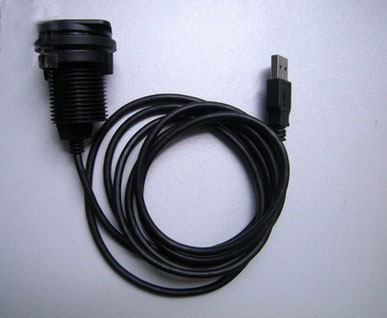
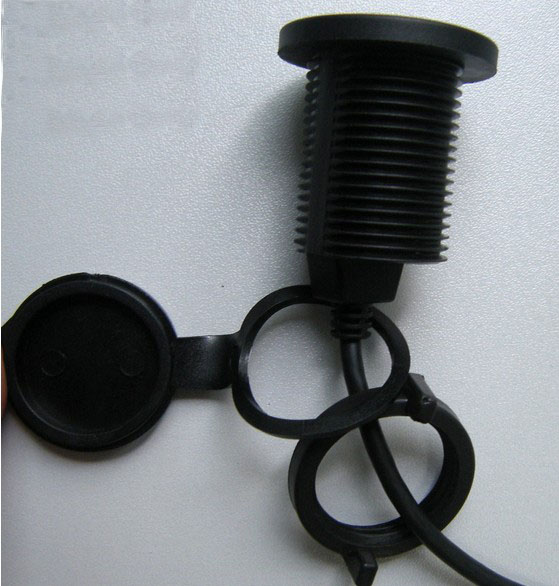
IP67 USB Extension Waterproof Cable
This extend waterproof cable takes a USB drop out to an outdoor panel, marine charger or wash-down enclosure as a molded USB-A male to USB-A female lead. O-ring sealed to IP67 when mated, carrying USB 2.0 data and 5 V power in 0.5 m to 5 m or OEM length.
Overview
An extension is how you move a USB port from somewhere dry to somewhere useful – out to an outdoor panel, up to a helm, or through the wall of a wash-down enclosure. This extend waterproof cable is a molded USB-A male to molded USB-A female lead with an internal O-ring at each end, so the sealed path continues through the joint instead of ending at the enclosure wall. It carries USB 2.0 data and 5 V power, and it is built in the length your run needs.
Key Specifications
| Connector A | USB-A male, molded, IP67 |
|---|---|
| Connector B | USB-A female, molded, IP67 |
| Interface | USB 2.0 data + 5 V DC power |
| Data Pair | 28 AWG stranded tinned copper, twisted, foil shield |
| Power Pair (5 V) | 24 AWG stranded tinned copper |
| Overall Shield | Foil with drain wire |
| Jacket | PVC or PUR, black, 5 mm OD |
| Overmold | TPE boot with internal O-ring seal |
| Sealing | IP67 mated |
| Length | 0.5 m to 5 m standard; OEM on request |
| Testing | 100% continuity and pinout, seal check quoted on the batch |
Where does the seal actually sit?
An extension has three possible weak points: the plug, the receptacle and the panel it passes through. Get all three right or the rating is decorative.
| Part of the run | What seals it | What to specify |
|---|---|---|
| The plug at the source end | O-ring inside the molded USB-A male | A matching IP67 receptacle on the source, not an ordinary jack |
| The female end at the device | O-ring inside the molded USB-A female | An IP67 plug on the device lead, or a cap when nothing is plugged in |
| The panel or enclosure wall | The bulkhead hardware, not the cable | A sealed feedthrough or bulkhead receptacle rated for the wall thickness |
| The jacket itself | Continuous PVC or PUR, no joints | PUR where there is oil or caustic cleaning |
The 5 m ceiling, and why it is not a suggestion
USB 2.0, as specified by the USB-IF, has a maximum cable length of 5 m for a single run, because the signaling depends on round-trip timing and not just on signal strength. That is why this lead tops out at 5 m as a standard build.
- Up to 5 m: a passive extension, and the shield matters more as you approach the limit.
- Beyond 5 m: use an active extension cable or put a powered hub at the far end. A thicker conductor will not buy you the timing budget back.
- At the limit with a noisy neighbor: keep the run away from motor drives and dimmer packs, or move to a shielded route.
- Charging only, no data: length is then limited by voltage drop instead, and a heavier power pair is the lever, not a repeater.
What kills an outdoor or wash-down extension?
- Water sitting in an uncapped female connector. The O-ring seals a mated pair; an open receptacle is a cup.
- Sunlight embrittling a jacket that was specified for indoor use.
- Cleaning agents that a PVC jacket was never chosen to survive – PUR is the answer where there is oil or caustic.
- A strain relief that is too short, so the conductors take the pull instead of the jacket.
- Running the extension through a panel cut without a grommet, which abrades the jacket until it cuts through.
Choosing PVC or PUR for the jacket
- PVC: lower cost, flexible enough, and fine for outdoor kiosks and panels with no oil or chemical exposure.
- PUR: pick it where the cable sees cutting oil, solvents, hot wash-down detergent, or where it drags across a rough surface.
- Both are black as standard. Other colors are available once you are past the prototype stage.
- If you are unsure, tell us the cleaning agent and the temperature and we will tell you which one we would build.
What to specify on an extend waterproof cable
- The total run length, and whether the sealed ends are both inline or one is a panel mount.
- Whether you need data as well as charging – it changes the length ceiling.
- Jacket material: PVC or PUR, based on the cleaning agent and temperature.
- The panel thickness and cut-out, if one end mounts to a wall or enclosure.
- Whether the far end needs to be USB-C – if so, the right angle USB-C cable is usually the better tail.
Extension or sealed adapter: which one do you want?
Both fill the same hole in an enclosure, and they fail differently. An adapter converts a plain panel cut-out into a sealed USB feed-through and adds no length, so the run from the source to the panel still has to be made with something else. An extension gives you the sealed path and the length in one part, with two sealed interfaces instead of one.
- Short run, source close to the panel: an extension, one part, two seals.
- Source inside a cabinet some distance away: a bulkhead receptacle plus an internal lead is usually tidier than a long extension trailing through the cabinet.
- Panel that is opened often: a bulkhead receptacle takes the wear of repeated mating better than a cable end.
- Temporary or seasonal installation: the extension wins, because it packs up and comes with you.
How the assembly is built and checked
IPC/WHMA-A-620 Class 3 is the workmanship bar for IP67 USB Extension Waterproof builds, and ISO 9001 is the system behind the line, from 32 to 12 AWG. Each IP67 unit passes a continuity and pinout check before it ships, and seal checking is quoted whenever an ingress rating is on the drawing.
Lead time and ordering
Five pieces is the prototype minimum for IP67 USB Extension Waterproof builds, shipping in 3 working days; the production minimum is 500 pcs, delivered 14 working days after sample sign-off. Tooling not already held adds around 10 working days. IP67 orders ship as OEM or ODM under your part number and labeling material certificates and first-article reports are on offer.
Related builds
- IP68 industrial data cable for serial, USB and Ethernet
- IP67 waterproof M12 molded cable
- M12 8-pin A-coded IP67 extension cable
- Cat6 S/FTP IP67 industrial pigtail patch cord
- Car USB-C data cable with right angle plug
- Aramid reinforced USB-C cable
Full range: signal and data cable assemblies.
RoHS and REACH declarations are provided per project together with the agreed test reports; the documentation scope is listed under certifications and compliance. If your drawing specifies a UL style, we build to that drawing and supply the UL reference with the shipment instead of substituting an equivalent. Sealing follows the insert, gasket and overmold-bond method described under IP67 and IP68 sealing structures, so the rating comes from the joint design rather than from the connector datasheet alone. The wider context is covered under our test and measurement work. Any tooling we cut for this part stays yours, maintained in our own tool room under your part reference.
Frequently Asked Questions
Can I chain two 5 m extensions together?
Not for data. Two passive runs put you past the USB 2.0 timing budget. Use an active extension or a powered hub if you need more than 5 m.
Is the female end sealed when nothing is plugged in?
The IP67 figure applies to the mated pair. Fit a cap or cover on an unmated receptacle, or specify a sealed bulkhead with its own cover.
Will it charge a tablet at full rate?
With the standard 24 AWG power pair it suits ordinary charging. For up to 3 A, order the 22 AWG power variant.
Can you put a panel-mount receptacle on one end?
Yes. Give us the panel thickness and the cut-out size and we will quote the bulkhead version with the sealed hardware.
| Connector A | USB-A male, molded, IP67 |
|---|---|
| Connector B | USB-A female, molded, IP67 |
| Interface | USB 2.0 data + 5 V DC power |
| Data Pair | 28 AWG stranded tinned copper, twisted, foil shield |
| Overall Shield | Foil with drain wire |
| Jacket | PVC or PUR, black, 5 mm OD |
| Sealing | IP67 mated |
| Length | 0.5 m to 5 m standard; OEM on request |
| Power Pair (5 V) | 24 AWG stranded tinned copper |
| Overmold | TPE boot with internal O-ring seal |
| Testing | 100% continuity and pinout, seal check quoted on the batch |
Related products
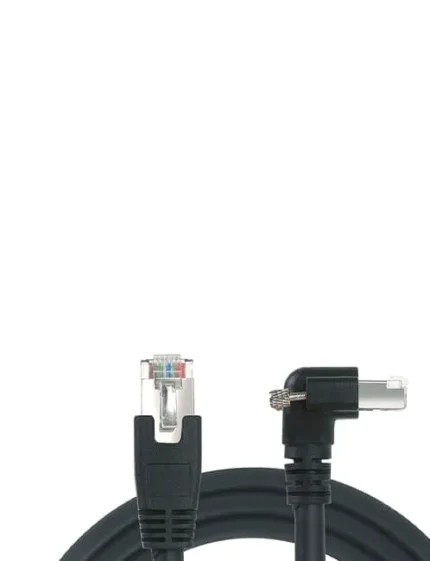
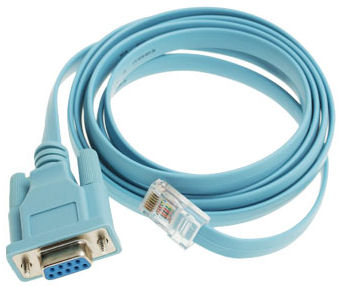
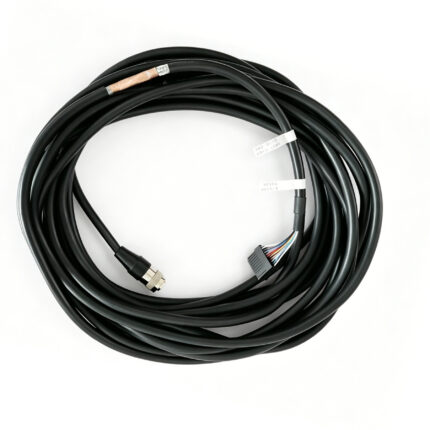
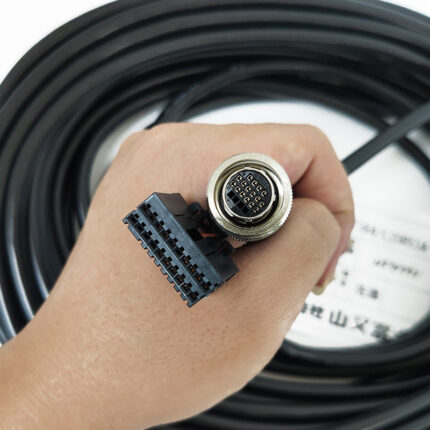
KUKA Robot Encoder Cable Compatible with 00-174-775
This kuka encoder 174775 cable is wired to the KUKA pin assignment for part 00-174-775, running encoder power and the data pair from the robot axis back to the controller. Six cores plus one pair under foil and braid, in a matte black PUR drag-chain jacket. A compatible replacement, not an OEM part.