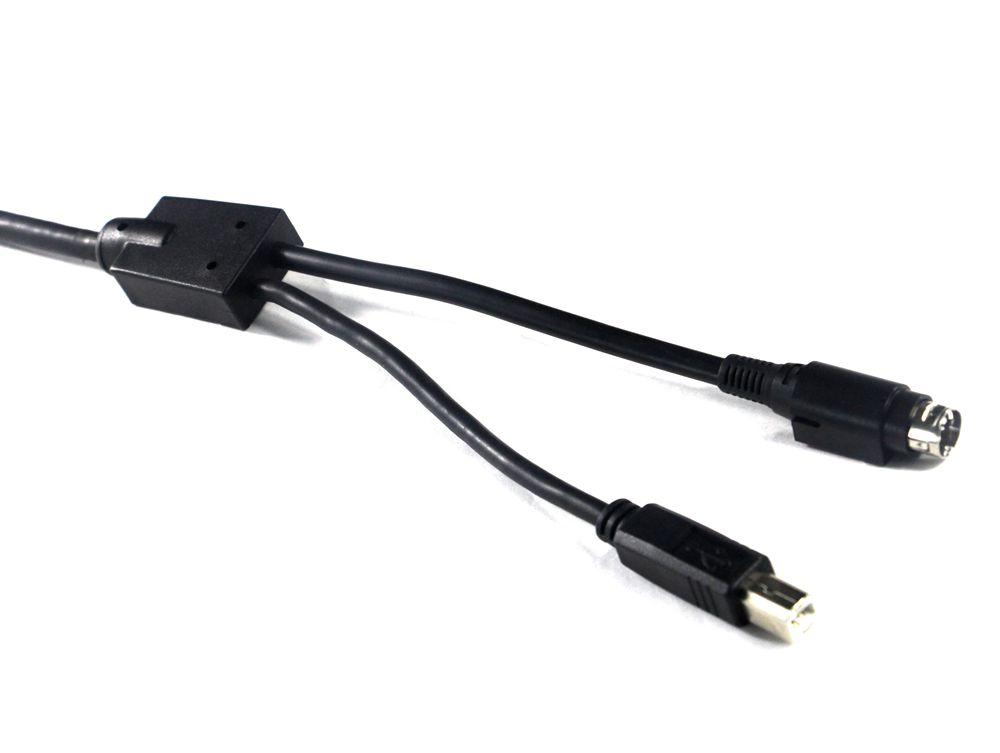
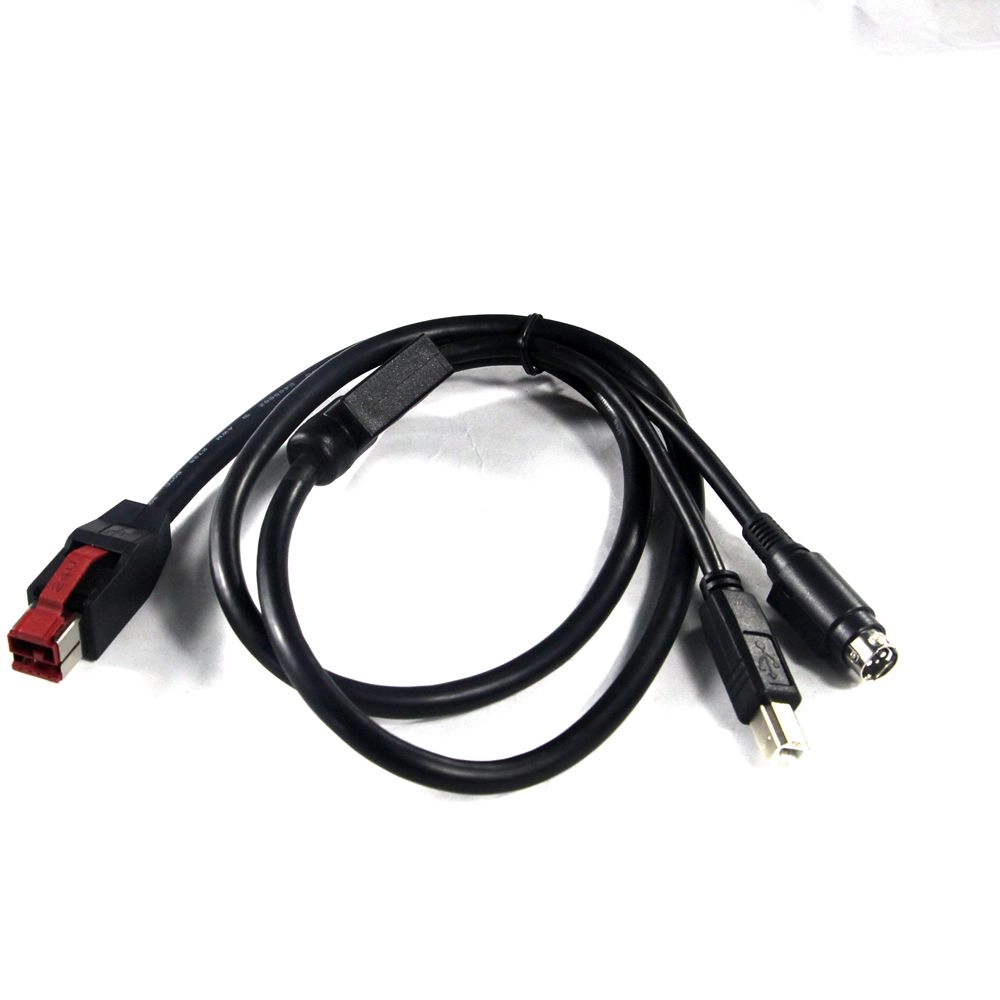
IBM 24V Powered USB to USB-B Scanner Cable
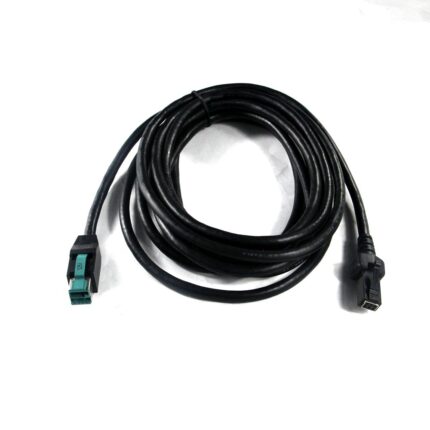
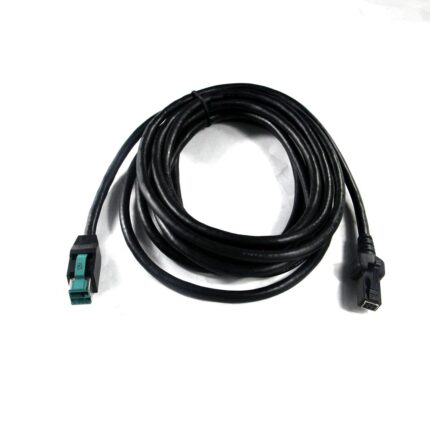
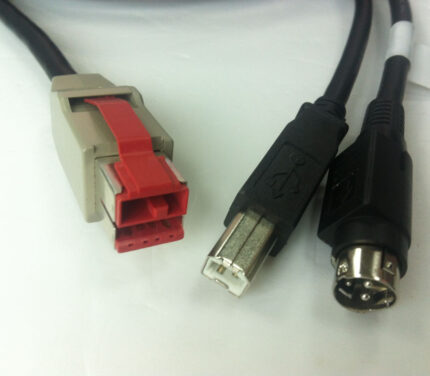
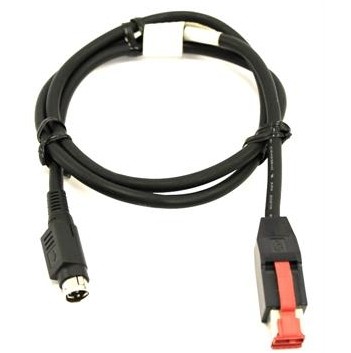
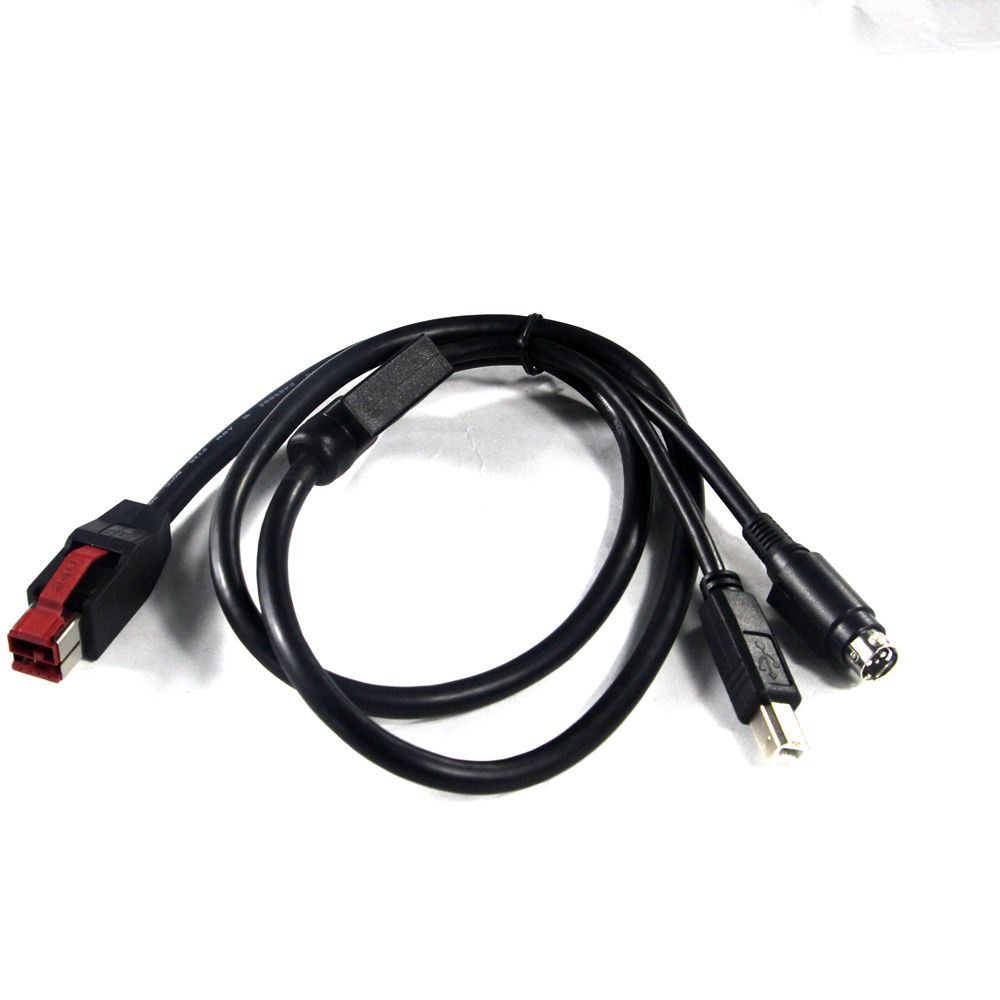
This IBM 24V Powered cable takes the 24 V DC rail and the USB 2.0 data pair from an IBM SurePOS Powered USB port to a USB-B scanner, receipt printer or customer display. Built for POS integrators and service teams replacing worn retail leads, in 1 m to 5 m or OEM length.
Overview
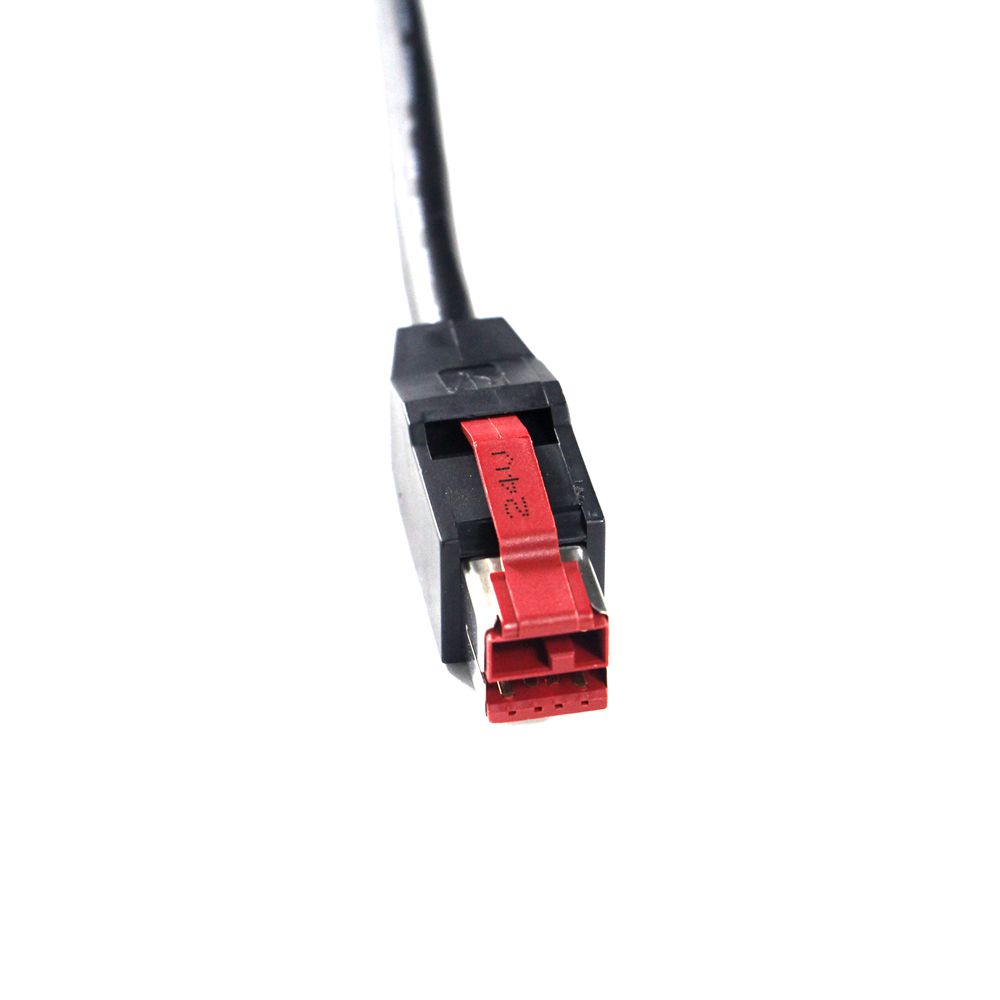
The Powered USB port on an IBM SurePOS terminal carries two things at once: a standard USB 2.0 data pair, as defined by the USB-IF, and a 24 V DC supply rail. This IBM 24V Powered cable picks both up on an 8-pin latching plug and delivers them to a USB-B peripheral, so a barcode scanner, receipt printer or customer display runs from one lead instead of a data cable plus a separate wall adapter. We build it as a compatible replacement for the cord that came with the terminal, in the length and pin-out your counter actually needs, and it is not an OEM IBM part.
Key Specifications
| Connector A | IBM 24V Powered USB male, 8-pin, latching |
|---|---|
| Connector B | USB-B male, standard USB 2.0 |
| Interface | USB 2.0 data + 24 V DC power |
| Data Pair | 28 AWG stranded tinned copper, twisted, aluminum foil shield |
| Power Pair (24 V) | 20 AWG stranded tinned copper |
| Overall Shield | Foil + braid with drain wire |
| Jacket | PVC, black, 6 mm OD |
| Length | 1 m to 5 m standard; OEM on request |
| Build standard | IPC/WHMA-A-620 Class 3 workmanship, ISO 9001 line |
| Testing | 100% continuity and pinout, hipot on the finished assembly |
Is the Powered USB rail on your terminal 12 V or 24 V?
This is the first question to settle, because the answer decides the plug, the power conductor and whether the peripheral survives the first power-up. The 12 V and 24 V Powered USB variants are different ports, not two names for the same one.
| What you are checking | 12 V Powered USB | 24 V Powered USB |
|---|---|---|
| Peripherals normally hung off it | Low-power handheld scanner, small customer display | Scanner with a motor, receipt printer, cash drawer |
| Power pair we build in | 22 AWG stranded tinned copper | 20 AWG stranded tinned copper |
| Data pair | 28 AWG twisted, foil shielded | 28 AWG twisted, foil shielded |
| Interchangeable with the other rail | No | No |
| How to be sure | Read the rating plate on the peripheral that came off it | Same, or measure the rail on a breakout |
The shells are keyed by rail, so a 24 V plug should not seat in a 12 V receptacle. Forcing one is how scanners get destroyed, and it is not an argument you win with a supplier afterwards. If the terminal is second-hand and the silkscreen has worn off, measure before you order.
How do you confirm the port before you order?
- Read the silkscreen printed next to the port on the terminal chassis – the rail is marked there.
- Check the rating plate on the peripheral already fitted. Its input voltage is printed on it, and that is the fastest answer you will get.
- Measure V+ against GND with a meter on a breakout. An unloaded 24 V rail reads at close to the rail voltage.
- Photograph the port face and the plug you pulled off it. A straight-on shot of the pin field is usually enough for us to confirm the shell.
What does 24 V do to the drop over a 5 m run?
A single 20 AWG conductor is roughly 33 milliohm per meter, and the current has to go out and come back, so budget about 67 milliohm for every meter of run. That number is why the length question matters more on a powered lead than on a plain data cable.
| Run length | Drop at 1 A | Drop at 2 A | What it means |
|---|---|---|---|
| 1 m | 0.07 V | 0.13 V | Nothing to worry about |
| 2 m | 0.13 V | 0.27 V | Fine for almost every scanner |
| 3 m | 0.20 V | 0.40 V | Still inside a 5 percent rail budget |
| 5 m | 0.33 V | 0.67 V | Check the scanner minimum input before you commit |
If a scanner browns out or resets at the far end of a long run, the fix is a heavier power conductor or a shorter run. Thickening the data pair does nothing for it, because the loss is in the power pair.
Why does the original cord fail?
- The strain relief is where the jacket is stiffest and the flex is greatest, so the power pair work-hardens there first and goes high-resistance before it goes open.
- The latching tab on the Powered USB plug cracks, then the plug walks out of the receptacle under the weight of the lead.
- The drain wire is the only path for shield current and is the thinnest conductor in the bundle; once it breaks the shield stops doing anything.
- Retail floors get wiped down every night. A jacket that is fine at a desk gets a cleaning agent and mechanical scrub on a daily cycle.
- A kinked run behind a counter puts a permanent set into the conductors and raises their resistance for good.
What to check before you order an IBM 24V Powered cable
- The rail: 24 V, or tell us if the terminal turns out to be 12 V.
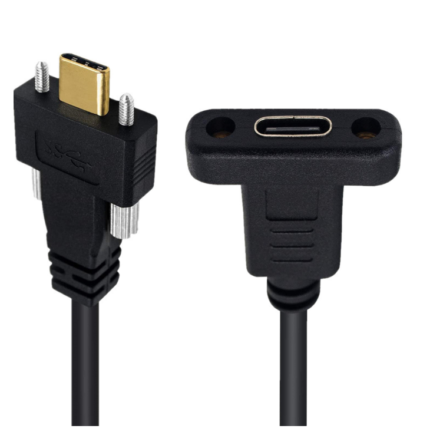
- The device end. USB-B is the default; if the peripheral takes USB-C instead, look at the POS USB-C PD cable build.
- The length, measured along the route the cable will actually take, not in a straight line between the two ports.
- Jacket color, and whether the label carries your part number or ours.
- Plug orientation at the scanner end, if the counter geometry forces one.
Why foil plus braid on a point-of-sale lead
A counter is a noisy place. Switch-mode supplies, cash drawer solenoids and the scanner motor itself all put transients onto the same rail the data pair is trying to use. The foil layer catches high-frequency noise because it covers the bundle completely, and the braid carries the lower-frequency current and gives the drain wire something substantial to terminate into. Either layer alone is a compromise: foil by itself has no current-carrying capacity worth mentioning, and braid by itself leaves gaps at high frequency. The pair works because the drain wire is continuous from end to end – if the drain is broken or left unconnected at one shell, the shield becomes decoration and no amount of copper in the jacket will help. Where the run passes a cash drawer or a printer feed motor, keep it separated from the power wiring rather than relying on the shield to solve the layout.
How the assembly is built and checked
For IBM 24V Powered USB builds the line runs to IPC/WHMA-A-620 Class 3 under ISO 9001, terminating 32 to 12 AWG. continuity and pinout are tested on each IBM unit before it is packed, and seal checking is quoted whenever an ingress rating is on the drawing.
Lead time and ordering
IBM 24V Powered USB prototype lots start from 1 to 50 pcs and ship in 3 working days; production requires 500 pcs and runs 14 working days after sample approval. Your part number and labeling go on OEM and ODM IBM shipments, and material certificates and first-article reports are on offer. We hold 100 sets of mold tooling in house, so a standard body needs no tooling time and a new one adds about 10 working days.
Related builds
- Honeywell scanner USB replacement cable
- Barcode scanner cable with coiled cord
- Kiosk and self-service terminal harness
- Right angle USB-C cable for tight desk runs
- Aramid reinforced USB-C cable
- Custom shielded Ethernet data cable
Full range: signal and data cable assemblies.
Every production run can ship with RoHS and REACH declarations and the electrical report agreed at quotation; see certifications and material declarations. UL styles and other named approvals are built to drawing: we source to the style you specify and document it, rather than asserting a listing we do not hold. Termination, molding and verification happen in-house see the assembly lines behind this build so the process that made your sample is the process that runs the order. More background: cable assemblies for test and measurement. Tooling is quoted separately, cut in-house rather than brokered out, and owned by you.
Frequently Asked Questions
Is this an original IBM part?
No. It is a compatible replacement built to the IBM 24V Powered USB pin layout, and it is not an OEM IBM product.
Can I plug a 24 V cable into a 12 V port?
No, and the shells are keyed so it should not seat. Confirm the rail on the terminal and on the peripheral rating plate before ordering.
Can I get 18 AWG power conductors instead of 20 AWG?
Yes. On runs past 3 m or on high-draw printers it is often the right call – tell us the load current and the run length and we will size the pair.
Do you test the data pair as well as the power pair?
Every unit gets continuity and pinout testing, plus hipot on the finished assembly. The values it is verified to are the ones on your drawing.
| Connector A | IBM 24V Powered USB male, 8-pin, latching |
|---|---|
| Connector B | USB-B male, standard USB 2.0 |
| Interface | USB 2.0 data + 24 V DC power |
| Data Pair | 28 AWG stranded tinned copper, twisted, aluminum foil shield |
| Power Pair (24 V) | 20 AWG stranded tinned copper |
| Overall Shield | Foil + braid with drain wire |
| Jacket | PVC, black, 6 mm OD |
| Length | 1 m to 5 m standard; OEM on request |
| Build standard | IPC/WHMA-A-620 Class 3 workmanship, ISO 9001 line |
| Testing | 100% continuity and pinout, hipot on the finished assembly |