Aramid Reinforced USB-C Cable with Overmoulded Sealed Shells
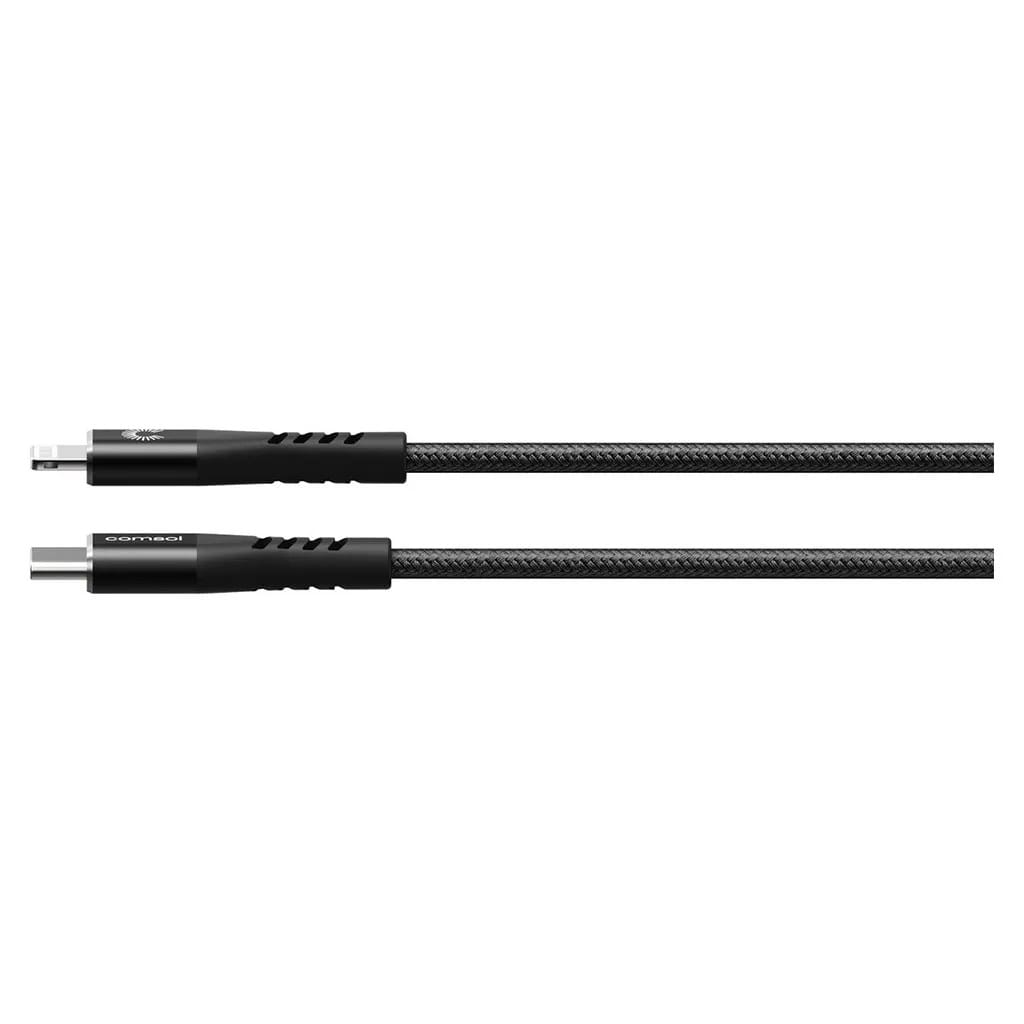
An aramid reinforced USB-C cable with a braided strength member anchored into both overmolds, so a pull is carried by the aramid and not by the solder terminations. Double nylon braid over the jacket, sealed shells, charge-only or 10 Gbps data variants.
Last updated: 13 September 2026
Overview
The failure mode on a field-service or vehicle-mounted lead is almost always at the connector. The cable gets pulled, the load transfers into the solder terminations, and the link goes intermittent long before the jacket looks damaged. This aramid reinforced USB-C cable puts a braided aramid strength member inside the assembly and anchors it in both overmolds, so a pull is carried by the aramid rather than by the conductors.
Key Specifications
| Product type | Ruggedized USB-C cable assembly |
|---|---|
| Strength member | Braided aramid, anchored in both overmolds |
| Outer braid | Double nylon braid over the jacket |
| Sealing | IP68 target on the overmolded shells – to be confirmed |
| Variants | Charge-only lead, or a 10 Gbps data version |
| Power | 60 W on the charging variant – to be confirmed |
| Temperature range | -20 to +80 degrees C – to be confirmed |
| Accessory | Silicone cable tidy included |
Where the load goes
The engineering in this build is not the braid you can see, it is how the strength member is terminated. Aramid has very high tensile strength and almost no stretch, which makes it ideal for a load path and useless unless that load path is anchored properly. We anchor the braid into both overmolds so that a pull on the cable is taken by the aramid and by the molded body, and the conductor terminations see almost none of it. Get that anchoring wrong and the aramid does nothing at all.
Duty, failure and what we build against
| Stress in service | What it does to a standard lead | Design answer |
|---|---|---|
| Straight pull on the cable | Load into the solder terminations, intermittent link | Aramid load path anchored in both overmolds |
| Abrasion against a tool box or a vehicle floor | Jacket cut through, then cores exposed | Double nylon braid over the jacket |
| Rain, washdown or salt air | Corrosion at the shell, then an open circuit | Sealed overmolded shells, to the level stated on your drawing |
| Cold morning start in a vehicle | Stiff jacket pulls on the plug | Jacket compound chosen for the stated temperature band |
| Repeated coiling and uncoiling | Kinks at the same point every time | Silicone cable tidy supplied with each assembly |
Sealing, shock and the figures we are still measuring
Competitor material for this class quotes a military shock rating alongside the construction details. We are not going to print a standard we have not tested to, so the build is described in physical terms instead: aramid load path, overmolded strain relief, sealed shells. Shock and vibration performance is on the test plan and will be published together with the test method once it has actually been measured.
The same applies to the IP68 sealing target, the -20 to +80 degrees C operating window, the salt spray exposure claim for the shells and the 60 W power figure on the charging variant. Each is a design target pending test confirmation. Where an ingress rating matters to the installation, IP ratings are defined by IEC 60529 and the rating your assembly is built and verified to is the one we agree on your drawing.
Which variant do you need
- Charge-only – the simplest build, fewer conductors, more room for the strength member. Right where the device only ever needs power.
- 10 Gbps data version – full high-speed wiring with adequate screening. Choose it when the device logs, syncs or streams over the wired link.
Both ends of the link matter as much as the cable. In vehicle and marine use, the shell plating and the mating connector on the panel decide whether the sealed shell actually seals, so specify both together rather than buying them separately.
Typical applications for this aramid reinforced USB-C cable
- Field-service laptops and tablets that live in a vehicle or a tool bag
- Ground stations for unmanned systems, where the lead is deployed and packed every session
- Marine and motorsport installations, paired with our waterproof USB-C bulkhead cable on the panel side
- Site engineering kits, alongside our dual USB IP67 waterproof cable where two ports are needed
- In-vehicle devices that use our car USB-C data cable at the dashboard end
How to specify
- Variant – charge-only or 10 Gbps data.
- Length, measured on the installed route.
- Sealing level required on the shells, and what the environment actually is.
- Environment – salt air, fuel, coolant, cleaning agents, temperature extremes.
- Both ends – the mating panel connector matters as much as the cable.
- Quantity, and whether this is a prototype or a production order.
Workmanship and testing
ISO 9001 governs the line and IPC/WHMA-A-620 Class 3 governs the workmanship. Terminations cover 32 to 12 AWG. No unit is packed before continuity and pinout have been verified, and where an ingress rating is specified we can quote seal checking on the production batch.
Custom builds and ordering
From 5 pcs for a prototype, shipped in 3 working days, to 500 pcs and up for production at 14 working days after approval. Tooling we already hold costs no lead time; a new body adds roughly 10 working days. Private-label shipments carry your part number and labeling, and we can supply material certificates plus a first-article report.
Related assemblies
- Waterproof USB-C Bulkhead Cable for Panel Mount Enclosures
- Car USB-C Data Cable with Right Angle Plug
- Dual USB IP67 Waterproof Cable
- IP67 USB Extension Waterproof Cable
- IP68 Industrial Data Cable for Serial, USB and Ethernet Ports
- USB-C PD Charging Cable 240 W PD 3.1 EPR
Full range: signal and data cables.
Frequently Asked Questions
What does the aramid actually do?
It takes the pull. The braid is anchored into both overmolds, so a straight pull on the cable loads the aramid and the molded body instead of the conductor terminations.
Is the sealed shell rated IP68?
IP68 is the design target on the overmolded shells, pending test confirmation. The rating your assembly is built and verified to is the one stated on your drawing.
Do I need the 10 Gbps version?
Only if the device moves data over the wired link. For charge-only duties the simpler build gives more room for the strength member and costs less.
What is the minimum order?
Sample quantity starts at 5 pcs with 3 working days to ship. Once the sample is approved, production from 500 pcs takes 14 working days.
| Product type | Ruggedized USB-C cable assembly |
|---|---|
| Strength member | Braided aramid, anchored in both overmolds |
| Outer braid | Double nylon braid over the jacket |
| Sealing | IP68 target on the overmolded shells – to be confirmed |
| Variants | Charge-only lead, or a 10 Gbps data version |
| Power | 60 W on the charging variant – to be confirmed |
| Temperature range | -20 to +80 degrees C – to be confirmed |
| Accessory | Silicone cable tidy included |