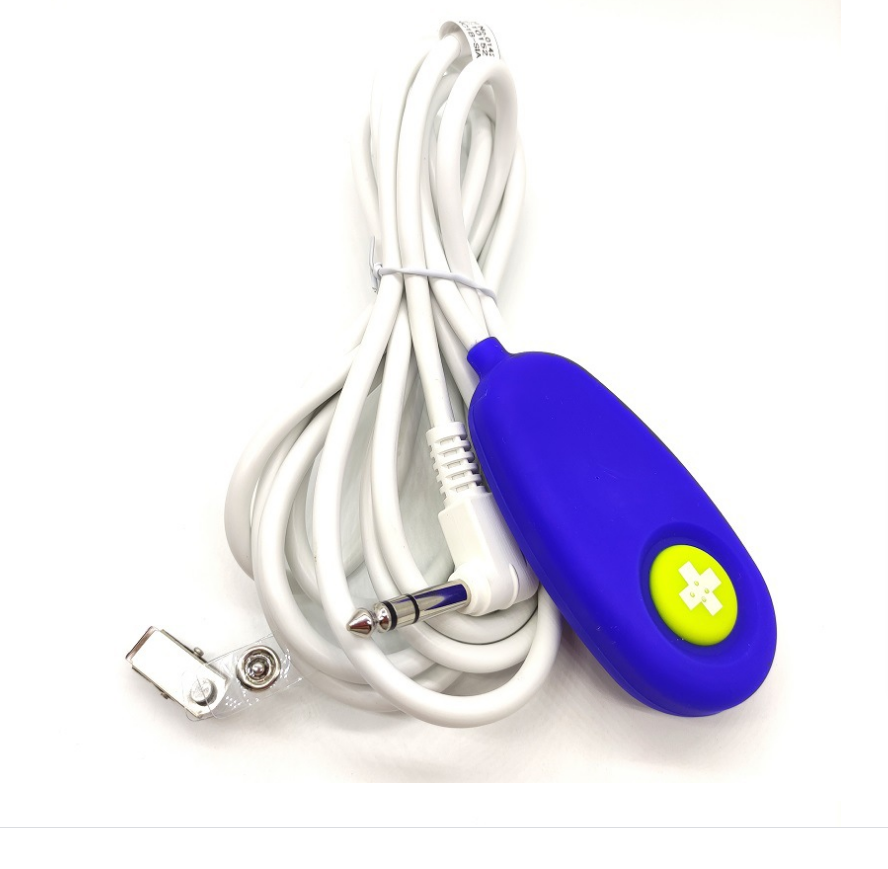
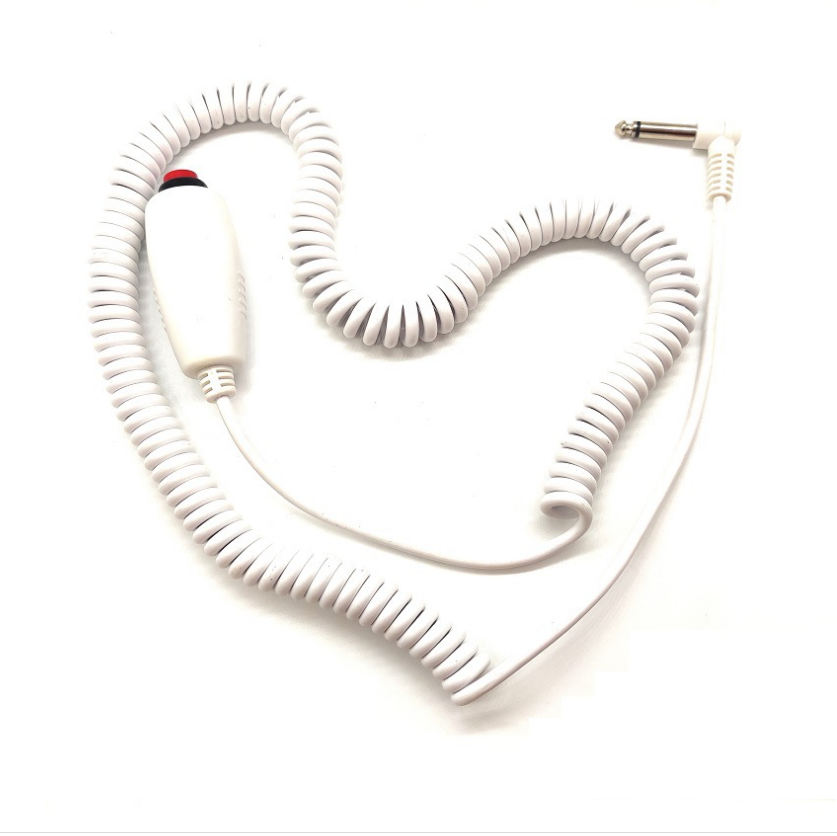
Nurse Call 2-Key Button Cable with Silicon Coil
This nurse call 2key cable puts a two-key call button at the patient end of a silicon coil cord, with a 6P4C plug for the bed head or wall plate. 1 m relaxed to 5 m extended at 1:5 stretch, 26 AWG conductors, built to your pin count, button outline and reach.
Overview
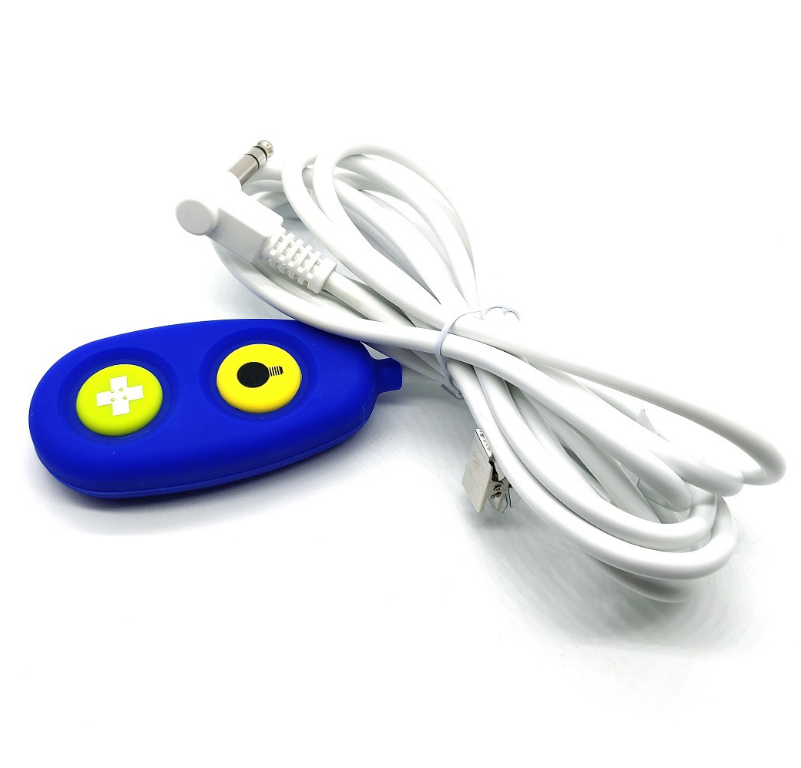
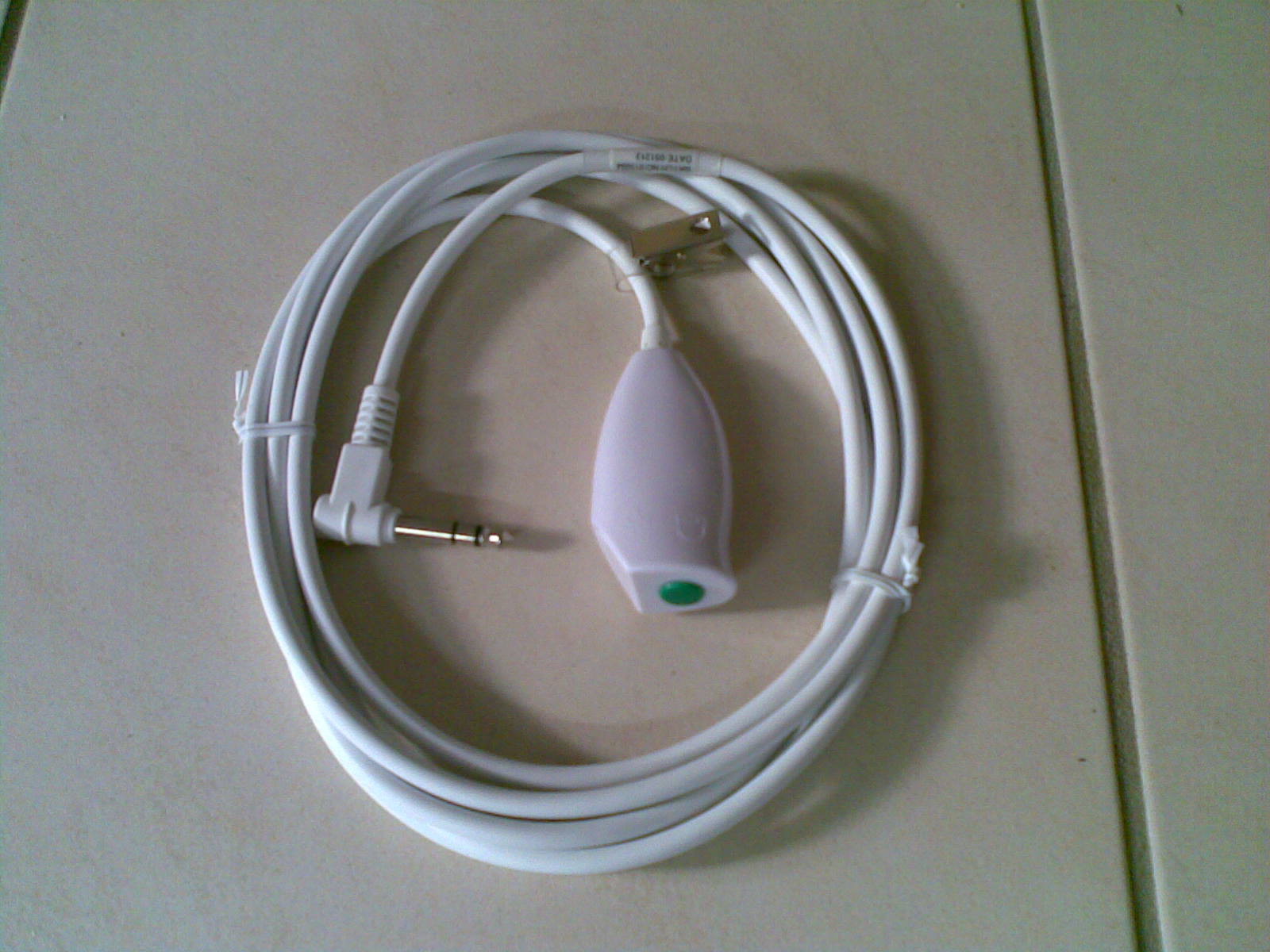
A nurse call 2key cable is the bed-side drop with two call keys at the patient end and a coil in the middle so the button can be brought to the patient rather than the patient reaching for the wall. This one uses a silicon coil cord at a 1:5 stretch ratio – 1 m relaxed to 5 m extended – with a 6P4C (RJ14-style) molded plug at the head end and a custom 2-key button overmold at the patient end, on two or four 26 AWG stranded tinned copper conductors. It is a passive assembly; the call button and host system carry the regulatory clearance.
Key Specifications
| Connector A | 6P4C plug (RJ14-style), molded |
|---|---|
| Connector B | 2-key nurse call button overmold |
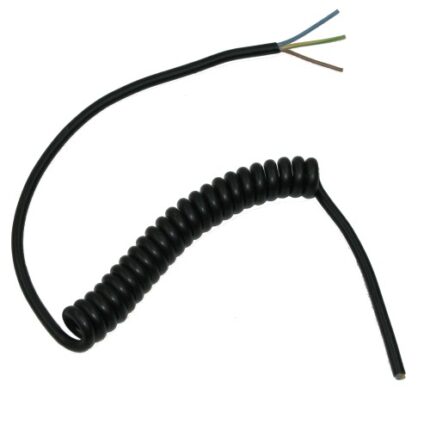
| Cord | Silicon coil cord, 1:5 stretch ratio |
| Conductor | 26 AWG stranded tinned copper, 2 or 4 cores |
| Jacket | Silicon outer, white or gray |
| Length | 1 m coiled to 5 m extended; OEM on request |
| Testing | 100% continuity and hipot |
| Assembly type | Passive assembly – not a medical device |
Why a silicon coil on this nurse call 2key cable
Two reasons, and they pull in the same direction. Silicon stays soft across the temperature range a ward sees, so the cord does not stiffen and then fight the patient who is trying to pull it across the bed. And it recovers from being held coiled: a PVC coil left relaxed for months takes a set and stops retracting, which leaves the call button lying on the floor where nobody can reach it. A call button on the floor is worse than no call button, because staff assume it is within reach. Silicon costs more than PVC and it is the right material here for exactly that reason.
What a 1:5 stretch ratio means at the bed-side
It is the ratio between the relaxed length of the coil and the length it will reach when extended, and it decides two practical things: how far from the jack the patient can bring the button, and how much cord is lying loose when it is not in use. Too generous a ratio and the relaxed coil is a tangle on the bed rail; too tight and the patient cannot reach it from the far side of the bed.
| Relaxed length | Extended at 1:5 | Suits | Watch out for |
|---|---|---|---|
| 0.5 m | 2.5 m | Wall plate close to the pillow | Too short across a wide bed |
| 1 m | 5 m | Standard bed head to patient reach | The default for most wards |
| 1.5 m | 7.5 m | Bays where the jack is set back | Slack on the floor when relaxed |
| Custom | Custom | Bariatric beds, bays with equipment between | Measure the actual reach, not the room |
Two keys: what the second one is for
On a single-key pendant the button does one thing – raise a call. A two-key build usually splits a call from a second function: a reassurance or cancel key, a staff assist call, or a light or bed control depending on the system. That is why the pin count matters here. Two conductors will support a single momentary contact; once there are two independent keys you are typically at four conductors, and if the system distinguishes between them by resistance or by a diode in the button, the build has to match. The head-end plug is a standard modular connector, so the jack side is rarely the problem – it is the button end that varies. Send the system make and model, or the old cable, rather than guessing.
Cleaning and the patient end
The patient end of this assembly is the highest-touch surface in the room, and it is the end that fails first. Sealing the 2-key body as a single overmold removes the seam where fluid would otherwise reach the contacts, and choosing a strain relief long enough to spread the pull means a patient tugging the cord is not loading the solder joint. The coil itself is tested for 50,000 stretch cycles as a minimum, but in practice the life of the assembly is set by the cleaning regime and by how the cord is stored when the bed is made, not by the cycle count.
Typical applications for this nurse call 2key cable
- Hospital bed-side 2-key call button with a patient pull-cord
- Patient pendant call button on the bed head
- Replacement for a worn 2-key silicon coil call button
- Assisted living and long-term care call points
- Custom call drops where reach matters more than tidy storage
How to specify your build
- Pin count and what each key does electrically.
- Relaxed and extended length, and the reach you actually need.
- Bed head or wall plate model, or a photo of the jack.
- Button body – your outline, or ours to your sample.
- Jacket color and the cleaning protocol in use.
- Quantity, and whether this is a sample or a production order.
Workmanship and testing
ISO 9001 covers the system and IPC/WHMA-A-620 Class 3 covers the work on Nurse Call 2-Key Button builds, across 32 to 12 AWG. No Nurse unit is packed until continuity and pinout check out, and seal checking is quoted whenever an ingress rating is on the drawing.
Every production run can ship with RoHS and REACH declarations and the electrical report agreed at quotation; see certifications and material declarations. UL styles and other named approvals are built to drawing: we source to the style you specify and document it, rather than asserting a listing we do not hold. This assembly is built on the four lines covered under the assembly lines behind this build, with nothing in the build handed to an undisclosed subcontractor. The wider context is covered under our medical device work. Tooling is quoted separately, cut in-house rather than brokered out, and owned by you.
Custom builds and ordering
Nurse Call 2-Key Button lots run from 1 to 50 pcs, out in 3 working days. Volume starts at MOQ 500 pcs shipping 14 working days after approval. Tooling not already held adds around 10 working days. Nurse orders go out under your part number and labeling, OEM or ODM, and we provide material certificates and first-article reports when asked.
Related signal and data assemblies
- Nurse Call Bedside Cable with Sealed Call Button
- Coiled Retractable Cable for Instruments and Test Leads
- IP68 Industrial Data Cable for Serial, USB and Ethernet
- Dual USB IP67 Waterproof Cable
- Kiosk and Self-Service Terminal Harness
- Custom Shielded Ethernet Data Cable
Full range: signal and data cable assemblies.
Frequently Asked Questions
Is this a medical device?
No. It is a passive cable assembly. The connected call button and the host system carry the regulatory clearance.
Why silicon rather than PVC for the coil?
Silicon recovers from being held coiled and stays soft in a cool ward. PVC takes a set and stops retracting, leaving the button out of reach.
Can I change the stretch ratio?
Yes. Give us the relaxed and extended lengths you need and we will set the coil accordingly.
Do you supply the button body as well?
Yes, overmolded to your outline or to a sample you send. New tooling adds about 10 working days the first time.
| Connector A | 6P4C plug (RJ14-style), molded |
|---|---|
| Connector B | 2-key nurse call button overmold |
| Cord | Silicon coil cord, 1:5 stretch ratio |
| Conductor | 26 AWG stranded tinned copper |
| Jacket | Silicon outer, white or gray |
| Length | 1 m coiled to 5 m extended; OEM on request |
| Testing | 100% continuity and hipot |
| Assembly type | Passive assembly – not a medical device |