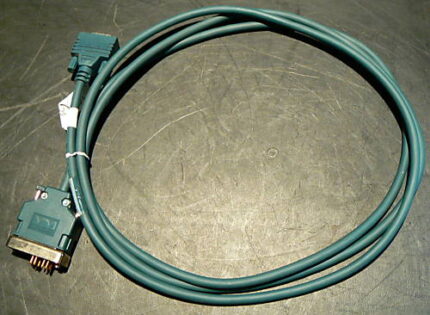
SCSI Cable Assembly, HD68 to HD68
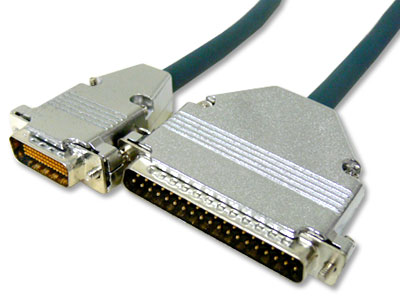
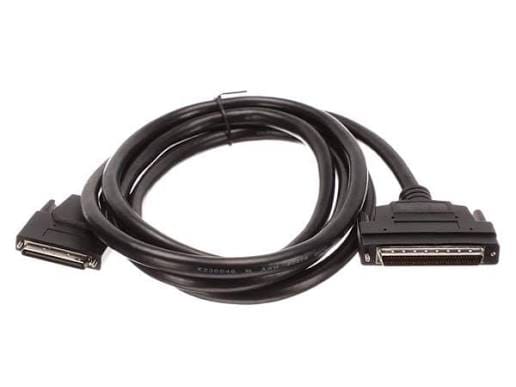
A SCSI HD68 cable built on shielded twisted-pair round cable with 360 degree backshells: HD68 to HD68, male-female or male-male, at the length your rack needs.
Last updated: 13 September 2026
Overview
A SCSI HD68 cable keeps a machine alive that nobody wants to replace: a scanner, a tape library, a test instrument or an industrial controller whose only working interface is a 68-pin high-density D-sub on the back panel. The original cable is 20 years old, the connectors are brittle, and the chain has started dropping devices. We build the replacement on shielded twisted-pair round cable with a backshell that actually terminates the shield, because a flat untwisted substitute is how a stable chain turns intermittent.
Key Specifications
| Connector A | HD68 (SCSI-3) male, 68-position |
|---|---|
| Connector B | HD68 female or male, to order |
| Cable | Shielded twisted-pair, round, 68-way |
| Termination | Backshell with strain relief, screw-lock |
| Length | OEM build, typical 0.5 to 6 m |
| Jacket | PVC |
| Shielding | Overall braid plus foil, terminated 360 degrees at the backshell |
| Conductor | 28 AWG stranded twisted pairs, to order |
| Build standard | Wired to the pinout you supply; straight-through unless you say otherwise |
Which 68-way interface do you actually have
HD68 is one of four connectors that get called “the SCSI plug”. Getting this wrong is the single most common reason a replacement order has to be re-made. Measure the shell and count the rows before you order:
| Interface | Positions | How to tell it apart | Typically found on |
|---|---|---|---|
| HD68 | 68 | 0.050 inch pitch, D-shaped shell, thumb screws | Ultra2, Ultra160, Ultra320 LVD chains |
| HD50 | 50 | Same shape, visibly shorter, 50 contacts | Narrow SCSI-2 and older Fast SCSI |
| VHDCI 68 | 68 | Much smaller shell, 0.8 mm pitch, two rows | Ultra320 on later controllers |
| Centronics 50 | 50 | Rectangular block with clip latches | SCSI-1 hosts and older peripherals |
All of these are industry-standard mechanical definitions, not our own part numbers. Your cable is built and verified to the pinout and shell stated on your drawing.
Why a legacy chain starts dropping devices
- Cable substituted for the wrong type. Flat ribbon or untwisted cable in place of twisted pair removes the noise margin the interface was designed around. It works on the bench and fails in the rack.
- Termination. A chain needs a terminator at each physical end and nowhere else. Swap a cable and it is easy to end up with the terminator in the middle of the bus.
- Bent pins. HD68 pins are fine and close together. One side-loaded connector is enough to lose a whole byte lane, which shows up as retries rather than a hard failure.
- Mixed signaling. Putting a single-ended device on a low-voltage differential chain drags the whole bus down to the slower mode, or stops it negotiating at all.
- Backshell not bonded. If the shield is clamped rather than terminated 360 degrees, the cable is a quarter-wave antenna at the frequencies these links run at.
The SCSI family covers a wide range of electrical generations on the same mechanical shell, which is exactly why the pinout and the signaling mode have to be stated rather than assumed.
Replacing a cable on a chain that still has to run
- Power the whole chain down. SCSI is not hot-plug on most of this equipment.
- Photograph the back of every device, including the terminator positions and any ID jumpers.
- Note the device order along the bus and the SCSI ID of each one.
- Swap one cable at a time and re-test after each swap, so a pre-existing fault does not get blamed on the new part.
- Re-check termination at both physical ends of the chain after the swap.
- Run the longest transfer the system does in normal service before signing it off.
Typical Applications for This SCSI HD68 Cable
- Legacy SCSI storage chains on scanners, film recorders and pre-press equipment
- Tape libraries and autoloaders still carrying nightly backups
- Test and measurement instruments whose only storage interface is SCSI
- Industrial controllers and motion cards installed long before the interface was retired
- Spare and replacement cables held against a machine that cannot be re-hosted
How to specify your build
- Shell and pin count from a photo of the connector face.
- Gender on each end: male-female for extension, male-male to join two cables.
- Length, and whether the run sits in a rack or drags across a bench.
- Signaling mode if you know it, so we can advise on cable construction.
- Pinout if it differs from straight-through.
- Backshell style: straight, or right-angle where depth is limited.
- Quantity, and whether you need a matched set for a whole chain.
Workmanship and testing
Assembly and inspection follow IPC/WHMA-A-620 Class 3 workmanship criteria under our ISO 9001 quality management system. Every unit passes 100% continuity and pinout testing before it is packed, which matters more on a 68-way than anywhere else: one crossed pair is invisible until the chain is loaded. Conductor range is 32 to 12 AWG. Any electrical figure quoted for the interface itself is the industry-standard value; the values your assembly is built and verified to are the ones on your drawing.
Custom builds and ordering
Prototype builds start from 5 pcs and ship in 3 working days; production orders start at MOQ 500 pcs and ship 14 working days after approval. Backshell variants beyond the standard straight body add about 10 working days for tooling. OEM and ODM builds ship under your part number and labeling, with material certificates and first-article reports available on request. Factory audits and video line tours can be arranged.
Related legacy and data assemblies
If you are keeping an older machine alive, these are the assemblies that usually come up on the same maintenance job:
- Mini-SAS HD Cable, SFF-8643 to SFF-8644
- DB50 to DB25 DTE Serial Cable
- LFH60 to DB37 RS-449 / V.35 DCE Serial Cable
- 13W3 to VGA (HD15) Mixed-Contact D-Sub Cable
- D-Sub Screw Lock Cable, DB9 DB15 DB25 Serial and I/O Cordset
- DB9 RS485 Screw Cable for Modbus RTU Multi-Drop Runs
- Custom Shielded Ethernet Data Cable
Full range: signal and data cable assemblies.
Frequently Asked Questions
Is this the same as a 50-pin SCSI cable?
No. HD68 has 68 contacts on a 0.050 inch pitch; HD50 has 50. They look similar in a photo, so count the contacts or send us a close-up.
Can you make a male-to-male version?
Yes, to join two existing cables. Check the total chain length against what the interface allows before you order.
Do I need to change the terminator?
Not usually, but re-check it after any swap. The terminator belongs at the two physical ends of the chain and nowhere else.
Will a longer cable work?
It depends on the signaling mode and the number of devices. Tell us the mode and the length you need and we will tell you what we can build and hold to.
What is the minimum order?
For prototypes the floor is 5 pcs and lead time is 3 working days. Production orders begin at 500 pcs and ship 14 working days after sample sign-off.
| Connector A | HD68 (SCSI-3) male, 68-position |
|---|---|
| Connector B | HD68 female or male, to order |
| Cable | Shielded twisted-pair, round, 68-way |
| Termination | Backshell with strain relief, screw-lock |
| Length | OEM build, typical 0.5 to 6 m |
| Jacket | PVC |
| Shielding | Overall braid plus foil, terminated 360 degrees at the backshell |
| Conductor | 28 AWG stranded twisted pairs, to order |
| Build standard | Wired to the pinout you supply; straight-through unless you say otherwise |