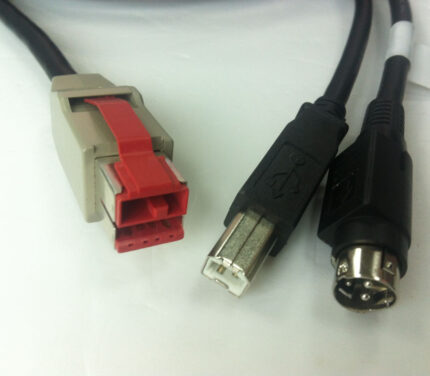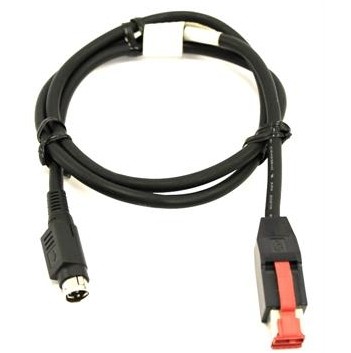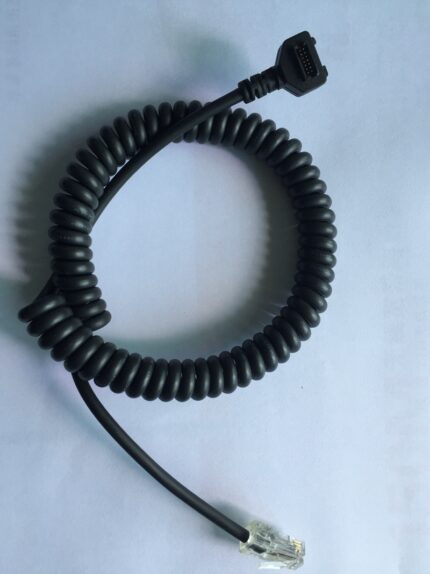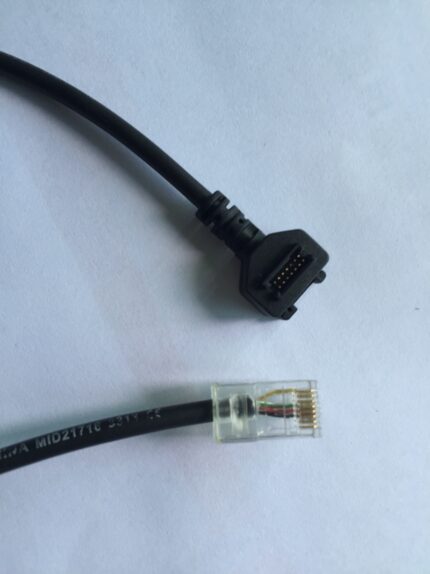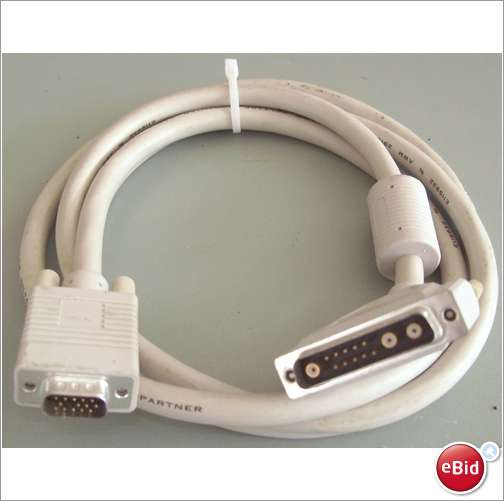
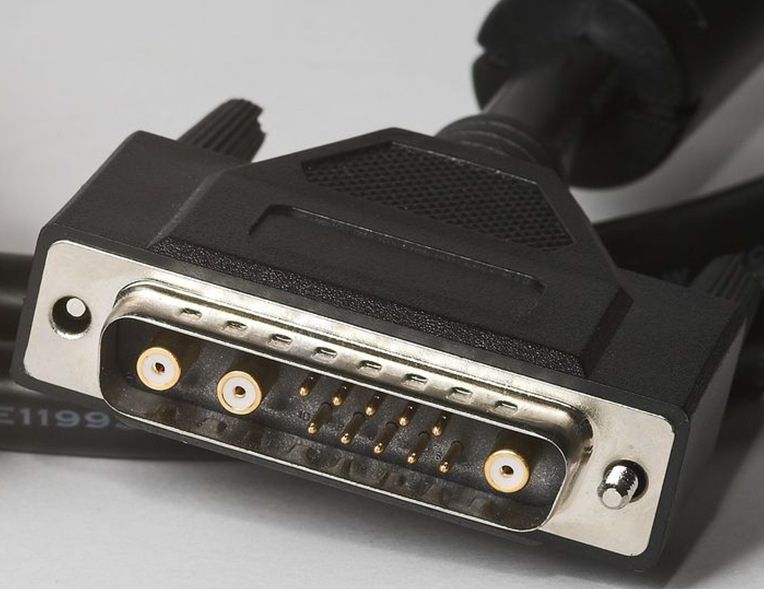
13W3 to VGA (HD15) Mixed-Contact D-Sub Cable
This 13W3 VGA cable carries analog RGB plus sync from a Sun, SGI or IBM workstation video output to a standard VGA monitor. Three 75 ohm coaxial lines and ten 28 AWG signal lines under a foil + braid shield, metal hoods at both ends, built to your pin-out and length.
Overview
A 13W3 shell looks like a D-Sub until you look at the contacts: three of them are miniature coaxial sockets and ten are ordinary signal pins. That mixed layout is how Sun Microsystems, SGI and IBM workstation video outputs moved analog RGB plus sync down one connector. This 13W3 VGA cable terminates the workstation end in a 13W3 male plug and the monitor end in a standard HD15 male plug, so legacy workstation video lands on any VGA input without an active converter.
Key Specifications
| Connector A | 13W3 male, mixed contact, metal hood |
|---|---|
| Connector B | HD15 (VGA) male, standard pin-out, metal hood |
| Coaxial Impedance | 75 ohm, for the 3 coaxial lines |
| Signal Conductors | 28 AWG to 26 AWG stranded tinned copper |
| Shielding | Overall foil + braid with drain wire |
| Hood Hardware | Metal hood both ends, thumbscrews for chassis retention |
| Jacket | PVC, black or beige, 8 mm to 10 mm OD |
| Length | 1 m to 10 m standard; OEM on request |
| Testing | 100% continuity and pinout, built to your drawing |
What actually travels on a 13W3 connector?
Three coaxial contacts carry the color channels and the remaining pins carry sync, identification and returns. The mapping below is the one we build to unless your drawing says otherwise.
| Contact group on the 13W3 | What it carries | Where it lands on the HD15 | Note |
|---|---|---|---|
| 3 coaxial contacts | Red, green and blue video | HD15 pins 1, 2 and 3, returns on 6, 7 and 8 | 75 ohm; the monitor input has to terminate in 75 ohm |
| Horizontal sync or composite sync | Line timing | HD15 pin 13 | Some hosts output composite sync – tell us which |
| Vertical sync | Frame timing | HD15 pin 14 | TTL level on workstation outputs |
| DDC clock and data | Monitor identification | HD15 pins 15 and 12 | Fit these if you want the monitor to report its modes |
| Sense and ID lines | Monitor type detection | HD15 pins 4 and 11 | Sun hosts read these to pick a resolution |
| Grounds and returns | Return paths | HD15 pins 5 and 10 | Keep them separate from the coax returns |
The 13W3 side is where these builds go wrong. Pin numbering on the mixed-contact shell is not consistent across Sun, SGI and IBM implementations, so we do not guess. Send the pin-out, the drawing, or the host model and we will confirm the mapping before a single conductor is cut.
Why does 75 ohm matter on the three coax lines?
Video coax is a transmission line, not a wire. The HD15 side follows the pin-out published by VESA. If the termination at the monitor do not match, part of the signal reflects back toward the source and arrives late, which shows up on screen as a ghost or a soft edge rather than as a hard failure. It is the reason a 13W3 lead built from ordinary stranded hookup wire produces a visibly worse picture than one built from 75 ohm coax, even though both pass a continuity test.
How far can you run analog RGB?
Analog video degrades gradually with distance, so the honest answer is a curve rather than a limit.
| Run length | What you tend to see | What we suggest |
|---|---|---|
| 1 m to 3 m | Clean image, no visible ghosting | Standard build, 28 AWG signal lines |
| 3 m to 5 m | Slight softening on fine text at high resolution | Still fine at 1024 x 768 and below; step up to 26 AWG |
| 5 m to 10 m | Ghosting and reduced sharpness unless the source drives hard | Heavier coax, and test before you commit to a batch |
| Beyond 10 m | Analog is the wrong transport | Use an active converter or move the source closer |
This is not a digital cable
- A 13W3 output carries analog RGBHV. It does not carry TMDS, so it will not feed a DVI or HDMI input through a passive adapter.
- If the monitor only has digital inputs, you need an active converter, and a better cable will not change that.
- Sync-on-green outputs need the sync extraction handled at the monitor or in the converter – tell us if your host is one of them.
When is a 13W3 VGA cable the right answer?
- The host: Sun, SGI, IBM, or a pin-out drawing. This decides everything else.
- Which end is male and which is female, and whether either end needs to be a chassis-mount receptacle.
- Length, and whether the run passes near motor drives or power cabling.
- Jacket color: black or beige, depending on what the rest of the rack looks like.
- Whether you need the DDC pair connected, or a straight RGBHV break-out only.
What to check on the host before you order
Workstation video outputs are not as uniform as PC VGA ports, and the difference is worth ten minutes of checking before the build starts.
- Is the output RGBHV with separate syncs, or sync-on-green? Sync-on-green needs the extraction handled downstream, and a straight cable will not do it.
- Does the host drive composite sync on one pin? Some machines do, and the mapping to the HD15 changes accordingly.
- What resolution and refresh rate do you need? Analog quality degrades with bandwidth, so a 1600 x 1200 run is a different cable problem from a 1024 x 768 run.
- Does the host read monitor ID lines to pick its resolution? If it does, the sense lines have to be wired and not left open.
- Is the monitor input 75 ohm terminated? Almost all are, but a distribution amplifier in the path may offer a high-impedance setting that will ghost the picture.
How the assembly is built and checked
Terminations on 13W3 builds run from 32 to 12 AWG, and the work is held to IPC/WHMA-A-620 Class 3 inside an ISO 9001 system. continuity and pinout are checked on every 13W3 unit before packing, and seal checking is quoted whenever an ingress rating is on the drawing.
Lead time and ordering
13W3 prototypes start from 1 to 50 pcs and ship in 3 working days. Series supply starts at 500 pcs and takes 14 working days after sample sign-off. Tooling not already held adds around 10 working days. 13W3 builds ship under your part number and labeling for OEM and ODM orders, and we provide material certificates and first-article reports when asked.
Related builds
- 2V2 / 3W3 / 5W5 mixed-contact D-Sub cable
- LFH60 to DB37 RS-449 / V.35 DCE serial cable
- DB50 to DB25 DTE serial cable
- DB9 to RJ45 serial / console cable
- CoaXPress machine vision cable assembly
- Custom shielded Ethernet data cable
Full range: signal and data cable assemblies.
RoHS and REACH declarations are provided per project together with the agreed test reports; the documentation scope is listed under certifications and compliance. If your drawing specifies a UL style, we build to that drawing and supply the UL reference with the shipment instead of substituting an equivalent. Injection parameters for this part are developed against the jacket material using the approach documented under overmold materials and injection parameters. More background: what instrument builds require. Any tooling we cut for this part stays yours, maintained in our own tool room under your part reference.
Frequently Asked Questions
Will this work on any workstation with a 13W3 port?
It will fit any 13W3 receptacle, but the pin-out has to match your host. Send the machine model or the drawing and we will confirm before building.
Can I run it to an HDMI monitor?
Not passively. 13W3 is analog RGBHV and HDMI is digital TMDS; you need an active converter between them.
Why not just use three coax cables and a VGA break-out?
You can, and for a test bench it works. For an installed run the single jacketed assembly is more robust, keeps the shield continuous, and does not leave three loose cables to snag.
Do you stock a Sun-specific pin-out?
We build to the pin-out you give us. Where a customer has already qualified one with us we can repeat it – send the earlier part number or drawing.
| Connector A | 13W3 male, mixed contact, metal hood |
|---|---|
| Connector B | HD15 (VGA) male, standard pin-out, metal hood |
| Coaxial Impedance | 75 ohm, for the 3 coaxial lines |
| Signal Conductors | 28 AWG to 26 AWG stranded tinned copper |
| Jacket | PVC, black or beige, 8 mm to 10 mm OD |
| Length | 1 m to 10 m standard; OEM on request |
| Shielding | Overall foil + braid with drain wire |
| Hood Hardware | Metal hood both ends, thumbscrews for chassis retention |
| Testing | 100% continuity and pinout, built to your drawing |
Related products
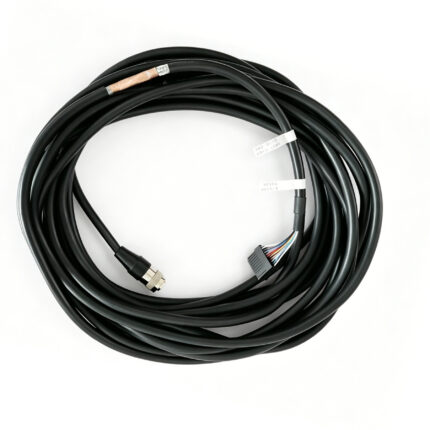
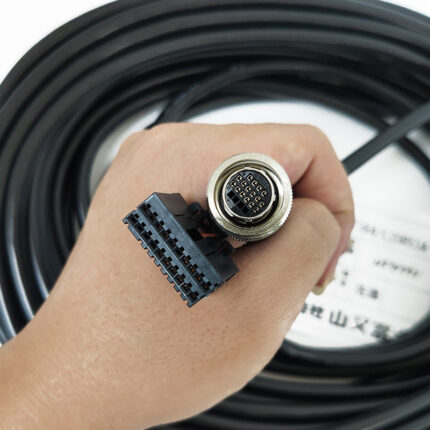
KUKA Robot Encoder Cable Compatible with 00-174-775
This kuka encoder 174775 cable is wired to the KUKA pin assignment for part 00-174-775, running encoder power and the data pair from the robot axis back to the controller. Six cores plus one pair under foil and braid, in a matte black PUR drag-chain jacket. A compatible replacement, not an OEM part.