D-Sub Screw Lock Cable, DB9 DB15 DB25 Serial and I/O Cordset
Last updated: 7 September 2026
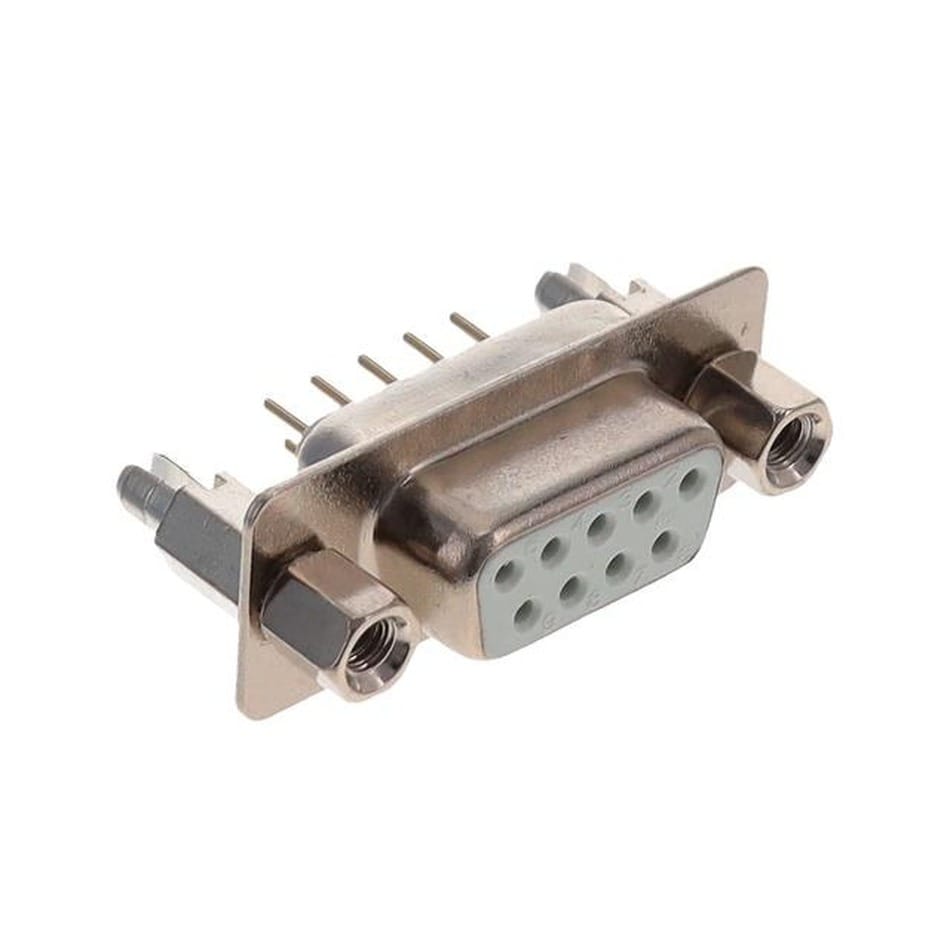
The D-Sub screw lock cable is a DB9 DB15 DB25 serial and I/O cordset.
The screw is the whole point
A plain D-Sub shell is held in by nothing but the friction of its stamped contacts. On a bench that is fine. In a CNC cabinet next to a spindle, on a valve manifold bolted to a press, or in a shipboard console that sees continuous low-frequency vibration, friction is not enough: the connector walks out over a period of weeks and you are left chasing an intermittent fault that never reproduces on the test bench. This d-sub screw lock cable uses shells with #4-40 UNC jackscrews that clamp the connector to the mating hood or panel so it cannot back off. The second failure mode is pull-out: a technician trips over a serial lead and drags a nine-pin plug out of a controller that is mid-batch.
Shell sizes and pin counts we build
- DB9 / DE-9 – the default for RS-232 ports and most serial device drops
- DB15 / DA-15 – legacy analogue I/O and some motion-control ports
- DB25 / DB-25 – parallel ports, older PLC and CNC I/O, telecom equipment
- High-density shells where a standard shell will not carry the pin count
- Standard and high density are not interchangeable – check the contact pitch first
Straight or right-angle, male or female
A right-angle shell takes the cable away along the panel instead of straight out of it, which is usually what you want in a shallow enclosure or a rack where the door still has to close. We mould straight and right-angle versions in both genders, and mixed builds – male at the controller, female at the device – are routine. The hood is moulded onto the cable, so the strain relief and the shell are one piece.
1:1 or crossed: the one thing you have to tell us
“DB9 to DB9” is not a finished order. A straight-through 1:1 lead carries every pin to the same pin at the other end. A crossed lead swaps the transmit and receive conductors so two data-terminal devices can talk to each other without an adapter in between. Null-modem and crossover patterns for nine-pin serial vary between vendors. Specify which you need, or send us a photograph of both connector faces.
Where these go
- RS-232 service and console ports on PLCs, drives and HMIs
- CNC operator panels and machine I/O breakouts
- Valve manifolds and pneumatic terminal blocks
- POS terminals, receipt printers and weigh scales
- Railway signaling cabinets and shipboard consoles
What to send us for a quote
- Shell size and pin count, and the gender at each end
- Straight or right-angle, and which way the right-angle must exit
- Pinout: 1:1, crossed, or a drawing you already have
- Length, and whether the run is inside a cabinet or across a machine
You May Also Need
Related Cable Ranges
Panel Mount Cable • Signal and Data Cables • Circular M8 M12 Cable
Frequently Asked Questions
What is D-Sub Screw Lock Cable used for?
RS-232 serial, PLC and CNC I/O, valve manifolds, POS, signaling.
Which connector family does D-Sub Screw Lock Cable use?
It uses D-Sub, standard and high density (IEC 60807 series).
What jacket material does D-Sub Screw Lock Cable use?
The jacket is PVC for cabinets, PUR for oil and coolant areas.
| Connector family | D-Sub, standard and high density (IEC 60807 series) |
|---|---|
| Shell sizes | DB9 / DE-9, DB15 / DA-15, DB25 / DB-25 |
| Retention | #4-40 UNC jackscrews in the shell – confirm against your panel |
| Gender | Male or female at either end, mixed builds available |
| Shell orientation | Straight or right-angle moulded hood |
| Pinout | 1:1 straight-through or crossed / null-modem – must be specified |
| Conductors | Multi-core signal, shielded option with drain |
| Jacket | PVC for cabinets, PUR for oil and coolant areas |
| Application | RS-232 serial, PLC and CNC I/O, valve manifolds, POS, signaling |
Related products
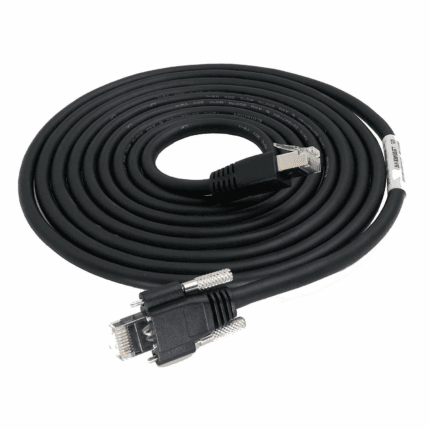
Cat6A RJ45 Screw-Lock GigE Vision Cable (S/FTP, High-Flex PUR, Drag Chain)