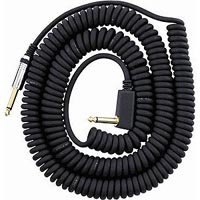
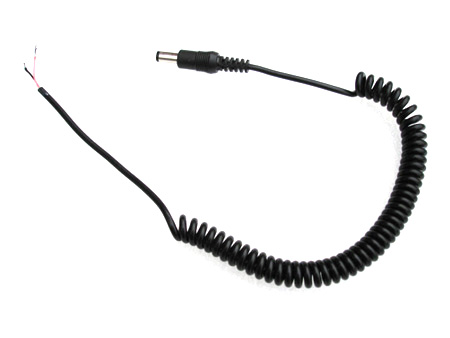
Coiled Retractable Cable for Instruments and Tools
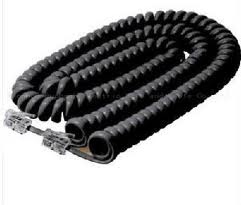
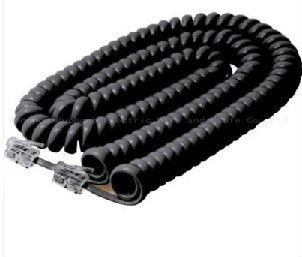
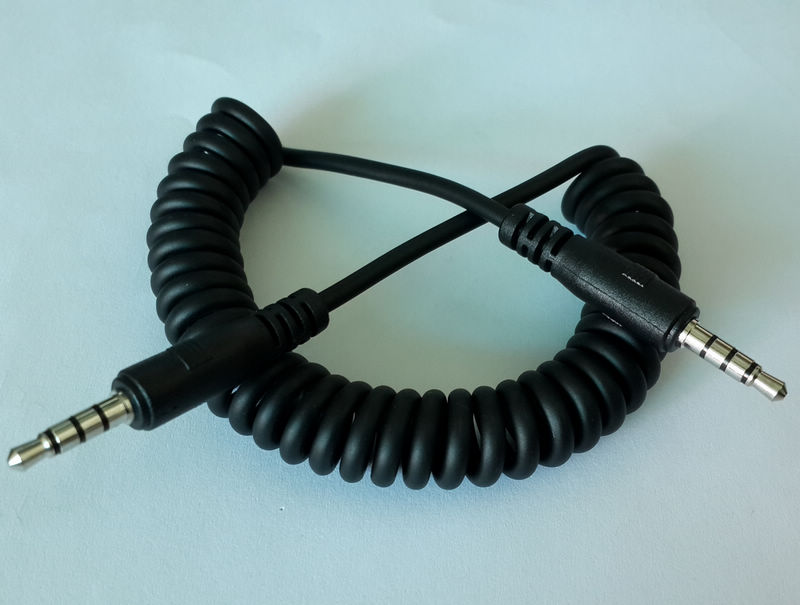
This coiled retractable cable is a curly cord for instruments, hand tools and small DC appliances, wound to a 1:5 to 1:10 stretch ratio with overmolded strain-relief boots. TRRS, DC barrel, USB or custom ends, 26 to 20 AWG, 0.5 m coiled to 5 m extended or OEM.
Overview
A curly cord solves a specific problem: the distance between two points changes constantly, and a straight cable either drags on the floor or has to be coiled by hand after every use. This coiled retractable cable is wound to a 1:5 to 1:10 stretch ratio, overmolded with a strain-relief boot at each end, and built with the connector you need at both ends – TRRS, DC barrel, USB or a custom plug. Typical use is an instrument to its amplifier, a tool to its power source, or a small DC appliance to its wall adapter.
Key Specifications
| Connector A | TRRS, DC barrel, USB or custom, overmolded |
|---|---|
| Connector B | TRRS, DC barrel, USB or custom, overmolded |
| Conductor | 26 AWG to 20 AWG stranded tinned copper |
| Conductor Count | 2 to 4, per the connector and the signal |
| Jacket | PVC or rubber, black, 3 mm to 5 mm OD |
| Coil Stretch Ratio | 1:5 to 1:10 |
| Pin-out | Straight-through by default; reverse or custom on request |
| Length | 0.5 m coiled to 5 m extended; OEM on request |
| Build standard | IPC/WHMA-A-620 Class 3 workmanship, ISO 9001 line |
| Testing | 100% continuity and pinout, hipot on the finished assembly |
What does the stretch ratio actually buy you?
The ratio is relaxed length against extended length. Pick it from the reach you need and the space you have, not from a catalog habit.
| Stretch ratio | Relaxed coil for 2.5 m of reach | How it feels | Where it suits |
|---|---|---|---|
| 1:5 | About 0.5 m of coil | Stiffer pull, coil stays tidy | Bench tools, short instrument leads |
| 1:8 | About 0.3 m of coil | Balanced | General purpose, handheld scanners |
| 1:10 | About 0.25 m of coil | Light pull, longer tail to manage | Stage and studio work, long reach from a fixed point |
| Custom | Stated per your drawing | Tuned to the duty | Where the relaxed length is fixed by the enclosure |
The arithmetic is simple and worth doing before you order: divide the reach you need by the ratio to get the relaxed coil length, then check that the coil fits where it has to sit. A ratio that is too high for the available space leaves a tail that trails on the floor, which is the thing the coil was meant to prevent.
Where does a coiled cord fail?
- Memory loss. Pull a coil past its working extension repeatedly and it stops retracting – this is the most common end of life, not a broken conductor.
- Kinking at the tangent point where the coil meets the straight tail. That corner takes every extension cycle.
- Conductor fatigue at the overmold exit, where the boot is rigid and the cable is not.
- Tangling when the coil is stored under tension or looped around the device.
- Jacket cracking on a rubber compound that has been left in sunlight or next to a heat source.
PVC or rubber jacket?
- PVC holds its coil shape well and is the default for indoor instruments, tools and appliances.
- Rubber is more supple at low temperature and handles being stepped on better – worth it for stage, studio and workshop use.
- Where the cord sits outdoors or in sunlight, tell us: neither compound is universally UV stable, and we will specify accordingly.
- Both are black as standard; other colors follow once you are past prototype quantity.
How many extension cycles should you plan for?
Cycle life on a retractable cord is a function of the ratio, the jacket and how far it is pulled, not a number a supplier can quote in isolation. Tell us the duty – extensions per day, the reach, and whether it lives outdoors – and we will build the coil and verify it to the figure stated on your drawing. Where a cord has to survive years of daily use, the usual answer is a lower stretch ratio and a heavier jacket rather than a thicker conductor.
What to specify on a coiled retractable cable
- The connectors at each end, and the pin-out if it is not straight-through.
- Reach when extended, and relaxed coil length – or tell us the ratio you want.
- Conductor count and gauge: 2 to 4 conductors, 26 AWG to 20 AWG.
- Jacket material and duty: indoor, workshop, stage, or outdoor.
- Cycle expectation, if this is a production build rather than a one-off.
Getting the connectors right on a coiled cord
A coil puts a standing load on both ends of the cord, which is why the connectors matter more here than on a straight lead of the same length.
- Overmolded ends, not field-terminated plugs: the boot is what takes the pull.
- A boot long enough to spread the bend, short enough not to fight the coil where it starts.
- Straight-through pin-out unless you have a reason not to – reversed coils are a common source of returns that are nobody’s fault.
- Tell us the plug orientation you need at each end; on a coil, an awkward angle is felt on every single extension.
- Where the cord mates with a panel or an instrument, check the depth of the receptacle: a chunky overmold can foul a recessed socket.
How the assembly is built and checked
Coiled Retractable builds are made to IPC/WHMA-A-620 Class 3 workmanship inside an ISO 9001 system, over a 32 to 12 AWG range. continuity and pinout are verified on each Coiled assembly before packing, and seal checking is quoted whenever an ingress rating is on the drawing.
Lead time and ordering
For Coiled Retractable builds, prototypes run from 1 to 50 pcs with a 3 working day turnaround. Volume orders begin at 500 pcs and ship 14 working days after approval. Tooling not already held adds around 10 working days. OEM and ODM Coiled work ships under your part number and labeling, and material certificates and first-article reports are on offer.
Related builds
- Coiled telephone handset cable 4P4C / 6P6C
- Barcode scanner cable with coiled cord
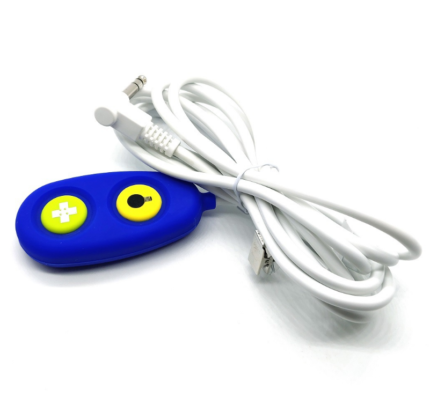
- Nurse call 2-key button cable with silicone coil
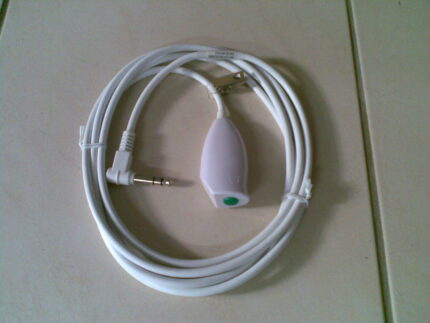
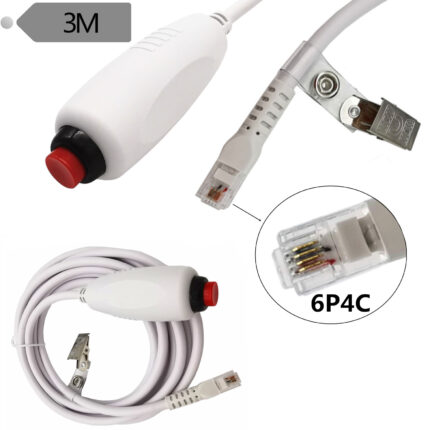
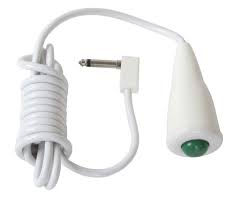
- Nurse call bedside cable with sealed call button
- Cat5e UTP retractable patch cord
- Plantronics headset bottom cable with QD housing
Full range: signal and data cable assemblies.
Material declarations against RoHS and REACH are issued per project, alongside the dimensional and electrical reports agreed at quotation; see certifications, compliance and material declarations. Where your drawing names a UL style or another approval, the build follows your drawing and ships with the supporting document rather than a claim of our own. Where this build needs an overmold, the tool is designed, cut and maintained in our own shop under overmold tooling cut in our own tool room, and it is never used for another customer’s program. Related reading: what instrument builds require.
Frequently Asked Questions
How long will the cord be when it is relaxed?
Divide the reach by the ratio. For 2.5 m of reach at 1:5 you get roughly a 0.5 m coil; at 1:10, roughly 0.25 m.
Can I have different connectors on the two ends?
Yes. TRRS, DC barrel, USB and custom plugs can be mixed, and the pin-out can be straight-through or reversed.
Why has my coil stopped retracting?
Almost always because it was pulled past its working extension repeatedly. Specify a lower ratio or a longer relaxed coil for that duty.
Is the coil part of the cable or a separate sleeve?
The cable itself is wound and heat-set into the coil, then overmolded at each end. There is no sleeve to slide or lose.
| Connector A | TRRS, DC barrel, USB or custom, overmolded |
|---|---|
| Connector B | TRRS, DC barrel, USB or custom, overmolded |
| Conductor | 26 AWG to 20 AWG stranded tinned copper |
| Jacket | PVC or rubber, black, 3 mm to 5 mm OD |
| Coil Stretch Ratio | 1:5 to 1:10 |
| Length | 0.5 m coiled to 5 m extended; OEM on request |
| Conductor Count | 2 to 4, per the connector and the signal |
| Pin-out | Straight-through by default; reverse or custom on request |
| Build standard | IPC/WHMA-A-620 Class 3 workmanship, ISO 9001 line |
| Testing | 100% continuity and pinout, hipot on the finished assembly |