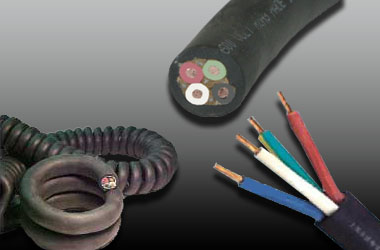

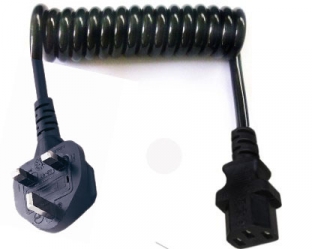
SJOW Coiled Power Cord 18-3 / 16-3
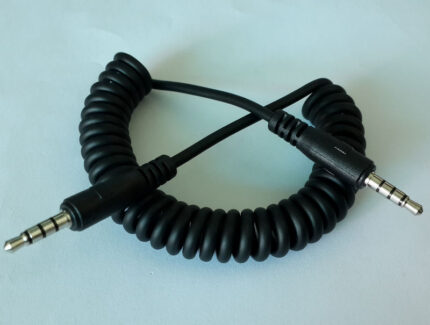
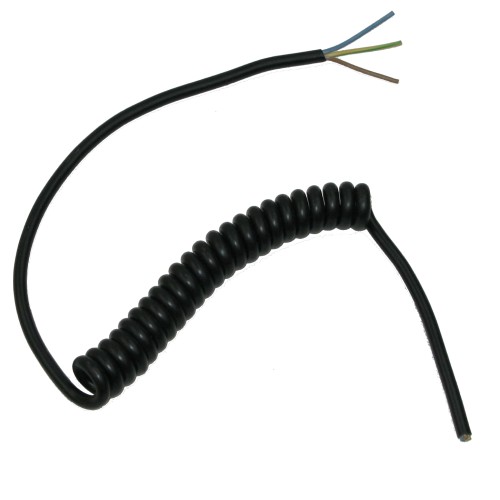
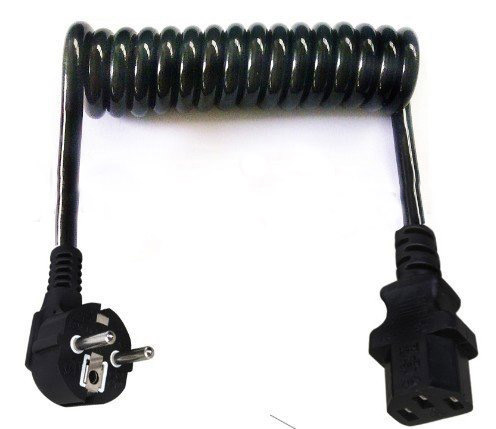
This coiled sjow cord is a 300 V junior hard-service cord with an oil-resistant jacket, three conductors at 18 AWG or 16 AWG, wound into a 1:4 to 1:5 retractable coil. Molded plug and connector ends, or flying leads, built to your lengths for workshop and light industrial drops.
Overview
A coiled sjow cord is the retractable power lead that keeps a workshop drop off the floor. SJOW is the junior hard-service cord: a 300 V construction with an oil-resistant thermoplastic jacket, three conductors at 18 AWG or 16 AWG, in this case wound into a coil with a 1:4 to 1:5 stretch ratio. It is supplied with molded plug and connector ends, or with flying leads and your specified terminals. Standard relaxed length is 0.5 m extending to 3 m; the plug and receptacle type is named at order.
Key Specifications
| Cable Type | SJOW 18-3 or 16-3, 300 V |
|---|---|
| Conductor | Bare copper, 18 AWG or 16 AWG |
| Jacket | Thermoplastic, oil-resistant, black |
| Coil Stretch Ratio | 1:4 to 1:5 |
| Rated Current | 10 A at 125 V (18-3) / 13 A at 125 V (16-3) |
| Rated Voltage | 300 V |
| Length | 0.5 m coiled to 3 m extended; OEM on request |
| Ends | Molded plug and connector, or flying leads per your drawing |
What the coil ratio costs you on a coiled sjow cord
A coil is a compromise you choose deliberately. Every extra meter of reach means more conductor, more resistance and more voltage drop, and it means a heavier, longer relaxed assembly hanging where you were trying to save space. A 1:4 ratio is the conservative choice – shorter relaxed length, less cord to tangle, and a coil that keeps retracting because it is worked less. A 1:5 ratio buys reach for the same relaxed length, and it is the right call when the tool genuinely has to travel. Stretching beyond the specified extended length is what kills these: the coil takes a set, stops retracting, and ends up on the floor anyway.
| Ratio | Relaxed to extended | Suits | Watch out for |
|---|---|---|---|
| 1:4 | 0.5 m to 2 m | Bench tools, fixed workstations | Not enough reach on a big assembly area |
| 1:5 | 0.5 m to 3 m | Workshop drops, hand tools on a bench run | Do not stretch past 3 m |
| Custom | Per your lengths | Vehicle bays, long retractable drops | More conductor means more voltage drop |
18-3 or 16-3: sizing the conductors
The two standard builds are 18 AWG at 10 A and 16 AWG at 13 A, both at 125 V, and the choice is usually made by the tool rather than by the cord. A bench drill or a small vacuum will live on 18-3. A compressor or a heater will not, and the cord is not the place to save money – an undersized conductor in a coiled assembly runs warmer than the same conductor in a straight one, because the coil holds the heat in. If the load is anywhere near the top of the range, go up a size and tell us the run length so the voltage drop can be checked.
What the letters in SJOW mean
They are not decoration. S means service cord, J is the junior 300 V class, O is an oil-resistant jacket, and W is the weather and water rating – which is what makes this the right family for a workshop or a covered outdoor drop rather than an indoor-only cord. The oil resistance matters more than people expect: a cord that lives in a shop picks up cutting fluid and hydraulic oil, and a jacket that is not rated for it will soften, crack and eventually expose the conductors. We build to the type you specify and verify the assembly against your drawing.
Where a retractable cord is the wrong answer
Three places. On a continuous high-draw load, because the coil is a thermal penalty. On a floor where people walk, because a coil lying relaxed is a trip hazard no matter how tidy it looked on the drawing. And on anything mobile that genuinely travels – a cart, a vehicle – where a retractable reel at the fixed end and a straight cord on the tool is the safer design. A coiled cord solves “this drop is always in the way” and it does not solve “this tool needs to move”.
Name the plug and receptacle at order
This is the most common cause of a wrong delivery on a power cord, because the cord is the same and the ends are not. Tell us the standard: NEMA for North America, Schuko for much of Europe, BS1363 for the UK, or the industrial connector you actually use. If the cord is going onto equipment you ship, the final regulatory clearance rests with the host equipment, so the plug type and the approvals your market needs have to be settled before we build rather than after.
| Market | Plug family | Note |
|---|---|---|
| North America | NEMA | Confirm 125 V or 250 V and the configuration |
| Much of Europe | Schuko | Confirm the earthing arrangement |
| United Kingdom | BS1363 | Fused plug; confirm the fuse rating |
| Industrial | Your specified connector | Send the part number or a photo |
Typical applications for this coiled sjow cord
- Workshop and light industrial retractable power drops
- Trailer and caravan retractable power leads
- Garage and workshop vacuum, drill and hand tool leads
- Assembly benches where a straight cord is always in the way
- Replacement cord for an existing retractable drop
How to specify your build
- Conductor size – 18-3 or 16-3 – from the load.
- Relaxed and extended length, and the ratio that gets you there.
- Plug and receptacle type, by market standard.
- Ends – molded, or flying leads with your terminals.
- Jacket color and label print.
- Quantity, and whether this is a sample or a production order.
Workmanship and testing
SJOW Coiled Power Cord builds are assembled and inspected to IPC/WHMA-A-620 Class 3 criteria, with ISO 9001 as the quality system over 32 to 12 AWG work. continuity and pinout are verified on each SJOW assembly before packing, and seal checking is quoted whenever an ingress rating is on the drawing.
Every production run can ship with RoHS and REACH declarations and the electrical report agreed at quotation; see certifications and material declarations. UL styles and other named approvals are built to drawing: we source to the style you specify and document it, rather than asserting a listing we do not hold. This assembly is built on the four lines covered under our assembly lines in Longgang, with nothing in the build handed to an undisclosed subcontractor. The wider context is covered under what instrument builds require. Tooling is quoted separately, cut in-house rather than brokered out, and owned by you.
Custom builds and ordering
SJOW Coiled Power Cord prototype builds start from 1 to 50 pcs and are out in 3 working days. Production is quoted from 500 pcs at 14 working days after sample approval. Your part number and labeling go on OEM and ODM SJOW shipments, and material certificates and first-article reports are available on request. We hold 100 sets of mold tooling in house, so a standard body needs no tooling time and a new one adds about 10 working days.
Related coiled and power assemblies
- Coiled Retractable Cable for Instruments and Test Leads
- Cat5e UTP Retractable Patch Cord
- BESS Battery Wiring Harness Built to Drawing
- Energy Storage Cabinet Wiring Harness
- MIL-DTL-22992 Power Cable Assembly
- EV High Voltage Harness Built to Print
Full range: signal and data cable assemblies.
Frequently Asked Questions
Which do I need, 18-3 or 16-3?
18-3 is rated 10 A at 125 V and 16-3 is 13 A at 125 V. Size it to the tool, and go up if the load is near the top of the range.
Can I get a longer extended length?
Yes, within reason. More conductor means more voltage drop, so tell us the load and the length and we will check it before quoting.
Do you supply the plugs?
Yes. Name the standard – NEMA, Schuko, BS1363 – or send the connector part number.
Will the coil keep retracting?
The coil is tested for 50,000 stretch cycles as a minimum. Staying inside the stated extended length is what determines real service life.
| Cable Type | SJOW 18-3 or 16-3, 300 V |
|---|---|
| Conductor | Bare copper, 18 AWG or 16 AWG |
| Jacket | Thermoplastic, oil-resistant, black |
| Coil Stretch Ratio | 1:4 to 1:5 |
| Rated Current | 10 A at 125 V (18-3) / 13 A at 125 V (16-3) |
| Rated Voltage | 300 V |
| Length | 0.5 m coiled to 3 m extended; OEM on request |