
Built to order · 31 assemblies
Automotive Wire Harnesses and Cables
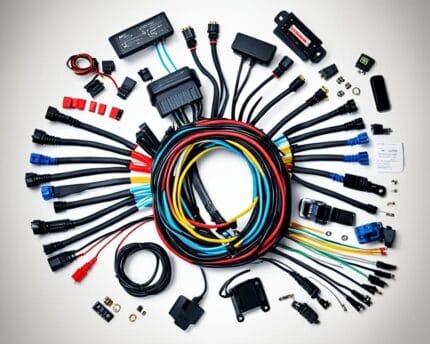
Vehicle and heavy-equipment wiring built for OBD2 16-pin, J1939 9-pin and sealed DT connectors, including eBike battery leads with XT60 / XT90-S / SB50, EV charging adapters and trailer ABS harnesses. Circuit count, wire gauge and jacket are set per order.
- Diagnostic
- OBD2 16-pin · J1939 9-pin
- Heavy duty
- J560 trailer ABS · DT06
- Power
- XT60 · XT90-S · SB50
- EV charging
- Type 2 · NACS · V2L
- Sealing
- IP67 – IP69K mated
- Temperature
- −40 °C to +125 °C
- Jacket
- PVC · PUR · silicone
- Length
- 0.3 m – 10 m
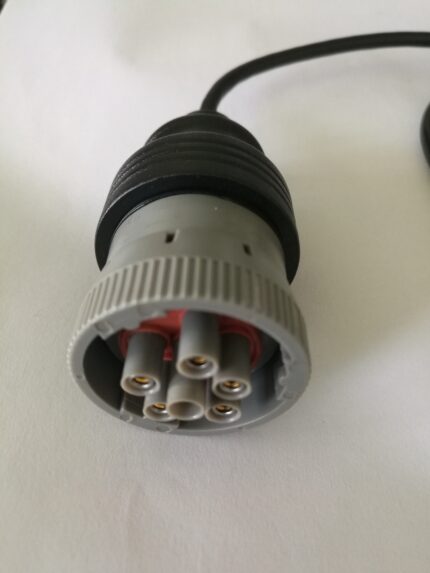
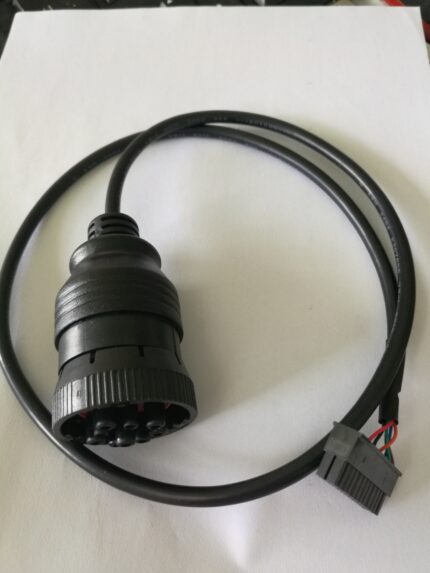
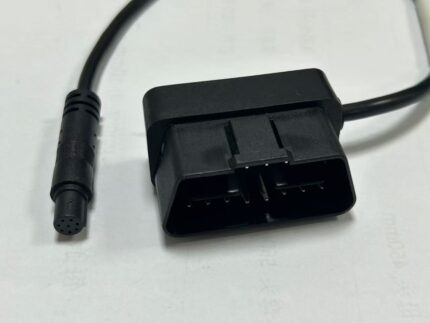
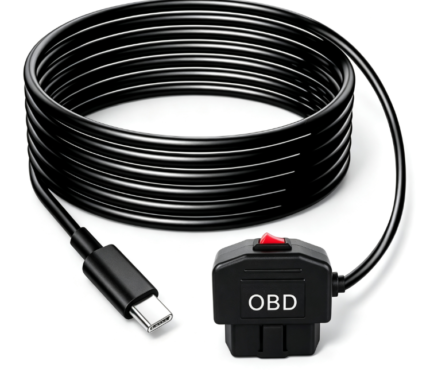
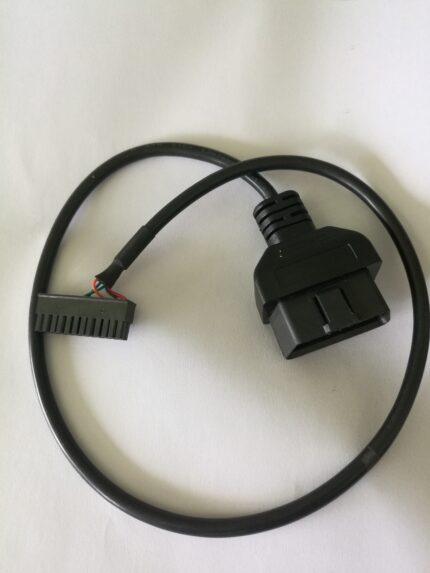
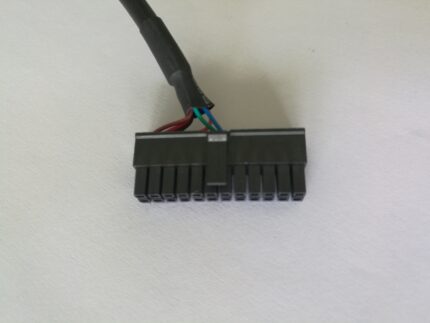
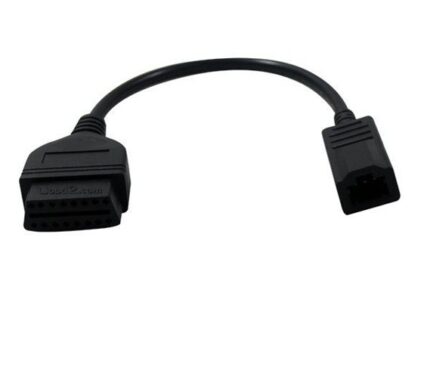
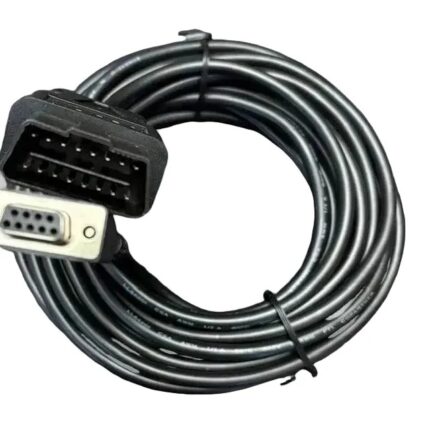
Heavy-Duty 9-Pin Industrial Diagnostic Cable Assembly
A heavy duty 9 pin cable with a 9-pin round industrial plug and a 14-pin 2x7 DIP bare end, for engine management diagnostics on trucks, marine diesel and heavy equipment benches. Verify the pinout against your service manual, since 9-pin assignments follow the engine maker rather than one specification.
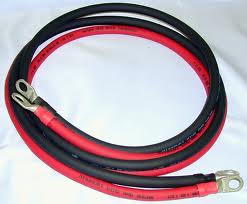
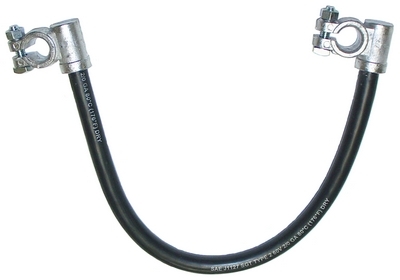
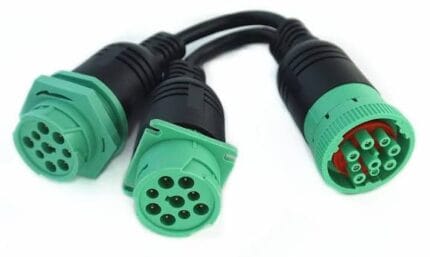
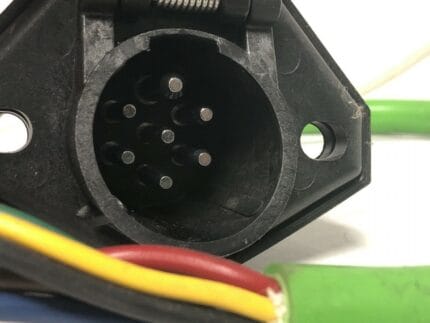
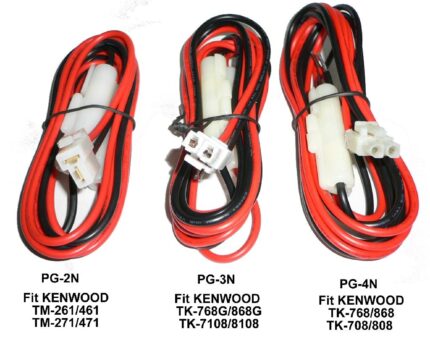
Specification table
Vehicle and off-highway cabling lives with heat, vibration, fuel vapor and road salt at the same time. Every assembly here is specified from the temperature zone it occupies first, then the connector family the vehicle platform uses, then the bend and routing constraints.
| Parameter | Standard build | Available on request |
|---|---|---|
| Diagnostic interfaces | OBD2 16-pin (J1962) and J1939 9-pin | Heavy-duty 6 and 9 pin variants |
| Heavy duty | J560 trailer ABS spirals | DT06-2S / DT series Deutsch connectors |
| Power connectors | XT60, XT90-S, SB50 Anderson | Ring terminals, sealed metri-pack style |
| EV charging | Type 2 and NACS leads | V2L discharge leads with stated current rating |
| Temperature class | −40 °C to +125 °C standard | 150 °C and 200 °C per ISO 6722 classes |
| Jacket | PVC per ISO 6722 thin-wall | PUR for abrasion zones, silicone for engine bay heat |
| Sealing | IP67 to IP69K mated | Sealed boots and cavity plugs |
| Abrasion protection | Braided sleeve, tape wrap | Convoluted conduit, heat-shield sleeves |
| Validation | Continuity and pull testing | Salt spray, thermal cycling, vibration to your specification |
| Documentation | Wire run lists and termination schedules | PPAP-style documentation packages |
Wire may have to meet ISO 6722 temperature classes; heavy-duty diagnostic networks follow SAE J1939 and CAN in Automation specifications.
Typical applications
- Diagnostics and telematics OBD2 and J1939 leads that stay plugged into vibrating harness taps.
- Trucks and buses J560 trailer ABS coils and heavy-duty diagnostic branches.
- Agricultural and construction Sealed leads through chassis grommets into the cab.
- EV conversion and auxiliaries Insulation-monitored high-voltage branches.
- Camera and ADAS retrofit Coaxial camera extensions with marine-grade sealing.
Related reading
- Automotive Wire Harness SelectionISO 6722 temperature classes, gauge tables and the de-rating that applies inside a hot harness.
- Oil Resistant Cable Material SelectionThermal aging and Arrhenius test data behind oil-resistant jackets, read for real duty cycles.
- CCA vs Copper CableResistance, heat and crimp reliability compared, and how to spot copper-clad aluminum.
Questions buyers ask
Which temperature class do I need?
It depends on where the wire sits, not on the vehicle. Anything in an engine bay or near an exhaust shield needs a higher ISO 6722 class than the same gauge inside the cabin. Our automotive harness selection guide maps the classes to real locations.
OBD2 or J1939?
Light vehicles use OBD2 (J1962); heavy-duty diesel uses J1939, with the connector and baud rate set by the platform. We build both plus adapter leads between them, and we confirm the connector keying before production.
Do you use copper or copper-clad aluminum?
Copper for harness work. CCA saves cost on long static runs but brings higher resistance and poorer flex life; the numbers are in our comparison of CCA versus copper.
Have one built to your drawing
Send the connector part numbers, lengths and environment. We review manufacturability in writing before any tooling spend, and we tell you up front what we cannot do.