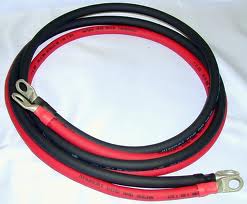
Heavy-Duty Battery Power Cable with Ring Terminals
A battery power ring terminals cable in matched red and black pairs, 16 mm2 to 25 mm2 tinned copper, crimped and heat-shrunk at each end. For linking starter and leisure batteries, and for winch, inverter and solar bank feeds.
Overview
A battery power ring terminals cable is the permanent answer where an installation kit is the temporary one. This is a matched red and black pair in tinned copper, 16 mm2 to 25 mm2, with ring lugs crimped and sealed at each end. It links a starter battery to a leisure battery, feeds a winch or an inverter, or takes a solar bank into a distribution point. The two decisions that matter are the cross section and the termination: get either wrong and the lead becomes the warmest component in the circuit.
Key Specifications
| Cable Type | Battery Power Cable |
|---|---|
| Conductor | Tinned Copper |
| Cross Section | 16 mm2 to 25 mm2 |
| Terminal Type | Ring Lug |
| Conductor form | Stranded, red and black matched pair |
| Termination | Crimped and sealed with heat shrink over the barrel |
| Length | Stated per your drawing |
| Testing | 100% continuity check before packing |
Why tinned copper, and where it earns its cost
Tinning a stranded conductor is not decoration. Each strand is coated so that moisture, salt and battery acid fumes cannot start corrosion that creeps up inside the insulation, out of sight, until the lead measures high resistance and the crimp runs hot. In a dry passenger cabin bare copper will last for years. In a bilge, an engine bay, a battery box or anywhere a flooded battery vents, tinned strands are the difference between a lead that ages and a lead that fails. Marine installers commonly specify tinned stranded conductors for this reason; confirm against the standard your vessel is surveyed to.
Choose the cross section from current and length, not from the stud
A ring lug will fit a 6 mm stud whether the conductor is 16 mm2 or 50 mm2, which is why the stud size tells you nothing about the right cable. Use the current and the round trip instead, and if you work in AWG rather than square millimeters, convert by cross-sectional area rather than by the number you remember from a catalog page.
| Cross section | Approximate AWG by area | Resistance per meter at 20 C | Typical use |
|---|---|---|---|
| 16 mm2 | Between 6 and 5 AWG | 1.21 mOhm | Auxiliary batteries, moderate loads over short runs |
| 25 mm2 | About 4 AWG | 0.78 mOhm | Leisure battery links, inverters, and the default for this build |
| 35 mm2 | About 2 AWG | 0.55 mOhm | Winches and long runs to a starter solenoid |
| 50 mm2 | About 1/0 AWG | 0.39 mOhm | High cranking current over a long run |
The drop is current multiplied by the resistance of the round trip, which is twice the one-way length. A 3 m run at 100 A on 25 mm2 loses about 0.47 V; the same run on 16 mm2 loses about 0.73 V. Whether that is acceptable depends on the circuit, and it is your call to make on the drawing rather than ours to guess.
The ring terminal is the weak link, not the cable
Almost every returned power lead has failed at a termination rather than in the middle of a run. Three things decide whether the joint lasts: the barrel has to match the cross section, the crimp has to be made on a die that compresses the whole barrel rather than flattening it with pliers, and the entry has to be sealed so moisture cannot sit against the copper.
- Stud size – M6, M8 and M10 are the common ones; measure rather than assume, and check the lug tongue width clears the surrounding hardware.
- Barrel and crimp – one crimp per barrel on the correct die, then a pull test.
- Sealing – adhesive-lined heat shrink over the barrel and up onto the jacket.
- Torque – tighten to the value in the equipment manual. An unterminated ring lug on a painted or corroded stud is a heater, not a connection.
- Support – clamp the lead so its weight never hangs off the lug.
Matched pairs, and why both leads are the same length
Order the positive and negative runs as a pair, at the same cross section and the same length. Mixing sizes puts more resistance in one leg than the other, and it is the kind of shortcut that produces a voltage at the load that is lower than either calculation predicted. It also makes the job look unfinished, which matters when a customer or an inspector is going to see it.
How to specify your build
- Current and duty – cranking, continuous, or intermittent winch duty.
- One-way length of the run, and the acceptable drop for the circuit.
- Stud size at each end, and the lug tongue orientation you need.
- Environment – engine bay, bilge, battery box or cabin.
- Quantity, and whether you want them bagged as pairs under your part number.
Typical applications for this battery power ring terminals cable
- Linking a starter battery to a leisure battery in a camper or a service vehicle
- Feeding an inverter or a compressor, alongside insulated terminal clamps at the temporary end
- Winch and recovery vehicle supply, paired with a heavy-duty ring terminal battery lead
- Solar and off-grid battery banks, next to a BESS battery wiring harness
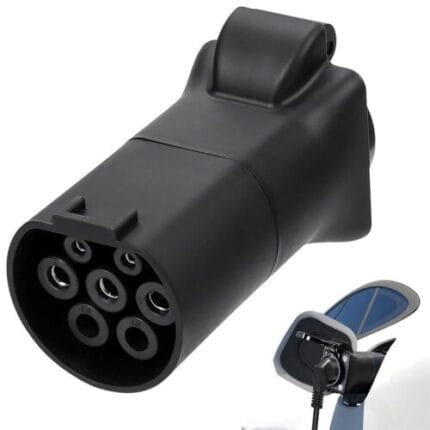
- Marine and bilge installations, with a Type2 to NACS adapter in the shore power chain
Workmanship and testing
Workmanship on Heavy-Duty Battery Power builds follows IPC/WHMA-A-620 Class 3, the line is run under ISO 9001, and the termination range is 32 to 12 AWG. No Heavy-Duty assembly is boxed before 100% continuity and pinout are confirmed, and seal checking is quoted whenever an ingress rating is on the drawing.
RoHS and REACH declarations are provided per project together with the agreed test reports; the documentation scope is listed under certifications and compliance. If your drawing specifies a UL style, we build to that drawing and supply the UL reference with the shipment instead of substituting an equivalent. Overmold material is selected for how it bonds to the jacket, following the method set out under overmolding and injection molding. More background: what changes on vehicle harness builds. Any tooling we cut for this part stays yours, maintained in our own tool room under your part reference.
Custom builds and ordering
Quote Heavy-Duty Battery Power builds from 1 to 50 pcs and they ship in 3 working days; at volume the minimum is 500 pcs with 14 working days after sample sign-off. Tooling not already held adds around 10 working days. Your part number and labeling go on Heavy-Duty shipments, and material certificates and first-article reports come with them on request.
Related power leads and harnesses
- Heavy-Duty Ring Terminal Battery Lead Cable
- Battery Jumper Lead with Insulated Terminal Clamps
- E-Bike Battery Harness with Discharge and Charge Leads
- Type2 to NACS Adapter for Single-Phase AC Charging
- BESS Battery Wiring Harness for Energy Storage Racks
Full ranges: automotive cable and wire harness and custom wire harnesses.
Frequently Asked Questions
Is 16 mm2 enough for my winch?
It depends on the current and the run. Work out the drop across twice the one-way length and see what is left at the load; winch duty is usually the case where people move up to 35 mm2.
Why tinned copper rather than bare?
Corrosion creeps up inside the insulation where you cannot see it. Tinned strands resist the moisture, salt and acid fumes that shorten a bare copper lead in an engine bay or a bilge.
What stud sizes do you supply lugs for?
M6, M8 and M10 as standard, and others to order. Measure the stud and check the tongue clears the surrounding hardware.
Can I order non-matching lengths for the positive and negative?
You can, but we advise against it. Matched cross section and matched length keep the circuit predictable and the installation tidy.
| Cable Type | Battery Power Cable |
|---|---|
| Conductor | Tinned Copper |
| Cross Section | 16 mm2 to 25 mm2 |
| Terminal Type | Ring Lug |
| Conductor form | Stranded, red and black matched pair |
| Termination | Crimped and sealed with heat shrink over the barrel |
| Length | Stated per your drawing |
| Testing | 100% continuity check before packing |