eBike Battery Harness with XT60, XT90-S or SB50 Plug
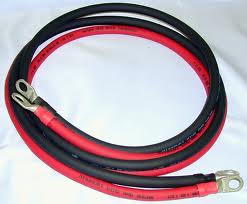
An ebike battery harness is the short heavy-gauge lead between a pack and a controller, charger or distribution point. XT60, XT90-S or SB50 on the battery side, tinned leads or ring terminals on the other, 10-14 AWG silicone.
Last updated: 13 September 2026
Overview
An ebike battery harness is the short, heavy-gauge lead between a pack and a controller, a charger or a distribution point. The pack side carries the connector the battery already has; the equipment side ends in tinned flying leads or crimped ring terminals. Builds cover battery-to-controller conversion, pack extension, charger pigtails, and the replacement leads that repair shops get through steadily. It is a simple part to draw and an easy one to get wrong, because the failure modes are all thermal or mechanical rather than electrical.
Key Specifications
| Battery-side connector | XT60, XT90 / XT90-S anti-spark, or SB50-type housing (compatible parts) |
|---|---|
| Equipment end | Tinned bare leads or crimped ring terminals |
| Conductor size | 10-14 AWG high-strand silicone; 8 AWG for high-power builds |
| Cable length | 150-600 mm, red and black pair |
| Protection option | Inline fuse holder, 30 A or 50 A, to order |
| Jacket material | High-strand flexible silicone insulation |
| Options | Sealed Higo-type connector, custom phase colors, printed markings |
Connector options, and what each one is chosen for
| Connector | Why it gets chosen | Note |
|---|---|---|
| XT60 | Common on mid-power packs and chargers | Compact, widely stocked, easy to service |
| XT90 / XT90-S | Higher power packs; the S variant adds an anti-spark path | Anti-spark matters where the pack is connected often |
| SB50-type housing | Two-pole format used on larger packs and service connectors, built to the Anderson Powerpole format | Polarized housing, replaceable contacts |
| Sealed Higo-type | OEM builds where the harness runs outside the frame | Sealed against spray and wash |
Connector names above belong to their respective owners. These harnesses are built with compatible components and are not supplied by those brands. Current figures published for each connector family are the maker values; the rating your assembly is built and verified to is the one on your drawing.
Sizing the lead
| Conductor | Typical use | Note |
|---|---|---|
| 14 AWG | Lower power city and folding bikes, short runs | Most flexible of the range |
| 12 AWG | General e-bike and cargo builds | The usual default |
| 10 AWG | Higher current controllers and longer runs | Stiffer, needs a larger bend radius |
| 8 AWG | High power drives | At this size the crimp and the connector usually become the limiting parts, not the cable |
Gauge follows the controller current and the length of the run, and we size it with you against your drawing rather than against a rule of thumb. High-strand silicone insulation is the default because it stays flexible in cold weather and takes the vibration a frame transmits. Red and black pairs are standard; other jacket colors are available where a build identifies phases or carries a separate sense lead.
Why the original lead fails
| Failure | Where it starts | What prevents it |
|---|---|---|
| Cracked crimp at the connector | Vibration carried by the crimp rather than the cable | Strain relief on the cable, support at both ends |
| Heat at the connector face | Contact resistance from a worn or undersized contact | Correct contact size, pull-test every termination |
| Chafe through the jacket | Frame pivots, chain line, brake rotor | Route away from moving parts, use frame grommets |
| Green corrosion up the strands | Water tracking in behind the boot | Adhesive-lined heat shrink, sealed connectors outside the frame |
Installation
- Fit an inline fuse or a breaker as close to the battery terminal as you can, sized to the controller rather than to the wire alone. A 30 A or 50 A holder is the usual choice.
- Keep the run short and route it away from the motor casing, brake rotor, chain line and any folding or suspension pivot, using the frame grommets where they exist.
- Support the harness at both ends so vibration is not carried by the crimp.
- Terminate with a proper hexagonal crimp, pull-test every termination, and insulate the joint with adhesive-lined heat shrink.
- Check polarity with a meter before the pack is connected for the first time. Guessing here is expensive.
Typical applications for this ebike battery harness
- Battery-to-controller conversion leads and pack extensions
- Charger pigtails and service leads for repair shops, alongside our DC plug XT60 cable with Anderson SB50 option
- Replacement harnesses for cargo, folding and fat-tire builds
- Dual-battery and range-extender installs where two packs feed one controller
- Test rigs and burn-in stands, paired with our heavy-duty ring terminal battery lead cable
Ordering notes
- Length from 150 mm to 600 mm, measured overall.
- Connector combination on each end.
- Whether an inline fuse holder is needed, and its current rating.
- Whether the sealed OEM version is required for an external run.
- Polarity convention, and any color or marking requirement.
The prototype minimum is 5 pcs, out in 3 working days. Production starts at 500 pcs and ships 14 working days from approval. Tooling for a body we do not stock adds about 10 working days. Your part number, your label, your packaging – with material certificates and first-article reports on request.
Workmanship and testing
Workmanship follows IPC/WHMA-A-620 Class 3 and the line runs under ISO 9001. Conductors from 32 to 12 AWG are in range. Continuity and pinout are verified on 100% of units before packing; if you specify an ingress rating, seal checking on the batch can be quoted.
Related battery and power leads
- DC plug XT60 cable, 5.5×2.1 mm with Anderson SB50 option
- Heavy-duty ring terminal battery lead cable
- Battery jumper lead with insulated terminal clamps
- Battery cable installation kit with terminal clamps and lugs
- BESS battery wiring harness built to drawing
Full range: automotive cable and wire harness assemblies and DC plug power cable.
Frequently Asked Questions
Can I mix XT60 on one end and SB50 on the other?
Yes. The two ends are specified independently, and mixed builds are common on conversion and service leads.
Do I need the anti-spark XT90-S?
Choose it when the pack is connected and disconnected often. The spark on a plain connector erodes the contacts over time.
What size fuse holder should I order?
Size it to the controller, not to the cable. A 30 A or 50 A holder covers most builds; tell us the controller rating and we will match it.
Do you supply the connectors you name?
We build with compatible components. Those names belong to their respective owners and we are not supplied by those brands.
| Battery-side connector | XT60, XT90 / XT90-S anti-spark, or SB50-type housing (compatible parts) |
|---|---|
| Equipment end | Tinned bare leads or crimped ring terminals |
| Conductor size | 10-14 AWG high-strand silicone; 8 AWG for high-power builds |
| Cable length | 150-600 mm, red and black pair |
| Protection option | Inline fuse holder, 30 A or 50 A, to order |
| Jacket material | High-strand flexible silicone insulation |
| Options | Sealed Higo-type connector, custom phase colors, printed markings |