Nurse Call Bedside Cable with Sealed Call Button, USB-C or RJ45
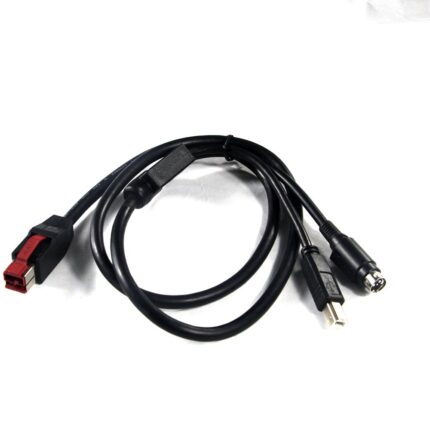
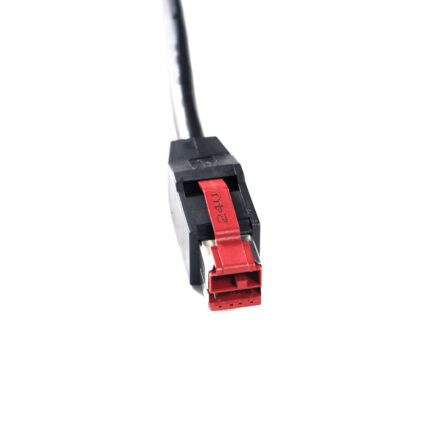
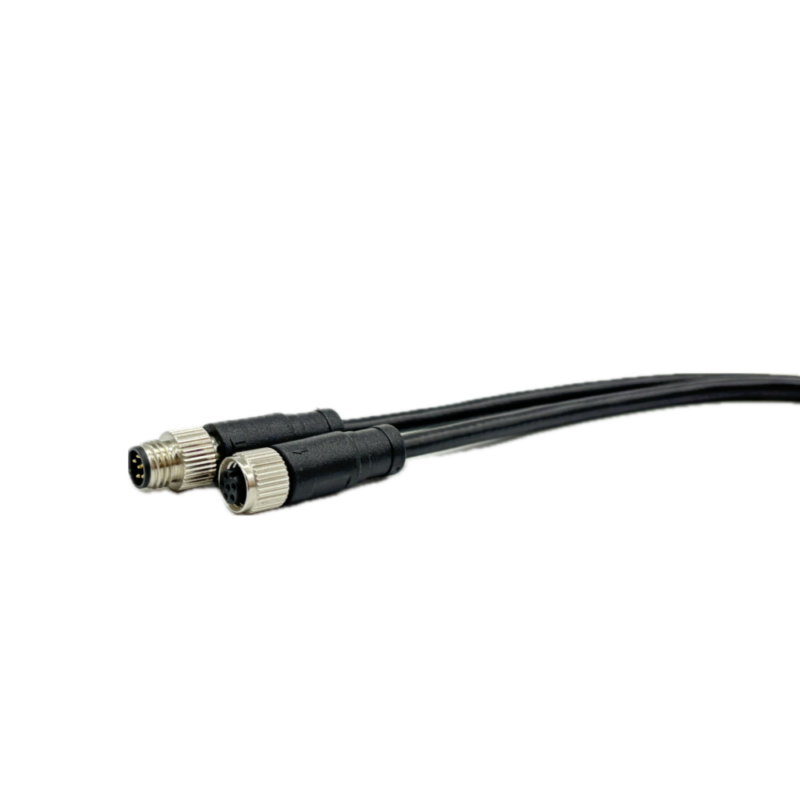
A nurse call bedside cable with a sealed call button at the patient end and USB-C or RJ45 at the host end. TPU jacket selected for repeated wipe-down, load path through the molding, 1 m to 5 m with an optional coiled section. Send a photo of the outlet and we match it.
Last updated: 13 September 2026
Overview
A nurse call bedside cable lives the hardest life of any lead in a ward. It gets wiped down several times a shift with alcohol based agents, it gets pulled by patients and caught in bed rails, and it is expected to work first time, every time, for years. This range covers the retrofit path from the old 6P4C handset leads to sealed call points that connect over structured cabling or over USB, and it is built for the cleaning regime rather than for the catalog.
Key Specifications
| Product type | Nurse call bedside lead with sealed call button |
|---|---|
| Host end | USB-C or RJ45, straight or right angle |
| Patient end | Sealed push button unit, IP65 target – to be confirmed |
| Jacket material | TPU, selected for cleaning agent exposure |
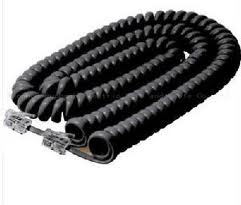
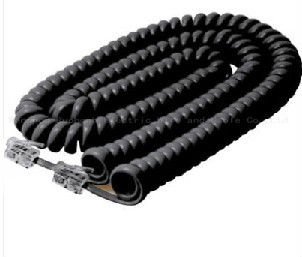
| Optional section | Coiled section for bedside reach |
| Length range | 1 m to 5 m |
| Pull resistance | Load path through the molding – force figure to be confirmed |
| Labeling | Ward and bed tag printing available |
| Compatibility | Interconnect only, not a medical device or certified accessory |
What kills a bedside lead
Replacement programs usually start because the existing leads fail in one of four predictable ways. Each one has a design answer, and the answer is cheap at design stage and expensive afterwards:
| Stress in service | Observed failure | Design answer |
|---|---|---|
| Repeated wipe-down | Jacket crazes and stiffens, then splits at the strain relief | TPU compound selected for cleaning agent contact |
| Patient pull on the lead | Terminations take the load and the link goes intermittent | Load path carried by the molding, not by the solder joints |
| Fluid at the call button | Moisture into the switch housing, false calls or no call | Sealed molded housing with the sealing level quoted per build |
| Bed rail and trolley crush | Conductor break at the plug exit | Right-angle host end and a coiled section that retracts |
Sealing at the button end
The sealing level of the button end is quoted at IP65 in the source material and is treated here as a target until an ingress test report is in hand. IP ratings are defined by IEC 60529: the first digit covers solid ingress and 6 means dust-tight, the second covers liquid and 5 means low-pressure water jets from any direction. For a bedside unit that is wiped rather than hosed, that is usually the right level, but the number your assembly is built and verified to is the one stated on your drawing.
These assemblies are interconnect products for use inside a nurse call installation that the hospital or the integrator qualifies as a complete system. They are not presented as medical devices or as certified medical accessories, and we do not imply any approval we do not hold.
Cleaning agents: test against what the ward actually uses
Wards use different agents and different contact times, and that variability is the reason we will not print a generic wipe-cycle number. A TPU compound that survives quaternary ammonium at a short contact time can still craze under a chlorine based agent left wet on the surface. The only sensible approach is to test against the agent the customer actually uses, at the contact time the protocol specifies. Send the agent list with the enquiry and we will build the test into the sample stage.
Retrofit practice
Most sites run a phased replacement, one ward at a time, reusing the existing back box and outlet plate where the mechanical fit allows. That makes two things the first items to confirm on any enquiry, before length, color or button style:
- Outlet geometry – the plate and back box you already have, photographed from the front and with the plate removed.
- Pinout – whether the call and any lighting or audio conductors land where the new assembly expects them.
- Host interface – structured cabling with RJ45, or USB-C on newer bedhead units.
- Reach – whether a coiled section is needed so the lead does not loop onto the floor.
Send a photograph of the existing outlet and we will match it. Where the site runs mixed estates, our nurse call button cable with 6P4C plug covers the older sockets still in service.
Typical applications for this nurse call bedside cable
- Acute ward bedhead units where the existing handset lead is being replaced with a sealed call point
- Retrofit programs running one ward at a time, matched to the existing outlet plate
- New builds connecting over structured cabling, alongside our nurse call 2-key button cable with silicon coil
- Bedhead service panels and monitor carts built up as a medical panel feedthrough set
- Assessment and treatment rooms where the lead is wiped down between every patient
The systems these connect into are generally described as nurse call installations; the interface and the protocol are set by the system maker, and we build the lead to the pinout you give us.
Workmanship and testing
Workmanship follows IPC/WHMA-A-620 Class 3 and the line runs under ISO 9001. Conductors from 32 to 12 AWG are in range. Continuity and pinout are verified on 100% of units before packing; if you specify an ingress rating, seal checking on the batch can be quoted.
Custom builds and ordering
The prototype minimum is 5 pcs, out in 3 working days. Production starts at 500 pcs and ships 14 working days from approval. Tooling for a body we do not stock adds about 10 working days. Your part number, your label, your packaging – with material certificates and first-article reports on request.
Related assemblies
- Nurse Call Button Cable with 6P4C Plug
- Nurse Call 2-Key Button Cable with Silicon Coil
- Medical Panel Feedthrough Set for Cart and Monitor Enclosures
- Patient Monitor ECG Lead Set, 5-Lead AHA
- USB-C Gen2 Data Cable, 10 Gbps, with 100 W Power Delivery
- Aramid Reinforced USB-C Cable with Overmolded Sealed Shells
Full range: signal and data cables.
Frequently Asked Questions
Can you match the outlet we already have?
Usually yes. Send a photograph of the outlet plate and, if possible, one with the plate removed so we can see the back box and the existing termination.
Is the call button sealed?
It is a sealed molded housing built to an IP65 target. That figure is pending an ingress test report, so the rating your assembly is verified to is the one we agree on your drawing.
Do you supply the bedhead electronics?
No. This is the interconnect between the call point and the system. The system maker qualifies the installation as a whole.
What is the minimum order?
Minimum for a prototype run is 5 pcs, out the door in 3 working days. Volume production starts at 500 pcs and ships 14 working days after you approve the sample.
| Product type | Nurse call bedside lead with sealed call button |
|---|---|
| Host end | USB-C or RJ45, straight or right angle |
| Patient end | Sealed push button unit, IP65 target – to be confirmed |
| Jacket material | TPU, selected for cleaning agent exposure |
| Optional section | Coiled section for bedside reach |
| Length range | 1 m to 5 m |
| Pull resistance | Load path through the molding – force figure to be confirmed |
| Labeling | Ward and bed tag printing available |
| Compatibility | Interconnect only, not a medical device or certified accessory |