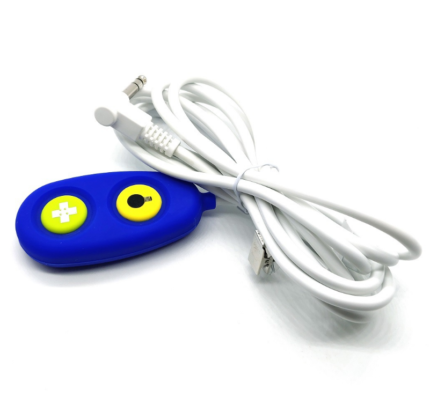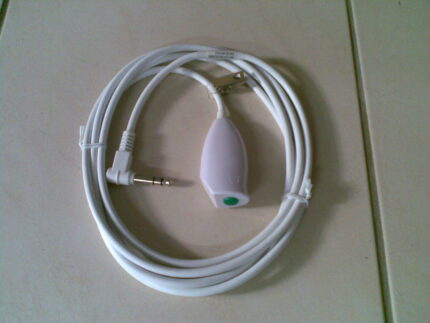
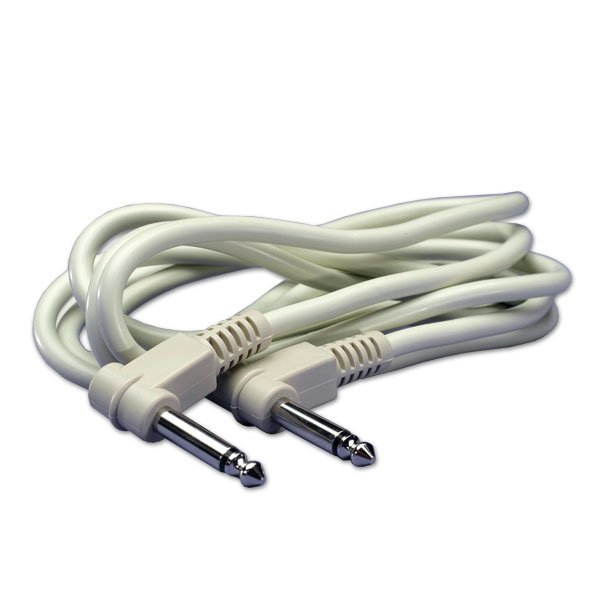
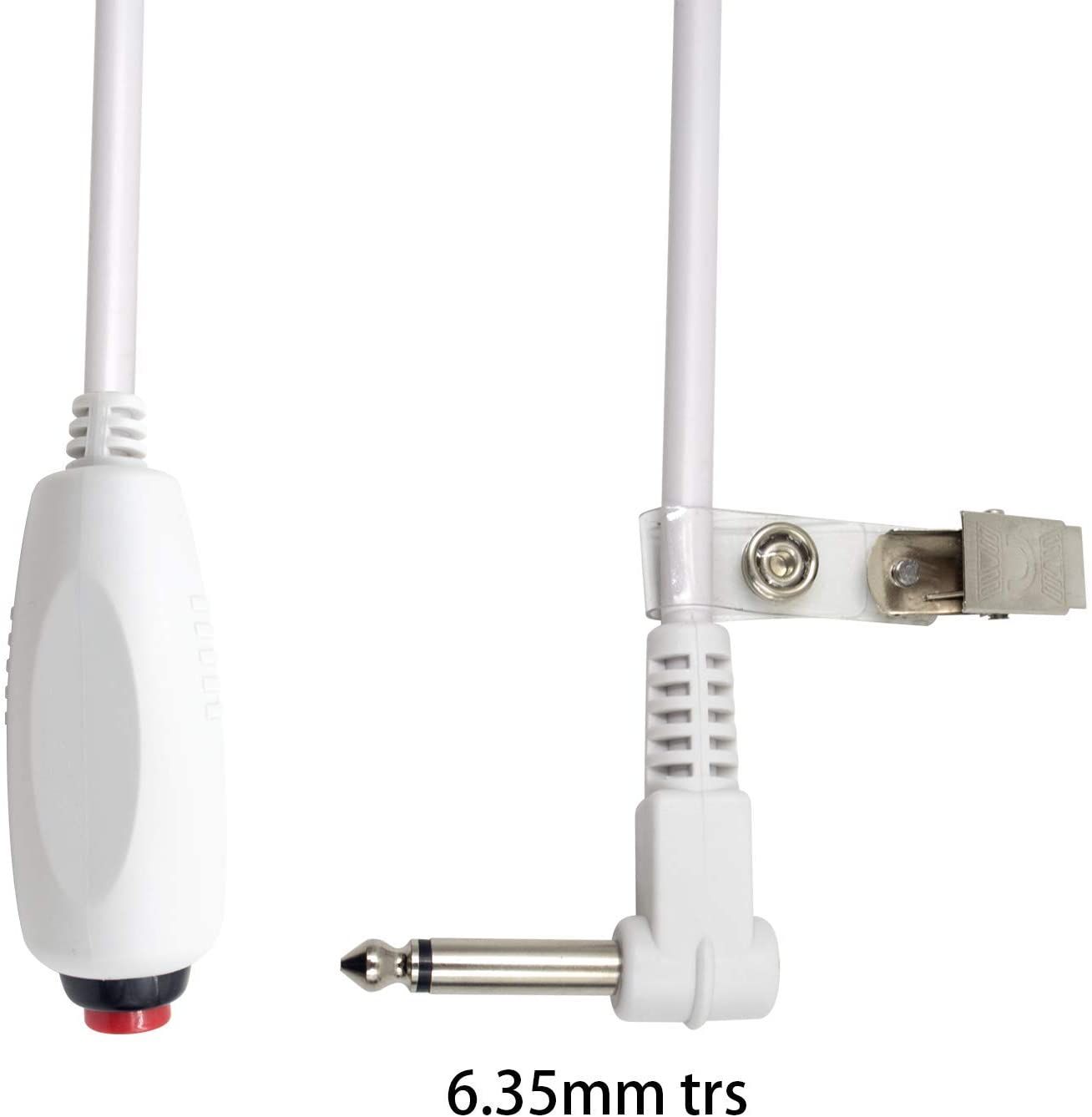
Nurse Call Button Cable with 6P4C Plug
This nurse call button cable drops from a bed head or wall plate 6P4C jack to a patient-side call button, on 26 AWG stranded tinned copper in a white or gray PVC jacket. Built to your pin count, button overmold and length for hospital and assisted living call systems.
Overview
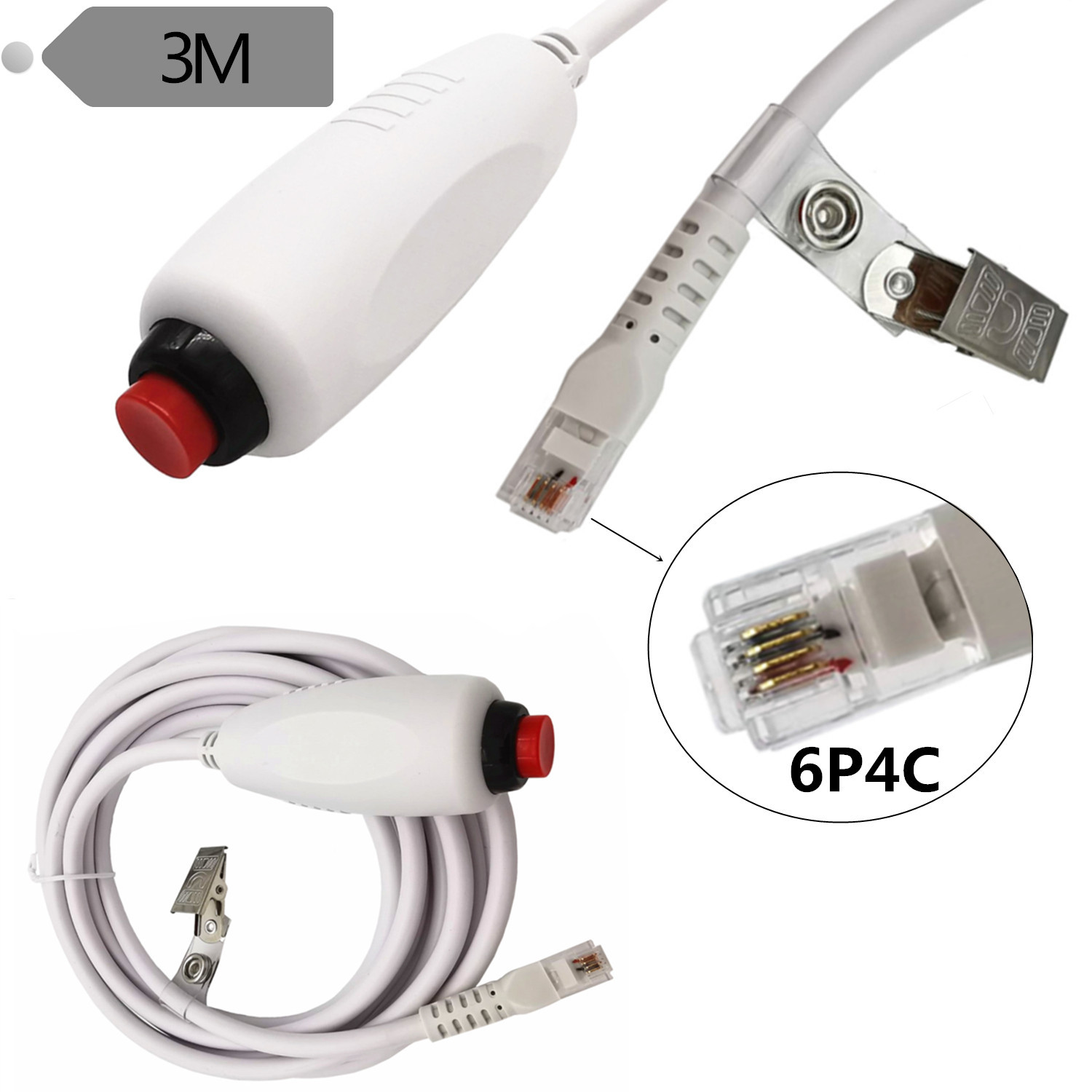
A nurse call button cable is the patient-side drop on a hospital call system: a call button on one end and a plug into the bed head or wall plate on the other. This one is built with a 6P4C (RJ14-style) molded plug at the head end and a custom button overmold at the patient end, on two or four 26 AWG stranded tinned copper conductors in a white or gray PVC jacket. Length runs 2 m to 5 m as standard. It is a passive assembly – the call button and the host system carry whatever regulatory clearance applies, not the cable.
Key Specifications
| Connector A | 6P4C plug (RJ14-style), molded |
|---|---|
| Connector B | Nurse call button overmold, 2-pin or 4-pin |
| Conductor | 26 AWG stranded tinned copper, 2 or 4 cores |
| Jacket | PVC, white or gray, 4 mm OD |
| Length | 2 m to 5 m standard; OEM on request |
| Testing | 100% continuity and hipot |
| Assembly type | Passive assembly – not a medical device |
| Build | Built and verified to your drawing and pinout |
Which jack does this nurse call button cable plug into?
The 6P4C jack is the one you find on most hospital bed heads and wall plates, and it is worth being precise about it because 6P4C, 6P6C and RJ11 get used as if they were the same thing. A 6P4C plug has six positions with the middle four conductors populated; a 6P6C carries all six. A 6P4C plug will physically go into a 6P6C jack, which is exactly why people get away with the wrong one – and why a call button sometimes works on one bed and not another. Count the contacts in the jack and the conductors in the old plug before you order, and if the system has a second function on the button, expect to need four conductors rather than two.
| Connector | Positions / conductors | Where you meet it | Note |
|---|---|---|---|
| 6P4C | 6 positions, 4 conductors | Nurse call bed heads and wall plates | The common call-system jack |
| 6P6C | 6 positions, 6 conductors | Telephony and some POS handsets | Physically accepts a 6P4C plug |
| 4P4C | 4 positions, 4 conductors | Telephone handset cords | Will not fit a 6-position jack |
| RJ11 | 6 positions, 2 or 4 conductors | Consumer telephony | A usage, not a different shell |
Why the button end is the end you specify
The jack end is standardized; the button end never is. Some systems want the cable to terminate on a small PCB inside the button, some want a flying lead to be soldered by the installer, and some want the whole thing overmolded into a sealed button body that can be wiped down. That last option is the one worth thinking about, because a call button is handled by patients and cleaned by staff several times a day, and an unsealed joint at the button is where disinfectant gets in and the contacts corrode. We mold the button body to your outline, or supply a flying lead if you are fitting your own button.
Wipe-down, disinfectant and jacket life
Hospital cleaning is harder on cable than most industrial environments. The jacket sees quaternary ammonium or chlorine-based disinfectants several times a day, and PVC that is fine in an office will craze and stiffen under that regime. Our standard build is a 4 mm PVC jacket in white or gray, which holds up to routine wipe-down; if your protocol is more aggressive, tell us what the surface is cleaned with and we will quote a compound against it. This matters more than it sounds, because a stiffened jacket cracks at the button strain relief and the crack is where fluid reaches the conductors.
What this cable is not
For Nurse Call Button builds the line runs to IPC/WHMA-A-620 Class 3 under ISO 9001, terminating 32 to 12 AWG. Each Nurse unit passes a 100% continuity and pinout check before it ships, and seal checking is quoted whenever an ingress rating is on the drawing.
Typical applications for this nurse call button cable
- Hospital bed-side nurse call button drops
- Patient pendant call button on the bed head
- Replacement cable for legacy 6P4C nurse call systems
- Assisted living and long-term care call points
- Custom call drops where the existing jack is retained and the button is replaced
How to specify your build
- Pin count – two or four conductors, and what each one does.
- Bed head or wall plate make and model, or a photo of the jack.
- Button end – PCB, flying lead or a sealed overmolded body.
- Length, measured along the run from the jack to the patient position.
- Jacket color and the cleaning protocol in use.
- Quantity, and whether this is a sample or a production order.
Workmanship and testing
For Nurse Call Button builds the line runs to IPC/WHMA-A-620 Class 3 under ISO 9001, terminating 32 to 12 AWG. Each Nurse unit passes a 100% continuity and pinout check before it ships, and seal checking is quoted whenever an ingress rating is on the drawing.
Material declarations against RoHS and REACH are issued per project, alongside the dimensional and electrical reports agreed at quotation; see certifications, compliance and material declarations. Where your drawing names a UL style or another approval, the build follows your drawing and ships with the supporting document rather than a claim of our own. Overmold tooling for this part is designed and cut in our own tool room under in-house mold making and overmold tooling, so the tool belongs to your program and a revision is a machining job rather than a new negotiation. The wider context is covered under our medical device work.
Custom builds and ordering
Nurse Call Button prototype lots start from 1 to 50 pcs and ship in 3 working days. Production requires 500 pcs and runs 14 working days after approval. Tooling not already held adds around 10 working days. Private-label Nurse runs ship under your part number and labeling, and material certificates with first-article reports are available.
Related signal and data assemblies
- Nurse Call Bedside Cable with Sealed Call Button
- Coiled Retractable Cable for Instruments and Test Leads
- IP68 Industrial Data Cable for Serial, USB and Ethernet
- IP67 Waterproof M12 Molded Cable
- Kiosk and Self-Service Terminal Harness
- Custom Shielded Ethernet Data Cable
- UL1331 FEP Teflon Hook-Up Wire, 600 V / 150 °C
Full range: signal and data cable assemblies.
Frequently Asked Questions
Is this a medical device?
No. It is a passive cable assembly. The connected call button and the host system carry the regulatory clearance for the installation.
Will a 6P4C plug work in my 6P6C jack?
It will fit mechanically, but whether the circuit works depends on which conductors the system uses. Count the contacts before ordering.
Can you mold our existing button body?
Yes, if you send the outline or a sample. New button tooling adds about 10 working days the first time.
What jacket survives daily disinfectant wipe-down?
Standard PVC handles routine cleaning. For aggressive protocols, tell us the agent and we will quote a compound against it.
| Connector A | 6P4C plug (RJ14-style), molded |
|---|---|
| Connector B | Nurse call button overmold, 2-pin or 4-pin |
| Conductor | 26 AWG stranded tinned copper |
| Jacket | PVC, white or gray, 4 mm OD |
| Length | 2 m to 5 m standard; OEM on request |
| Testing | 100% continuity and hipot |
| Assembly type | Passive assembly – not a medical device |
Related products
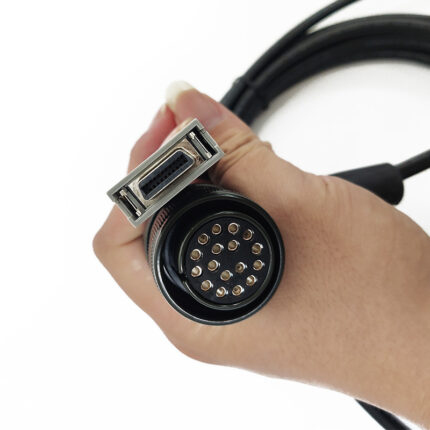
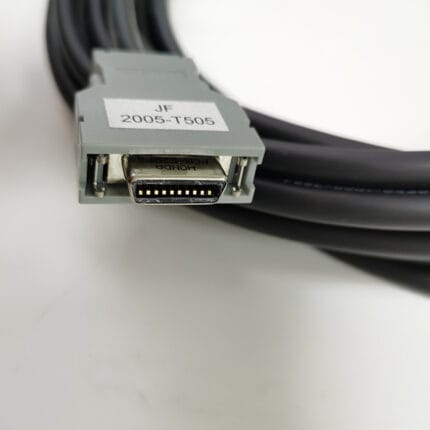
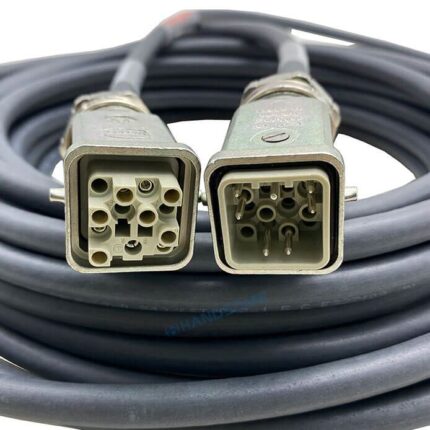
KUKA Robot Encoder Cable Compatible with 00-174-775
This kuka encoder 174775 cable is wired to the KUKA pin assignment for part 00-174-775, running encoder power and the data pair from the robot axis back to the controller. Six cores plus one pair under foil and braid, in a matte black PUR drag-chain jacket. A compatible replacement, not an OEM part.