Medical Panel Feedthrough Set for Cart and Monitor Enclosures
A medical panel feedthrough set that carries RJ45, USB 3.2 Type-C and HDMI through a cart, monitor or instrument enclosure, on a D-shape or circular cut-out. We build the cable and panel parts; final device compliance rests with the device manufacturer.
Last updated: 13 September 2026
Overview
A medical panel feedthrough set carries data interfaces through the wall of a cart,
a display housing, a patient monitor or a diagnostic instrument, so the cables that leave the enclosure
are serviceable without exposing the internals. The set groups the interfaces most often requested on
one plate, which keeps the panel layout consistent across a product family instead of changing with each
enclosure revision. To be explicit about where we sit in the supply chain: we manufacture cable
assemblies and panel components. We do not manufacture finished medical devices, and compliance of the
finished device rests with the device manufacturer.
Key Specifications
| Interface options | RJ45 per IEC 60603-7, USB 3.2 Type-C, HDMI class receptacle |
|---|---|
| Cut-out style | D-shape or circular |
| Isolation target | Two means of patient protection creepage and clearance — design target, lab confirmation pending |
| Leakage target | Type B / BF applied-part level — design target, pending test |
| Front surface | Smooth wipe-clean, chemical-resistant (compatibility list pending) |
| Pigtail | LSZH jacket on the internal side |
| Fixing | Screw fixing or clip fixing, per panel thickness |
| Documentation | Outline drawing and material declaration on request; no medical approval claimed |
What we make, and what we do not
We manufacture cable assemblies and panel components. We do not manufacture finished medical devices,
and we do not hold or claim a medical device approval for this part. Final device compliance — the
assessment of the finished equipment against the applicable medical electrical equipment standard,
including spacing, leakage and risk management — belongs to the device manufacturer, with the part
installed and in the context of the whole system. What we supply is a component built to your drawing,
with the documentation listed below so your engineering file has what it needs.
- We supply — the outline drawing, the material declaration, the termination detail, and production parts built to the approved sample.
- We do not supply — a medical approval, a certified quality-system statement for medical devices, or a certified marking durability result. If your build file needs those, they come from the device approval process.
- We can quote — creepage and clearance as a design target on the drawing, and the spacing test in the finished equipment if your laboratory specifies it.
Interface options on one plate
- RJ45 receptacle per IEC 60603-7 for the equipment network drop
- USB 3.2 Type-C receptacle for peripherals and software updates
- HDMI class receptacle for video to surgical and review displays, or our HDMI 8K panel coupler with screw lock where the cable must be retained
- D-shape or circular cut-out to match the panel tooling you already have
- LSZH pigtail on the internal side, or a connector on the internal end instead
What kills this assembly in service
Working backwards from the failures we see on cart and enclosure builds, five stresses do the damage,
and each has a design answer.
| Stress | Failure mode | Design answer |
|---|---|---|
| Cleaning agents, several times a day | Front surface crazes, legend fades, seams hold residue | Smooth closed front, chemical-resistant material, marking method quoted to your agent list |
| Cable pull at the front | Receptacle pushed back, internal pigtail snagged or torn | Retained receptacle, strain relief on the internal tail, slack loop dressed inside |
| Repeated mating over a service life | Contact wear, intermittent link, loose fixing | Specify the mating cycle target on the drawing and we quote the receptacle to it |
| Cart movement and door flex | Fatigue at the panel exit, cracked overmold | Bend relief that starts at the body, and a jacket that survives flexing |
| Heat inside a sealed housing | Insulation stiffens, contacts tarnish | Jacket rated to the enclosure temperature you state, not to a generic figure |
Creepage, clearance and leakage are design targets
For equipment intended for use in a medical electrical system, the spacing between mains-derived
parts and the applied part is the first thing to check, and the family of standards covering that
requirement is IEC
60601. The two means of patient protection creepage and clearance target, and the
Type B or BF leakage-current target, are design targets for this set and require confirmation in the
finished equipment. We do not state numeric spacing values here and we do not claim compliance for the
component in isolation; that assessment belongs to the device manufacturer with the part installed. What
we can do is build to the spacing your drawing calls out and record it on the first-article report.
Surfaces that survive wipe-down
The front is a smooth, closed surface with no exposed screw slots, chosen so the usual hospital
cleaning routine does not leave residue in a seam. Chemical resistance against common agents is a design
target pending the compatibility list, and we can supply the panel material declaration on request.
Specify the agents used in your cleaning protocol with the enquiry so the right front material is
quoted, and tell us the marking method you need — printed, laser marked or molded — since that is what
decides whether an asset label survives a year of wipe-down.
Material and jacket selection
- LSZH pigtail on the internal side as standard, for enclosures where smoke and acid gas generation matter.
- Silicone where the tail has to stay flexible in a cold or a sterilized environment — see our surgical handpiece cable with silicone jacket for that construction.
- PUR where the run sees oil or continuous flexing, which is more of an issue on mobile equipment than on carts.
- Shielding where the internal run passes near power or motor wiring in the same enclosure.
Typical builds for this medical panel feedthrough set
- Mobile cart plates carrying network, peripheral and video on one cut-out
- Surgical and review display housings where the video feed has to be serviceable
- Patient monitor and diagnostic instrument enclosures with a mixed interface requirement
- Service plates on larger equipment, where field staff need access without opening the housing
What we need from you
- Panel cut-out drawing — D-shape or circular, with the panel thickness and the material.
- Interface list — which receptacles, and the orientation on the plate.
- Internal termination — pigtail length and jacket, or a connector on the internal end.
- Spacing and leakage targets from your engineering file, stated as values on the drawing.
- Cleaning agents in your protocol, so the front material can be quoted correctly.
- Marking and legend text, and the method you need it applied by.
- Quantity, and whether you need a first-article report with the sample.
Workmanship, documentation and ordering
Every build is assembled and inspected to IPC/WHMA-A-620 Class 3 workmanship under our ISO 9001 system. We terminate conductors from 32 to 12 AWG. Each unit is checked for continuity and pinout before packing, and where the build carries an ingress rating we can add seal checking on the production run.
Related panel components
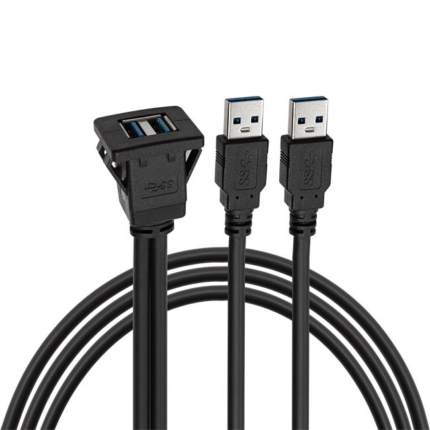
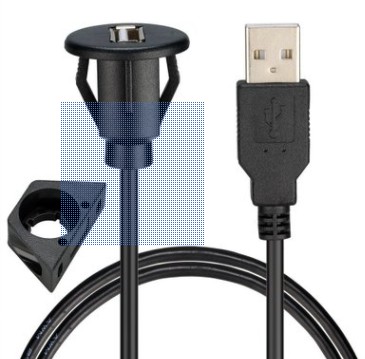
- D-Type USB Panel Feedthrough with Reversible A/B Core
- IP67 RJ45 Panel Coupler, Cat6A Shielded Bulkhead Feedthrough
- HDMI 8K Panel Coupler with Screw Lock for Cabinet Feedthrough
- Dual Port USB Panel Mount with USB-C 100 W and USB 3.0 A
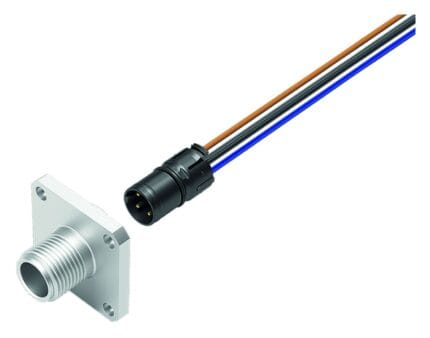
- Waterproof USB-C Panel Pigtail, 10 Gbps with Dual Screw Lock
Full range: Panel Mount Cable.
Frequently Asked Questions
Is this an approved medical device component?
No. We manufacture cable assemblies and panel components and we claim no medical approval for this part. Compliance of the finished device rests with the device manufacturer, with the part installed.
Can you state the creepage and clearance values?
Not as a component figure. Two means of patient protection spacing is a design target for this set and has to be confirmed in the finished equipment. Tell us the value your drawing calls out and we build and record it.
What documentation comes with the part?
An outline drawing and a material declaration on request, plus first-article and test reports for the production sample. No medical approval statement is supplied.
Which cleaning agents is the front resistant to?
That is a design target pending the compatibility list. Send us the agents in your protocol and we will quote the right front material.
What is the minimum order?
Five pieces is the prototype minimum and those ship in 3 working days. Production quantities start at 500 pcs, 14 working days after sample approval.
| Interface options | RJ45 per IEC 60603-7, USB 3.2 Type-C, HDMI class receptacle |
|---|---|
| Cut-out style | D-shape or circular |
| Isolation target | Two means of patient protection creepage and clearance |
| Leakage target | Type B / BF applied-part level |
| Front surface | Smooth wipe-clean, chemical-resistant |
| Pigtail | LSZH jacket on the internal side |
| Documentation | Outline drawing and material declaration on request; no medical approval claimed |
| Fixing | Screw fixing or clip fixing, per panel thickness |
Related products
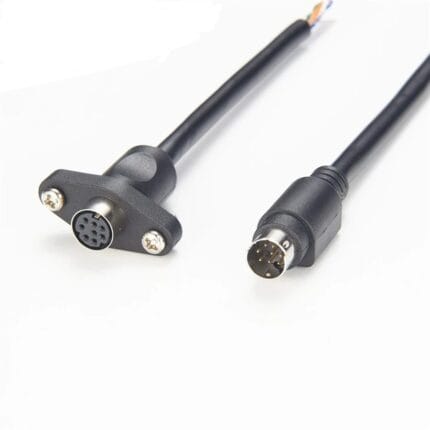
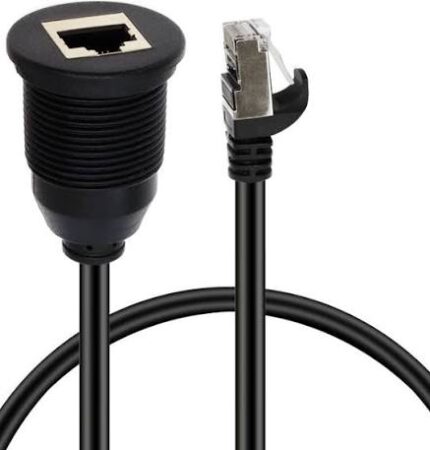
Cat6 RJ45 Panel-Mount Extension Cable with Thread-locking (UTP, 24 AWG, 3 ft, 50u” Gold)