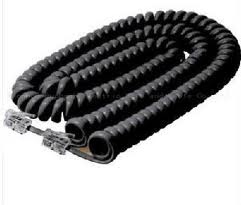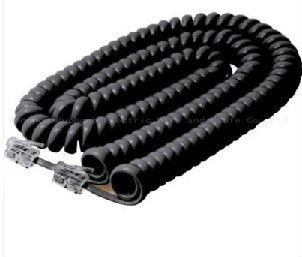
Plantronics Headset Bottom Cable with QD Housing
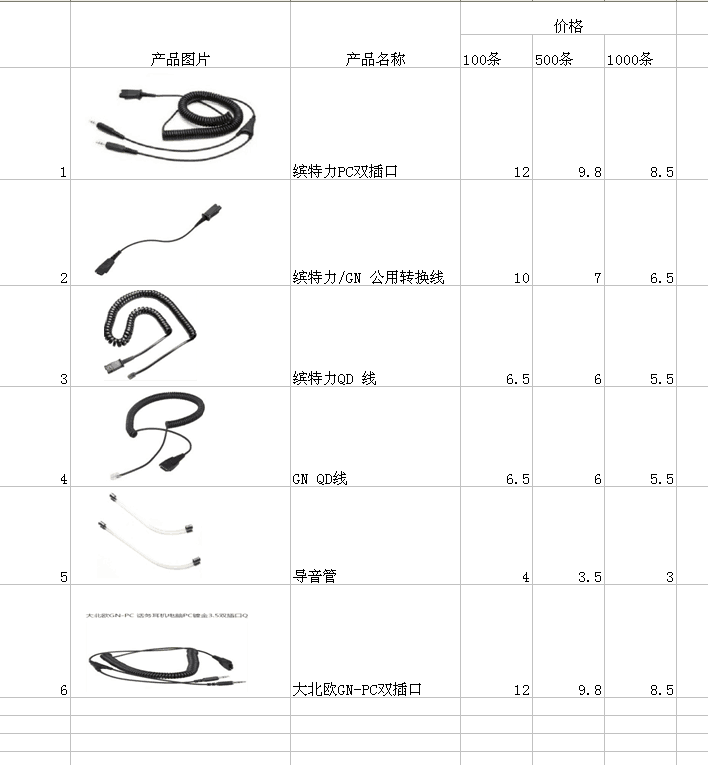
This plantronics headset bottom cable terminates in a custom overmolded Quick Disconnect housing, for call center headsets that release at the QD instead of tearing the plug out. 26 AWG stranded tinned copper, black PVC jacket, built to your pinout, length and headset-side termination.
Overview
A plantronics headset bottom cable with a Quick Disconnect housing is the half of the headset cord you actually wear out. It runs from the headset down to the QD plug, and everything below the QD – the amplifier, the direct-connect cord, the desk phone lead – stays on the desk when the operator walks away. This one is two to four 26 AWG stranded tinned copper conductors in a black PVC jacket, overmolded into a custom QD housing on one end and finished with the headset-side termination you ask for on the other. Every unit is continuity and hipot tested before packing.
Key Specifications
| Connector A | Plantronics-compatible QD plug, overmolded |
|---|---|
| Connector B | Flying lead or Plantronics-style connector, per inquiry |
| Conductor | 26 AWG stranded tinned copper, 2 to 4 cores |
| Jacket | PVC, black, 3 mm OD |
| Length | 0.5 m to 1 m standard; OEM on request |
| Latch | QD housing latch, custom overmold |
| Testing | 100% continuity and hipot |
| Build | Built and verified to your drawing and pinout |
Where does the QD actually earn its keep?
The quick disconnect exists so that the expensive part of the headset and the part that gets destroyed are not the same part. An operator who stands up without unplugging puts the whole load through the cord; with a QD in the run, the cord pulls apart instead of tearing the plug out of the headset or dragging the amplifier off the desk. That is also why the QD is the failure point on a well-used fleet: it is designed to let go, and the latch wears every time it does. We mold the housing rather than assembling it, so the latch geometry is repeatable across a production run and the strain relief is a single piece with the body.
Which amplifier does this plantronics headset bottom cable plug into?
Whatever the QD on the other side belongs to. The QD housing is the interface, and its pin numbering has to match the amplifier or the direct-connect cord you are mating with – which is the one thing we cannot infer from a photograph of the cable alone. Count the contacts, note whether the latch is on the wide or the narrow face, and tell us the amplifier model. If you are replacing an H-series bottom lead, the H-series QD is the usual target; if you are building to a proprietary amplifier, we work from your drawing. This is a compatible replacement and is not an OEM Plantronics product.
| What to check | Why | How to capture it |
|---|---|---|
| Contact count | Two, three or four conductors change the whole pinout | Photograph the QD face straight on |
| Latch side | A mirrored housing will not lock | Note which face carries the latch |
| Headset end termination | Flying lead, tinned ends, or a molded plug | Send the wire list or a sample |
| Length | Too long coils on the desk, too short pulls when you stand | Measure from the headset to the QD resting point |
| Amplifier model | Sets the pin numbering below the QD | Read the label on the amplifier |
Why the conductor count is not a cost question
Two conductors carry a microphone and a receiver if the amplifier handles the rest. Add a third and a fourth and you are usually carrying a hook-switch sense line, a volume or mute control, or a separate ground so the microphone return does not share the receiver return and put crosstalk on the line. Sharing a return is the single most common reason a replacement lead sounds worse than the original: the wiring is electrically continuous and still wrong. If you are not sure, send a sample of the original and let us read it rather than guessing from the conductor count.
How to read a QD that is about to fail
You can usually see it coming. Pull the two halves apart and look at the latch: if the catch has gone shiny on one shoulder, the housing has been releasing under load and the retention is already partly gone. Wiggle the plug side to side in the receptacle – any movement at all means the latch is no longer holding. And check the cable where it enters the QD body: a faint ring in the jacket, or a section that has gone slightly oval, is the strain relief having taken the bend for the last few thousand cycles. None of this needs instruments, which is the point: a two-minute walk of the floor on a quiet shift will find the leads that are going to strand an operator next week, and replacing them on schedule costs far less than replacing them during a shift.
Typical applications for this plantronics headset bottom cable
- Contact center headset bottom cable with a QD at the amplifier
- Drop-in replacement for a worn H-series bottom cable
- Custom QD bottom cable for a proprietary headset amplifier
- Office and reception headsets that move between desks
- Spare-part programs where the QD lead is the field-replaceable item
How to specify your build
- QD type and contact count, with a photo of the face.
- Pinout, or a sample cable to read from.
- Headset end – flying lead, tinned ends or a molded plug.
- Length, measured from the headset to the resting point of the QD.
- Jacket color and label, if the fleet is color-coded by team.
- Quantity and whether this is a sample or a production order.
Workmanship and testing
Build standard for Plantronics Headset Bottom builds is IPC/WHMA-A-620 Class 3 under ISO 9001, with terminations from 32 to 12 AWG. No Plantronics unit is packed until 100% continuity and pinout check out, and seal checking is quoted whenever an ingress rating is on the drawing.
RoHS and REACH declarations are provided per project together with the agreed test reports; the documentation scope is listed under certifications and compliance. If your drawing specifies a UL style, we build to that drawing and supply the UL reference with the shipment instead of substituting an equivalent. Injection parameters for this part are developed against the jacket material using the approach documented under how we run the overmold press. The wider context is covered under what instrument builds require. Any tooling we cut for this part stays yours, maintained in our own tool room under your part reference.
Custom builds and ordering
On Plantronics Headset Bottom builds, prototype lots run from 1 to 50 pcs and leave in 3 working days. Production runs of 500 pcs and up ship 14 working days after approval. Tooling not already held adds around 10 working days. Plantronics builds go out under your part number and labeling, and material certificates and first-article reports can be supplied.
Related signal and data assemblies
- Coiled Retractable Cable for Instruments and Test Leads
- Coiled Telephone Handset Cable, 4P4C / 6P6C
- BYOD Active USB-C Cable for Meeting Rooms and Desks
- Right Angle USB-C Cable for Tight Desk Runs
- POS USB-C PD Cable for Kiosk and Self-Service Terminals
- Kiosk and Self-Service Terminal Harness
Full range: signal and data cable assemblies.
Frequently Asked Questions
Will the QD latch survive a fleet of operators?
It is a wear item by design – it releases so the cord does not destroy the headset. Molding the housing in one piece makes the latch repeatable, but expect to stock the bottom cable as a spare.
Can I get the QD on both ends?
Yes. A QD-to-QD lead is common where the amplifier cord and the headset cord are both field replaced.
Is this an original Plantronics part?
No. It is a compatible replacement built to your pinout and housing drawing.
Can you build to a sample if I have no drawing?
Yes. Send one good lead, we document the pinout and the housing dimensions, and build to that.
| Connector A | Plantronics-compatible QD plug, overmolded |
|---|---|
| Connector B | Flying lead or Plantronics-style connector, per inquiry |
| Conductor | 26 AWG stranded tinned copper |
| Jacket | PVC, black, 3 mm OD |
| Length | 0.5 m to 1 m standard; OEM on request |
| Latch | QD housing latch, custom overmold |
| Testing | 100% continuity and hipot |