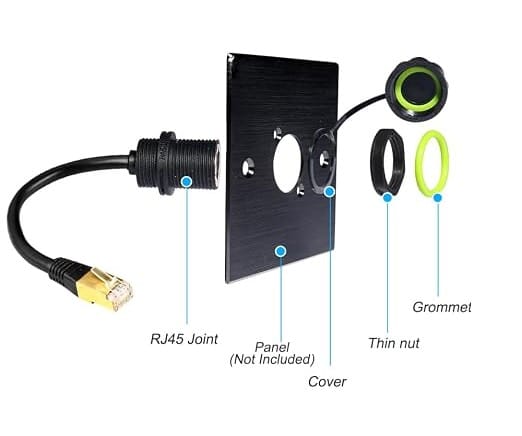
IP67 RJ45 Screw-Lock Bulkhead Cable (Threaded Coupling, Panel Mount, Dust Cap)
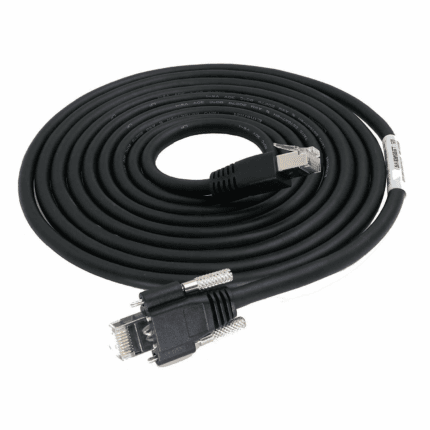
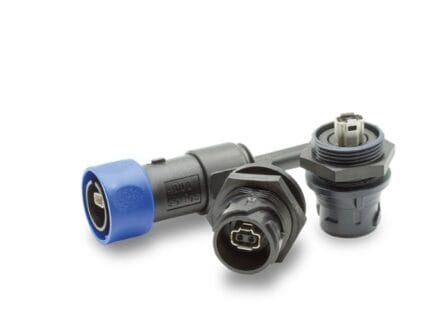
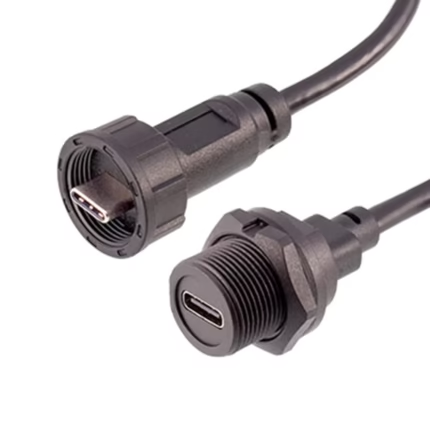
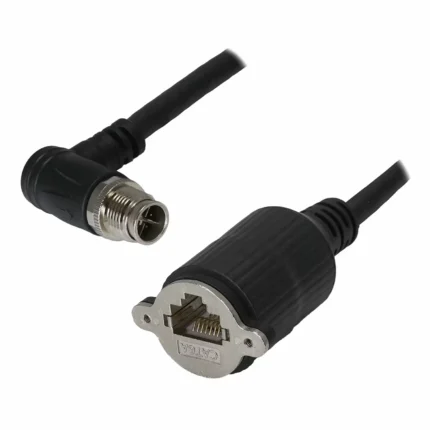
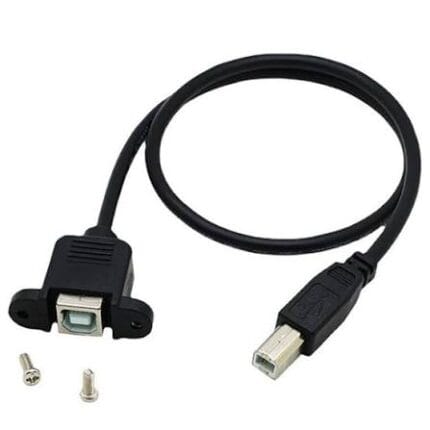
An IP67 RJ45 bulkhead cable carries an RJ45 port through an enclosure wall and seals the opening to IP67. The socket clamps to the panel with a threaded coupling nut and silicone gasket, and ships with a dust cap so the opening stays sealed when nothing is plugged in.
Overview
An IP67 RJ45 bulkhead cable carries an RJ45 port through an enclosure wall and seals the opening to IP67. The bulkhead socket clamps to the panel with a threaded coupling nut and a silicone gasket, and it ships with a dust cap so the opening stays sealed when nothing is plugged in. This is the part you fit to an outdoor cabinet, a food-area enclosure that gets hosed down, a machine housing or a vehicle body when the Ethernet connection has to survive the environment outside the box.
Key Specifications
| Connector A | RJ45 8P8C male, molded, straight or right angle |
|---|---|
| Connector B | RJ45 8P8C female bulkhead socket, threaded coupling, panel mount |
| Sealing | IP67 per IEC 60529 when mated or when the dust cap is fitted |
| Shell Material | PA66 nylon, or zinc alloy for higher impact duty |
| Seal | Silicone panel gasket plus epoxy rear potting; dust cap included |
| Category | Cat5e / Cat6 / Cat6A depending on build |
| Mounting | Rear or front panel mount, nut fastened; cutout per build drawing |
| Temperature Rating | Stated on the build drawing – most shells in this family are rated -30 C to +80 C or wider |
| Length | 0.3 m / 0.5 m / 1 m standard, other lengths OEM |
Confirm the cut-out and the thread before you drill
Bulkhead connectors are returned because a hole was cut before the hardware was confirmed. Thread forms and cut-out diameters vary between manufacturers even when the front face looks identical, so measure the part you are actually going to fit – or tell us the panel and we will match the hardware to it.
| What to confirm | How to check it | If it is unknown |
|---|---|---|
| Cut-out diameter | Measure across the hole on the drawing or an existing panel | Stated per your drawing |
| Thread and pitch | Read it off the coupling nut with a thread gauge | Stated per your drawing |
| Panel thickness range | Measure the wall, including paint and any gasket stack | Stated per your drawing – the nut has a clamping range, not an infinite one |
| Fixing hole pitch and anti-rotation | Measure center to center on the flange | Stated per your drawing |
| Clearance behind the panel | Depth for the socket body, the nut and the pigtail bend radius | Stated per your drawing |
| Which face it mounts from | Front or rear, decided by access inside the box | Specify on the order – it changes the hardware |
Two sides, two ratings: what IP67 on the bulkhead does and does not cover
An ingress rating on a feedthrough describes a mated assembly in a stated condition, not a magic property of the part. Reading it per side saves arguments later.
| Part of the assembly | Rating | Condition | What is not covered |
|---|---|---|---|
| Bulkhead opening, mated | IP67 per IEC 60529 | A mating plug screwed down, gasket compressed | A plug that is partly seated, or a gasket with a cable pinched under it |
| Bulkhead opening, unmated with the cap fitted | IP67 per IEC 60529 | Dust cap threaded down | Cap left off, or the cap tether cut |
| Bulkhead rear termination | Sealed by epoxy potting | As built | A field-soldered rear termination that was never potted |
| The other end of the cable | Depends entirely on what it plugs into | A sealed receptacle, or an ordinary jack inside a dry cabinet | A sealed bulkhead feeding an unsealed plug in a wet area |
So the practical rule: buy the bulkhead, the mating plug and the cap as one qualified set, and state the rating you need on the order. The reference for the code itself is the IP code in IEC 60529; the values your build is verified to are the ones on your drawing.
Installation: torque, gasket and the seal face
- Clean the panel face. Paint overspray, dust and a raised weld seam all hold the gasket off the surface, and a gasket that is not flat does not seal.
- Fit the gasket dry and flat, and make sure nothing – a cable, a burr, a label – crosses the seal line.
- Bring the nut up evenly. The aim is even compression of the gasket, not maximum torque: over-tightening a nylon shell is how flanges crack.
- Torque value: take it from your build drawing. Where you do not have one, we can state a target for the hardware supplied.
- After installation, check the panel has not dished. Thin sheet pulls in around the nut and leaves the gasket uneven.
- Field-test it the way it will be used: mated, and capped, on a panel mounted the way the real one is mounted.
Rear termination: pigtail or solder pads
The back of the socket is the decision most people leave until the part is in their hand. We supply it either as a solder pad field termination, or as a factory-molded pigtail to a male RJ45 plug. The molded pigtail removes a failure point – there is no field joint to get dirty or to be pulled apart during service – and behind the socket the termination is potted with epoxy so moisture cannot track along the wires into the enclosure. If you are fitting a service port that gets used often, pair it with our control cabinet service interface.
Shell material and duty
| Shell | Where it is used | Why | Watch out for |
|---|---|---|---|
| PA66 nylon | General industrial and outdoor cabinets | Light, non-conducting, does not corrode | Lower impact resistance than metal; do not over-torque |
| Zinc alloy | Panels that take knocks – vehicle bodies, machine housings, public-area enclosures | Takes impact and resists thread damage | Heavier, and needs a clean earth path consideration on a painted panel |
Temperature rating is stated on the build drawing; most shells in this family are rated -30 C to +80 C or wider, and we confirm the figure for the hardware we supply.
Where an ip67 rj45 bulkhead cable is the cleanest way through the wall
- Outdoor cabinets, junction boxes and street-side enclosures that need one Ethernet port through the wall
- IP security camera and wireless bridge installations, next to the IP67 RJ45 patch cable for the run itself
- Food and beverage areas that get hosed down, where our IP69K screw lock cable covers the higher washdown rating
- Machine housings and vehicle bodies where the port has to be reachable from outside
- Service and commissioning ports on control cabinets, alongside the Cat6 RJ45 screw-lock panel mount extension cable
Ordering and lead time
IP67 RJ45 Screw-Lock Bulkhead prototypes start from 1 to 50 pcs and ship in 3 working days; series supply starts at 500 pcs and takes 14 working days after approval. Tooling not already held adds around 10 working days. IP67 builds ship under your part number and labeling for OEM and ODM orders, and material certificates and first-article reports can be supplied.
Workmanship and testing
Terminations on IP67 RJ45 Screw-Lock Bulkhead builds run from 32 to 12 AWG, and the work is held to IPC/WHMA-A-620 Class 3 inside an ISO 9001 system. No IP67 unit is packed until continuity and pinout check out, and seal checking is quoted whenever an ingress rating is on the drawing.
Material declarations against RoHS and REACH are issued per project, alongside the dimensional and electrical reports agreed at quotation; see certifications, compliance and material declarations. Where your drawing names a UL style or another approval, the build follows your drawing and ships with the supporting document rather than a claim of our own. Sealing follows the insert, gasket and overmold-bond method described under IP-rated sealing validation, so the rating comes from the joint design rather than from the connector datasheet alone. The wider context is covered under build-to-print cable assemblies. Tooling for this build is cut in our own tool room and belongs to your program, so a repeat run years later starts from the same tool.
Frequently Asked Questions
Is the whole assembly IP67, or only the panel opening?
The rating applies to the bulkhead opening when it is mated or capped. The other end of the cable is only as protected as whatever it is plugged into, so specify both halves together if the whole run is in a wet area.
Can I mount it from inside the enclosure?
Yes, front or rear mounting is available and it changes the hardware, so state which one you need. Rear mounting is usual when the panel face has to stay clean and uncluttered.
Do I need the dust cap?
Yes, if the port is ever left unmated outdoors or in a washdown area. The rating when capped is a stated condition, so a cap that is left off is an unsealed hole. It ships with the assembly.
How do I know what size hole to cut?
From the build drawing for the hardware you are fitting. Cut-out diameter, thread and pitch, panel thickness range and fixing pitch all vary between manufacturers, so confirm them before the panel is drilled rather than after.
Related assemblies
| Connector A | RJ45 8P8C male, molded, straight or right angle |
|---|---|
| Connector B | RJ45 8P8C female bulkhead socket, threaded coupling, panel mount |
| Sealing | IP67 per IEC 60529 when mated or when the dust cap is fitted |
| Shell Material | PA66 nylon, or zinc alloy for higher impact duty |
| Seal | Silicone panel gasket plus epoxy rear potting; dust cap included |
| Category | Cat5e / Cat6 / Cat6A depending on build |
| Mounting | Rear or front panel mount, nut fastened; cutout per build drawing |
| Temperature Rating | Stated on the build drawing – most shells in this family are rated -30 C to +80 C or wider |
| Length | 0.3 m / 0.5 m / 1 m standard, other lengths OEM |