Threaded Locking DC Pigtail 5.5×2.1mm, Shielded Right-Angle Plug to Bare Wire
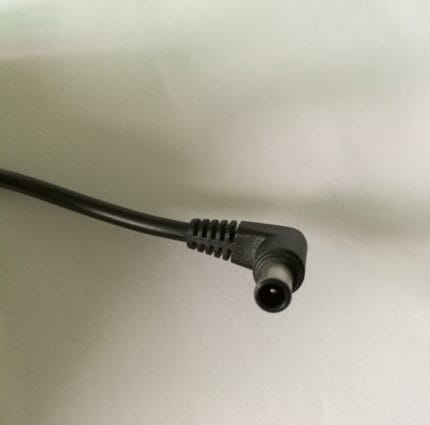
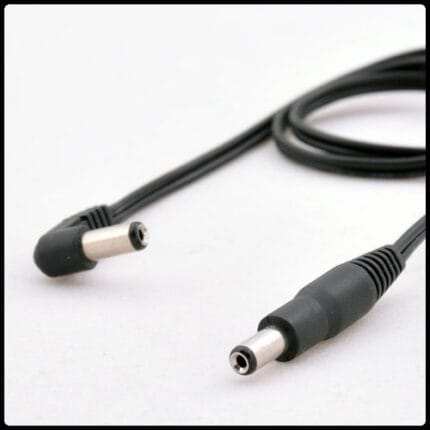
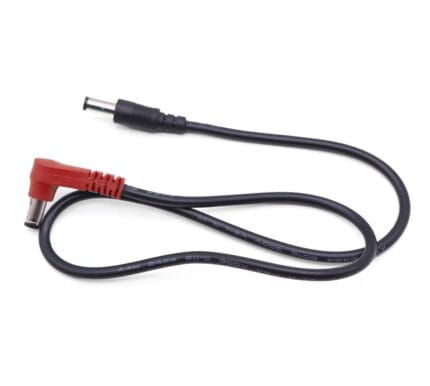
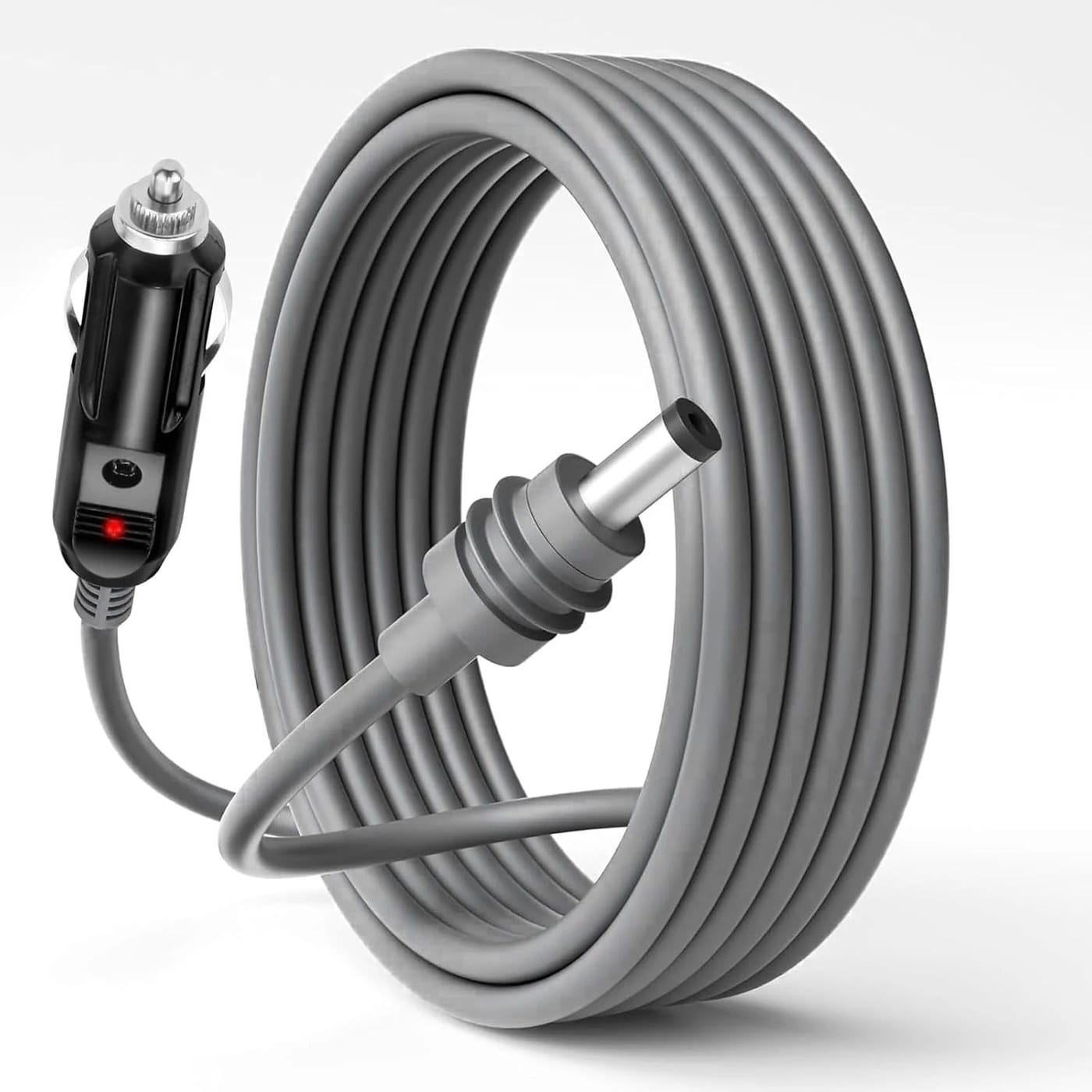
A threaded locking dc pigtail for equipment that vibrates: a 5.5×2.1mm right-angle plug with a knurled threaded collar, shielded cable with a drain wire, and tinned tails. The collar screws onto a matching socket, so retention no longer depends on friction. 2.00 m standard, with the cable exit clocked to your run.
Last updated: 13 September 2026
Overview
A threaded locking dc pigtail solves three problems that usually get solved one at a time: a plug that walks out of its socket, a cable that cannot exit a shallow enclosure, and noise picked up on the run. The plug carries a knurled collar that screws onto a matching threaded socket, so retention no longer depends on spring pressure; the body is right-angle, so the cable leaves along the panel instead of through it; and the cable is shielded with the braid brought out as a drain wire.
Key Specifications
| Connector A | Threaded locking DC plug 5.5×2.1mm, right angle, knurled collar |
|---|---|
| Connector B | Stripped and tinned bare wire with shield drain wire |
| Shielding | Braided shield with drain wire, land at one end |
| Conductor | Tinned stranded copper |
| Length | 2.00 m |
| Rated figures | 24 V / 5 A, quoted from public listings, pending verification |
| Jacket | Flexible PVC |
| Options | Straight plug version, ring terminals, inline fuse holder, custom length |
| Applications | Medical carts, kiosks, vending machines, industrial panels, mobile robots |
| Panel fit | Built to the cut-out diameter and thread pitch you name |
Three failure modes, one connector
| Problem on site | What causes it | What a plain plug does | What this plug does |
|---|---|---|---|
| Intermittent reboots | Continuous vibration working the plug out of the socket | Friction contact relaxes, resistance climbs, the joint heats | Threaded collar screws down; retention is mechanical, not frictional |
| Cable will not fit | Straight plug needs clearance behind the panel | Stands proud and gets knocked, or the door will not close | Right-angle body exits along the panel face |
| Noise on the DC rail | Motors, compressors and switching supplies near the run | Unshielded cable acts as an antenna | Braided shield with a drain wire to land at the panel |
Why friction-fit is not enough on moving equipment
A standard barrel plug is held in by spring contact pressure and nothing else. On a wall adapter behind a desk that is fine. On a medical cart rolling over tiled floors, a kiosk with a compressor next to the power entry, a vending machine, or a mobile robot, the vibration is continuous and the symptom is an intermittent reboot that no amount of software debugging will explain. The failure is rarely sudden: the contact frets, a wear track forms, contact resistance rises, the joint warms, the spring relaxes further. A threaded collar removes the whole mechanism.
Right angle, and getting the exit clocked
Right-angle is the default because it is the version that fits where these cables actually live. But a right-angle body introduces a question a straight plug does not: which way does the cable point once the collar is screwed down? Because the collar rotates independently of the contact, the exit can be clocked to the run so it does not foul the housing or a neighboring connector. Tell us the direction the cable has to leave and we set it on the build; a straight version is available where the run leaves the panel square-on.
- Right-angle threaded plug, 5.5 mm outer and 2.1 mm inner
- Cable exit clocked to the direction you specify
- Collar screws down by hand, no tool required
- Straight version for square-on exits
Shielding, and where to land the drain
Electromagnetic shielding only does something if it has somewhere to go. The braid is brought out as a drain wire alongside the conductors, and that drain needs a deliberate destination. On a metal enclosure, land it to the chassis at the panel end. Leave it floating at the equipment end unless the design calls for it: landing both ends on equipment that is separately grounded invites ground-loop current in the braid, which is worse than no shield at all. If you are unsure, land one end.
The drain is supplied stripped and tinned like the conductors, and can be terminated in a ring terminal at the build if that is how your panel is arranged.
Ratings, and what we verify before printing them
The figures quoted for comparable parts are 24 V at 5 A over a 2.00 m lead. We carry those as leads from public listings rather than as our own verified ratings; the current your assembly is built and verified to is the value stated per your drawing. What is worth saying now is that five amps is a realistic ceiling for a 5.5×2.1mm barrel interface, and the limiting factor is contact area at the plug rather than the conductor behind it. Where the load is heavier, the answer is a bigger interface, not a thicker cable.
Termination options
The free end ships stripped and tinned, ready for a screw terminal block or a solder joint. Ring terminals, an inline fuse holder, a different overall length, or a connector in place of the tails can all be specified at build time. Send the panel cut-out diameter and thread pitch you are matching and we will confirm the plug geometry before quoting – that is the one dimension that cannot be corrected after molding.
Typical applications for this threaded locking dc pigtail
- Medical carts and mobile clinical equipment that roll all day
- Kiosks and self-service terminals with a compressor in the cabinet
- Vending machines and dispensers
- Industrial control panels feeding a control cabinet service interface
- Mobile robots and AGVs, where a DC screw lock cable is the alternative on the panel side
- Enclosures that need the sealed route instead, via an IP65 waterproof DC 5521 extension
How to specify your build
- Panel thread and cut-out – the pitch and diameter you are matching.
- Plug angle – right-angle as standard, straight on request.
- Exit direction once the collar is tightened.
- Cable length and whether the run is fixed or moving.
- Shield landing – which end, and to what.
- Free end – tinned tails, ring terminals, or a connector.
- Quantity, sample or production.
Workmanship and testing
Our line is ISO 9001 certified and every assembly is built to IPC/WHMA-A-620 Class 3 workmanship across 32 to 12 AWG. Continuity and pinout are checked on every unit before packing, and seal checking can be quoted where an ingress rating is specified.
Custom builds and ordering
A first build of 5 pcs ships in 3 working days. Repeat production starts at 500 pcs and ships 14 working days after approval, plus roughly 10 working days if a new overmold tool is required. Your part number and labeling go on OEM and ODM orders, with material certificates and first-article reports on request.
Related DC assemblies
- DC Screw Lock Cable with Threaded Retaining Collar Barrel Plug
- IP67 Waterproof DC Extension Cable 5.5×2.1mm
- DC 5525 Male to Bare Wire Power Cable
- 14 AWG DC Barrel Pigtail Cable to Bare Wire or Ring Terminals
- DC 5521 Right Angle to Straight Adapter Cable
- IP65 Waterproof DC 5521 Extension Cable
Full range: DC plug power cable assemblies, plus screw-lock molded cable for the panel side.
Frequently Asked Questions
Can I use this with an existing socket?
Only if the socket has the matching thread. A threaded collar needs a threaded barrel to screw onto – send the cut-out diameter and pitch and we will confirm before quoting.
Which end do I land the shield drain?
At the panel end, to the chassis on a metal enclosure. Leave the other end floating unless your design says otherwise; landing both ends can put ground-loop current in the braid.
Do I need a tool to tighten the collar?
No, the knurled collar is designed to be screwed down by hand.
Can the cable exit be pointed a particular way?
Yes. The collar rotates independently of the contact, so the exit is clocked to the direction you specify.
What is the current limit?
Five amps at 24 V is quoted for comparable parts and is a realistic ceiling for a 5.5×2.1mm barrel. The value your assembly is built and verified to is stated per your drawing.
| Connector A | Threaded locking DC plug 5.5×2.1mm, right angle, knurled collar |
|---|---|
| Connector B | Stripped and tinned bare wire with shield drain wire |
| Shielding | Braided shield with drain wire, land at one end |
| Conductor | Tinned stranded copper |
| Length | 2.00 m |
| Rated figures | 24 V / 5 A class |
| Jacket | Flexible PVC |
| Options | Straight plug version, ring terminals, inline fuse holder, custom length |
| Applications | Medical carts, kiosks, vending machines, industrial panels, mobile robots |
| Panel fit | Built to the cut-out diameter and thread pitch you name |