NMEA 2000 Bulkhead Connector with Micro-C and OneNet Options
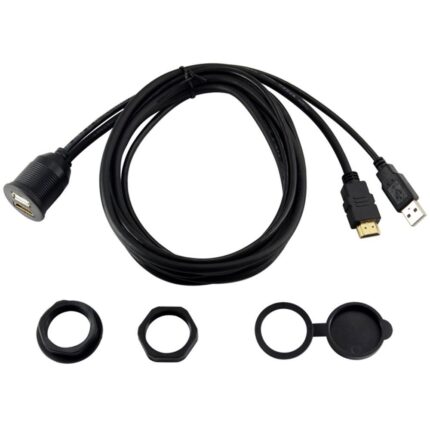
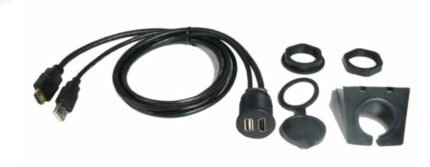
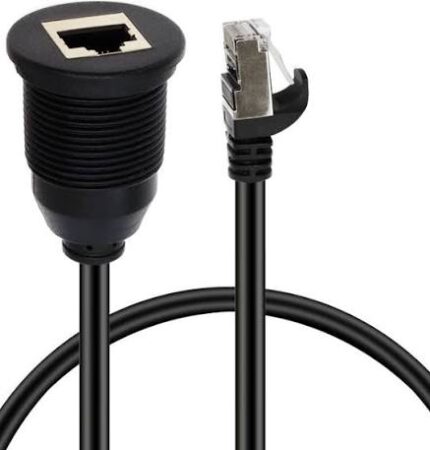
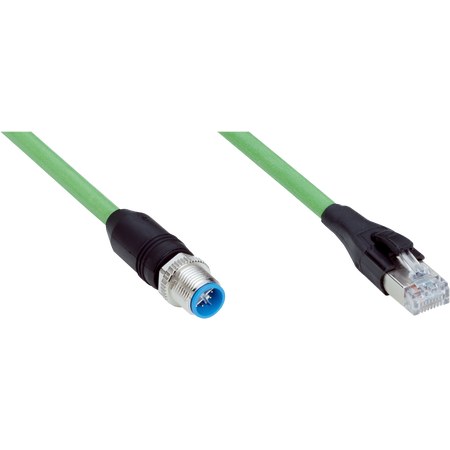
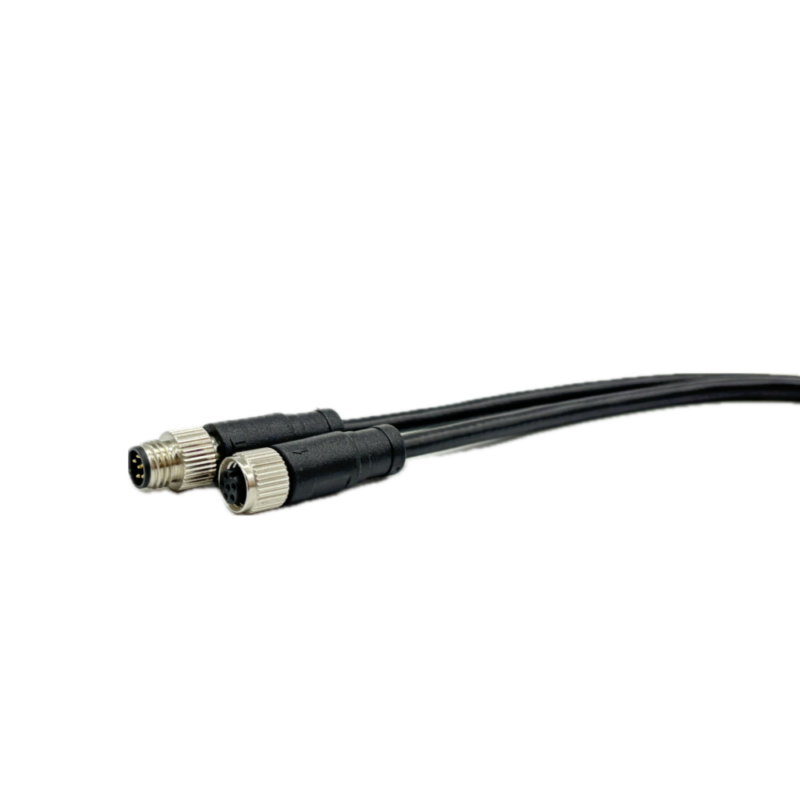
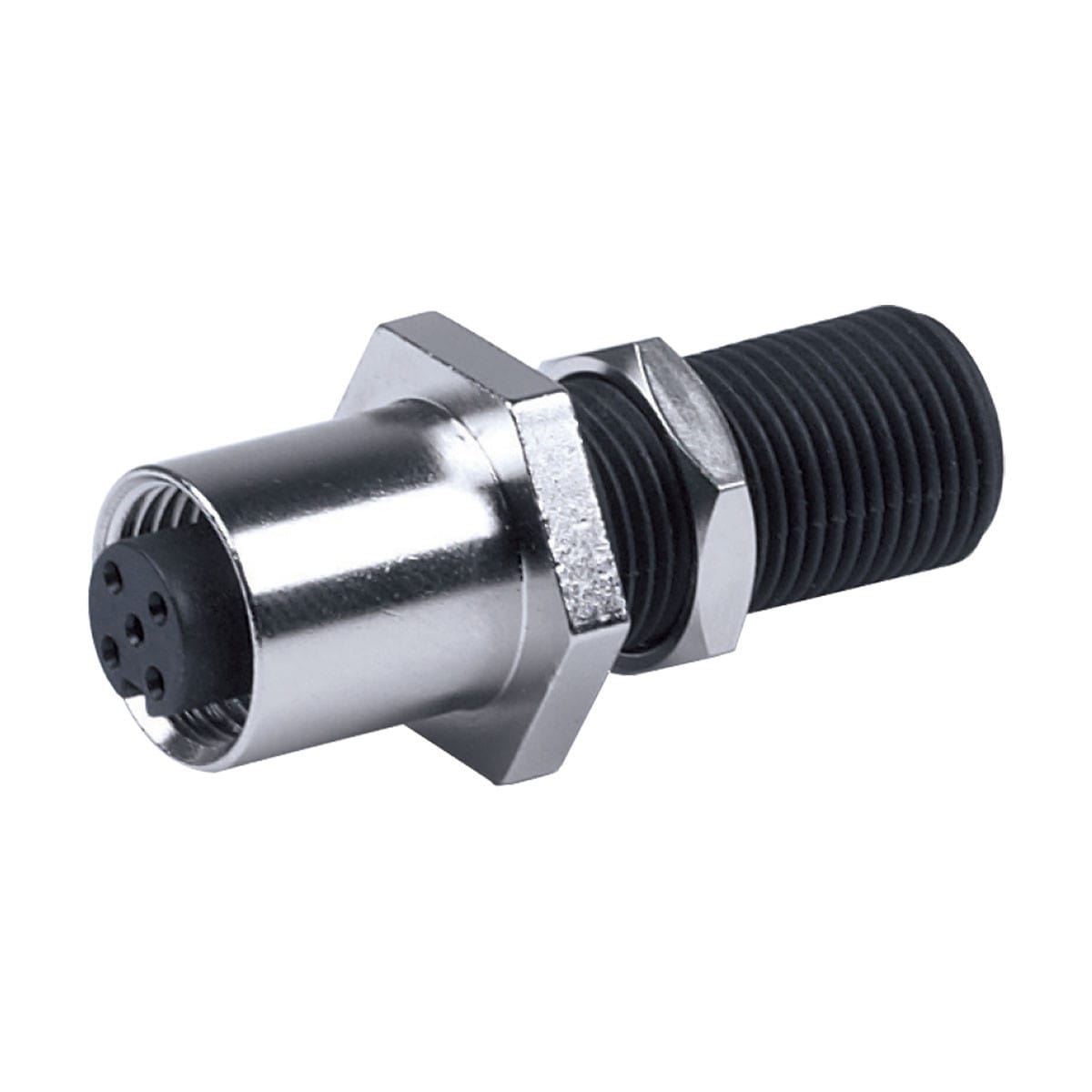
An NMEA 2000 bulkhead connector carries the backbone or an OneNet Ethernet run through a deck or a watertight bulkhead in one sealed 12 mm penetration. Micro-C 5-pin or 8-pin X-coded OneNet, gold-plated contacts, TPU jacket. Ratings confirmed per order.
Last updated: 13 September 2026
Overview
An NMEA 2000 bulkhead connector is the clean way to take a network through a deck, a cockpit coaming or a watertight bulkhead. One round penetration, one sealed receptacle, and the electronics stay dry inside while the drop cable stays outside. It replaces the field-made gland that everyone seals with silicone and nobody trusts two seasons later.
Key Specifications
| Connector families | Micro-C 5-pin (NMEA 2000) and 8-pin X-coded (NMEA OneNet) |
|---|---|
| Panel cut-out | 12 mm – design target, confirm before cutting |
| Panel thickness | Up to 13 mm – design target, confirm |
| Thread options | PG9 to M16 |
| Ingress rating | IP67 mated / IP68 capped – design target, pending test |
| Contact plating | Gold-plated contacts |
| Cable jacket | TPU |
| Operating temperature | -40 C to +80 C – supplier datasheet confirmation pending |
| Compliance | NMEA 2000 certification is not claimed – status to be confirmed with the manufacturer |
| Mounting | Front mounting with locknut, gasket on the outside face |
| Accessory | Protective cap for the unmated state |
What a watertight penetration actually has to survive
A bulkhead on a boat is not a cabinet wall. It flexes, it is exposed on one side and not the other, and the water arrives under pressure from a hose or from green water over the bow rather than as a static head. The detail that fails is almost never the connector, it is the land the gasket sits on.
| Exposure | What it does to the joint | The detail that answers it |
|---|---|---|
| Salt spray and airborne salt | Creep corrosion on contacts and on the panel land | Gold-plated contacts, mating faces kept capped, rinse with fresh water |
| UV on an above-deck face | Hardens and cracks a cap tether and a cheap gasket | UV-stable cap and gasket material, cap hinge oriented down |
| Deck flex and hull working | Rocks the flange and pumps water past a flat gasket | Flat, deburred land; correct nut torque; backing plate on thin laminate |
| Hose-down and green water | Drives water at the joint rather than onto it | Gasket on the outside face, thread sealed, drip loop in the drop cable |
| Bilge and condensation inside | Corrosion on the rear terminations | Sealed rear side, tinned conductors, tail dressed above any standing water |
Backbone and drop rules that decide where the bulkhead goes
The penetration is not free. A drop cable is a drop cable, and the network rules bound how long it can be, which sets how far inside the boat the bulkhead can sit relative to the backbone tee. The figures below are the values commonly quoted for the NMEA 2000 network, which runs over a CAN bus physical layer at 250 kbit/s with five-pin Micro-C style hardware. Treat them as the published standard values and check them against the edition your installer works to.
| Rule | Commonly quoted limit | Why it matters for the bulkhead |
|---|---|---|
| Backbone length | 100 m on Micro/Mid cable; longer on Mini/Heavy | Sets where the backbone can run, so it sets where the penetration can be |
| Single drop length | 6 m maximum | The bulkhead plus the internal lead has to fit inside 6 m of the tee |
| Cumulative drop length | 78 m across the network, often quoted as 76 m | A refit with many devices can run out of budget before it runs out of tees |
| Device count | 50 physical devices per network | Decides whether a second network, and a second penetration, is needed |
| Supply | 9 to 16 V DC, single injection point, fused | The bulkhead carries power as well as data, so the contacts are not signal-only |
| Termination | 120 ohm at each end of the backbone | A penetration in the middle of the backbone must not break the bus |
Micro-C or OneNet: which mating face do you need
| Micro-C 5-pin | 8-pin X-coded (OneNet) | |
|---|---|---|
| Network | NMEA 2000, CAN bus at 250 kbit/s | NMEA OneNet, Ethernet over IP |
| Carries | Power plus CAN-H and CAN-L, plus shield | Gigabit and faster Ethernet, PoE capable |
| Topology | Linear backbone with tees and drops | Star or tree through Ethernet switches |
| Typical payload | Instrument, engine and tank data | Radar, sonar, onboard IP video |
| Connector style | Five-pin Micro-C / M12 A-coded style | M12 X-coded, 8 positions |
| Interchangeable? | No – different keying, different network | No – different keying, different network |
The two are not interchangeable on the same device port and they are not interchangeable on the same cable. If a refit is being specified with both, drill both penetrations now: a second 12 mm hole in a finished console costs far more in labor than the receptacle does. Our NMEA 2000 Drop Cable, Micro-C M12 5-Pin covers the backbone side of the Micro-C variant.
Materials, sealing and the cap
Contacts are gold-plated, which is the right choice for a low-level signal in a salt-laden atmosphere, and the jacket on the matching cable is TPU because PVC stiffens at low temperature and stiff cable pulls on the seal. The target is IP67 mated and IP68 with the protective cap fitted. Both are design targets pending test reports, and neither belongs on a customer drawing until the report exists. Above deck, orient the cap so spray does not sit on the seal, and put a drip loop in the drop cable so water runs off the loop instead of into the receptacle.
Typical installations for this NMEA 2000 bulkhead connector
- Chart plotter consoles and instrument pods with a sealed entry at the coaming
- Radar pedestals and mast bases where the cable has to pass through a deck
- Engine-monitoring panels and engine-room bulkheads
- Fishfinder and transducer pods on open boats
- Flybridge and second-station repeats of a helm network
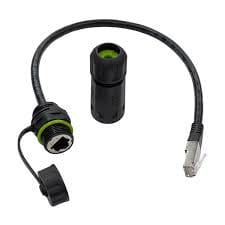
- Refits where an older gland is being replaced with a proper penetration, paired with our IP68 Deck Feedthrough Cable with RJ45 Pass-Through
Compliance statement
NMEA 2000 certification and any marine type approval are not claimed for this part. Network certification is a device-level matter and sits with the equipment manufacturer. If your build needs a certified component, say so in the enquiry and we will quote against a verified source rather than imply approval on a datasheet.
How to specify your build
- Mating face – Micro-C 5-pin or 8-pin X-coded OneNet.
- Panel thickness at the mounting point, including any backing plate.
- Thread – PG9 through M16, matched to the locknut you already hold.
- Inside termination – tail length, or the connector you want on the back.
- Above or below deck, which sets the cap and gasket material.
- Quantity, and whether this is a prototype or a production order.
Workmanship and testing
The line works to IPC/WHMA-A-620 Class 3 under ISO 9001, terminating 32 to 12 AWG. Every unit gets a continuity and pinout test before it is packed. Seal checking on the production batch is available when an ingress rating is in the specification.
Custom builds and ordering
Small runs start at 5 pcs and leave in 3 working days. At production volume the minimum is 500 pcs and lead time is 14 working days after approval. New tooling is about 10 working days on top. OEM and ODM orders ship under your part number, with material certificates and first-article reports available.
Related marine and panel hardware
- NMEA 2000 Drop Cable, Micro-C M12 5-Pin
- M12 Bulkhead Panel Connector with Pigtail, A, D and X Coding
- M12 IP69K Washdown Cable with Stainless Steel Coupling Nut
- Waterproof USB-C Panel Pigtail, 10 Gbps with Dual Screw Lock
- Single USB-C Female Car Dashboard Flush Mount Extension Cable with Bracket
- IP67 RJ45 Panel Coupler, Cat6A Shielded Bulkhead Feedthrough
Full ranges: panel mount cable, circular M8 and M12 cable and signal and data cables.
Frequently Asked Questions
Is this part NMEA 2000 certified?
No, and we do not imply it. Certification is a device-level matter held by the equipment manufacturer. Tell us if your build requires a certified component and we will quote against a verified source.
How long can the drop cable be?
The published limit for the network is 6 m per drop, with a cumulative budget across the network. Keep the bulkhead close to the tee so the internal lead does not eat the allowance.
Can I use the 8-pin X-coded version on an existing NMEA 2000 network?
No. OneNet is an Ethernet network with a different keying and a different topology. It runs alongside NMEA 2000 through a gateway, not on the same ports.
| Connector families | Micro-C 5-pin (NMEA 2000) and 8-pin X-coded (NMEA OneNet) |
|---|---|
| Panel cut-out | 12 mm class |
| Panel thickness | Up to 13 mm class |
| Thread options | PG9 to M16 |
| Ingress rating | IP67 mated / IP68 capped |
| Contact plating | Gold-plated contacts |
| Cable jacket | TPU |
| Operating temperature | -40 C to +80 C class |
| Compliance | NMEA 2000 certification is not claimed – status to be confirmed with the manufacturer |
| Mounting | Front mounting with locknut, gasket on the outside face |
| Accessory | Protective cap for the unmated state |
Related products