IP68 Deck Feedthrough Cable with RJ45 Pass-Through
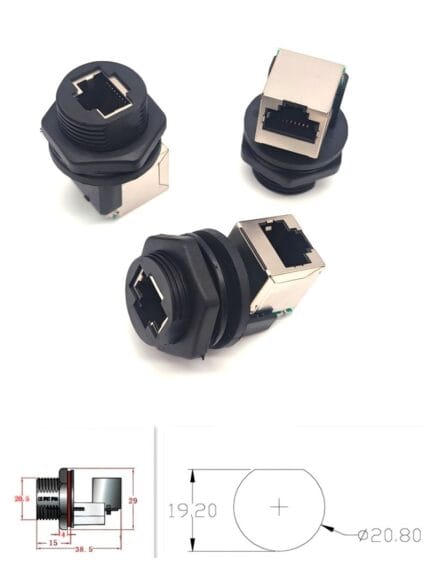
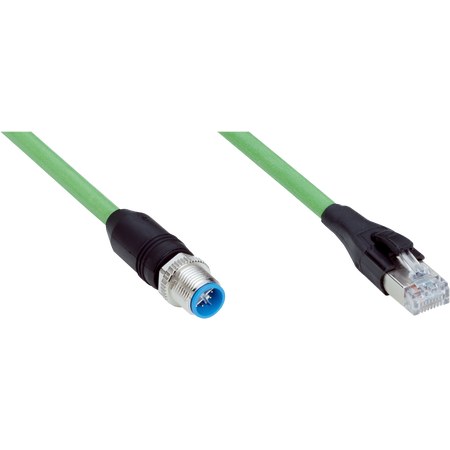
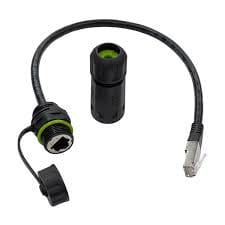
An IP68 feedthrough cable for decks and bulkheads: RJ45 pass-through on a threaded gland with a tethered protective cap, air-leak screened on every unit.
Last updated: 13 September 2026
Overview
An IP68 feedthrough cable is the one place where an enclosure wall stops behaving like a wall. Everywhere else on a deck, water stays outside because there is solid material in the way; here, you have made a hole and put a component in it. That component has to be built like a seal that happens to carry data, not like a connector that happens to get wet. This build passes a shielded RJ45 run through a deck or bulkhead on a threaded gland, with a tethered cap on the outside face for the times when nothing is plugged in.
Key Specifications
| Pass-through | RJ45, shielded |
|---|---|
| Mounting | Threaded gland, panel thickness per your spec |
| Ingress rating | IP68 at the depth and duration on your drawing |
| Cap | Tethered protective cap on the mating face |
| Screening | 100% air-leak test on the line |
| Cable | Outdoor-rated patch cable build to order |
| Hardware | Stainless or plated brass, selected for salt exposure |
| Documentation | First-article report in your format |
What the IP rating actually covers
Ingress ratings come from IEC 60529, and the second digit is where the arguments start. A 6 for solids means dust-tight. For liquids, 7 covers temporary immersion under defined conditions, and 8 covers continuous immersion at a depth and duration agreed between the maker and the buyer – which is the key sentence. IP68 does not mean “watertight at any depth”; it means watertight at the depth it was agreed and tested at.
The IP code also says nothing about the things that actually kill deck hardware: ultraviolet exposure, salt spray, galvanic corrosion between dissimilar metals, or the mechanical load of a cable hanging off a bulkhead in a swell. Those are material and hardware decisions, and they are the ones worth spending money on.
What kills this cable
| Stress | Failure mode | Design response |
|---|---|---|
| Salt spray and standing seawater | Corrosion at the gland threads; the nut seizes and the seal can no longer be serviced | Stainless or correctly plated hardware, matched to the panel material to avoid galvanic coupling |
| UV exposure on the exposed face | Jacket and cap chalking and cracking | UV-stable compounds, and a cap that covers the mating face when unmated |
| Cable hanging under its own weight | Load transfers into the gland and opens the seal | Strain relief at the gland, and a support clamp within a short distance |
| Cap lost overboard | An open port where there used to be a wall | Tethered cap as standard, not as an accessory |
| Immersion cycling | Water drawn in as the fitting cools, condensation on the contacts | Sealed interface and 100% air-leak screening before packing |
The three seals that decide the outcome
A feedthrough has three places to leak, and only one of them is the obvious one.
- Gland to panel. The radial seal under the hexagon. This one fails from wrong panel thickness, wrong surface finish, or a hole cut with a hole saw that left a burr.
- Cable to gland. The compression seal where the cable enters. This one fails when the cable diameter is off-spec, or when the gland is tightened on a cable that has been pulled sideways.
- Cable jacket itself. A cable with a damaged or porous jacket will carry water along the inside of the jacket and deliver it into the enclosure behind the gland, having never leaked at either seal.
Design notes from the build
Sealing is a tooling decision here. The gland and insert fit are machined in our own tool room, so when a leak shows up in testing the mold is corrected on site rather than argued about over email. Every sealed unit is screened by air leak before packing, because a water immersion test tells you a unit failed and an air test tells you the same thing faster, drier and on 100% of the batch rather than on a sample.
Two things worth specifying at RFQ: the panel thickness range, and the panel material. The first sets the gland; the second decides whether you are about to build a battery out of two dissimilar metals in seawater.
Typical applications for this IP68 feedthrough cable
- Boat and ship decks passing Ethernet to mast, radar or camera equipment
- Outdoor enclosures for wireless access points and CCTV
- Offshore and coastal cabinets with a sealed bulkhead entry
- Food and washdown plants where a panel pass-through gets hosed daily
- RV, truck and mobile plant bodies, alongside our IP67 RJ45 Panel Coupler, Cat6A Shielded Bulkhead Feedthrough
- Industrial enclosures with an external service port
How to specify your build
- Panel thickness and material, plus the cut-out size you can make.
- Cable spec – shielded category, jacket, and the outside diameter.
- Depth and duration the seal has to hold, so the rating means something.
- Hardware – stainless or plated brass, and what the panel is made of.
- Cable length on each side of the panel.
- Testing and documentation – air-leak screening, first-article report format.
Workmanship and testing
Sealed units are 100% air-leak screened on the line before packing, with the method and limit recorded on the first-article report. Assembly and inspection otherwise follow IPC-WHMA-A-620 Class 3 workmanship criteria under our ISO 9001 quality management system, and every unit passes 100% continuity and pinout testing. Ingress ratings are the industry-standard definitions from IEC 60529; the depth and duration your assembly is built and verified to are the ones stated on your drawing.
Custom builds and ordering
Prototypes start from 5 pcs and ship in 3 working days; production orders start at MOQ 500 pcs and ship 14 working days after approval. Gland and insert tooling is machined in house, so a non-standard panel thickness or cut-out adds about 10 working days. Our Longgang, Shenzhen plant runs four assembly lines with 40 assembly workers and 1,000,000 pcs annual output. Factory audits and video line tours can be arranged.
Related panel and sealed Ethernet assemblies
- IP67 RJ45 Panel Coupler, Cat6A Shielded Bulkhead Feedthrough
- IP67 RJ45 Screw-Lock Bulkhead Cable with Threaded Coupling and Dust Cap
- Cat6A Outdoor Direct-Burial Patch Cord, Gel-Filled, IP68 Shroud
- Rugged RJ45 IP68 Military Ethernet Cable
- IP68 Industrial Data Cable for Serial, USB and Ethernet Ports
- NMEA 2000 Bulkhead Connector with Micro-C and OneNet Options
Full range: panel mount cable.
Frequently Asked Questions
Does IP68 mean I can leave it submerged indefinitely?
It means it holds at the depth and duration it was agreed and tested at. IEC 60529 defines 8 as continuous immersion under conditions set by the maker and buyer, so tell us your depth and we build and screen to that.
Why an air-leak test instead of a water test?
An air test is faster, it is not ambiguous, and it can be run on every unit rather than on a sample. A water test also leaves moisture on a part that is about to be packed.
Stainless or plated brass?
Depends on the panel and the budget. In a salt environment, match the hardware to the panel material so you do not build a galvanic cell, and tell us what the panel is made of.
Can the cable length differ on each side of the panel?
Yes. Give us the two lengths and we build it that way, which also saves you a coil of cable you have nowhere to put.
What is the minimum order?
5 pcs minimum for prototypes, shipping in 3 working days. Production runs of 500 pcs and up ship 14 working days after approval.
| Pass-through | RJ45, shielded |
|---|---|
| Mounting | Threaded gland, panel thickness per your spec |
| Ingress rating | IP68 at the depth and duration on your drawing |
| Cap | Tethered protective cap on the mating face |
| Screening | 100% air-leak test on the line |
| Cable | Outdoor-rated patch cable build to order |
| Hardware | Stainless or plated brass, selected for salt exposure |
| Documentation | First-article report in your format |