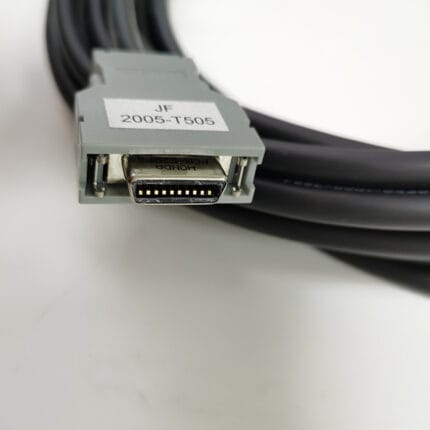
CoaXPress Machine Vision Cable Assembly for CXP-12 Camera Links
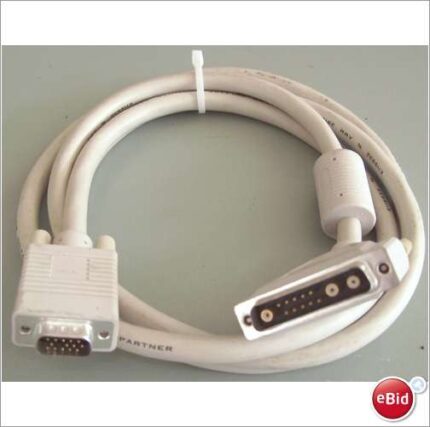
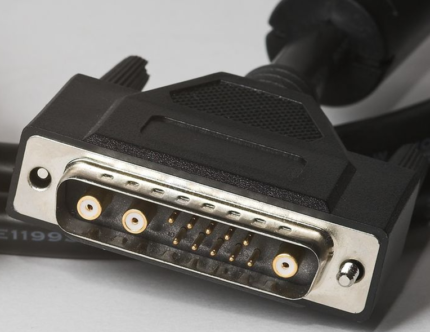
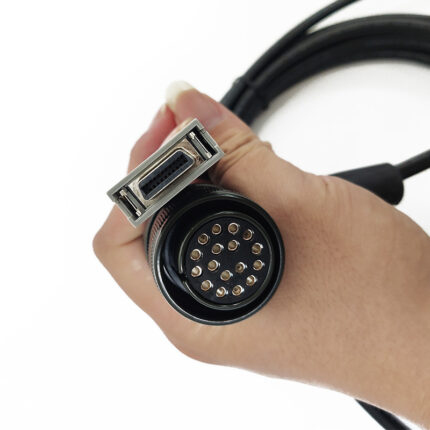
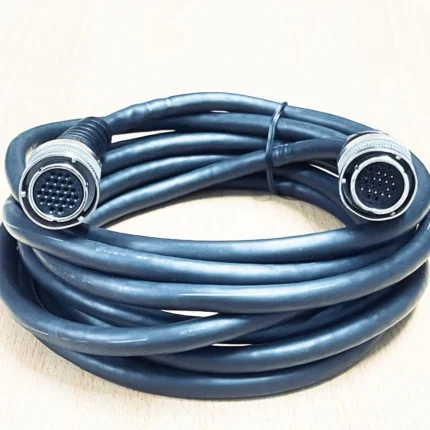
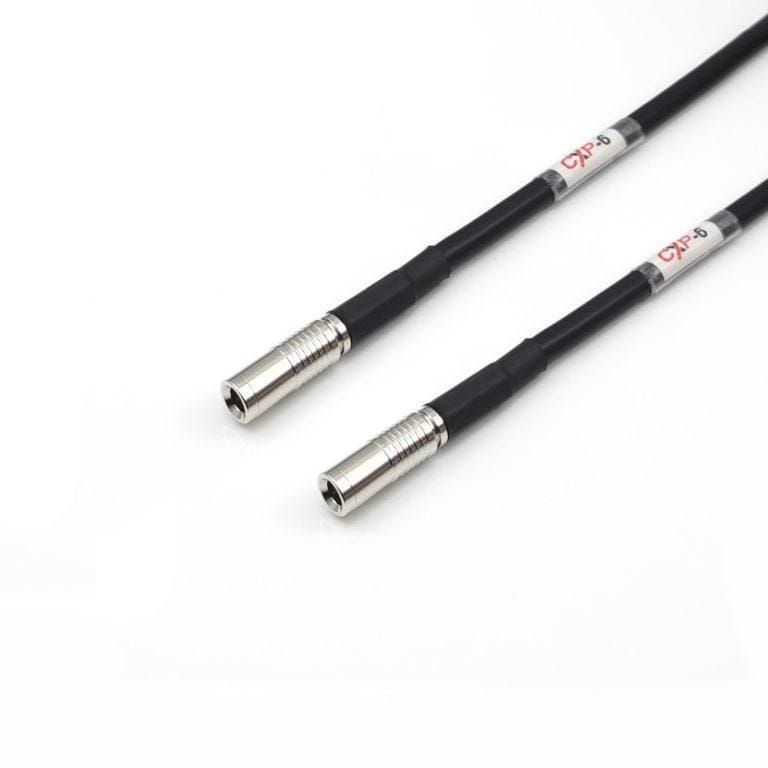
A CoaXPress machine vision cable assembly built for CXP-12 and CXP-6 camera links. DIN 1.0/2.3, BNC or micro-BNC connectors, power over coax to the class your camera draws, and a high-flex build for gantry and robot mounted heads. Send the lane count and the run length.
Overview
CoaXPress carries image data, camera control, trigger and power over a single coax run, which is why it displaced Camera Link on high-resolution lines. The coaxpress machine vision cable is the part that decides whether a stated link rate holds at the length the machine actually needs – and reach, not rate, is the number that usually causes trouble.
Key Specifications
| Product type | CoaXPress camera link cable assembly |
|---|---|
| Link rate | CXP-12 at 12.5 Gbps and CXP-6 at 6.25 Gbps per lane – to be confirmed |
| Aggregate throughput | Around 50 Gbps over four lanes – to be confirmed |
| Connector options | DIN 1.0/2.3, BNC, micro-BNC, right-angle |
| Power over coax | PoCXP, quoted 13 W or 37 W – to be confirmed |
| Outer diameter | Quoted 3.7 to 4.2 mm – to be confirmed |
| Usable length | Around 8 m at CXP-12, 11 m at CXP-6, up to 20 m low-loss – to be confirmed |
| Flex build | High-flex construction for gantry and robot mounted heads |
What kills a CXP link
On a line that has been running, the cable is almost always the first suspect and often the last thing checked properly. Four mechanisms account for most of it:
| Stress | Symptom on the line | Build answer |
|---|---|---|
| Run too long for the lane rate | Link trains at commissioning, then drops frames as the cable warms | Low-loss construction, or drop to CXP-6 for the extra reach |
| Impedance bump at the connector | Reflections, eye closure, intermittent retraining | Connector selected for the rate, terminated on controlled tooling |
| Continuous movement | Shield fracture, then noisy images that look like a camera fault | High-flex construction, braid angle set for the duty |
| Under-sized power class | Camera browns out under PoCXP load, link drops | Power class matched to the actual camera draw |
Rate versus reach: pick the length first
CoaXPress is defined in the industry by lane rate – CXP-6 at 6.25 Gbps per lane, CXP-12 at 12.5 Gbps, with four lanes aggregated to roughly 50 Gbps. The useful number for a machine builder is the reach, because it moves the opposite way to the rate:
| Lane rate | Quoted usable run | When to choose it |
|---|---|---|
| CXP-12 | Around 8 m | Highest resolution or frame rate, short camera to frame grabber distance |
| CXP-6 | Around 11 m | Longer runs where the full CXP-12 rate is not needed |
| Either, low-loss build | Up to around 20 m | Long gantry or cross-cell runs where the construction is doing the work |
Every figure in that table comes from competitor literature and is recorded as needing confirmation on our own build. We would rather measure it on a finished assembly than print a number that fails at commissioning.
Connector choice
- DIN 1.0/2.3 – the usual choice on frame grabbers and CXP camera bodies, and the safest default on a new build.
- BNC – where an existing camera or grabber already carries it and you are matching the installed base.
- Micro-BNC – dense camera heads and multi-lane bundles where the rear panel is crowded.
- Right-angle – where the clearance behind the camera is tight and a straight plug will not fit.
Power over the same coax
PoCXP lets a single run power the camera as well as talk to it. The power class quoted in competitor material is 13 W or 37 W depending on the camera and the supply unit. Confirm the draw of your camera before ordering: a cable sized for the wrong class will run warm and drop the link, and it will do it under load rather than on the bench.
Flex and jacket
For gantry or robot mounted heads we supply a high-flex build. Competitor data quotes flex life in the tens of millions of cycles for these constructions and a jacket diameter in the 3.7 to 4.2 mm band; flame performance is quoted against the VW-1 method. None of these are published as certified results on this page until the supplier reports are filed – the values your assembly is built and verified to are the ones on your drawing.
Typical applications for this coaxpress machine vision cable
- High-resolution line scan and area scan cameras running CXP-12 to a frame grabber
- Multi-lane camera heads bundled into one run, alongside our USB3 Vision camera cable for smaller inspection heads
- Gantry and robot mounted cameras needing a high-flex build, with power and trigger on the same coax
- Upgrade paths from Camera Link where the existing tray and gland sizes have to be reused
- Camera drops terminated at an industrial interface using our USB Type-C to M12 8-pin industrial cable
What we need to quote
- Lane count and the target rate per lane.
- Run length, measured on the installed route.
- Connector at each end, including whether one end needs a right-angle.
- Whether the run moves – gantry, robot, or fixed.
- Camera power class, taken from the camera nameplate rather than guessed.
Workmanship and testing
ISO 9001 covers the system and IPC/WHMA-A-620 Class 3 covers the work on CoaXPress Machine Vision builds, across 32 to 12 AWG. No CoaXPress unit is packed until continuity and pinout check out, and seal checking is quoted whenever an ingress rating is on the drawing.
Every production run can ship with RoHS and REACH declarations and the electrical report agreed at quotation; see certifications and material declarations. UL styles and other named approvals are built to drawing: we source to the style you specify and document it, rather than asserting a listing we do not hold. For continuous motion the stranding, lay length and jacket are built to the flex method described under continuous-flex construction and flex-life testing, with the cycle count defined in the test scope. More background: our test and measurement work. Tooling is quoted separately, cut in-house rather than brokered out, and owned by you.
Custom builds and ordering
CoaXPress Machine Vision lots run from 1 to 50 pcs, out in 3 working days. Volume starts at MOQ 500 pcs shipping 14 working days after sample approval. CoaXPress orders go out under your part number and labeling, OEM or ODM, and we provide material certificates and first-article reports when asked. We hold 100 sets of mold tooling in house, so a standard body needs no tooling time and a new one adds about 10 working days.
Related assemblies
- USB3 Vision Camera Cable with Locking Screws
- USB Type-C to M12 8-Pin Industrial Cable
- M12 X-Coded Cat6A Cable to RJ45 for Machine Vision
- Cat6A RJ45 Screw-Lock GigE Vision Cable
- Cat6A S/FTP GigE Vision Screw-lock Cable for Drag Chain
- 12G-SDI Coax Cable Assembly, BNC to BNC
Full range: signal and data cables.
Frequently Asked Questions
Can I run CXP-12 at 15 m?
Not on a standard construction. Drop to CXP-6, or specify a low-loss build and let us measure it on a finished assembly rather than quoting a number from literature.
Which connector should I default to?
DIN 1.0/2.3 on a new build. Match BNC only where you are replacing into an installed base that already carries it.
How do I size the power class?
Take the draw from the camera nameplate and confirm against the supply unit. A cable sized for the wrong class runs warm under load and drops the link.
What is the minimum order?
CoaXPress Machine Vision lots run from 1 to 50 pcs, out in 3 working days. Volume starts at MOQ 500 pcs shipping 14 working days after sample approval.
| Product type | CoaXPress camera link cable assembly |
|---|---|
| Link rate | CXP-12 at 12.5 Gbps and CXP-6 at 6.25 Gbps per lane – to be confirmed |
| Aggregate throughput | Around 50 Gbps over four lanes – to be confirmed |
| Connector options | DIN 1.0/2.3, BNC, micro-BNC, right-angle |
| Power over coax | PoCXP, quoted 13 W or 37 W – to be confirmed |
| Outer diameter | Quoted 3.7 to 4.2 mm – to be confirmed |
| Usable length | Around 8 m at CXP-12, 11 m at CXP-6, up to 20 m low-loss – to be confirmed |
| Flex build | High-flex construction for gantry and robot mounted heads |