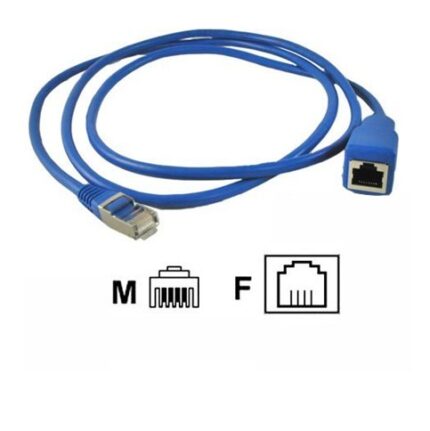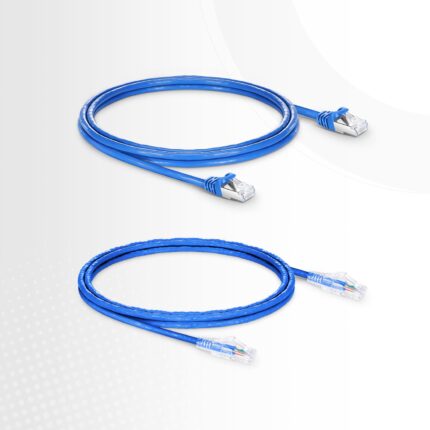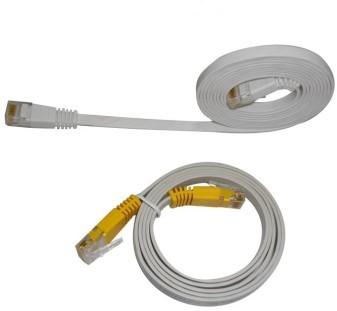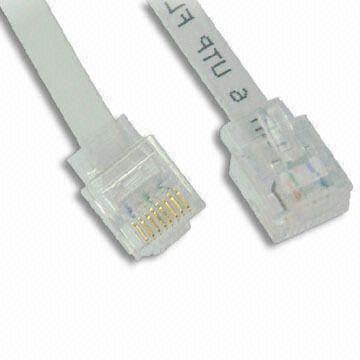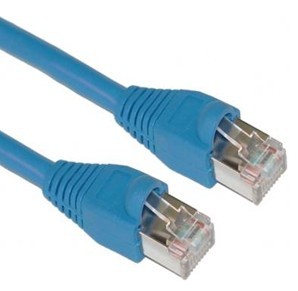
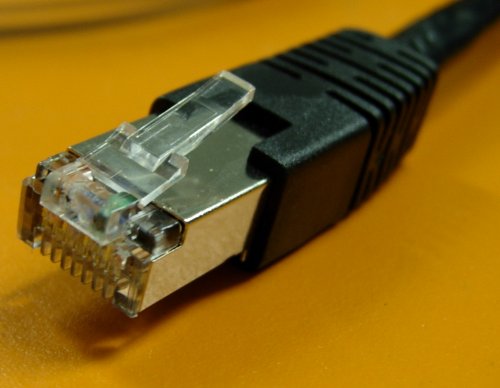
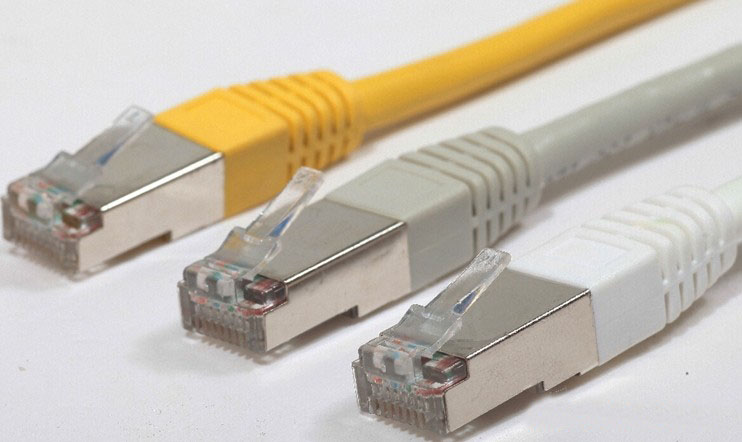
Cat6 S/FTP Shielded RJ45 Patch Cord (Foiled + Braid, Snagless Boot)
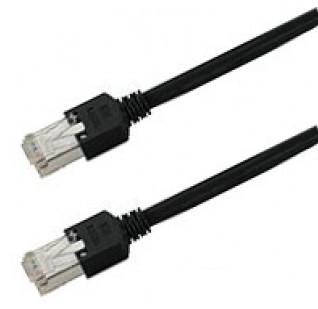
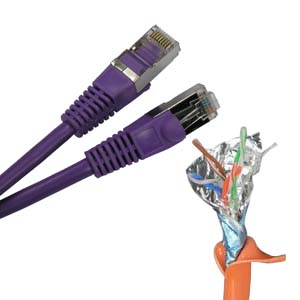
A cat6 shielded patch cord built for runs that pass through electrical noise: aluminum foil on each pair, an overall tinned copper braid, and a snagless over-molded boot, made to your length and wiring.
Overview
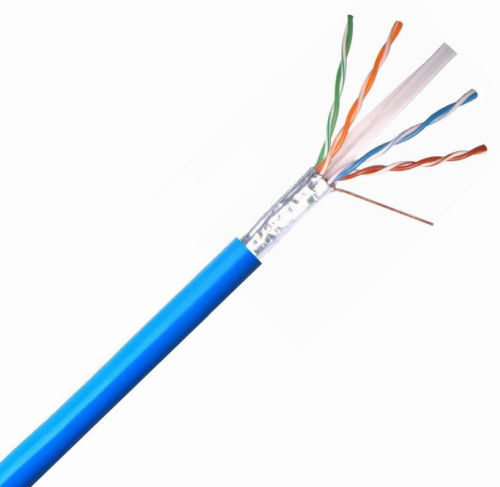
A cat6 shielded patch cord earns its keep in one situation: the run passes through electrical noise. Foil on each of the four pairs keeps the pairs from talking to each other, and the overall tinned copper braid keeps outside fields from getting in. Two shields, two different jobs, and neither one does much unless the channel is grounded end to end. We build the cord to the length, jacket, wiring and boot style on your drawing.
Key Specifications
| Cable type | Cat6 S/FTP, 4-pair, 100 ohm class |
|---|---|
| Individual screen | Aluminum/polyester foil per pair |
| Overall screen | Tinned copper braid |
| Conductor | Stranded bare copper, 26 AWG typical |
| Connector | RJ45 8P8C, 50 micro-inch gold plating |
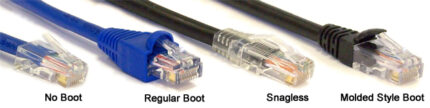
| Boot | Snagless, over-molded strain relief |
| Wiring | T568A or T568B, straight through, per order |
| Jacket | PVC standard; LSZH or PUR on request |
| Length | OEM build, stated per order |
| Category reference | ISO/IEC 11801 Class E, industry-general definition |
What the S/FTP code actually means
Shielding is described with a two-part code in the ISO/IEC 11801 series: the part before the slash is the screen over all four pairs, the part after is what wraps each pair on its own. Reading the code tells you what the construction can do before you look at a single electrical figure.
| Code | Overall screen | Per-pair screen | Where it is used |
|---|---|---|---|
| U/UTP | None | None | Office LAN, PoE devices, clean short patch runs |
| F/UTP | Foil | None | Runs parallel to power where cost matters |
| S/UTP | Braid | None | Industrial noise; braid is easier to drain |
| SF/UTP | Foil + braid | None | Heavier noise, still no pair isolation |
| F/FTP | Foil | Foil | Pair-to-pair crosstalk in tight bundles |
| S/FTP | Braid | Foil | This build — dense bundles near drives and lighting |
| SF/FTP | Foil + braid | Foil | Worst-case EMI; largest diameter, stiffest |
The category itself comes from the channel limits in ANSI/TIA-568 and the ISO/IEC 11801 series: the Category 6 cable channel is defined to 250 MHz as an industry-general figure. Whatever your assembly is built and verified to is stated per order, on your drawing — we do not publish numbers we did not measure on your build.
Where a shielded cord is genuinely required
- Variable-frequency drives, servo racks and welding cells
- Cable tray shared with 230/400 V power over long parallel runs
- Dense bundles where alien crosstalk between adjacent cords is the limiting factor
- Broadcast, AVoIP and medical imaging racks full of mixed RF equipment
- Cabinet runs that sit next to switching power supplies
Shielded or unshielded: the grounding caveat
A shield is a conductor, and a conductor that goes nowhere behaves like an antenna. The braid has to be drained through a shielded RJ45 plug into a shielded jack, into a grounded patch panel and a grounded switch. If even one end of the channel is unshielded, the cord buys you very little and can make the noise situation worse. Budget for the physical side too: shielded cords are stiffer, heavier and need a larger bend radius, which matters once a patch panel is full.
Conductor: stranded or solid
Patch cords are stranded for a reason — they get bent, coiled and pulled every time a port moves. Solid conductor belongs in the wall.
| Stranded | Solid | |
|---|---|---|
| Typical use | Patch cords, equipment leads | Permanent link, riser and wall runs |
| Flex life | High, survives daily handling | Low, work-hardens and cracks |
| Attenuation | Slightly higher per meter | Lower over long permanent runs |
| Termination | Crimped RJ45 plug | Insulation-displacement jack or panel |
Typical applications for this cat6 shielded patch cord
- Industrial Ethernet drops from a shielded panel to a machine
- Machine vision and GigE camera links near drives — see our Cat6A RJ45 screw-lock GigE Vision cable
- Broadcast and AVoIP racks with mixed RF and video gear
- Cabinet feedthrough into sealed enclosures — pair it with an IP67 RJ45 panel coupler
- Data center cabinets at high port density
How to specify your build
- Length and whether the cord is static or handled daily.
- Jacket — PVC, LSZH or PUR, and what it will be exposed to.
- Wiring — T568A or T568B, straight through on both ends.
- Boot — snagless, slim, or no boot at all.
- Shield termination — whether your panel and jacks are shielded and grounded.
- Quantity, and whether this is a prototype or a production order.
Workmanship and testing
Assembly and inspection follow IPC/WHMA-A-620 Class 3 workmanship criteria under our ISO 9001 quality management system, and every unit is 100% continuity and pinout tested before it is packed. Conductor range is 32 to 12 AWG. Shield coverage and drain-wire construction are checked on the first article. Where a standard sets a limit for the category, the connector interface or the jacket, that is the industry-general definition of the rating. The values your assembly is built and verified to are the ones stated on your drawing, per order.
Every production run can ship with RoHS and REACH declarations and the electrical report agreed at quotation; see certifications and material declarations. UL styles and other named approvals are built to drawing: we source to the style you specify and document it, rather than asserting a listing we do not hold. Termination, molding and verification happen in-house see the assembly lines behind this build so the process that made your sample is the process that runs the order. Related reading: our industrial automation work. Tooling is quoted separately, cut in-house rather than brokered out, and owned by you.
Custom builds and ordering
Send a drawing, a photo of the existing cord, or just the port count and length. Prototype builds start from 1 to 50 pcs and ship in 3 working days; production orders start at MOQ 500 pcs and ship 14 working days after approval. New tooling adds about 10 working days, and we hold 100 sets of mold tooling in house. OEM and ODM builds ship under your part number and labeling, with material certificates and first-article reports on request. Factory audits and video line tours of our Longgang, Shenzhen plant can be arranged through Alan Kang.
Related shielded Ethernet assemblies
- Cat5e FTP Shielded Patch Cord
- Cat6A Shielded Patch Cord, S/FTP 26 AWG
- Cat7 S/FTP Patch Cord, 600 MHz
- Cat8 Ethernet Patch Cord, S/FTP 22 AWG
- Cat6 UTP Patch Cord
- Custom Shielded Ethernet Data Cable
- PoE Cat6a Patch Cable, 4-Pair Shielded, Molded Snagless Boot
Full range: Ethernet patch cord range.
Frequently Asked Questions
Does a shielded patch cord replace a shielded permanent link?
No. The shield has to be continuous from plug to plug. If the horizontal cable or the jack is unshielded, the shielded patch cord is the weakest link rather than the fix.
Can I use this for PoE?
Yes, and bare copper conductors are the right starting point for PoE because of heating in bundles. The current rating and temperature rise are stated per order, from your build.
Is S/FTP always better than F/UTP?
Not always. S/FTP is stiffer, thicker and costs more. Where the only problem is external noise, an overall foil is often enough.
Can you build one end shielded and one end unshielded?
We can, but for a reason — usually a device with no shield contact on its port. Tell us which end and we will flag the consequence.
| Individual screen | Aluminum/polyester foil per pair |
|---|---|
| Overall screen | Tinned copper braid |
| Boot | Snagless, over-molded strain relief |
| Conductor | Stranded bare copper, 26 AWG typical |
| Wiring | T568A or T568B, straight through, per order |
| Connector | RJ45 8P8C, 50 micro-inch gold plating |
| Cable type | Cat6 S/FTP, 4-pair, 100 ohm class |
| Jacket | PVC standard; LSZH or PUR on request |
| Length | OEM build, stated per order |
| Category reference | ISO/IEC 11801 Class E, industry-general definition |