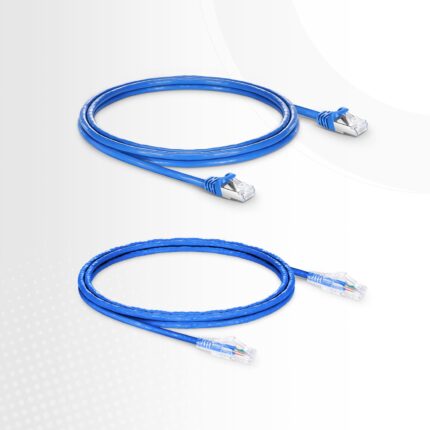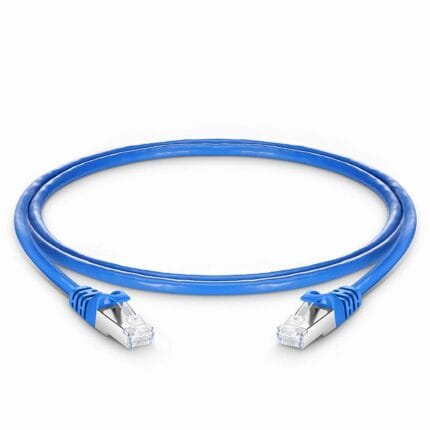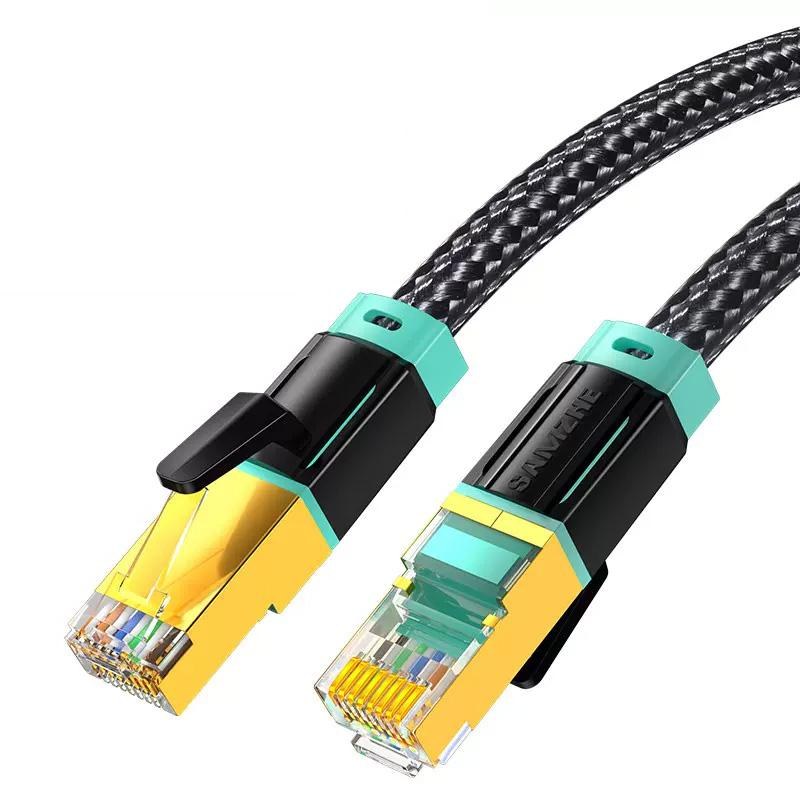
Cat8 Ethernet Patch Cord, S/FTP 22 AWG, 25/40GBASE-T to 30 m
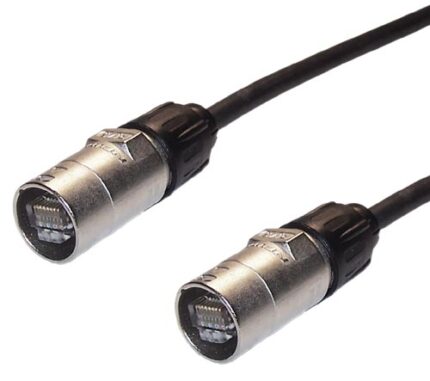
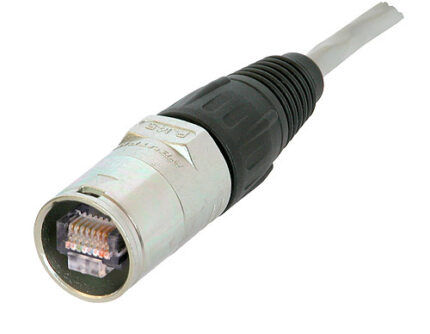
A Cat8 Ethernet patch cord in S/FTP 22 AWG for 25GBASE-T and 40GBASE-T inside a 30 m channel. Screened plugs with metal shell, LSZH or CM jacket, built in 1 to 5 m for top-of-rack and short-reach links.
Overview
A Cat8 Ethernet patch cord is a short-reach component, and that is the whole
design brief. Category 8 exists for 25GBASE-T and 40GBASE-T inside a cabinet or across an aisle,
not for structured cabling across a floor. The quoted construction is four pairs of 22 AWG in
S/FTP — foil on each pair under an overall braid — characterized to 2000 MHz. If your run is
longer than the channel limit, buy fiber or a different category rather than hoping a heavier
cable will stretch it. Buying Cat8 for a desk run buys you a stiff cord and no additional
performance, because the link negotiates to what the equipment at both ends supports.
Key Specifications
| Category / class | Category 8, Class I per ISO/IEC 11801, ANSI/TIA-568-C.2-1 |
|---|---|
| Construction | 4-pair S/FTP, foil per pair plus overall braid, 22 AWG (pending supplier datasheet) |
| Bandwidth | 2000 MHz (pending supplier datasheet and test report) |
| Supported applications | 25GBASE-T and 40GBASE-T |
| Channel reach | 30 m channel, read as 24 m permanent link plus 2 x 3 m patch (pending channel test) |
| Connector | Screened RJ45 plug with metal shell; GG45 and TERA style plugs listed as options |
| Jacket options | LSZH or CM, color and outer diameter pending supplier datasheet |
| Typical lengths | 1 m / 2 m / 3 m / 5 m (pending supplier confirmation) |
| Typical loads | Top-of-rack switch to server, short 25G and 40G links, edge and AI clusters |
| Channel class | Class I with RJ45 as standard; Class II with GG45 or TERA on request |
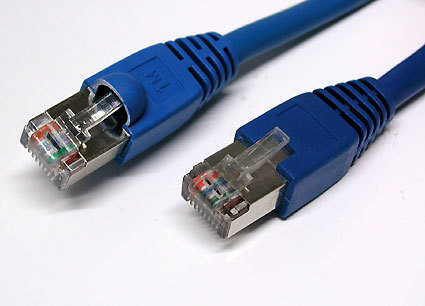
| Termination | Screened plug with metal shell and strain relief boot, braid carried through the shell |
The 30 meter channel, and where it actually goes
Category 8 performance is defined over a 30 m channel. That is not a suggestion about cable
length; it is the total of the permanent link plus the patch cords at both ends, and it is the
number most buyers misread. The common reading is a 24 m permanent link plus two 3 m patches, one
at the switch and one at the server. If your permanent link is longer, the patch allowance shrinks
with it.
| Segment | Common budget | What eats it |
|---|---|---|
| Permanent link | 24 m | Vertical runs up and down the rack, tray routing, cross-aisle distance |
| Patch at the switch | 3 m | Top-of-rack to the cable manager, or end-of-row to the patch panel |
| Patch at the server | 3 m | Cable manager to the NIC, including the bend at the rear of the chassis |
| Total channel | 30 m | The figure the category is defined against |
Measure the routed path, add the vertical distance up and down the rack, then choose the
lengths. That is why these cords are ordered at 1, 2, 3 and 5 m rather than at desktop
lengths.
Cat8 against Cat6A: what you are actually choosing
This comparison decides most of these orders. The category only matters if the equipment at
both ends runs at 25 or 40 Gbit/s over copper and the run is inside the channel budget. Outside
those conditions, Cat6A is lighter, cheaper, easier to dress and does the job to 100 m.
| Factor | Category 6A | Category 8 |
|---|---|---|
| Characterized bandwidth | 500 MHz | 2000 MHz (quoted construction) |
| Top application over copper | 10GBASE-T | 25GBASE-T and 40GBASE-T |
| Channel reach | 100 m | 30 m |
| Conductor in the patch build | 26 or 28 AWG typical | 22 AWG quoted, notably stiffer |
| Best fit | Structured cabling, desks, general 10G | Top of rack, end of row, short 25G and 40G links |
| Cost and handling | Lower cost, easier to dress | Higher cost, needs a generous bend radius |
For the floor and the desk, our Cat6A
shielded patch cord is the sensible part. For the two-meter hop from a top-of-rack switch to a
25G server, Cat8 is what the application calls for.
Class I and Class II are different mating faces
ISO/IEC 11801 splits Category 8 into two channel classes. Class I uses the familiar RJ45 mating
face, which keeps these cords backward compatible with existing 1G and 10G equipment in the same
rack. Class II uses the GG45 or TERA style interfaces, which are different hardware worth
specifying only if the installed base already uses them. Order the class your equipment
expects.
On twisted-pair
Ethernet, the application standard and the cabling category are separate documents: the
application sets the reach and the bit rate, the category sets what the copper must do. Both have
to line up, which is why we quote the channel rather than the cable alone.
Shielding and grounding
At this frequency the screen is not decoration. Every pair is foiled and the whole bundle is
braided, and the cords use screened plugs with a metal shell so the braid is carried through the
connector rather than stopped at the boot. The consequence is that the equipment at both ends has
to provide a grounded shielded port: an ungrounded screen turns the cord into a radiator and you
lose the margin you paid for.
Installation reality
Cords at this gauge are stiff. Respect the bend radius at the connector exit and across the
cable manager, because a hard kink costs margin that no amount of shielding recovers. Do not
bundle them so tightly that the weight of the bundle distorts the pairs at the plug, and keep
them out of the same bundle as the cabinet power whips. Where the run has to move, our Cat6A
high-flex drag chain patch cord will outlast a stiff one.
What we are confirming
Bandwidth, channel reach, conductor gauge and jacket ratings come from public competitor data
and the published category definitions. Ask for the datasheet and channel test report for the
exact construction, and tell us your permanent link length.
How to specify your build
- Class — Class I RJ45 as standard, or Class II with GG45 or TERA.
- Lengths, and the permanent link length they will sit inside.
- Jacket — LSZH or CM, and what the local code requires.
- Quantity, and whether this is a sample or a production order.
Typical applications for this Cat8 Ethernet patch cord
- Top-of-rack switch to server links at 25GBASE-T and 40GBASE-T
- End-of-row and short cross-aisle runs inside the 30 m channel budget
- Edge and AI clusters where copper is preferred over fiber for very short hops
- Test benches and burn-in racks that need the highest copper rate available
Workmanship and testing
Cat8 Ethernet builds are assembled and inspected to IPC/WHMA-A-620 Class 3 criteria, with ISO 9001 as the quality system over 32 to 12 AWG work. continuity and pinout are checked on every Cat8 unit before packing, and seal checking is quoted whenever an ingress rating is on the drawing.
Every production run can ship with RoHS and REACH declarations and the electrical report agreed at quotation; see certifications and material declarations. UL styles and other named approvals are built to drawing: we source to the style you specify and document it, rather than asserting a listing we do not hold. Where this build needs an overmold, the tool is designed, cut and maintained in our own shop under the overmold tooling we build in-house, and it is never used for another customer’s program. The wider context is covered under our industrial automation work.
Custom builds and ordering
Cat8 Ethernet prototype builds start from 1 to 50 pcs and are out in 3 working days; production is quoted from 500 pcs at 14 working days after approval. Tooling not already held adds around 10 working days. Private-label Cat8 runs ship under your part number and labeling, and we provide material certificates and first-article reports when asked.
Related patch cords
- Cat6A Shielded Patch
Cord, S/FTP 26 AWG, 500 MHz - Cat6A Slim Patch Cord, 28 AWG
S/FTP, Low-Profile Boot - Cat7 S/FTP Patch Cord, 600 MHz,
TERA / GG45 - ix Industrial Cat6A Patch
Cord for ix-to-RJ45 and ix-to-ix Links - Cat6A
High-Flex Drag Chain Patch Cord, S/FTP PUR
Full range: Ethernet
cable and patch cords.
Frequently Asked Questions
Is Cat8 worth it for a desktop run?
Almost never. The link negotiates to what the equipment supports, and a 1G or 10G desktop gets
nothing from a 2000 MHz cord except stiffness and cost.
How long can the run be?
Category 8 is defined over a 30 m channel, which includes the permanent link and both patch
cords. A common reading is 24 m permanent link plus two 3 m patches.
Does it work with existing 1G and 10G equipment?
Yes, in the Class I build with an RJ45 mating face. The plug is backward compatible; the
performance is set by the equipment.
Do I need GG45 or TERA plugs?
Only if your installed base already uses them. Those are the Class II interfaces and they need
matching hardware at both ends.
Why is the cord so stiff?
The quoted construction uses 22 AWG conductors with foil per pair and an overall braid. That is
what the performance requires, and it is why bend radius matters on these runs.
| Category / class | Category 8, Class I per ISO/IEC 11801, ANSI/TIA-568-C.2-1 |
|---|---|
| Construction | 4-pair S/FTP, foil per pair plus overall braid, 22 AWG |
| Bandwidth | 2000 MHz class |
| Supported applications | 25GBASE-T and 40GBASE-T |
| Channel reach | 30 m channel, read as 24 m permanent link plus 2 x 3 m patch class |
| Connector | Screened RJ45 plug with metal shell; GG45 and TERA style plugs listed as options |
| Jacket options | LSZH or CM |
| Typical lengths | 1 m / 2 m / 3 m / 5 m class |
| Typical loads | Top-of-rack switch to server, short 25G and 40G links, edge and AI clusters |
| Channel class | Class I with RJ45 as standard; Class II with GG45 or TERA on request |
| Termination | Screened plug with metal shell and strain relief boot, braid carried through the shell |