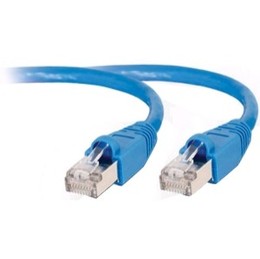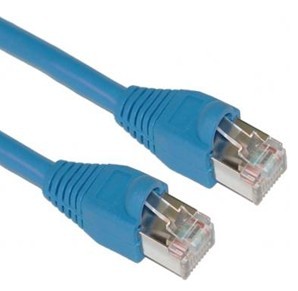
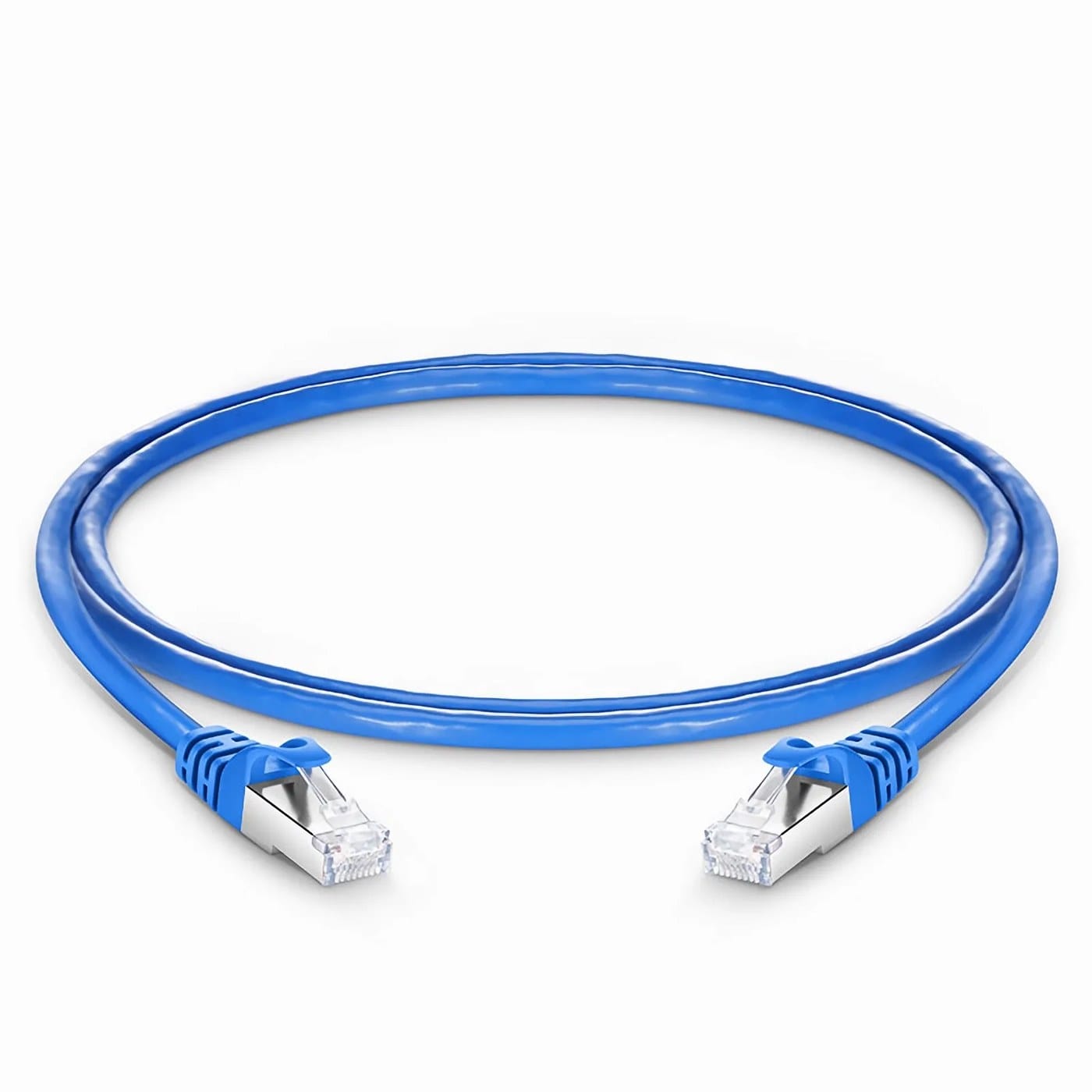
Cat6A Shielded Patch Cord – S/FTP 26AWG, 500 MHz, 10G
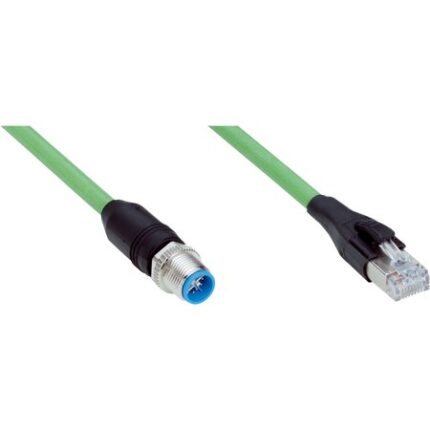
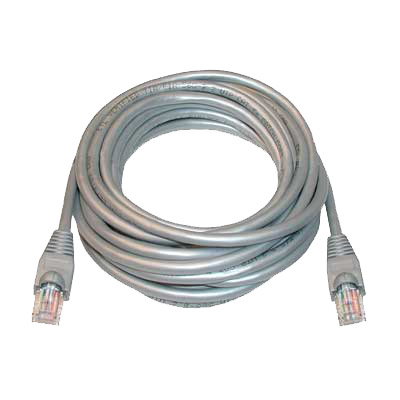
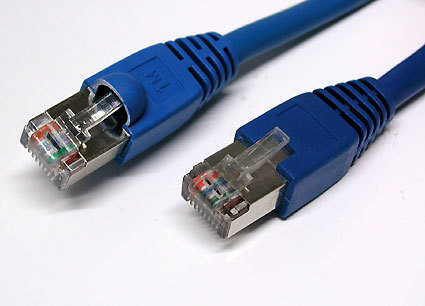
A cat6a shielded patch cord in S/FTP 26 AWG stranded copper: pair foil plus overall braid, 500 MHz class, RJ45 to RJ45, built to your length and channel budget.
Overview
A cat6a shielded patch cord is what you buy when the link has to run at ten gigabits and the environment is not clean. Category 6A is the class defined for 10GBASE-T across the full 100 m channel, and the S/FTP construction is what holds that together when the cord sits next to power or in a bundle with fifty others. It is also the cord people over-specify, so it is worth being clear about when you need it.
Key Specifications
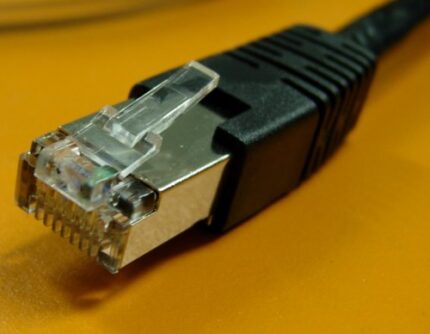
| Cable type | Cat6A S/FTP shielded patch cord, 4-pair |
|---|---|
| Construction | Pair foil plus overall tinned copper braid |
| Conductor | 26 AWG stranded, bare or tinned copper |
| Bandwidth class | 500 MHz, Class EA, industry-general definition |
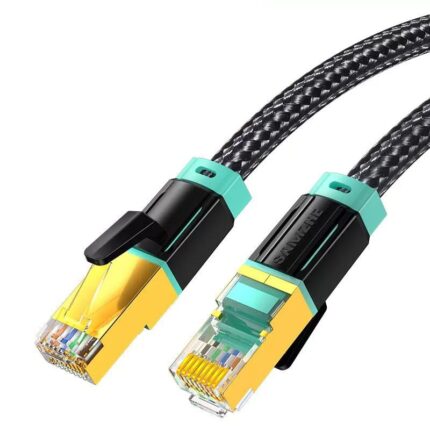
| Connectors | RJ45 to RJ45, shielded, 50 micro-inch gold plating |
| Rating | 10GBASE-T class channel; stated per order |
| PoE | Suitable for PoE builds; current rating stated per order |
| Jacket | PVC standard; LSZH or plenum compound on request |
| Length | OEM build, stated per order |
What 500 MHz Class EA actually means
The two standards bodies use different names for the same idea. ISO/IEC 11801 calls it Class EA, specified to 500 MHz. ANSI/TIA-568 calls it Category 6A. Either way it is the class written for 10GBASE-T over the full 100 m channel — the first one that is. The Category 6A specification also tightens the limits on alien crosstalk between adjacent cords, which is the failure mode you hit in a full bundle rather than on a single cable.
These are industry-general definitions. What your cord is built and verified to is stated per order, from your drawing.
Length and channel budget
This is the part that catches people out. The 100 m channel is not 100 m of patch cord — it is a budget shared between the horizontal run and the cords at each end, and patch cords count against it more heavily per meter than the permanent link does.
| Segment | Standard allowance | Note |
|---|---|---|
| Permanent link | Up to 90 m | Solid conductor, installed once |
| Patch cord at the outlet | 5 m typical | Stranded, higher attenuation per meter |
| Patch cord at the panel | 5 m typical | Same allowance at the other end |
| Total channel | 100 m | The number everyone remembers |
| Consolidation point | Reduces the allowance | Check the standard before designing one in |
The reason patch cords get a smaller allowance is conductor size: a stranded 26 AWG cord has more insertion loss per meter than 23 AWG solid horizontal cable. Ten meters of cord is fine. Thirty meters of cord in a channel is not, no matter what the jacket says. Give us the channel design and we will build the cord lengths to fit it.
26 AWG: why patch cords are thinner than the cable in the wall
Stranded 26 AWG is chosen for flexibility and for the strain relief at the plug, not for performance. A cord you can actually bend is worth more than a fraction of a decibel. It also matters for the panel: 26 AWG cords are thinner, so they dress better and block the neighboring port less. If your run is long or the bundle is large, tell us and we will quote a different gauge.
PoE and heat in bundles
Shielded cords are the right choice next to power, but they have their own thermal problem: a big bundle of energized cords in a sealed tray has nowhere to put the heat. Bare copper rather than copper-clad aluminum is the first rule, because CCA conducts worse and heats more. Bundle size and fill are the second. If the run carries PoE at real current, say so on the order and we will quote conductor and jacket accordingly, with the rating stated per your drawing.
Typical applications for this cat6a shielded patch cord
- 10G uplinks between switches in a data center
- Server and storage links in high-density cabinets
- Industrial Ethernet drops near drives and welders
- Wi-Fi 6 and 6E access point runs at 10G
- Machine vision links, alongside our Cat6A PUR High-Flex Patch Cord for moving applications
- Any 10G run through an electrically noisy route — compare the Cat6A UTP Patch Cord for clean environments
How to specify your build
- Length, and where it sits in the channel budget.
- Conductor — 26 AWG stranded standard; other gauges on request.
- Shield termination — confirm the jacks and panels are shielded and grounded.
- Jacket — PVC, LSZH, or plenum compound.
- Boot — standard, snagless, or slim for dense panels.
- Quantity, and whether you need labeling or custom packaging.
Workmanship and testing
Assembly and inspection follow IPC/WHMA-A-620 Class 3 workmanship criteria under our ISO 9001 quality management system, and every unit is 100% continuity and pinout tested before it is packed. Conductor range is 32 to 12 AWG. Shield continuity from plug shell to plug shell is checked on every unit. Where a standard sets a limit for the category, the connector interface or the jacket, that is the industry-general definition of the rating. The values your assembly is built and verified to are the ones stated on your drawing, per order.
RoHS and REACH declarations are provided per project together with the agreed test reports; the documentation scope is listed under certifications and compliance. If your drawing specifies a UL style, we build to that drawing and supply the UL reference with the shipment instead of substituting an equivalent. Production runs on the same lines described under the assembly lines behind this build, where cutting, termination, molding and 100 percent electrical verification sit under one roof. Related reading: cable assemblies for industrial automation and robotics. Any tooling we cut for this part stays yours, maintained in our own tool room under your part reference.
Custom builds and ordering
Cat6A Shielded Patch Cord lots run from 1 to 50 pcs, out in 3 working days; volume starts at MOQ 500 pcs shipping 14 working days after approval. Cat6A orders go out under your part number and labeling, OEM or ODM, and material certificates and first-article reports are available on request. New tooling adds about 10 working days, and we hold 100 sets of mold tooling in house.
Related Cat6A assemblies
- Cat6A UTP Patch Cord, 28 AWG
- Cat6A PUR High-Flex Patch Cord, S/FTP 26 AWG
- Cat6A Slim Patch Cord, 28 AWG S/FTP
- Cat8 Ethernet Patch Cord, S/FTP 22 AWG
- Cat7 S/FTP Patch Cord, 600 MHz
- Cat6A Outdoor Direct-Burial Patch Cord
Full range: Ethernet patch cord range.
Frequently Asked Questions
Do I need shielded for 10G?
Not always. In a clean office environment an unshielded Cat6A cord is fine and cheaper. Shielded earns its place near power, in dense bundles, and in industrial environments.
What happens if the shield is not grounded?
You lose most of the benefit, and in some cases make the noise situation worse. The shield has to be continuous from plug to grounded panel.
How long can the patch cords be?
Within the channel budget, the standard model allows a 90 m permanent link plus cords at each end. Tell us the design and we will build to it.
Is Cat6A worth it over Cat6?
For 10G over the full channel, yes — Cat6 was defined for 1G, with 10G supported only over shorter distances.
| Cable type | Cat6A S/FTP shielded patch cord, 4-pair |
|---|---|
| Construction | Pair foil plus overall tinned copper braid |
| Connectors | RJ45 to RJ45, shielded, 50 micro-inch gold plating |
| Conductor | 26 AWG stranded, bare or tinned copper |
| Rating | 10GBASE-T class channel; stated per order |
| Length | OEM build, stated per order |
| Bandwidth class | 500 MHz, Class EA, industry-general definition |
| PoE | Suitable for PoE builds; current rating stated per order |
| Jacket | PVC standard; LSZH or plenum compound on request |