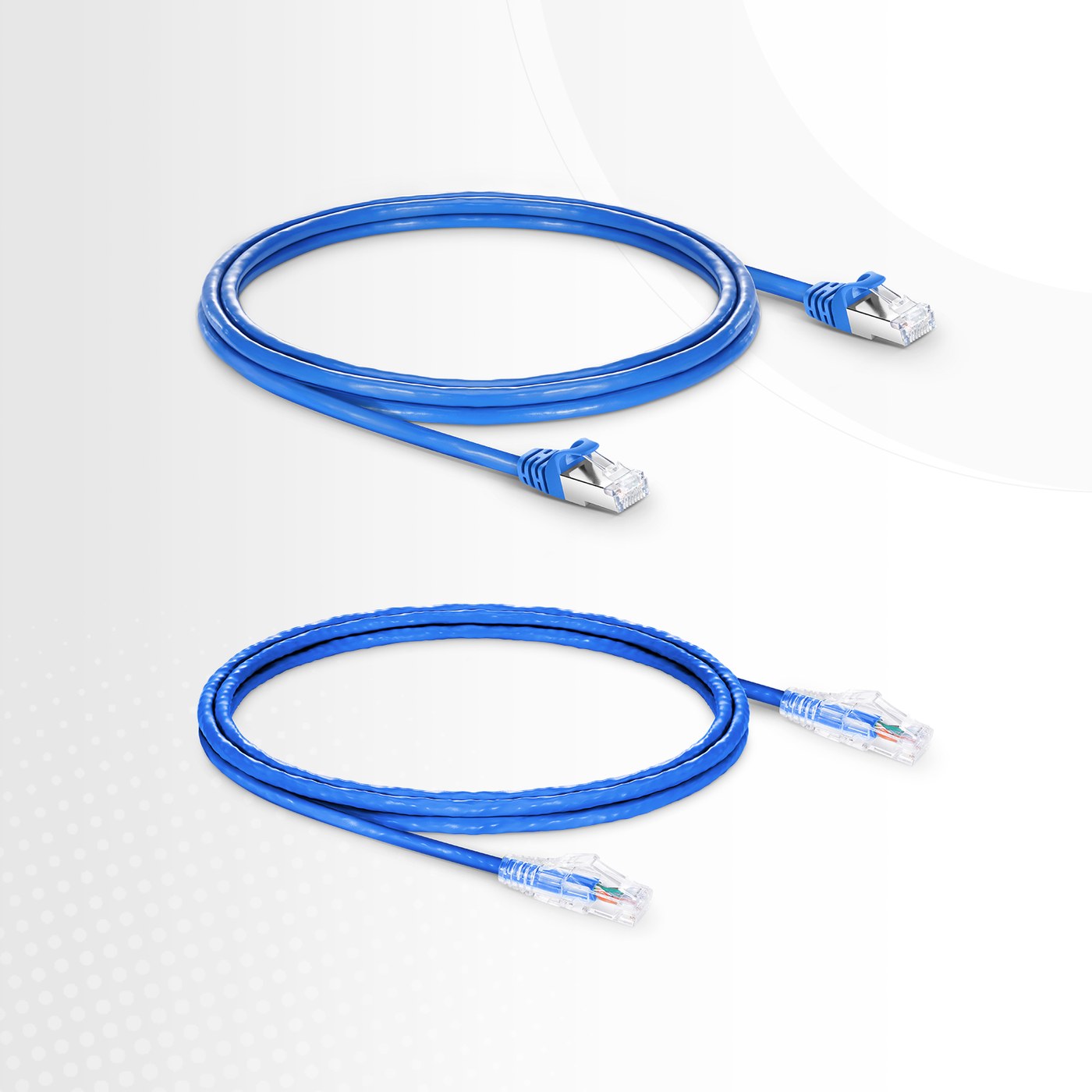
Cat6A Railway Patch Cord for Rolling Stock, RJ45 or M12 Ends
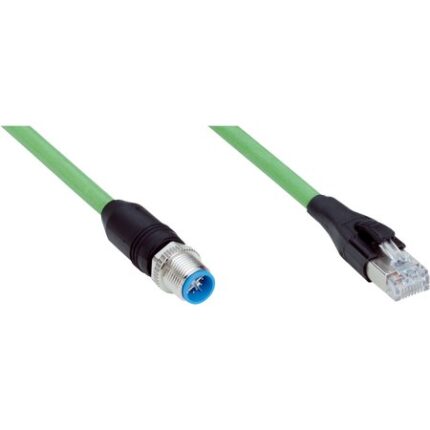
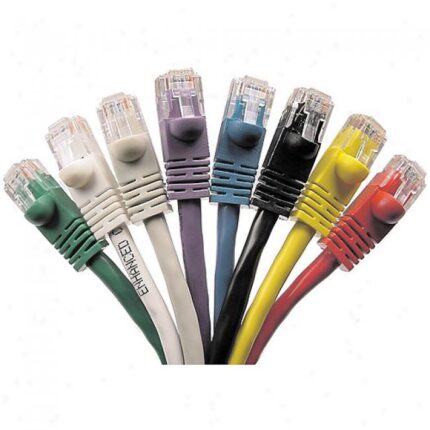
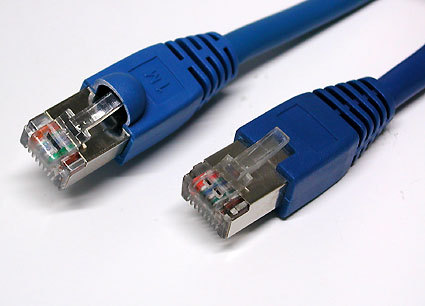
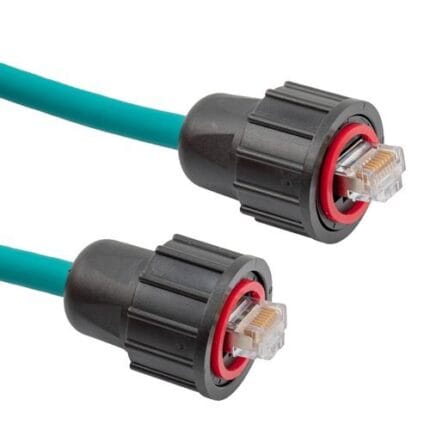
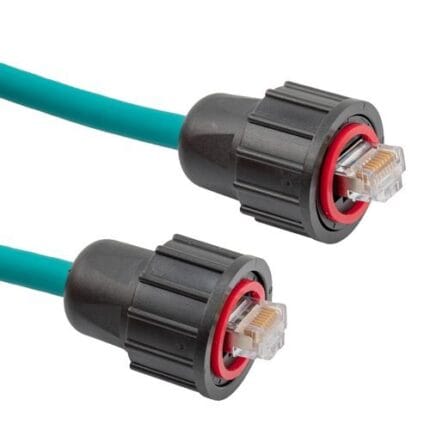
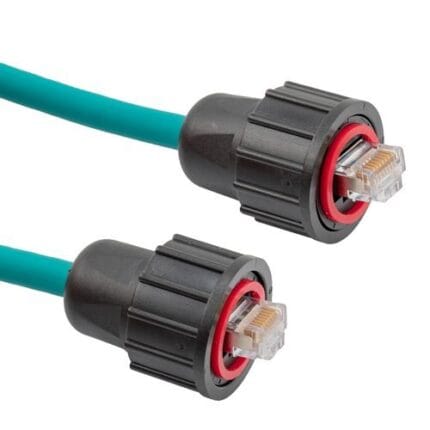
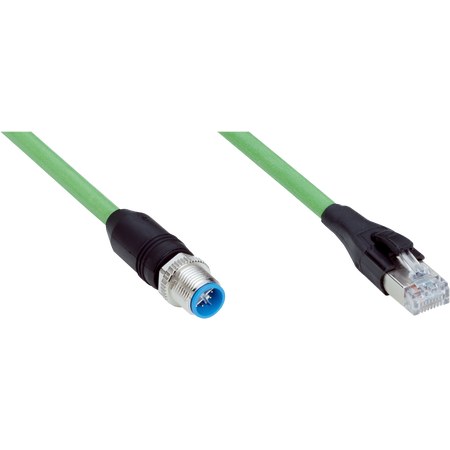
A cat6a railway patch cord is specified against two things an office cord never meets: the fire behaviour of every material in the finished assembly, and a service life measured in decades of vibration. Onboard passenger information screens, CCTV cameras, ticket validators and the vehicle control network have moved onto Category 6A links because the camera count per vehicle keeps rising. These cordsets are RJ45 to RJ45 as standard, with an M12 X-coded variant where the equipment side is sealed.
Fire performance is the specification
EN 45545-2 is the European standard covering fire protection of railway vehicles. It assigns requirement sets R1 to R26 according to where a product sits in the vehicle, and hazard levels HL1 to HL3 according to how severe the operating case is; electric cable falls under R15. Competitor data for this construction quotes requirement set R15 with the EL1A classification across HL1 to HL3, supported by flame spread per IEC 60332-3-24 and -3-25, smoke density per IEC 61034 and toxicity per EN 50305. We treat all of that as the design target. Published competitor figures are not a test report for our bill of materials, and the hazard level you need is set by the route profile and the evacuation concept, not by the cable.
Jacket and construction
The quoted construction is four screened pairs of 26 AWG in an S/FTP layout, which is foil on each pair under an overall braid. The jacket is a halogen-free LSZH compound drawn from the railway cable families EN 50306-1 and EN 50264-1, supplied in RAL 6018 green so the data network stays distinguishable from power and signalling in a crowded tray. UN/ECE R118 is the corresponding regulation for interior materials in some vehicle classes; confirm which regime your project is approved under before we freeze the compound.
Where it is used
- Passenger information displays and seat-back screens on commuter and intercity stock
- Onboard CCTV recording chains, where every added camera is another 6A run
- Ticket validators, gate lines and passenger counting nodes
- Vehicle control and diagnostic networks inside saloons and equipment cubicles
Installation reality
Screened pairs in a vehicle only behave if the screen is terminated properly. Bond the braid to the connector shell at both ends and make sure the shell lands on a clean, painted-through chassis point, or the screen stops being a screen. Keep a generous bend radius at the connector exit, because a cord inside a door pillar or a seat-back box gets flexed every time the panel is opened for service, and leave slack rather than pulling the run tight against a fixing.
What we are confirming
Voltage rating, temperature range, conductor gauge and every fire and smoke figure above come from public competitor data rather than from a verified datasheet for our part. Ask us for the material declaration and the test report covering the construction you are buying.
Related Cable Ranges
Signal and Data Cables • Circular M8 M12 Cable • Panel Mount Cable
| Category / class | Category 6A, Class EA per ISO/IEC 11801 (confirm against TIA-568.2-D for North American projects) |
|---|---|
| Construction | 4 x 2 x 26 AWG S/FTP: foil per pair plus overall braid (pending supplier datasheet) |
| Ends | RJ45 to RJ45 standard; M12 X-coded variant available |
| Jacket material | Halogen-free LSZH, RAL 6018 green |
| Jacket standards | Railway cable families EN 50306-1 and EN 50264-1 (pending supplier confirmation) |
| Fire performance target | EN 45545-2 requirement set R15, EL1A, HL1-HL3 (pending test report) |
| Supporting fire tests | IEC 60332-3-24 / -3-25 flame spread, IEC 61034 smoke density, EN 50305 toxicity (pending test reports) |
| Rated voltage | 90 V class (pending supplier datasheet) |
| Temperature range | -40 to +70 C (pending supplier datasheet) |
| PFAS status | PFAS-free claim requested from compound supplier, not yet confirmed |