Cat6 UTP Patch Cord
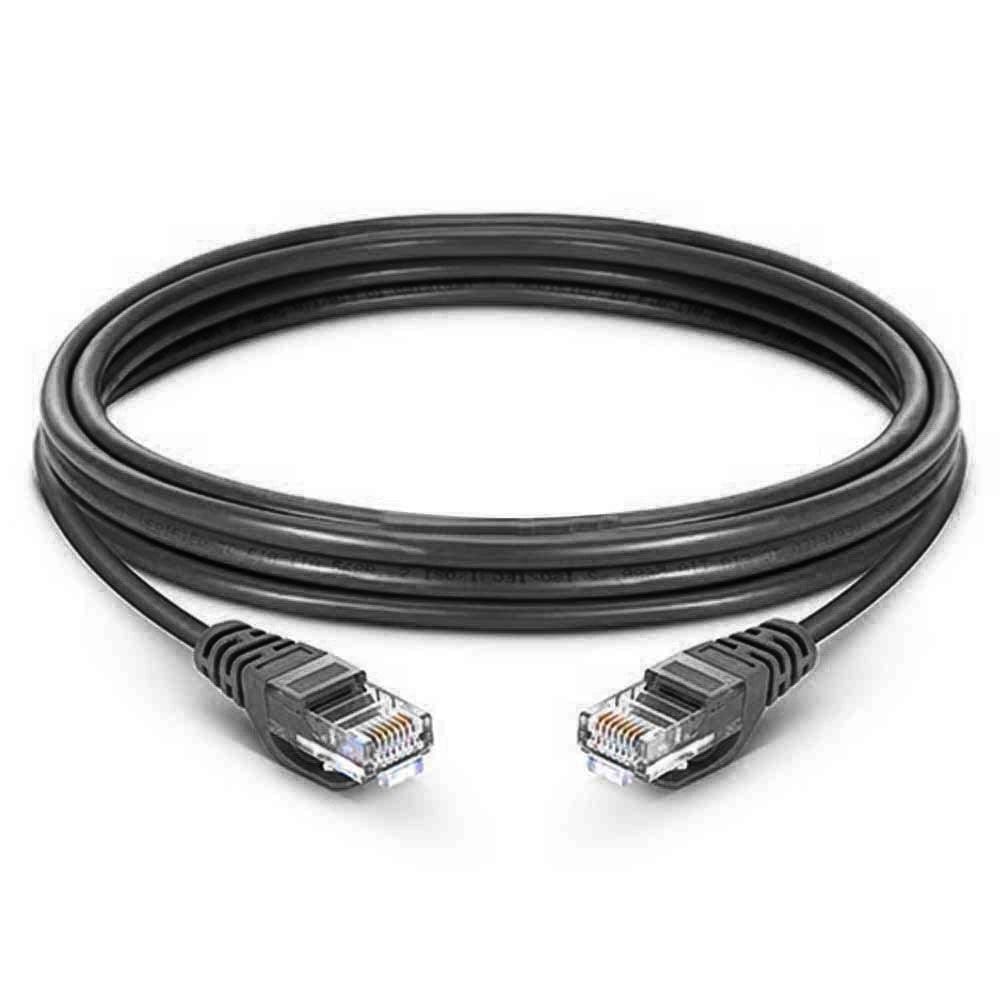
A cat6 utp cord is the default Gigabit patch lead: four unshielded 24 AWG pairs, RJ45 to RJ45, snagless boot, custom lengths and jacket colors for patch panels and server racks.
Overview
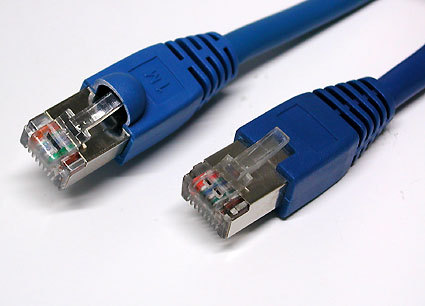
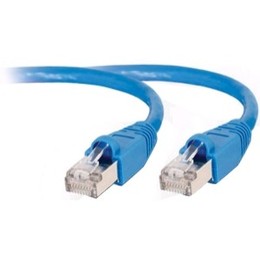
A cat6 utp cord is the default choice for new Gigabit installs and for the short 10GBASE-T links that appear inside a rack. Four unshielded twisted pairs of 24 AWG solid bare copper sit under HDPE insulation and a 6.2 mm PVC jacket, terminated RJ45 to RJ45 with a molded strain relief and a snagless boot. Compared with Category 5e the gain is not bandwidth for its own sake, it is crosstalk margin: tighter pair geometry and better NEXT performance mean the channel stays stable when the cabinet fills up and cords start pressing against each other. That margin is what you are buying when you specify Cat6 over Cat5e on a job that only runs Gigabit today.
Key Specifications
| Cable Category | Cat6 (Category 6) |
|---|---|
| Shielding | UTP (Unshielded Twisted Pair) |
| Conductor | 24 AWG solid bare copper |
| Insulation | HDPE, 0.97 mm nominal diameter |
| Jacket | PVC, 6.2 +/-0.5 mm diameter |
| Connector | RJ45 male to RJ45 male |
| Impedance | 100 ohm +/-15% |
| Mutual Capacitance | 5.1 nF/100 m maximum |
| Attenuation at 100 MHz | 19.8 dB/100 m maximum |
| NEXT at 100 MHz | 44.3 dB minimum |
| Compliance | TIA/EIA-568-B.2-1, ISO/IEC 11801, IEC 61156-6, UL-444 |
| Flame Rating | CM rated |
Cat5e, Cat6 or Cat6A: what changes at each step
The category names are defined by the bandwidth the channel is specified to, and each step up buys margin rather than a different kind of cable. These are the standard definitions used in structured cabling; they describe the class, not a promise about a particular installation.
| Category | Specified to | Typical application | Where it runs out |
|---|---|---|---|
| Cat5e | 100 MHz | Gigabit Ethernet everywhere, PoE lighting and cameras | No headroom for 10GBASE-T beyond very short runs |
| Cat6 | 250 MHz | Gigabit with margin; short 10GBASE-T within a rack | 10GBASE-T distance is limited and set by the application standard |
| Cat6A | 500 MHz | Full-distance 10GBASE-T and high-power PoE bundles | Cost, size and stiffness where none of that is needed |
Where the run is short and the environment is quiet, Cat5e is genuinely enough and the money is better spent on installation quality. Where the cabinet will be re-patched for ten years, or where access points and cameras are likely to be added, Cat6 is the sensible floor.
Why NEXT is the number that keeps a cabinet stable
Near-end crosstalk is the signal that leaks from one pair into another at the end where you are measuring. It matters more than attenuation on a patch cord, because patch cords are short and attenuation scales with length while crosstalk does not. The practical consequence is that a cabinet full of cords behaves worse than any single cord measured on a bench: every adjacent cord couples into its neighbors, and the margin you gave yourself at design time is what absorbs it.
- Keep cords as short as the layout allows. Slack coiled at the panel adds length and coupling.
- Do not untwist more than necessary at the plug. The twist is the crosstalk control; every millimeter you straighten is margin given away.
- Dress cords so they do not bundle tightly against each other for long distances.
PoE, conductor size and heating in a bundle
Power over Ethernet turns every patch cord into a power cable, and a cord that carries current gets warm. A single warm cord is not a problem; a bundle of forty-eight of them in a tray is, because the heat has nowhere to go and the insertion loss of the cable rises with temperature. Two things follow from that for anyone specifying a Cat6 drop for access points or cameras.
- Do not fill a tray to its limit with PoE cables if the installation is in a ceiling void or a sealed riser.
- Prefer a larger conductor where the run is long and the load is significant; the cable specification states the DC resistance, and the drawing states what we build to.
The DC resistance and current-related figures your assembly is built and verified to are the ones stated on your drawing, confirmed against the supplier datasheet before we quote.
Where a cat6 utp cord gets used
- Switch to patch panel and switch to server links in data rooms
- Workstation drops for CAD, video editing and large file transfer
- Wi-Fi 6 and 6E access points that need more than Gigabit backhaul
- Short 10GBASE-T runs within a rack or between adjacent racks
- PoE lighting, cameras and phones on structured cabling
- Everyday patching, where our Flat Slim Cat6 / Cat5e UTP Patch Cord suits tight trays
How to specify the build
- Length of each cord; mixed lengths are normal on a patch panel job.
- Color, and whether the colors code for a service or a VLAN.
- Boot style – snagless as standard, or a slim boot for dense panels.
- Conductor – as stated on your drawing; tell us if the application needs stranded.
- Acceptance test – channel or permanent link, and to which category.
- Quantity, and whether this is a prototype or a production order.
Workmanship and testing
Build standard for Cat6 UTP builds is IPC/WHMA-A-620 Class 3 under ISO 9001, with terminations from 32 to 12 AWG. continuity and pinout are checked on every Cat6 unit before packing, and seal checking is quoted whenever an ingress rating is on the drawing.
RoHS and REACH declarations are provided per project together with the agreed test reports; the documentation scope is listed under certifications and compliance. If your drawing specifies a UL style, we build to that drawing and supply the UL reference with the shipment instead of substituting an equivalent. This assembly is built on the four lines covered under our assembly lines in Longgang, with nothing in the build handed to an undisclosed subcontractor. The wider context is covered under our industrial automation work. Any tooling we cut for this part stays yours, maintained in our own tool room under your part reference.
Custom builds and ordering
On Cat6 UTP builds, prototype lots run from 1 to 50 pcs and leave in 3 working days; production runs of 500 pcs and up ship 14 working days after approval. Tooling not already held adds around 10 working days. Cat6 OEM and ODM shipments carry your part number and labeling, and material certificates and first-article reports can be supplied.
Ratings shown here are the industry-standard description of what the Cat6 UTP interface family is defined to do, not test results from a part of ours. Your assembly is built and verified to the values on your drawing, which we check against the supplier datasheet before quoting.
Related Ethernet patch cords
- Cat6A UTP Patch Cord, 28 AWG Stranded, 500 MHz
- Flat Slim Cat6 / Cat5e UTP Patch Cord
- Cat5e UTP Snagless Patch Cord, 350 MHz
- Cat6 CMP Plenum-Rated Patch Cord, 550 MHz
- Cat7 S/FTP Patch Cord, 600 MHz
- Cat8 Ethernet Patch Cord, S/FTP 22 AWG
Full ranges: Ethernet patch cords and signal and data cables.
Frequently Asked Questions
Will Cat6 run 10 Gigabit?
Yes over short distances. The run length 10GBASE-T supports on Category 6 is set by the application standard rather than by the cord, so treat full-distance 10G as a Cat6A job.
Do I need shielded cable for PoE cameras?
Usually not. Shielding addresses interference, not power. Choose shielding based on what the run passes, and choose conductor size based on the current and the length.
Why does the boot matter?
A snagless boot stops the latch catching on adjacent cords when you pull one out of a dense panel, which is the most common way a patch cord latch gets broken.
Can I mix Cat6 cords into a Cat5e channel?
Yes, but the channel performs to the weakest component. If you intend to certify to Category 6, every cord and every jack in the channel has to be Category 6.
| Cable Category | Cat6 (Category 6) |
|---|---|
| Shielding | UTP (Unshielded Twisted Pair) |
| Conductor | 24 AWG solid bare copper |
| Insulation | HDPE, 0.97 mm nominal diameter |
| Jacket | PVC, 6.2 +/-0.5 mm diameter |
| Connector | RJ45 male to RJ45 male |
| Impedance | 100 ohm +/-15% |
| Mutual Capacitance | 5.1 nF/100 m maximum |
| Attenuation at 100 MHz | 19.8 dB/100 m maximum |
| NEXT at 100 MHz | 44.3 dB minimum |
| Compliance | TIA/EIA-568-B.2-1, ISO/IEC 11801, IEC 61156-6, UL-444 |
| Flame Rating | CM rated |