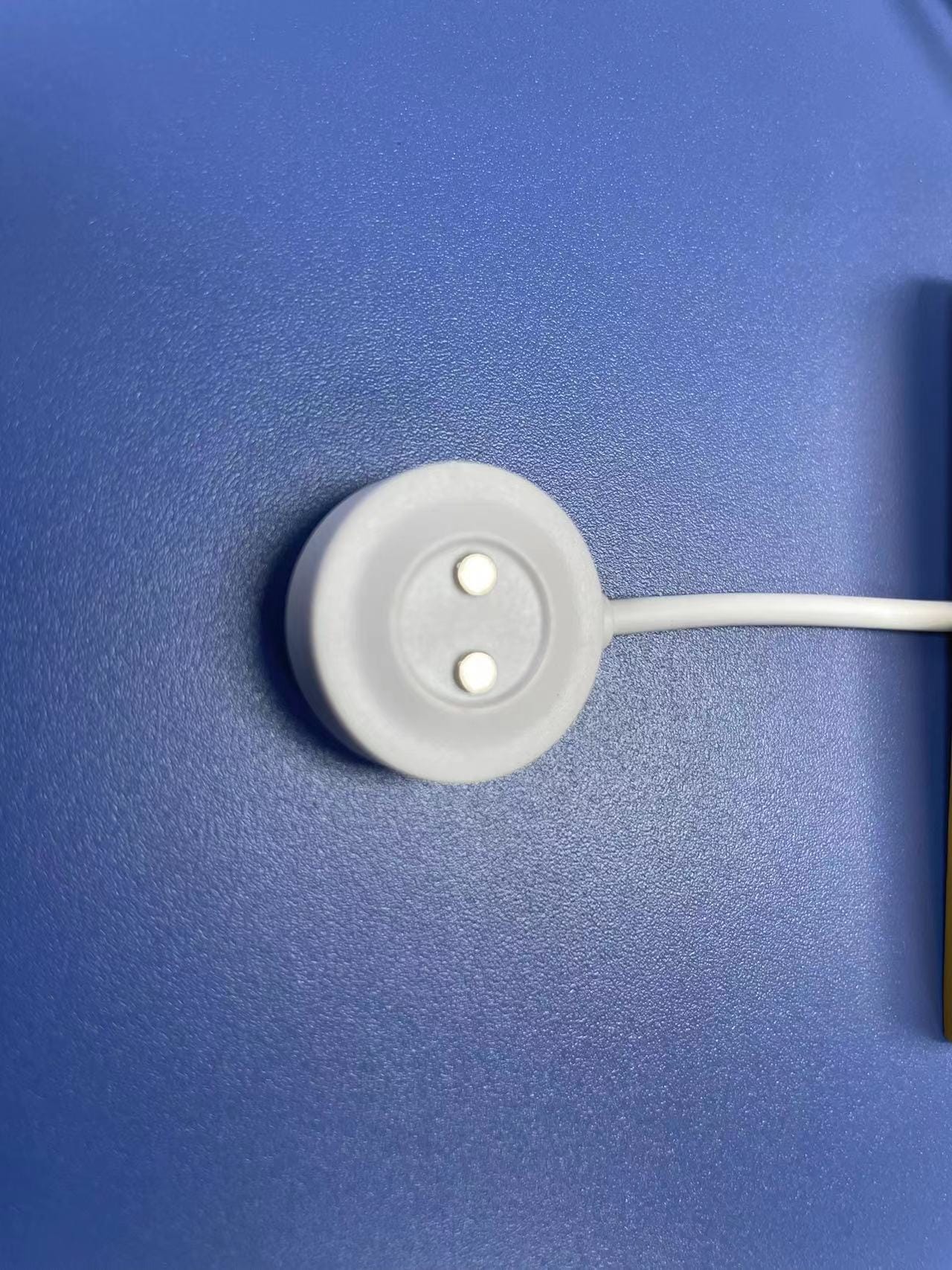
USB Type-C Magnetic Charging Cable
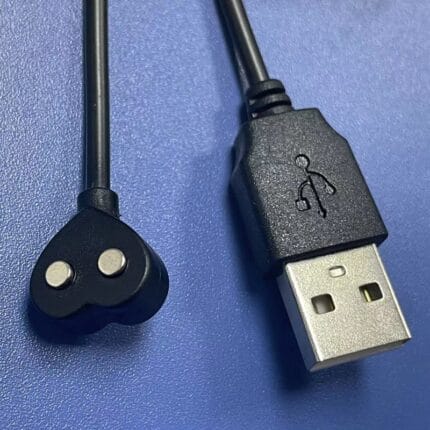
A magnetic charging cable with a USB Type-C device tip uses a round magnetic head that breaks away instead of dragging the device off a desk. 3 A standard, 5 A with an e-marked tip.
Overview
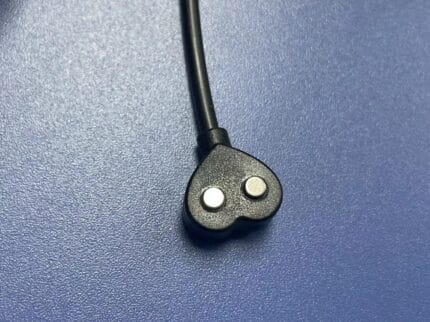
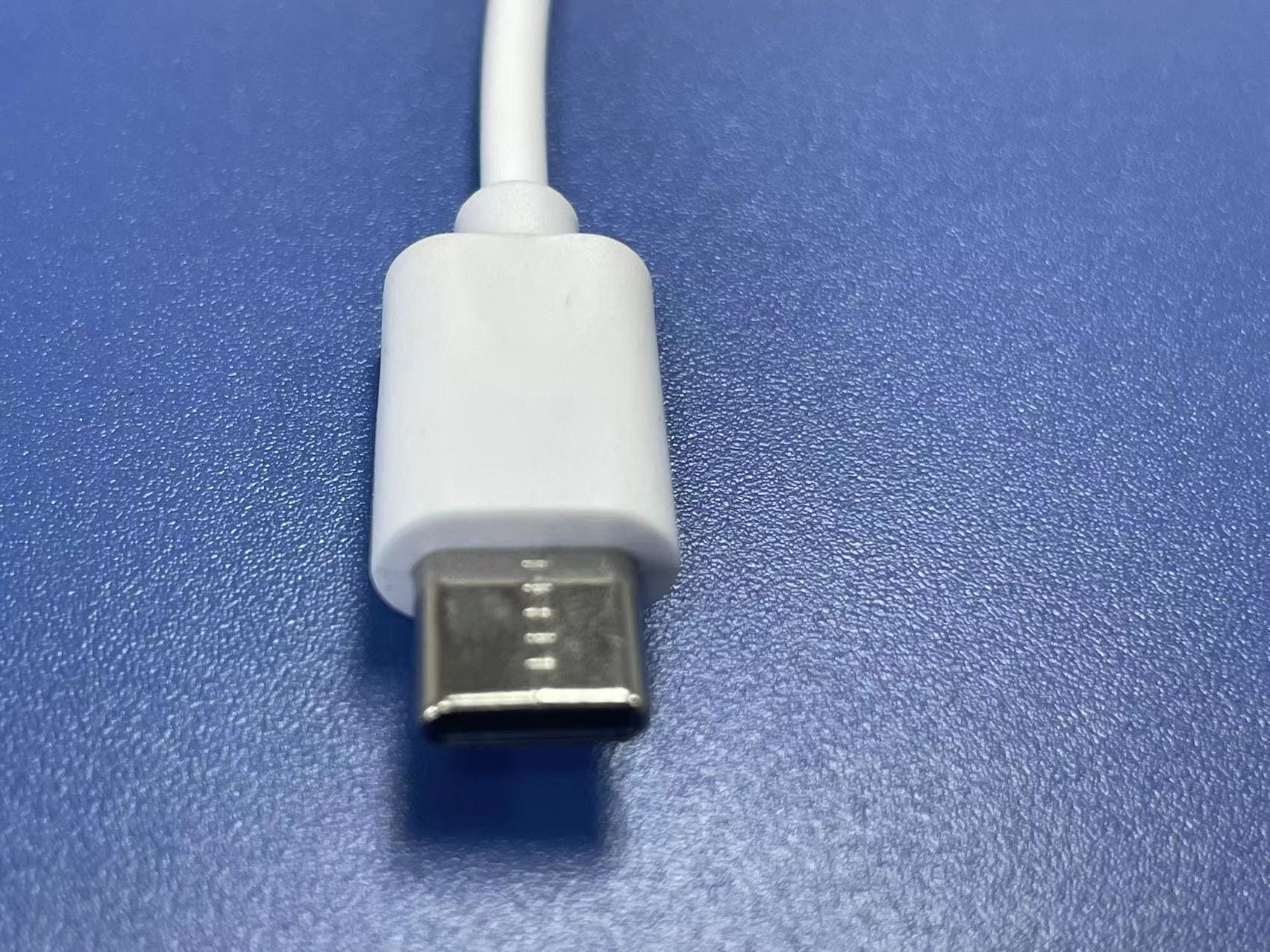
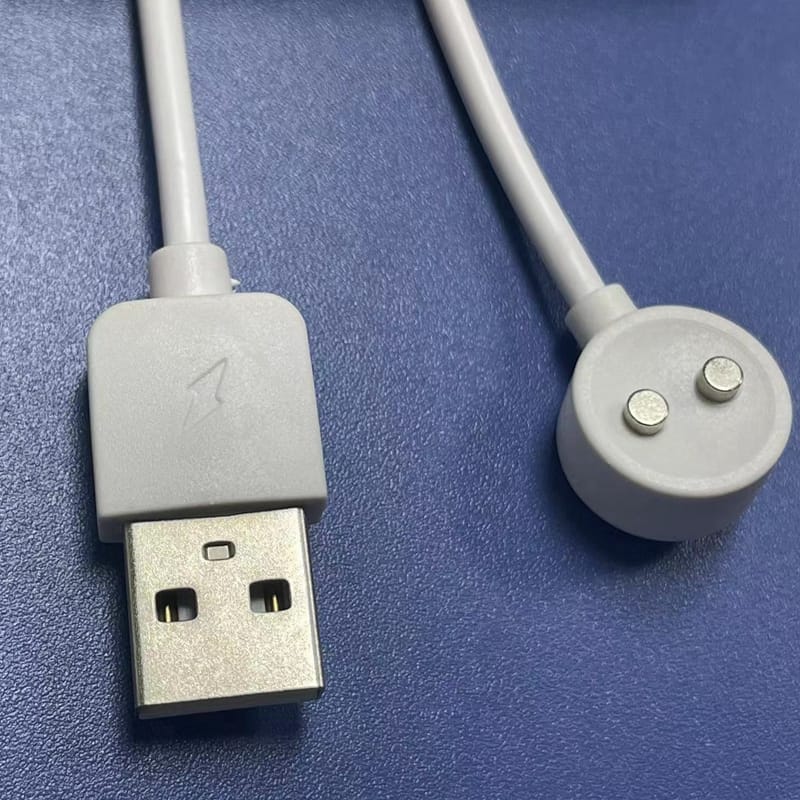
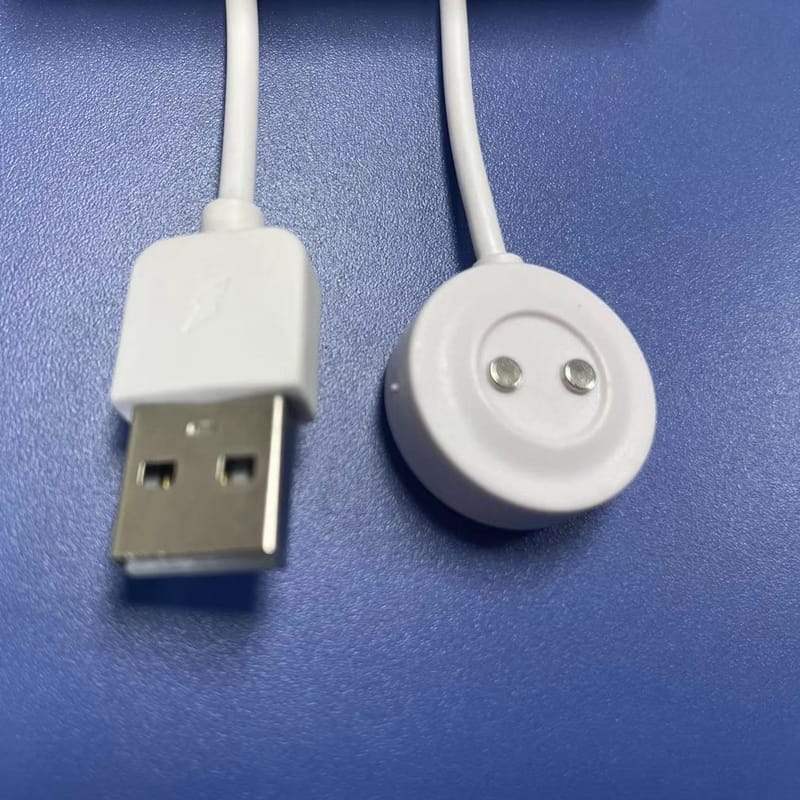
A magnetic charging cable replaces the friction fit at the device with a magnetic coupling. The Type-C tip stays in the device, the round magnetic head on the cable snaps onto it, and a pull on the cord separates the two instead of dragging a phone, a tablet or an instrument off the surface it was sitting on. The coupling is reversible, so there is no wrong orientation to fight with in a dark rack or a hospital trolley. This build runs USB 2.0 power and data over a five-conductor core, with the round head molded in ABS / PC holding four or five gold-plated pogo pins. Standard rating is 3 A, rising to 5 A when the Type-C tip carries an e-marker.
Key Specifications
| Connector A | USB-A or USB-C male host plug |
|---|---|
| Connector B | Round magnetic head with detachable Type-C tip |
| Interface | USB 2.0 power + data (Type-C tip wired per USB Type-C R2.3) |
| Rated Current | 3 A standard, 5 A with e-marked Type-C tip |
| Mating Cycles | 10,000 magnetic connect / disconnect minimum |
| Cable Jacket | PVC or TPE, 3.5 mm to 4.5 mm OD |
| Length | 1 m standard; OEM on request |
| Retention | Magnet pull set at build time to your breakaway force |
| Options | Right-angle tip, keyed housing, custom head color |
Why specify a breakaway at all?
The failure a magnetic head prevents is rarely the cable. It is the device port. A USB-C receptacle is rated for a finite number of insertion cycles, and in any installation where the cord is tripped over, snagged on a cart or yanked by a patient, the receptacle fails long before the cable does – and replacing a receptacle means opening the device. A magnetic joint moves the wear to a tip that costs a fraction of the repair and can be swapped without tools.
- Port life. The tip stays seated; the magnet takes the abuse instead of the receptacle.
- Trip hazard. The joint separates under a side pull rather than pulling the device over.
- One-handed mating. Useful on trolleys, kiosks and bedside equipment where the operator cannot see the port.
- Contamination. A closed magnetic face is easier to wipe down than an open receptacle, which is why medical and food-handling customers ask for it.
3 A or 5 A: what changes
The difference is not the cable alone, it is the whole chain. Above 3 A the USB Type-C specification expects an e-marked cable that identifies its current capability to the source, and the device-side tip has to be part of that chain. Ordering a 5 A magnetic build without an e-marked tip gives you a lead that charges at 3 A at best, and possibly one the source refuses to negotiate with.
| Build | What it identifies to the source | Realistic use | What to specify |
|---|---|---|---|
| 3 A standard tip | A standard Type-C current capability | Phones, tablets, handheld terminals, small instruments | The default; no e-marker on the tip |
| 5 A e-marked tip | An e-marked 5 A capability in the tip | Laptops and larger tablets that ask for more than 3 A | Say 5 A at the inquiry so the e-marked tip is quoted |
| Above 60 W or extended power range | Full PD negotiation including higher voltage contracts | Workstations and dock-class loads | Use a dedicated PD cable rather than a magnetic build; see our USB-C PD Charging Cable 240 W |
For high-power applications the magnetic coupling is the limiting element, not the conductors. If the load is above the magnetic rating, use a PD cable for power and reserve the magnetic lead for the device it suits.
Contact resistance is the number that decides whether it works
A pogo-pin joint is a spring contact, and every spring contact adds resistance in series with the charge path. That resistance does two things: it drops voltage, and it dissipates power as heat at the joint. Keep the contact faces clean, keep the plating intact, and size the pins for the current rather than for the space available. Where the device charges slowly on a magnetic lead but quickly on a normal one, the joint is almost always the reason, and the usual cause is a contaminated or worn contact face.
- Wipe both faces with alcohol before first use and periodically after that.
- Do not specify the smallest head that fits; pin diameter sets the current the joint can carry.
- Tell us the charge current you need and the pull force you want, and we will balance the two – they pull in opposite directions.
Where a magnetic charging cable earns its place
- Phones, tablets and handheld terminals on a bench or a bedside table
- Industrial panels and kiosks where the user-facing port takes constant abuse
- Field laptops, test instruments and rugged tablets used in vehicles
- Medical carts and bedside equipment where a trip hazard is a safety issue
- Docking stations where the cable lives behind the desk and is never seen
- Rental and shared devices, where the receptacle is the part that usually fails first
What we need from you to quote a magnetic build
- Host plug – USB-A or USB-C, straight or right angle.
- Current – 3 A standard, or 5 A with an e-marked tip.
- Data or power only – five conductors for USB 2.0 data plus power, or a reduced pinout for charging alone.
- Breakaway force – the pull at which the joint should separate, or the use case and we will propose one.
- Cable – PVC or TPE jacket, color, length, and whether it needs to stay flexible in the cold.
- Head and tip – color, and whether a keyed or right-angle tip is needed.
- Quantity, and whether you need the device-side tips separately as spares.
Workmanship and testing
USB Type-C Magnetic Charging builds are made to IPC/WHMA-A-620 Class 3 workmanship inside an ISO 9001 system, over a 32 to 12 AWG range. Each USB unit passes a continuity and pinout check before it ships, and seal checking is quoted whenever an ingress rating is on the drawing.
Every production run can ship with RoHS and REACH declarations and the electrical report agreed at quotation; see certifications and material declarations. UL styles and other named approvals are built to drawing: we source to the style you specify and document it, rather than asserting a listing we do not hold. This assembly is built on the four lines covered under the assembly lines behind this build, with nothing in the build handed to an undisclosed subcontractor. Related reading: our medical device work. Tooling is quoted separately, cut in-house rather than brokered out, and owned by you.
Custom builds and ordering
For USB Type-C Magnetic Charging builds, prototypes run from 1 to 50 pcs with a 3 working day turnaround; volume orders begin at 500 pcs and ship 14 working days after approval. Tooling not already held adds around 10 working days. OEM and ODM USB work ships under your part number and labeling, and material certificates and first-article reports can be supplied.
Ratings shown here are the industry-standard description of what the USB Type-C Magnetic Charging interface family is defined to do, not test results from a part of ours. Your assembly is built and verified to the values on your drawing, which we check against the supplier datasheet before quoting.
Related magnetic and charging builds
- Square-Shape 2-Pin Magnetic Charging Cable
- DC 5.5 x 2.1 mm Magnetic Charging Cable
- Magnetic Pogo Pin Cable USB-C for Medical and Wearables
- Smart Watch Magnetic Charging Cable with PCBA
- 240 W Magnetic USB-C Charging Cable, 16-Pin
- USB-C PD Trigger Cable to DC 5.5×2.1mm
Full ranges: DC plug power cable and custom wire harnesses.
Frequently Asked Questions
Does the tip stay in the device?
Yes. The Type-C tip plugs into the device port and stays there; the round magnetic head on the cable is what you handle. Spare tips are worth ordering with the first batch.
Can I get 5 A through this?
Yes, with an e-marked tip. Ask for the 5 A build at the quoting stage, because the e-marker sits in the tip and cannot be added later.
Will it carry data?
The five-conductor version carries USB 2.0 data plus power. A power-only build uses a reduced pinout and is cheaper where data is not needed.
How strong is the magnet?
Set at build time. A stronger magnet holds better and pulls harder sideways on the device port; a weaker one releases easily and can drop out under cable weight. Tell us the use case and we will propose a value.
| Connector A | USB-A or USB-C male host plug |
|---|---|
| Connector B | Round magnetic head with detachable Type-C tip |
| Interface | USB 2.0 power + data (Type-C tip wired per USB Type-C R2.3) |
| Rated Current | 3 A standard, 5 A with e-marked Type-C tip |
| Mating Cycles | 10,000 magnetic connect / disconnect minimum |
| Cable Jacket | PVC or TPE, 3.5 mm to 4.5 mm OD |
| Length | 1 m standard; OEM on request |
| Retention | Magnet pull set at build time to your breakaway force |
| Options | Right-angle tip, keyed housing, custom head color |