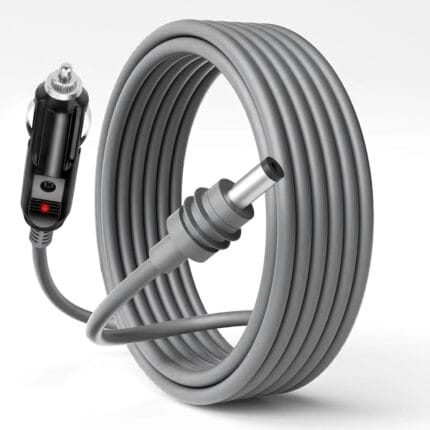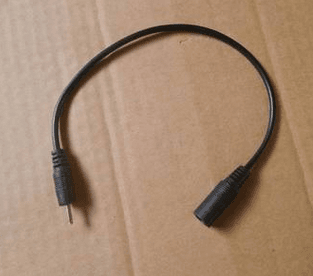
DC 5525 Female to Male Adapter Cable
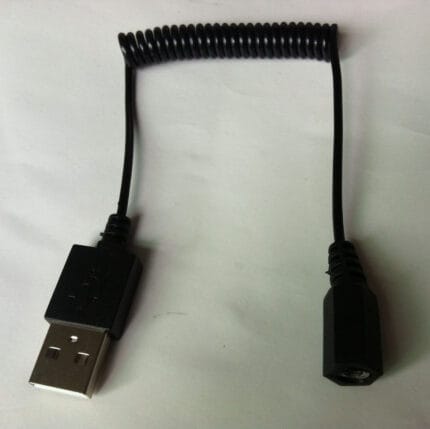
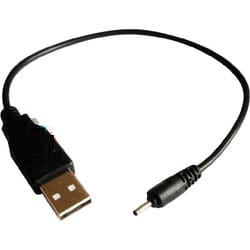
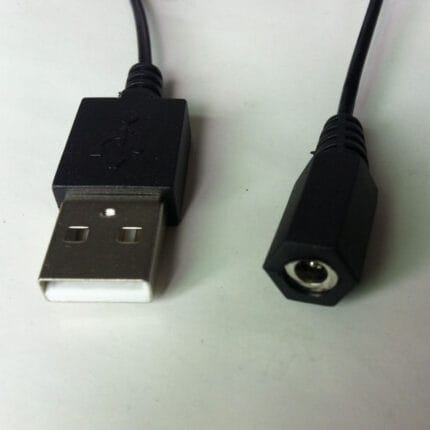
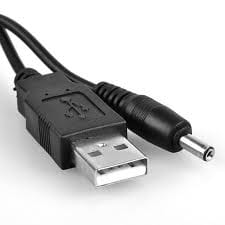
A short 5525 male cable pigtail that converts a DC 5.5 x 2.5 mm female socket to a 5.5 x 2.5 mm male plug, for extending or re-orienting an existing barrel lead.
Strictly 5.5 x 2.5 mm gear – not the 5521 or 4017 sizes.
Overview
A 5525 male cable here means a short pigtail with a DC 5.5 x 2.5 mm female socket on one end and a DC 5.5 x 2.5 mm male plug on the other, about 20 cm overall. It is the cheapest way to fix a lead that is too short, exits the wrong way, or has been terminated with the wrong plug – you add it to the end of an existing 5525 lead instead of re-terminating the whole run.
Key Specifications
| Connector A | DC 5.5 x 2.5 mm female socket |
|---|---|
| Connector B | DC 5.5 x 2.5 mm male plug |
| Cable length | Short (approx. 20 cm / 8 in) |
| Jacket | Black PVC |
| Color | Black |
| Polarity | Center positive (standard) |
| Conductor | Stranded copper; gage stated per your drawing |
| Application | Adapter for 5.5 x 2.5 mm equipment |
The inner pin is the whole story
Both ends of this adapter are nominally 5.5 mm across, which is exactly why they get mixed up with 5521. A coaxial power connector is named for outside diameter x inside diameter, and the second number is the one that decides whether the joint is solid or intermittent.
| Callout | OD x ID (mm) | Mates cleanly with | What happens if you mix them |
|---|---|---|---|
| 5525 | 5.5 x 2.5 | A 5.5 x 2.5 mm jack or plug | Correct pair – full contact area |
| 5521 | 5.5 x 2.1 | A 5.5 x 2.1 mm jack or plug | Often slides on, then makes intermittent contact |
| 4017 | 4.0 x 1.7 | A 4.0 x 1.7 mm jack or plug | Will not seat; the shell is too small |
| 3513 | 3.5 x 1.3 | A 3.5 x 1.3 mm jack or plug | Will not seat |
The 5525 and 5521 pair is the dangerous one. They are close enough that a plug will frequently go on and feel seated, then drop out under vibration or heat. That is worse than not fitting, because the symptom – a device that reboots at random – gets blamed on the power supply. Before you order, read the rating label on the device: it usually states the barrel size, and if it does not, measure the center pin of the jack with a caliper.
What a short extension costs you in voltage
Every adapter adds two contact pairs and a length of conductor. At 20 cm the conductor is rarely the problem; the contacts are. Each barrel joint contributes its own resistance, and a worn or mixed-size joint contributes a lot more. Work the budget before you stack adapters:
- Start from the voltage the device actually needs at its input, not the number on the supply.
- Add the drop across the supply lead, then this adapter, then the device lead.
- At 12 V you have more room than at 5 V; at 5 V, two adapters is often already too many.
- If the measured drop is more than you can afford, the answer is one longer lead of heavier gage, not another adapter.
The current your assembly is verified to is stated on your drawing. We do not assign a rating to a build we have not seen the load for.
Where these earn their keep
An adapter pigtail is a legitimate fix in three situations. The first is a supply whose lead is too short to reach the device by a small margin. The second is orientation: a straight plug that has to turn a corner inside a cabinet will either kink or lever on the jack, and a short flexible section takes that load off the joint. The third is polarity or plug mismatch on a supply you already own.
It is the wrong fix when the underlying problem is gage. If the original lead is thin and the device browns out, adding an adapter moves the failure, it does not remove it.
Typical applications for this 5525 male cable
- Extending an existing 5.5 x 2.5 mm PSU lead that will not quite reach
- Re-orienting a plug that has to turn a corner behind a cabinet or display
- Test benches where supplies get moved between devices with the same barrel
- Field service, where carrying one adapter beats carrying three supplies
- Rack and enclosure builds where the supply sits in a fixed tray
How to specify your build
- Barrel size on both ends – confirm 5525 against the device.
- Length – 20 cm is stock; anything else is a custom run.
- Polarity – center positive unless you say otherwise.
- Load current, so the conductor is sized to it.
- Straight or right-angle on either end.
- Quantity and packaging.
Workmanship and testing
DC 5525 Female builds are made to IPC/WHMA-A-620 Class 3 workmanship inside an ISO 9001 system, over a 32 to 12 AWG range. No DC assembly is boxed before continuity and pinout are confirmed, and seal checking is quoted whenever an ingress rating is on the drawing.
Every production run can ship with RoHS and REACH declarations and the electrical report agreed at quotation; see certifications and material declarations. UL styles and other named approvals are built to drawing: we source to the style you specify and document it, rather than asserting a listing we do not hold. Overmold tooling for this part is designed and cut in our own tool room under the overmold tooling we build in-house, so the tool belongs to your program and a revision is a machining job rather than a new negotiation. The wider context is covered under our marine and outdoor work.
Custom builds and ordering
For DC 5525 Female builds, prototypes run from 1 to 50 pcs with a 3 working day turnaround; volume orders begin at 500 pcs and ship 14 working days after approval. Tooling not already held adds around 10 working days. DC builds go out under your part number and labeling, and we provide material certificates and first-article reports when asked.
Related DC adapters and extensions
- DC Barrel Adapter Kit, 5521 / 5525 / 4017 / 3513
- DC Plug Adapter Set, 5521 / 5525 / 4017 / 3513
- DC 5521 Right Angle to Straight Adapter Cable
- IP67 Waterproof DC Extension Cable 5.5×2.1mm
- IP65 Waterproof DC 5521 Extension Cable
- Starlink Mini DC Extension Cable, DC 5.5×2.1mm
- 14 AWG DC Barrel Pigtail Cable to Bare Wire
Full range: DC plug power cable assemblies.
Frequently Asked Questions
Can I use this on 5.5 x 2.1 mm equipment?
No. The center contact is a different diameter. It may slide on, and that is the problem – an intermittent joint is harder to diagnose than one that will not fit. Use the 5521 version.
Does adding an adapter reduce the current I can draw?
It reduces the voltage at the device, which is usually what bites first. Each joint adds resistance. Keep adapters short and few, and size the conductor to the run.
Can I get it longer than 20 cm?
Yes. Length, gage, jacket color and end style are all set per build. For a long run, quote a single extension cable rather than a chain of adapters.
Is center positive the default?
Yes, and it is the convention on the overwhelming majority of DC gear. If your device is marked center negative, say so at the order and the polarities will be built reversed.
| Connector A | DC 5.5 x 2.5 mm female socket |
|---|---|
| Connector B | DC 5.5 x 2.5 mm male plug |
| Cable Length | Short (approx. 20 cm / 8 in) |
| Jacket | Black PVC |
| Color | Black |
| Application | Adapter for 5.5 x 2.5 mm equipment |
| Polarity | Center positive (standard) |
| Conductor | Stranded copper, gage stated per your drawing |
Related products
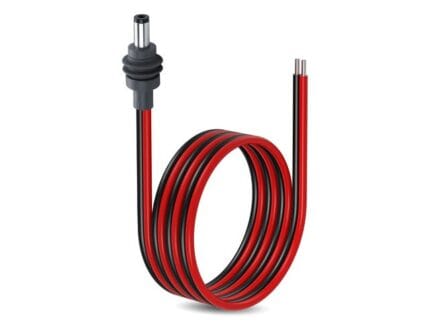
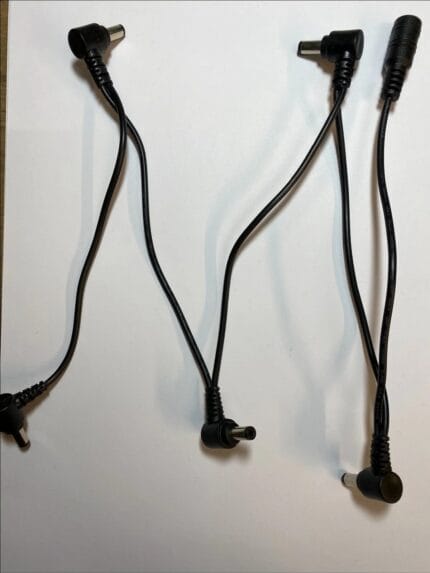
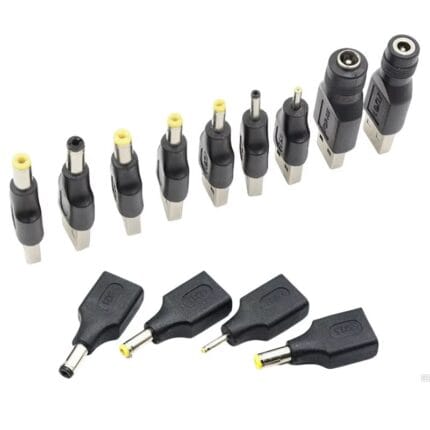
DC Barrel Adapter Kit – 5521 / 5525 / 4017 / 3513 / 1.35mm / 2.5mm, 6-Piece
A dc barrel adapter kit covering 5.5x2.1, 5.5x2.5, 4.0x1.7, 3.5x1.35 and 2.5 mm in six molded female-to-male adapters, so one supply covers a mixed estate. Center positive throughout, with nickel-plated brass contacts. Measure the socket pin with a caliper before ordering: the outer shell is identical across three of these five sizes. Bagged with a size card, or boxed with a printed insert.