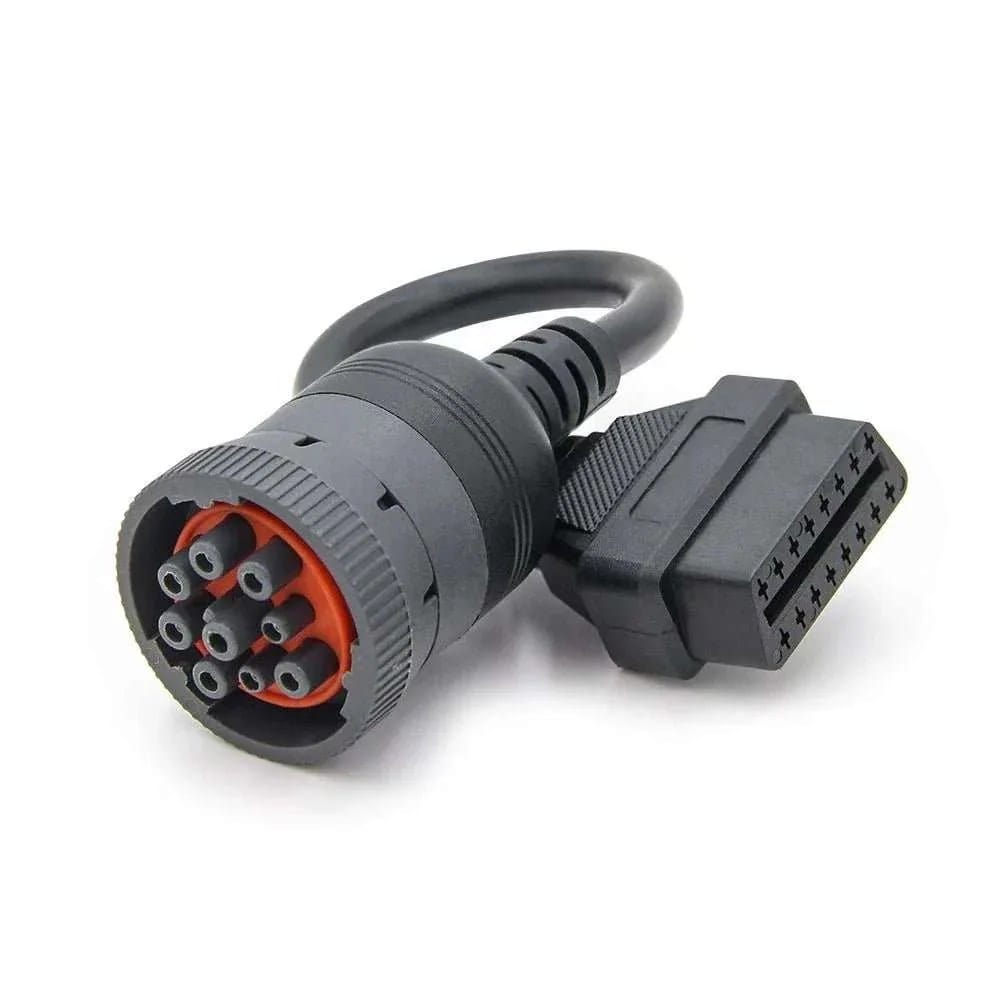
OBD2 Type B Cable for Medium-Duty Truck Fleets
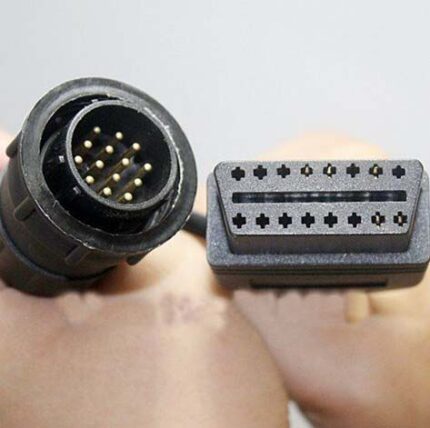
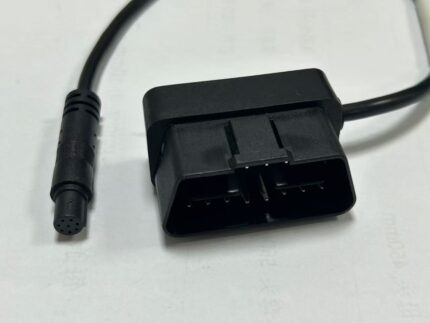
An obd2 type b cable covers the medium-duty chassis that do not follow the light-duty Type A pinout: same 16-pin shell, different assignment. Built in-line or as a hardwired breakout to the definition you send, with a printed pinout card for the installer.
Last updated: 13 September 2026
Overview
An obd2 type b cable covers the medium-duty chassis that do not follow the light-duty Type A pinout. Delivery vans, box trucks, motorhome chassis and a long list of cab-over and cutaway platforms present the same 16-pin J1962 shell with a different assignment behind it, and a passenger-car scanner lead simply lands on the wrong pins — which shows up as a tool that powers up and then cannot talk to anything. This cable is built to the Type-B definition you supply, with unswitched battery, ground, ignition sense and the bus lines broken out the way your telematics device needs them.
Key Specifications
| Connector A | Type-B 16-pin plug, pinout per chassis definition |
|---|---|
| Connector B | 16-pin female socket, or bare-wire breakout / ring terminals |
| Cable length | 1 m standard; other lengths to order |
| Jacket | Flexible PVC or TPU in black, selected by build |
| System voltage | 12 V / 24 V |
| Build option | In-line extension or hardwired breakout with ignition sense |
| Documentation | Printed pinout card supplied with each build |
Why we do not publish one Type B pinout
Type A is defined: SAE J1962 fixes the connector and ISO 15031-3 fixes the assignment for on-board diagnostics, so CAN sits on pins 6 and 14 and battery on 16. Type B is not one thing. It is a family of chassis-level assignments that share a shell and a mounting position, and several of them differ from each other as much as they differ from Type A. Any page that prints a single Type B chart is guessing.
| What to verify | Why it differs | How to confirm |
|---|---|---|
| Which pins carry the CAN pair | Not always 6 and 14 on medium-duty platforms | Chassis service manual, or meter the port |
| Whether a second bus is present | Some platforms run a separate low-speed or proprietary bus | Manufacturer pin list for the platform |
| Where unswitched battery sits | Determines whether the device sleeps with the key off | Meter pin 16 and the candidate pins against ground |
| Which ground is which | Chassis and signal ground are not interchangeable on some ECUs | Continuity to the shell and to the battery negative |
| Manufacturer-discretion pins | Frequently used for fleet or body-builder functions | Body builder drawing where one exists |
So the honest answer is: send us the pinout, or send us a known-good cable and we will copy it. We build to that, and every build ships with a printed pinout card so the next installer does not have to guess either.
Two builds, and which one fleets actually order
| Build | Ends | Best for |
|---|---|---|
| In-line | Type-B 16-pin plug to a female 16-pin socket, 1 m | Dongles and trackers that plug in and can be removed for service |
| Breakout | Type-B 16-pin plug to flying leads or ring terminals, 1 m | Hardwired telematics mounted behind the dash or above the fusebox |
The breakout build is the one most telematics installers ask for. A hardwired unit cannot be unplugged by a driver, it frees the port for the next service visit, and it lets the device hide above the fusebox rather than dangle in the footwell where it gets kicked. The in-line build still wins where a device has to move between vehicles or come out for warranty work.
Installation notes from the field
- Confirm the pinout before you crimp anything. The 16-pin shell is used with several assignments and no single cable fits every chassis.
- Fuse at the take-off point, not mid-cable, at the value your device maker specifies. An inline fuse in the middle of a lead protects the lead, not the vehicle.
- Route along the existing dash harness, clear of the steering column, pedal arms, seat slide mechanisms and the heater outlet.
- Secure every 150 to 200 mm with factory-style clips or loom tape, and leave a small service loop at the connector.
- Do not let the plug body carry the weight of the device. Strain relief belongs on the cable and on the device mount.
Ignition sense and battery drain
Where an installation has to sleep with the key off, the optional ignition-sense lead is the cheap answer, but it only helps if the chassis actually presents a switched feed at the port — on some medium-duty platforms it does not, and the device has to derive sleep from bus activity or a timer instead. Tell us which of the three you are designing to and we will populate the lead accordingly.
Typical applications for this obd2 type b cable
- Fleet telematics on mixed medium-duty fleets, one cable per pinout group rather than one universal part
- Hardwired tracking units that must not be unplugged by the driver, often with our OBD2 splitter USB charger cable on the in-line port
- Insurance and driver-behavior dongles on van and box-truck fleets
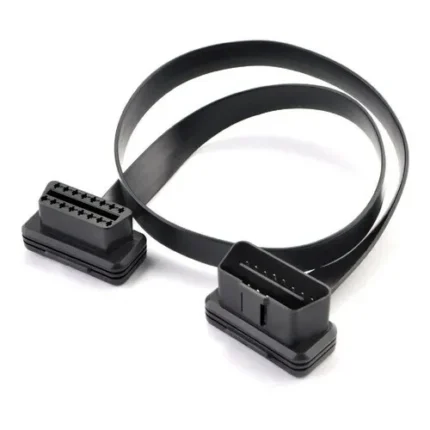
- Tachograph and compliance downloads where the tool has to sit at the port for a full shift, alongside our OBD2 extension flat cable
- Body-builder and upfitter harnesses that need battery, ground and ignition at the dash
What we need from you
- Chassis make, model and model year — or the VIN range if the fleet is mixed.
- The port pinout, or a known-good cable, or a clear photo of the vehicle socket.
- In-line or breakout build, and the end treatment on the breakout.
- Whether ignition sense is required.
- Length, and quantity.
Where a fleet runs several platforms we usually quote one part number per pinout group. Compatibility is checked per order; we are not an OEM supplier to the vehicle manufacturers named above.
Workmanship and testing
The line works to IPC/WHMA-A-620 Class 3 under ISO 9001, terminating 32 to 12 AWG. Every unit gets a continuity and pinout test before it is packed. Seal checking on the production batch is available when an ingress rating is in the specification.
Custom builds and ordering
Prototype quantity starts at 5 pcs with a 3 working day turnaround, and production starts at MOQ 500 pcs shipping 14 working days after approval. Where a new tool is needed, allow about 10 working days. We ship OEM and ODM builds under your part number and labeling, and can provide material certificates and first-article reports.
Related OBD and telematics leads
- OBD2 extension flat cable, 16-pin male to female ribbon lead
- OBD2 splitter USB charger cable, 16-pin pass-through Y lead
- 16-pin OBDII Y splitter extension cable, heavy-duty male to female extender
- OBD-II 16-pin to DB9 CAN bus diagnostic cable, 25 ft
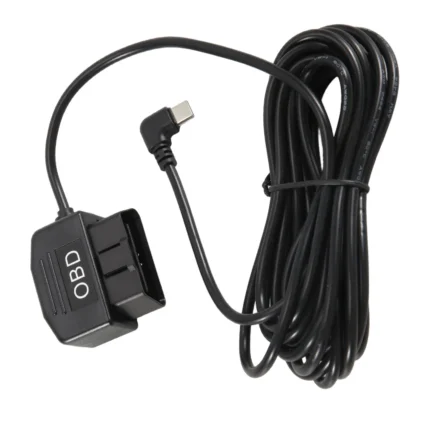
- OBD2 dashcam power cable with low-voltage cutoff and parking timer
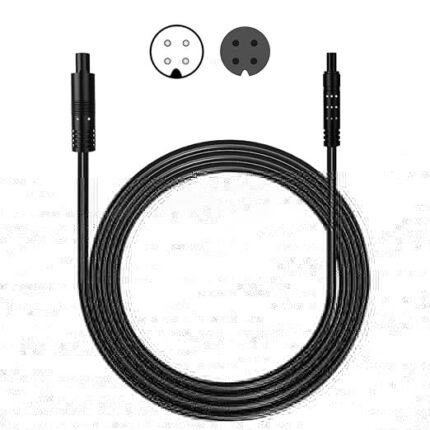
- M8 circular 8-pin to OBDII dash camera power and video cable
Full range: automotive cable and wire harness assemblies.
Frequently Asked Questions
Is Type B the same as a heavy-duty 9-pin port?
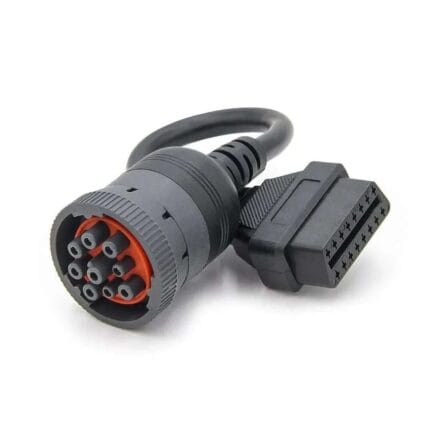
No. Type B refers to a 16-pin J1962 shell with a non-light-duty assignment. The round 9-pin port is a different connector entirely and takes a J1939 adapter.
Can you supply one cable that works across our whole fleet?
Only if the pinouts match. Where they do not, we quote one part number per pinout group — it is cheaper than the callout truck.
Do you provide the mating side for a hardwired device?
Yes. Tinned flying leads, ring terminals, or a device-side connector of your choice, with the pinout card printed to match.
What is the minimum order?
Prototypes start at 5 pcs with a 3 working day turnaround. Production starts at 500 pcs and ships 14 working days after sample approval.
| Connector A | Type-B 16-pin plug, pinout per chassis definition |
|---|---|
| Connector B | 16-pin female socket, or bare-wire breakout / ring terminals |
| Cable length | 1 m standard; other lengths to order |
| Build option | In-line extension or hardwired breakout with ignition sense |
| Jacket | Flexible PVC or TPU in black, selected by build |
| System voltage | 12 V / 24 V |
| Documentation | Printed pinout card supplied with each build |