BMW 16-Pin to 20-Pin OBD Diagnostic Adapter Cable
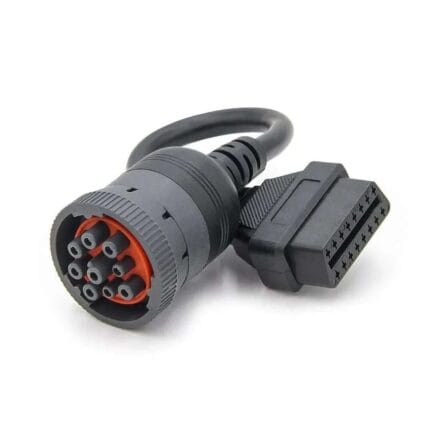
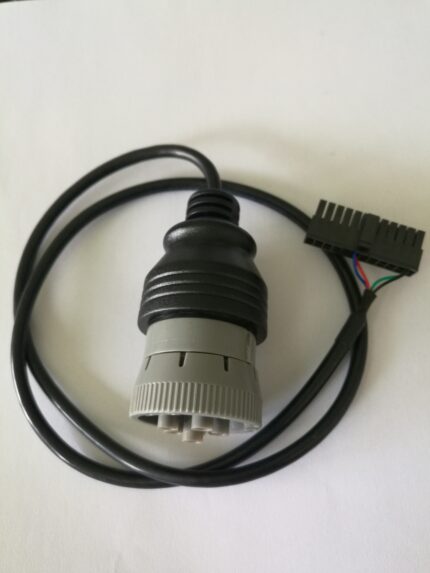
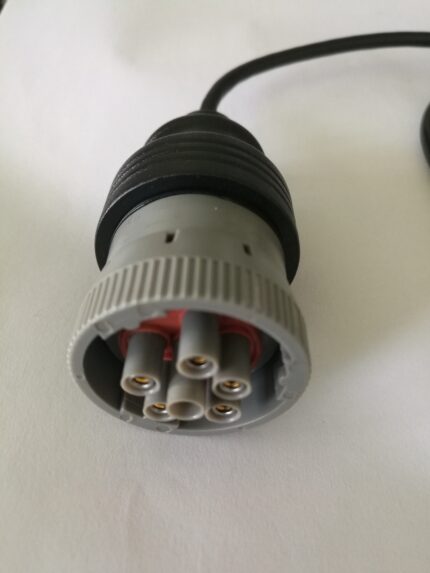
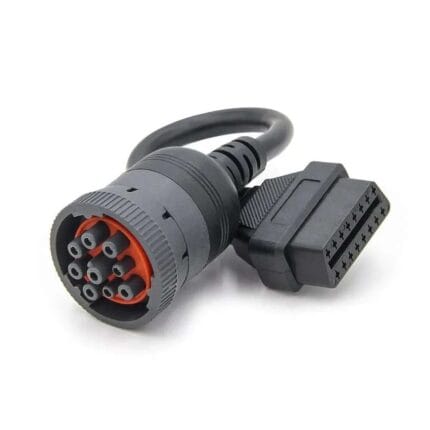
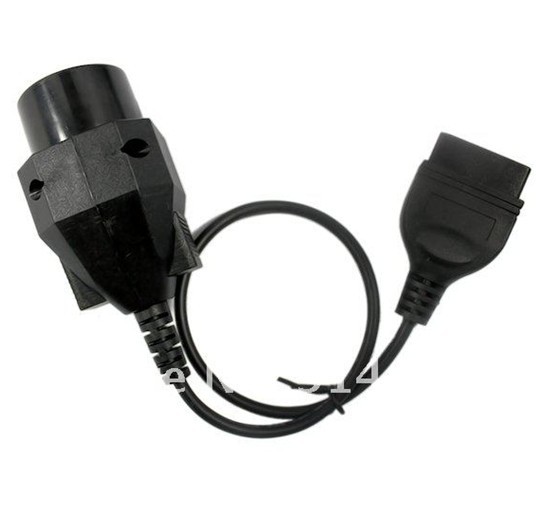
A bmw obd diagnostic cable that bridges a standard 16-pin OBD-II scanner to the round 20-pin under-hood port on older BMW models. Passive, threaded collar at the 20-pin end, overmolded strain relief at both bodies.
Overview
A bmw obd diagnostic cable of this shape solves a very specific problem: the car has a round 20-pin diagnostic port under the hood and the scanner you own expects the trapezoid 16-pin OBD-II socket. This adapter bridges the two mechanically and electrically, with a threaded collar at the 20-pin end so it stays on a port that vibrates, and overmolded strain relief where the lead leaves each body. It is passive. There is no chip in it, so it does not translate between protocols and it cannot make a vehicle answer a scanner it never supported. BMW is a trademark of its owner; we build compatible adapters and are not an authorized distributor.
Key Specifications
| Cable Type | Diagnostic Adapter Cable |
|---|---|
| Connector A | OBD-II J1962 16-Pin Female |
| Connector B | BMW 20-Pin Round Male |
| Application | BMW Pre-OBD-II Engine Diagnostics |
| Coupling | Threaded collar at the 20-pin end |
| Function | Passive adapter, no protocol conversion |
| Construction | Overmolded strain relief at both bodies |
| Length | Stated per your drawing |
| Testing | 100% continuity and pinout check before packing |
Which port does the car actually have?
Before you order anything, go and look. Vehicles built roughly from 1988 to 2000 in this marque typically carry the round 20-pin under-hood connector, while later ones moved to the trapezoid 16-pin cabin socket that every generic scanner expects under the OBD-II rule. Some chassis have both, which is where the confusion starts, and some have a 20-pin port that has never been opened since it left the factory.
| What you find | Where it is | What it means | What you need |
|---|---|---|---|
| Round 20-pin under hood | Engine bay, often near the strut tower or the fuse box | Pre-OBD-II diagnostic path, usually with a cap on it | This adapter |
| Trapezoid 16-pin in the cabin | Under the dash or behind a panel | Standard OBD-II socket | A plain OBD-II lead, no adapter |
| Both | Round under hood and trapezoid in the cabin | Transitional years; the two ports do not necessarily reach the same modules | Check which one your tool expects |
| Neither | Nothing obvious | Older than the diagnostic port era, or a market variant | Identify before buying anything |
What a passive adapter can and cannot do
Setting expectations here saves a lot of returned product. The 20-pin round port carries power, ground and the ISO 9141 style diagnostic path along with maker-specific module lines, and the exact cavity assignment varies by chassis and by module. A passive adapter can only carry what both ends already support.
| Question | Answer | Why |
|---|---|---|
| Does it convert protocols? | No | There is no active electronics in it; the vehicle and the tool do the talking |
| Will it reach every module? | Only the ones the wiring actually connects | Some modules sit behind the other port on transitional chassis |
| Does it need external power? | No | It takes what the port supplies, as long as that circuit is fused and live |
| Will it work with any scanner? | Only with one that speaks the protocol the vehicle uses | An adapter adds no protocol the vehicle did not already have |
| Can it damage anything? | Only if wired to a pinout it was not built for | That is why we build to the pinout you send rather than to a guess |
Why original 20-pin hookups fail, and how to avoid a repeat
The usual failure is not the cable, it is the port. The round 20-pin connector lives in the engine bay, so it collects oil, water and grit; if the protective cap is missing, corrosion does the rest. A port that has been sitting open for two decades will give you an intermittent session no matter how good the adapter is. Clean the contacts before you blame the lead, refit the cap when you are done, and route the adapter so its weight is not pulling on the collar.
Construction
- J1962 16-pin female socket to a 20-pin round male plug with a threaded collar.
- Straight-through wiring to the pinout you send; no active components.
- Stranded copper conductors, cross section stated on your drawing.
- Overmolded strain relief at both bodies, which is where an adapter hanging off an under-hood port normally fails first.
- Jacket chosen for under-hood heat and oil exposure.
How to specify your build
- The chassis and model year, so we know which port and which era.
- The pinout – the one your scanner vendor documents, or the one you measure.
- Length, kept short because the adapter hangs off an under-hood port.
- Whether you need the threaded collar or a plain body.
- Quantity, and whether these go out under your own part number.
Typical applications for this bmw obd diagnostic cable
- Independent specialists keeping older vehicles on a modern scanner
- Restoration shops diagnosing a car that has sat for years, alongside an OBD2 extension flat cable for the cabin port cars
- Engine swaps where the loom and the chassis are from different eras, paired with a J1962 female to ECU board harness
- Fault code retrieval before a purchase inspection, next to a 16-pin OBDII Y splitter extension
- Club and enthusiast work, with an OBD2 splitter and USB charger lead for the power side
Workmanship and testing
BMW 16-Pin builds are assembled and inspected to IPC/WHMA-A-620 Class 3 criteria, with ISO 9001 as the quality system over 32 to 12 AWG work. continuity and pinout are checked on every BMW unit before packing, and seal checking is quoted whenever an ingress rating is on the drawing.
Every production run can ship with RoHS and REACH declarations and the electrical report agreed at quotation; see certifications and material declarations. UL styles and other named approvals are built to drawing: we source to the style you specify and document it, rather than asserting a listing we do not hold. Termination, molding and verification happen in-house see cable assembly and wire harness production so the process that made your sample is the process that runs the order. Related reading: our automotive and EV work. Tooling is quoted separately, cut in-house rather than brokered out, and owned by you.
Custom builds and ordering
BMW 16-Pin prototype builds start from 1 to 50 pcs and are out in 3 working days. Production is quoted from 500 pcs at 14 working days after approval. Tooling not already held adds around 10 working days. Private-label BMW runs ship under your part number and labeling, and material certificates and first-article reports are available on request.
Related diagnostic adapters
- OBD2 Extension Flat Cable, 16-Pin Male to Female
- 16-Pin OBDII Y Splitter Extension Cable, Heavy-Duty Extender
- 16-Pin J1962F OBD2 Female Connector to ECU Board Harness
- SAE J1939 OBD2 Diagnostic Cable, Type 2 Green 9-Pin
- OBD2 Splitter USB Charger Cable, 16-Pin Pass-Through
Full range: automotive cable and wire harness.
Frequently Asked Questions
Is this an original or authorized part?
No. It is a compatible adapter we build to the pinout you send. The vehicle marque name is used only to describe what it is made to fit.
Will it let my generic scanner read every module?
Only the modules the port wiring actually reaches. It does no protocol conversion, so the vehicle and the tool still have to agree.
The session keeps dropping out. Is the adapter faulty?
Usually not. Clean the under-hood port first: these connectors collect oil and water, and corrosion there looks exactly like a bad cable.
Can you wire it to a non-standard pinout?
Yes. Send the assignment and we build to it. That is the normal route for shops with a house tool that expects something specific.
| Cable Type | Diagnostic Adapter Cable |
|---|---|
| Connector A | OBD-II J1962 16-Pin Female |
| Connector B | BMW 20-Pin Round Male |
| Application | BMW Pre-OBD-II Engine Diagnostics |
| Coupling | Threaded collar at the 20-pin end |
| Function | Passive adapter, no protocol conversion |
| Construction | Overmolded strain relief at both bodies |
| Length | Stated per your drawing |
| Testing | 100% continuity and pinout check before packing |