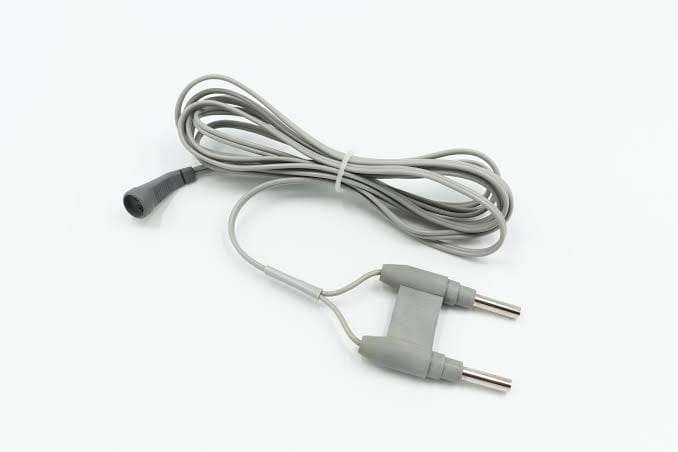
Surgical Handpiece Cable with Silicone Jacket
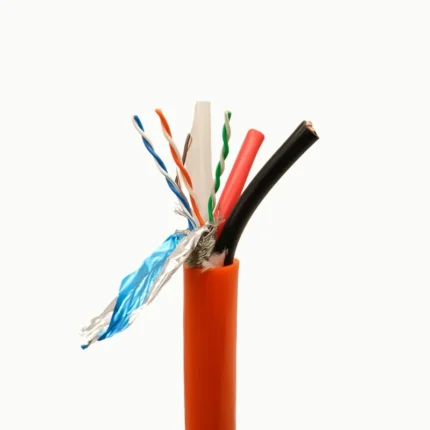
A surgical handpiece cable with silicone jacket and overmolded strain relief, built to your instrument drawing and cleaning protocol. We supply the cable component, not the finished instrument.
Last updated: 13 September 2026
Overview
A surgical handpiece cable is wiped down, soaked or autoclaved between cases, and it is handled by a gloved hand that is pulling it sideways off a table more often than anyone admits. Both of those matter more to service life than the electrical design does. The jacket compound is selected against the cleaning agents and the sterilization cycle you actually run, stated in writing before production, and the strain relief is overmolded to your shell so the bend lands in the boot rather than in the termination.
Scope of supply. We manufacture the cable component – conductors, jacket, shielding, terminations and overmolds – built to your drawing. We do not manufacture the handpiece, the generator or any finished medical device, and we make no claim that this cable is an approved medical device. Suitability of the finished instrument for its intended use, and its regulatory compliance, remain your responsibility as the device manufacturer. Tell us what your registration requires of the cable part and we build and document to that.
Key Specifications
| Configuration | 2-pole instrument cable, straight |
|---|---|
| Jacket | Silicone or medical-grade TPE, per cleaning exposure |
| Instrument end | Termination per your handpiece drawing |
| Unit end | Connector per your generator side |
| Strain relief | Overmolded at both ends |
| Cleaning exposure | Compound selected against the agents you name |
| Documentation | Material certificates with lot traceability |
| Scope | Cable component only; finished device compliance is yours |
What kills this cable
| Stress | What happens | How the build answers it |
|---|---|---|
| Repeated steam sterilization | Jacket hardens, then cracks at the bend where the cable leaves the handpiece | Compound selected against the cycle count and temperature you specify; sample run before release |
| Chemical wipe-down between cases | Surface crazing and swelling, followed by jacket split | Silicone or TPE chosen against the actual agents, not against a generic chemical list |
| Sideways pull off the table | Conductor breaks at the termination, inside the shell where nobody can see it | Overmold geometry matched to your shell, load carried by the boot |
| Coiling and stacking in a tray | Permanent set and kinking at the coil | Strand and lay selection for recovery, cable supplied with a handling note |
| Fluid ingress at the joint | Corrosion at the contact, intermittent operation | Sealed joint design and 100% air-leak screening where the drawing calls for it |
Selecting the jacket: silicone against TPE
The choice is not about which material is better in the abstract. It is about which one survives your specific combination of heat, chemistry and handling.
- Silicone – stays flexible across a wide temperature range and handles repeated steam sterilization well. It is soft, which makes it comfortable to handle and also easier to cut, so the overmold has to protect it at the shell.
- Medical-grade TPE – tougher against abrasion and cutting than silicone, and generally easier to process into a consistent overmold. It has a narrower temperature window, so high-temperature cycles need to be confirmed before it is specified.
Either way, we ask for the agents and the cycle in writing before a compound is committed. A cable that survives 200 wipe-downs and then fails at the fiftieth autoclave cycle is a compound selection problem, not a workmanship problem, and it is far cheaper to settle at the sample stage.
Bend radius and strain relief at the handpiece end
The instrument end is where these cables fail. The shell is small, the cable is soft, and the operator’s hand puts a side load on the joint several times a case. Two things fix most of it: an overmold whose geometry is cut to your shell so the load transfers into the boot, and a defined minimum bend radius that the boot enforces rather than merely recommends.
Where the handpiece is autoclaved with the cable attached, the boot material has to survive the cycle too, and it has to stay bonded to the jacket while it does. That bond line is the part worth testing on a sample before release, because it is the failure you cannot see from the outside.
Design notes from the build
- Lot traceability on materials, with certificates issued against the build rather than against a catalog page.
- Overmold tooling cut in our own tool room, so a boot that does not fit gets corrected in days rather than weeks.
- Sealed joints screened by air leak where the drawing specifies a seal, and the method documented.
- Terminations made to your drawing, with the acceptance criteria you use rather than ours.
Typical applications for this surgical handpiece cable
- Electrosurgical pencil and instrument leads
- Dental and oral surgery handpiece connections
- Ophthalmic and microsurgical instrument cables
- Endoscopic and laparoscopic instrument leads, alongside our Surgical Robot Cable Harness with Overmolded Strain Relief and Sealed Joints
- Veterinary and dental chair-side instruments using the same cleaning cycle
How to specify your build
- Drawing of the instrument end, including the shell geometry and the termination.
- Cleaning and sterilization protocol – agents, cycle temperature, and expected cycle count.
- Generator side connector and pinout.
- Conductor count and size, or the load the circuit has to carry.
- Length and whether a coil or straight build is wanted.
- Documentation you need – material certificates, first-article report, inspection format.
Workmanship and testing
Assembly and inspection follow IPC-WHMA-A-620 Class 3 workmanship criteria under our ISO 9001 quality management system, with additional acceptance criteria applied where your drawing defines them. Every unit passes 100% continuity and pinout testing, and sealed builds are air-leak screened when the drawing calls for it. We build and document to the requirements you state for your device registration; we do not hold or claim the device-level approvals that belong to the finished instrument.
Custom builds and ordering
Prototypes start from 5 pcs and ship in 3 working days; production orders start at MOQ 500 pcs and ship 14 working days after approval. New overmold tooling adds about 10 working days, and we hold 100 sets of mold tooling in house at our Longgang, Shenzhen plant – four assembly lines, 40 assembly workers, 1,000,000 pcs annual output. Factory audits and video line tours can be arranged.
Related medical cable components
- Surgical Robot Cable Harness with Overmolded Strain Relief and Sealed Joints
- Ultrasound Probe Cable Assembly, Multi-Coax Build
- Patient Monitor ECG Lead Set, 5-Lead AHA
- Medical Panel Feedthrough Set for Cart and Monitor Enclosures
- Magnetic Pogo Pin Cable USB-C for Medical and Wearable Devices
- Nurse Call Bedside Cable with Sealed Call Button
Full range: custom wire harnesses.
Frequently Asked Questions
Do you supply the finished handpiece?
No. We build the cable component to your drawing. The handpiece, the generator and the finished instrument are your scope, and the regulatory compliance of the finished device sits with you as its manufacturer.
Autoclaving is hard on cables. How do you approach it?
An autoclave cycle combines heat, moisture and pressure, and the jacket compound and the overmold bond both have to survive it. We select against the cycle you specify and confirm on a sample build before production is released.
Can we get material certificates with each shipment?
Yes. Material certificates with lot traceability are issued against the build, and we can add a first-article report in your format.
Silicone or TPE – which should we choose?
Give us the cleaning agents, the sterilization cycle and the expected cycle count and we will recommend one, with the reasoning written down. If the cable sees high-temperature steam and soft handling, silicone usually wins; if it sees abrasion and tray stacking, TPE usually does.
What is the minimum order?
Five pieces is the prototype minimum and those ship in 3 working days. Production quantities start at 500 pcs, 14 working days after sample approval.
| Configuration | 2-pole instrument cable, straight |
|---|---|
| Jacket | Silicone or medical-grade TPE, per cleaning exposure |
| Instrument end | Termination per your handpiece drawing |
| Unit end | Connector per your generator side |
| Strain relief | Overmolded at both ends |
| Documentation | Material certificates with lot traceability |
| Cleaning exposure | Compound selected against the agents you name |
| Scope | Cable component only; finished device compliance is yours |