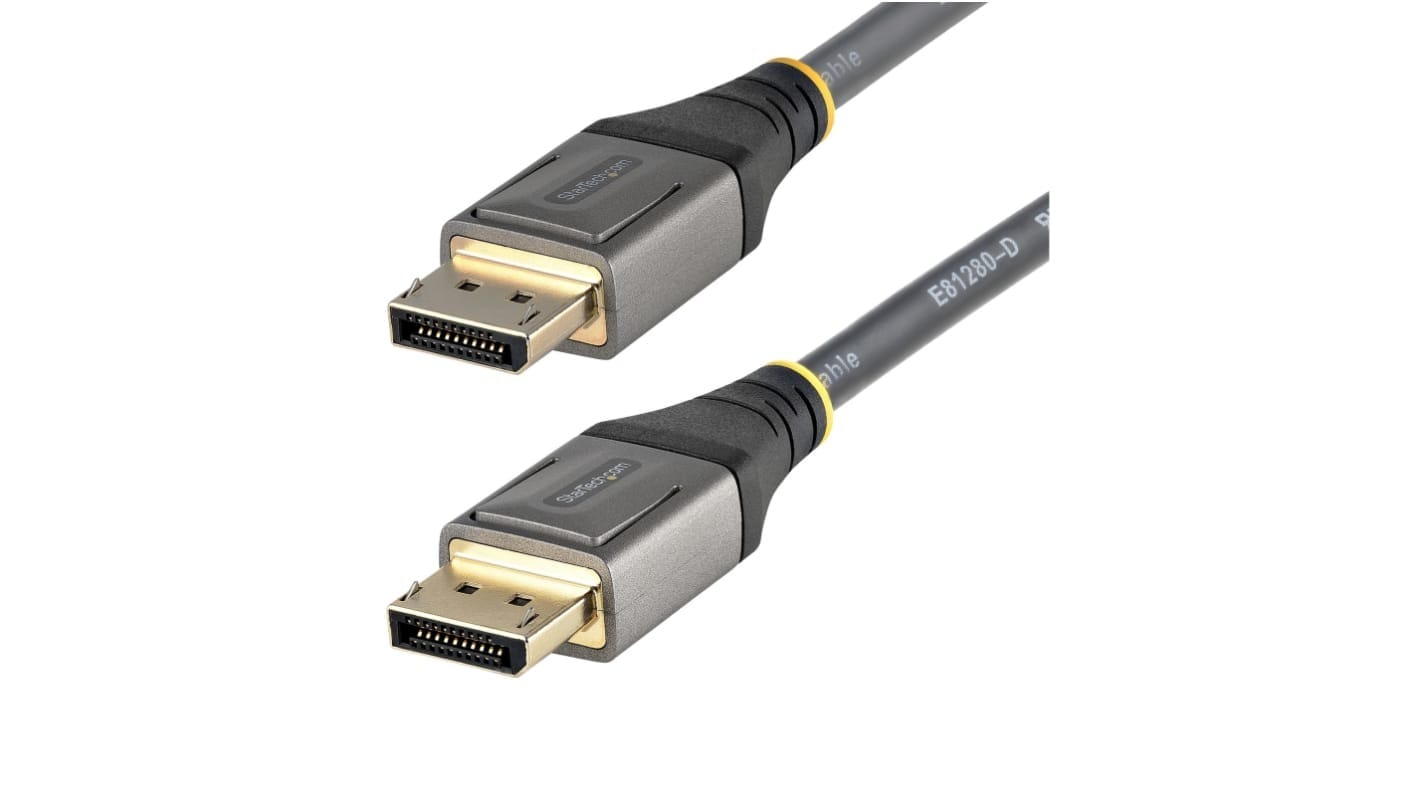
DisplayPort Screw Lock Cable for Control Room and Kiosk Displays
Last updated: 7 September 2026
A panel-mount display needs a retained plug
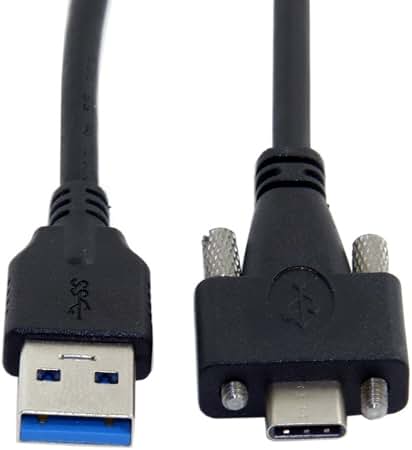
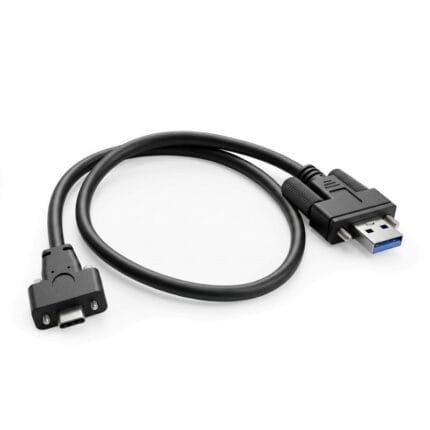
On a control-room wall, an imaging workstation or a public kiosk, the display end of the DisplayPort screw lock cable is never touched gently. Screens get rotated on their arms, trolleys get wheeled between rooms, and cleaning staff knock everything at waist height. A friction-fit plug works its way out under that treatment, and the failure looks like a graphics driver problem rather than a cable problem. A displayport screw lock cable clamps the plug into the panel threads so the connector stays seated through all of it.
Check the source end before you order
This is the part buyers get wrong. The screws on a retained plug need threaded holes in the socket they mate with, and not every device has them: plenty of add-in cards and small-form-factor PCs ship a DisplayPort socket with no threaded holes at all, and some use a latching mechanism instead of screws. So a retained plug at the display does not automatically give you a retained link. Check the source, or send us a photograph of both ports and we will tell you what will actually fit.
Screw versus latch
- Screw retention holds against sustained vibration and repeated knocks, and cannot be released by a pull on the cable
- A latching plug is quicker to fit and release, which suits serviceable equipment
- Some sockets accept a screw plug and some do not – the shell around the port is the giveaway
- We can build retaining screws on one end and a standard or latching plug on the other
What the cable itself has to do
DisplayPort is a high-rate differential link that negotiates its operating mode between the source and the sink, so the assembly has to hold its pair geometry and keep crosstalk down or the link falls back or drops. We build these with individually screened pairs, a consistent lay, and the shield bonded into the connector shell at both ends so the return path runs through the plug rather than stopping at it. Every assembly is checked before it leaves the bench.
Where we see these specified
- Video walls and operator desks in control rooms
- Medical imaging workstations and review displays
- Self-service kiosks and ticketing machines in public areas
- Industrial HMI panels mounted on machine arms
- Digital signage runs behind wall-mounted screens
What to specify
- Length, and whether the run is fixed or moves with the display arm
- Whether the source device has threaded holes, a latch, or neither
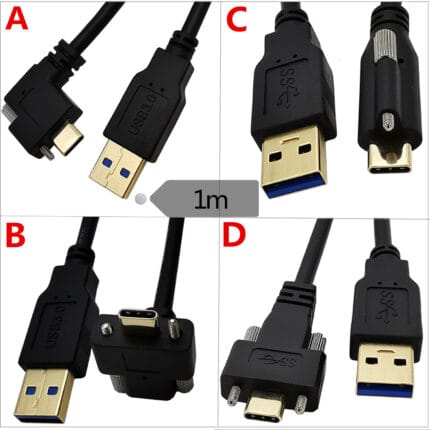
- Straight or right-angle at the display end, and which way it must exit
- Cleaning agents or jacket color requirements for the installation
You May Also Need
Related Cable Ranges
Panel Mount Cable • Signal and Data Cables • Circular M8 M12 Cable
Frequently Asked Questions
What is DisplayPort Screw Lock Cable for Control Room and Kiosk used for?
Control rooms, imaging workstations, kiosks, industrial HMI panels.
Which connectors does DisplayPort Screw Lock Cable for Control Room and Kiosk use?
One end is DisplayPort plug, screw-retained variant and the other end is DisplayPort plug, retained or standard, or Mini DisplayPort on request.
What jacket material does DisplayPort Screw Lock Cable for Control Room and Kiosk use?
The jacket is PVC as standard, PUR or low-smoke options on request.
| Connector A | DisplayPort plug, screw-retained variant |
|---|---|
| Connector B | DisplayPort plug, retained or standard, or Mini DisplayPort on request |
| Interface | DisplayPort, VESA standard video and audio interface |
| Retention | Retaining screws at the display end – source end must be checked |
| Compatibility note | Not every source socket has threaded holes – verify before ordering |
| Conductors | Individually screened differential pairs plus auxiliary channel |
| Shielding | Overall braid bonded to the connector shell at both ends |
| Jacket | PVC as standard, PUR or low-smoke options on request |
| Application | Control rooms, imaging workstations, kiosks, industrial HMI panels |
Related products