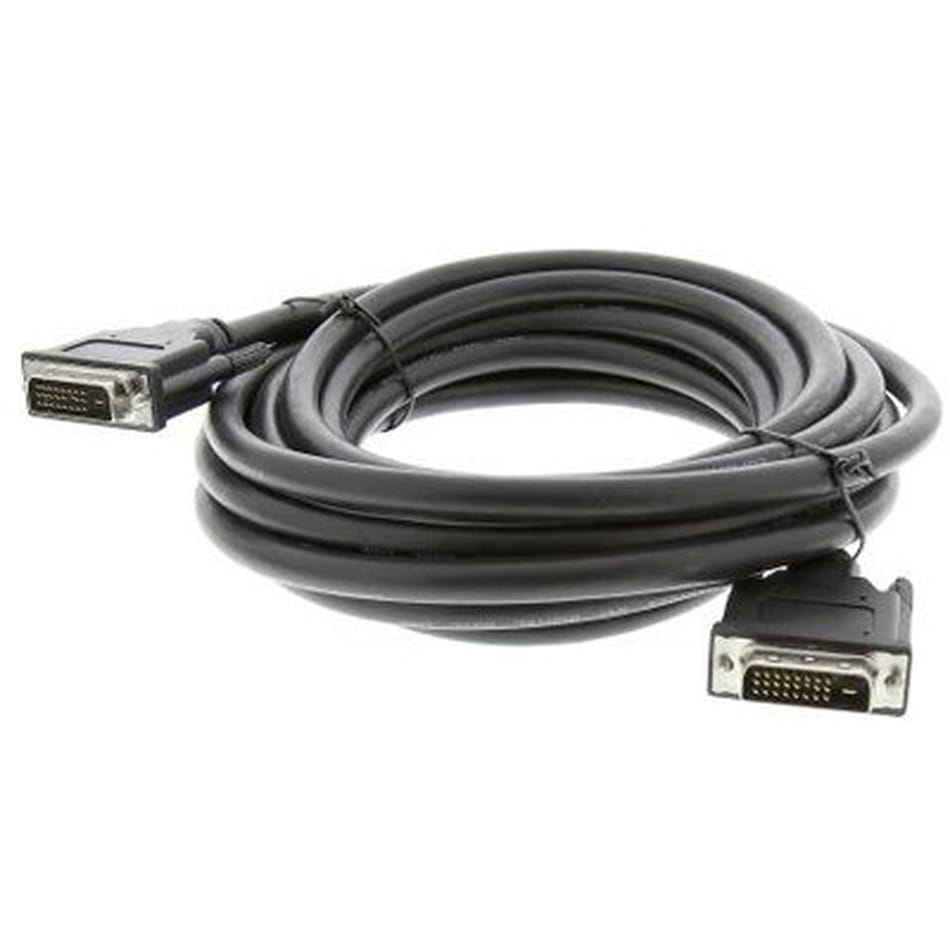
DVI Screw Lock Cable, DVI-D and DVI-I for Legacy Industrial PCs
Last updated: 7 September 2026
Read the connector before you order
DVI is not one connector, it is a family that shares a shell and differs in which contacts are populated. Getting this right is the difference between a DVI screw lock cable that works and one that cannot physically be plugged in.
- DVI-D – digital only. The flat blade with the two rows of pins and no pins around it.
- DVI-A – analogue only. Carries VGA signaling on the four pins around the flat blade.
- DVI-I – integrated, both signal types in one connector. Digital pins plus the four analogue pins.
- DVI-I plugs into a DVI-D socket only if the cable is built to match – check both ends, not one.
The practical rule when replacing a dead lead on an existing machine: look at the socket on each device, not at the label on the old cable. Photograph both ports if you are not sure.
Single link or dual link
A dual-link connector carries a second set of differential pairs alongside the first, which is what allows the higher pixel clocks that a large or fast display needs. A single-link cable in a dual-link application gives a reduced mode or no picture at all; a dual-link cable in a single-link application simply has pins that go nowhere. If you are matching an existing installation, the pin population on the old connector tells us the answer.
Replacing a cable on a machine that is not being upgraded
This is the usual reason somebody orders a dvi screw lock cable. The machine works, the display works, the controller will not be replaced this decade, and the original lead has been flexed at the connector until a pair went open. A properly built replacement of the original cable is cheaper than an adapter chain, has nothing to convert, and keeps the port the machine was designed around.
Why the screws matter here
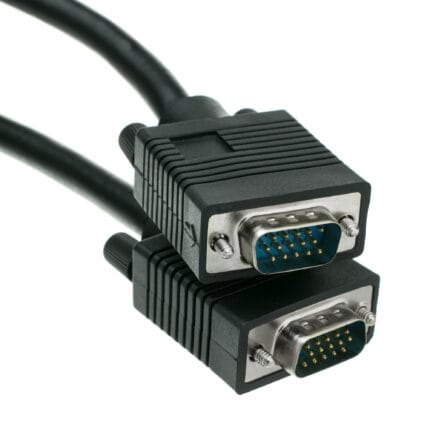
DVI shells were always threaded, and on an industrial PC mounted in a cabinet door or a vision station bolted to a frame, those two screws are what stop the plug from working loose. A DVI plug is heavy relative to its contacts, and the leverage of a stiff cable hanging off it is enough to break contact on its own over time. Do the screws up and the load is carried by the shell.
What to send us
- Which variant at each end: DVI-D, DVI-I or DVI-A, single or dual link
- Length, and whether the cable is routed through a machine or behind a bench
- Straight or right-angle, and the exit direction
- Whether the run passes near drives, contactors or power cabling
- A photograph of both ports if you are not certain of the variant
You May Also Need
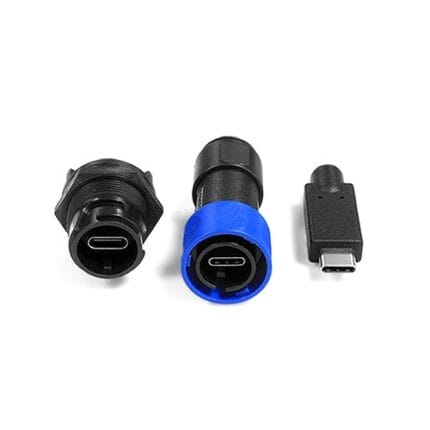
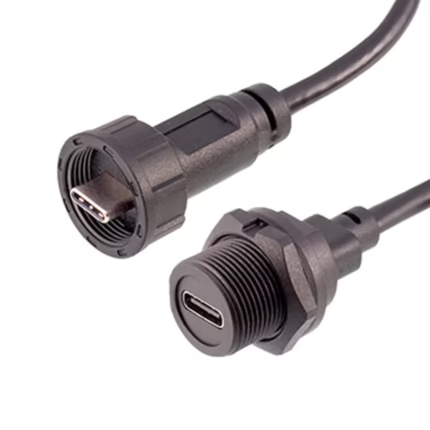
- Right Angle Type C male USB Cable to Femal socket with screw-lock
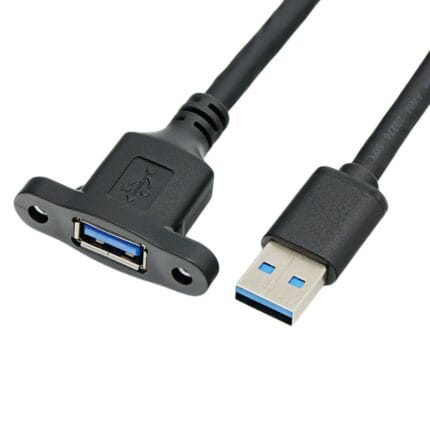
- Screw-Lock USB 3.0 Type-A Male to Female Socket Extension Cable Industrial Panel Mount Extension Cable
Related Cable Ranges
Panel Mount Cable • Signal and Data Cables • Circular M8 M12 Cable
Frequently Asked Questions
What is DVI Screw Lock Cable used for?
Legacy industrial PCs, machine-vision frame grabbers, older medical displays.
Which connectors does DVI Screw Lock Cable use?
One end is DVI-D or DVI-I, single or dual link, straight or right-angle and the other end is DVI-D or DVI-I, or DVI to a panel-mount feed-through.
What jacket material does DVI Screw Lock Cable use?
The jacket is PVC as standard, PUR on request.
| Connector A | DVI-D or DVI-I, single or dual link, straight or right-angle |
|---|---|
| Connector B | DVI-D or DVI-I, or DVI to a panel-mount feed-through |
| Interface | DVI digital and integrated variants – confirm the fitted contacts |
| Retention | Two jackscrews clamping to the mating panel threads |
| Link configuration | Single link or dual link – must be specified at order |
| Conductors | Screened TMDS differential pairs plus analogue cores on DVI-I |
| Shielding | Individual pair screening plus overall braid – confirm per build |
| Jacket | PVC as standard, PUR on request |
| Application | Legacy industrial PCs, machine-vision frame grabbers, older medical displays |