IP67 Right-Angle M8 6-Pin Sensor Cable
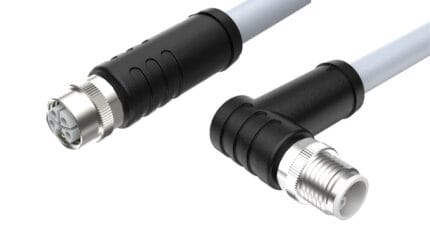
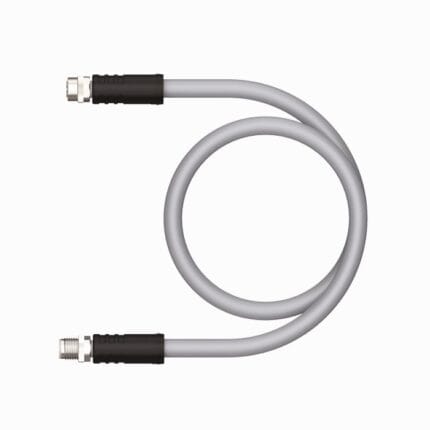
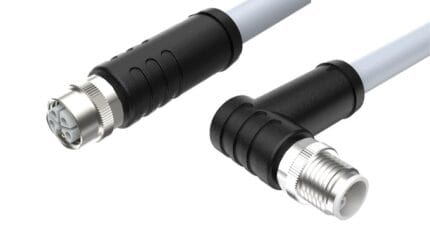
This IP67 right angle m8 sensor cable pairs a molded 90-degree male with a molded 90-degree female A-coded connector, so proximity switches, photoelectric sensors and small actuators can be wired in the tightest recesses of a machine frame.
Overview
This IP67 right angle m8 sensor cable pairs a molded 90-degree male with a molded 90-degree female A-coded connector, so proximity switches, photoelectric sensors and small actuators can be wired in the tightest recesses of a machine frame.
M8 A-coded cordsets are the default wiring choice for compact sensors, and the six-position layout covers multi-conductor sensor and actuator circuits, including devices that use spare contacts for teaching or diagnostics. Specifying both ends as right angle lets the cable hug the machine surface on either side of the connection, which matters on sliding carriers, rotating towers and sensors mounted inside guard channels.
Key Specifications
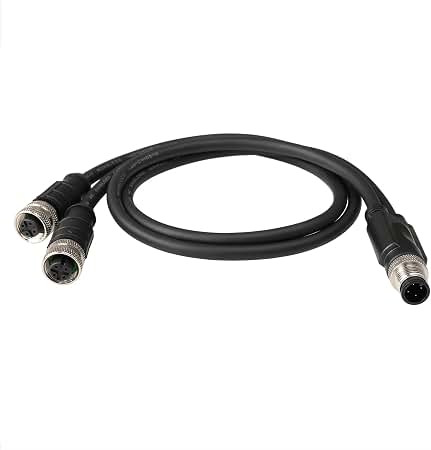
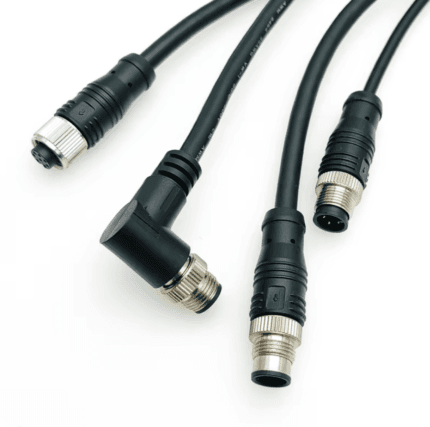
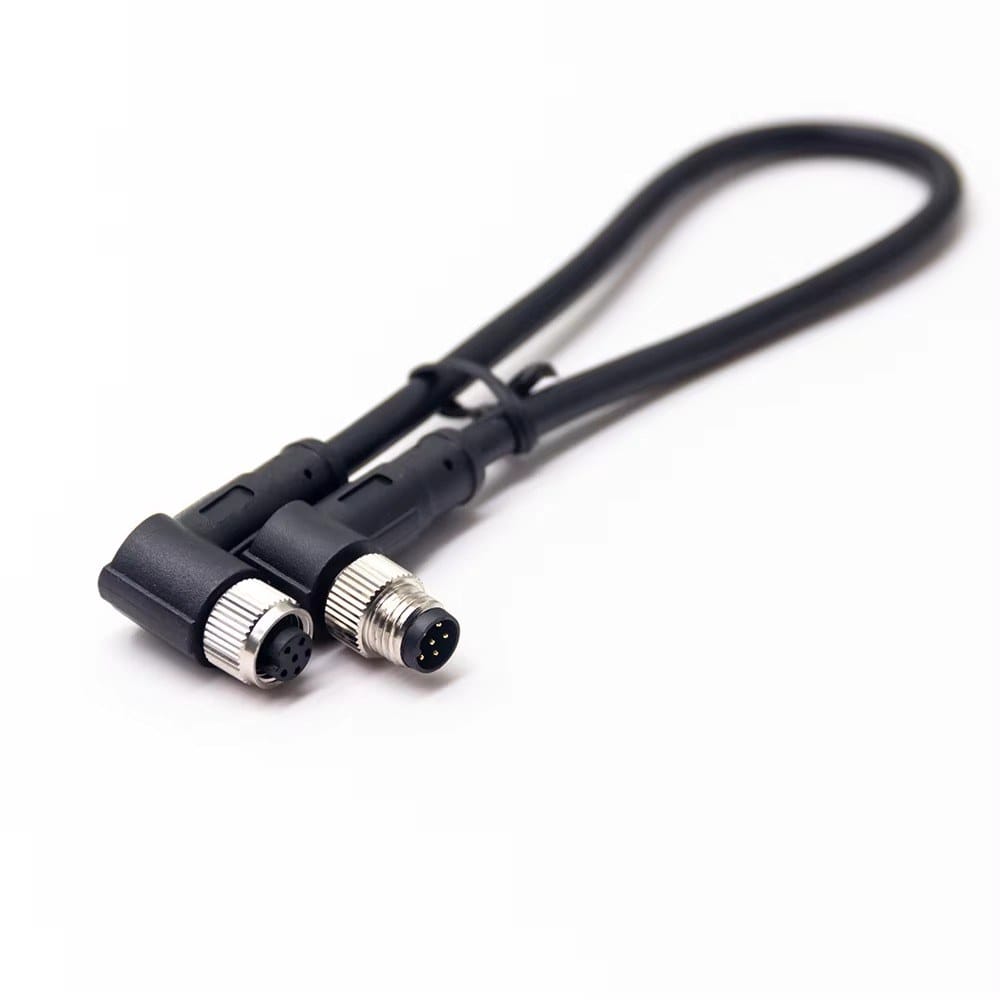
The table below lists the configuration shown in the product photo.
Why M8 Instead of M12
M8 exists because plenty of sensors do not need the size, the current capacity or the panel area of an M12 connector. Standard interface tables place M8 A-coded in the low-voltage signal class used for power, signal and CAN connections, with fewer positions and a noticeably smaller shell than its larger relative.
On a machine covered in proximity switches and photoelectric sensors that size difference compounds. Each device needs a smaller panel cutout or no cutout at all, the cable is lighter, the bend radius is tighter, and the bolt circle of the sensor itself can shrink. Sensitive faces and small actuator heads simply have no room for the larger thread.
The interface is standardised in IEC 61076-2-104, so an M8 A-coded cordset from one supplier mates with a sensor port from another as long as the pin count and gender agree.
When Both Ends Turn
A single right-angle end solves one problem: getting the cable away from a surface. Turning both ends solves a harder one, because now the cable has to leave two surfaces cleanly and those surfaces are often not parallel.
Each ninety-degree body is molded in one orientation relative to the keyway, so the direction the cable leaves each end is fixed at build time. On a run between a sensor in a frame channel and an I/O block on a mounting plate, that means two directions to decide, not one. Get it wrong and the cable leaves one end pointing into a bracket.
Send a sketch, or simply describe which way each end must go, and we will set both orientations to match. It is a build-time decision and cannot be rotated afterwards.
Construction and Materials
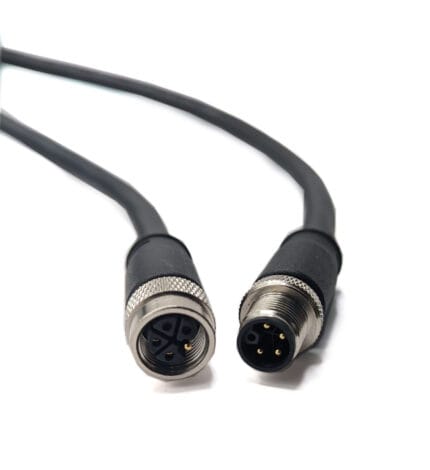
Both connectors are overmolded: the potting material flows around the shell and the cable entry, sealing the assembly against washdown and coolant splash. The coupling nuts are knurled metal for a secure finger grip, and the black circular jacket stays flexible across the drag and flex that small gauge sensor wiring normally sees inside a machine.
Both right-angle bodies are overmolded with the bend supported inside the molding, so the conductors are not bent at the crimp. Keeping the turn inside the potting matters more here than on a straight body: it means there is one continuous encapsulation around the conductors and one straight seal line at the face, rather than a gasket trying to seal around a corner.
The knurled nuts seat on metal threads and the potting closes the cable entry against coolant and washdown splash.
Typical Applications
Use this right angle m8 sensor cable on inductive and capacitive proximity switches, photoelectric sensors, magnetic cylinders, valve connectors with M8 inputs, and compact drive accessories. The male-to-female arrangement also makes it a clean extension cordset between a fixed sensor pigtail and a machine I/O block.
Guard channels and frame recesses are where this form earns its keep. A sensor mounted inside a channel has its port facing a wall, and the only exit that fits runs along that wall.
Sliding carriers and rotating indexing towers add movement. Anything projecting from the housing has to be cleared every cycle, and a low-profile pair with the cable lying flat does that automatically.
Valve manifolds with M8 inputs are the other classic: the connectors sit shoulder to shoulder, and a straight body on one simply cannot be gripped once its neighbors are wired.
Six-Position A-Coding Notes
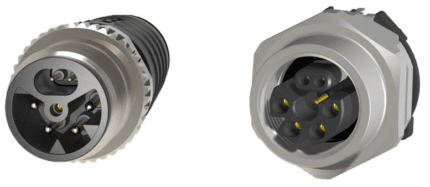
Six positions is more than a basic three-wire sensor needs, and that surplus is the point. Modern sensors use the extra contacts for a second switching output, a teach-input that lets the device be configured electrically instead of mechanically, or a diagnostic line. Ordering a three-pin cordset for a six-pin device saves nothing and removes functions.
Because A-coded shells come in several pin counts and the count is what determines pinout, specify positions as well as coding. Shape and thread size will not tell a buyer what they need to know.
Compatibility and Fitment
The A-coded keyway and thread follow IEC 61076-2-104, so the cordset mates with standard M8 sensor ports from all major sensor brands. Match the six-position pinout to your device documentation before ordering, and tell us if your drawing calls for a different contact assignment.
If you are wiring newer IO-Link devices, check whether the installation expects the four-position variant instead; IO-Link is widely carried on A-coded M8 and M12 connections and the pin count has to match the device.
Installation and Routing Notes
Decide both exit directions before ordering, as neither can be changed once molded.
Route the cable so the connector is not carrying its weight. Small-gauge sensor wire is light, which is exactly why it is easy to leave it hanging in a way that puts steady tension on the joint.
Keep mating faces covered while a machine is being built. An open branch in a channel collects the swarf and coolant mist that later turn into intermittent faults nobody can reproduce.
Custom Builds and Ordering
Other pin counts, cable lengths and jacket materials are produced to order. Share your device list and required lengths, and we will quote matching cordsets with consistent labeling for your assembly line. Prototype and sample lots run from 1 to 50 pieces and ship in 3 working days; production orders start at 500 pieces per part number and ship 14 working days after approval, with new overmold tooling adding about 10 working days.
Packaging and Shipping
Cordsets ship individually bagged with mating protection over the contacts. OEM quantities can be packed with your part number labels.
Quality and Compliance
Every assembly passes a continuity check before packing, and the overmold is inspected for complete fill around both connector shells. See the IEC 61076-2-104 M8 connector standard for the governing interface specification.
Every production run can ship with RoHS and REACH declarations and the electrical report agreed at quotation; see certifications and material declarations. UL styles and other named approvals are built to drawing: we source to the style you specify and document it, rather than asserting a listing we do not hold. The 90-degree exit is formed in the tool itself; the exit options and their clearances are set out under right-angle overmold tooling options. The wider context is covered under cable assemblies for industrial automation and robotics. Tooling is quoted separately, cut in-house rather than brokered out, and owned by you.
Frequently Asked Questions
Can the two exit directions be chosen independently? Yes. Each end is set at build time, so specify both.
Will it mate with an M12 port? No. M8 and M12 threads and keyways differ.
Why choose six positions over fewer? Spare contacts carry second outputs, teach lines and diagnostics that shorter cordsets leave unavailable.
Is the seal effective when unplugged? No. IP67 covers the mated pair only.
Related Cable Ranges
Browse the related ranges: Circular M-Series Cable Assemblies Signal and Data Cables Screw-Lock Molded Cable.
For a panel-anchored version of the same interface see the M8 screw-lock cable, and for larger sensor circuits the M12 A-code push-pull sensor cable.
| Connector A | M8 male, 6-position, A-coded, right angle |
|---|---|
| Connector B | M8 female, 6-position, A-coded, right angle |
| Coding | A-coded per IEC 61076-2-104 |
| Application | Sensors, actuators, proximity switches |
| Ingress Rating | IP67 when mated |
| Orientation | 90-degree right angle at both ends |
| Construction | Overmolded, circular jacket |