Railway Rolling Stock Harness Built to EN 45545-2 Cable Specifications
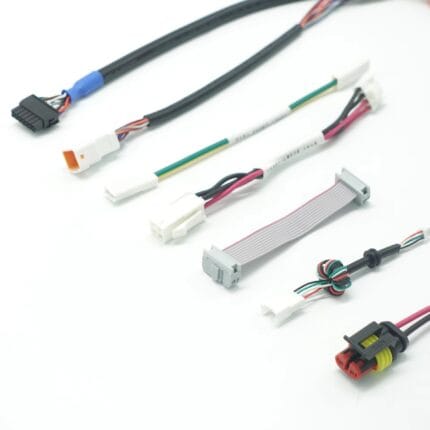
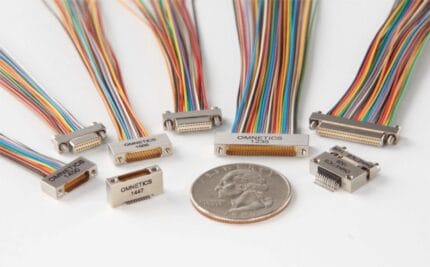
A railway rolling stock harness built with the fire safety cable grade your project names, for door control, brake sensors, HVAC and lighting circuits. Electron beam cross-linked halogen free constructions, or an equivalent you nominate on the drawing. Send a drawing for a quote.
Last updated: 13 September 2026
Overview
Rolling stock wiring is specified around what happens in a fire rather than around what happens in normal service. A railway rolling stock harness is therefore a cable selection exercise before it is a harness design exercise: smoke density, toxicity and flame spread are decided by the grade the vehicle is being approved to, and that grade comes from your engineering team rather than from a supplier data sheet. We build the harness with the cable grade your drawing names and pass through the mill documentation that goes with it.
Key Specifications
| Build Type | Build to drawing or build to sample |
|---|---|
| Cable Construction | Electron beam cross-linked halogen free |
| Cable Families | RADOX or SABIX style, or a customer nominated equivalent |
| Fire Standard | Built to the grade named on the project drawing |
| Temperature Range | Per the selected cable data sheet, as stated on your drawing |
| Oil and Fuel | Oil and fuel resistant jacket option for underframe runs |
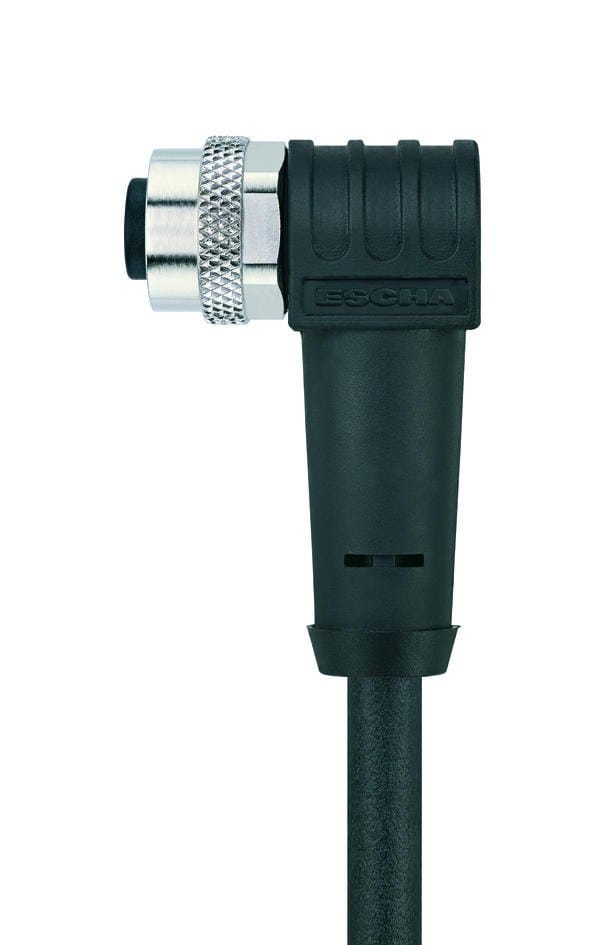
| Terminations | M12 A, D and X coded, circular connectors, terminal blocks |
| Testing | Continuity, dielectric withstand, insulation resistance, pull test |
What EN 45545-2 governs
EN 45545-2 is the European fire safety standard for rolling stock. In general terms it sets requirements for materials and components by hazard level, with the level rising with the consequence of a fire in that part of the vehicle, and it is read together with the test methods it references for flame spread, smoke density and toxicity. That is an industry definition of how the requirement is structured, not a claim about an approval we hold. Your project names the hazard level and the evidence it needs, and we build and document to that.
The requirement is built from several measured behaviors, and they do not pull in the same direction:
| What the standard looks at | Why it matters on a vehicle | What the harness can influence |
|---|---|---|
| Flame spread | How fast a fire travels along a run once it starts | Cable grade, and whether the loom is a single run or a dense bundle |
| Smoke density | Visibility during evacuation | Jacket and sleeving material, and how much of it is in the vehicle |
| Toxicity | The gases released, which decide survivability | Halogen free construction, selected by your specification |
| Heat release | How much energy the fire feeds back into itself | Cable grade and the total volume of non-metallic material |
| Flaming droplets | Whether burning material spreads the fire downward | Jacket and sleeving selection |
The third column is the honest one. Four of those five are decided by the cable you specify. What the harness builder controls is how much non-metallic material ends up in the bundle and how it is supported.
The same vehicle contains several different requirements. Position decides which one applies:
| Where the loom runs | What usually drives the requirement | Notes from the build |
|---|---|---|
| Passenger saloon and ceiling | Smoke and toxicity, because evacuation time is the constraint | Keep non-metallic volume low and avoid over-sleeving |
| Underframe and bogie | Oil, fuel, water ingress and mechanical damage | Oil and fuel resistant jacket, with armor at frame edges |
| Driver cab and console | Saloon requirements plus equipment density | Dense looms need the clamp plan agreed early |
| Door control and door edge | Cyclic flexing on top of the fire performance | Flex life and fire grade have to be met by the same cable |
| HVAC and lighting circuits | Heat near the source and the grade for that area | Check the temperature at the hottest point of the route |
Cable constructions we build with
Electron beam cross-linked halogen free constructions are the usual starting point for these vehicles, in the RADOX or SABIX style families or an equivalent you nominate. Where the project names a national fire standard we source to it: EN 45545-2 hazard levels as defined by the standard, DIN 5510-2, NF F16-101 or UNI CEI 11170, depending on where the vehicle is going into service. Oil and fuel resistant jackets are available for underframe runs. Temperature range comes from the data sheet of the cable your drawing names, and we do not publish one of our own.
Terminations and mechanical duty
We terminate M12 A, D and X coded connectors, circular connectors and the terminal blocks already on your schedule. Vibration and shock requirements for body mounted equipment come from your specification; we build to the clamping interval and strain relief method on the drawing and note anywhere the loom layout makes that difficult to achieve. Where a run passes through a body panel, the rating structure is defined by IEC 60529 as an industry standard, and the rating your assembly is built and verified to is the one stated on your drawing, not one we assume.
Typical applications for this railway rolling stock harness
- Door control and door edge sensing looms
- Brake and speed sensor wiring under the frame
- HVAC, lighting and passenger information circuits
- Traction auxiliary and converter auxiliary wiring
- Retrofit looms for refurbishment programs, built from a sample
Testing
- Continuity and polarity on every circuit
- Dielectric withstand test at the voltage stated on the drawing
- Insulation resistance recorded against the serial number
- Pull test on terminations and visual inspection of clamping and sleeving
Workmanship and ordering
IPC/WHMA-A-620 Class 3 is the workmanship standard and ISO 9001 is the quality system behind it. We work from 32 to 12 AWG. Nothing ships without a continuity and pinout check, and seal checking can be added where an ingress rating is part of the specification.
Small runs start at 5 pcs and leave in 3 working days. At production volume the minimum is 500 pcs and lead time is 14 working days after approval. New tooling is about 10 working days on top. OEM and ODM orders ship under your part number, with material certificates and first-article reports available.
Frequently Asked Questions
Do you hold an EN 45545-2 approval?
No. The standard defines how the requirement is structured. Your project names the hazard level and the evidence it needs; we build with the cable grade your drawing specifies and pass through the mill documentation for it.
Which cable families can you build with?
Electron beam cross-linked halogen free constructions in the RADOX or SABIX style families, or an equivalent you nominate on the drawing.
Can you build to DIN 5510-2 or NF F16-101 as well?
Yes. Where the project names the standard we source the cable to it and build to the drawing.
What is the prototype quantity?
Prototype quantity is 5 pcs minimum with a 3 working day turnaround. Production starts at 500 pcs and ships 14 working days from approval.
Related assemblies
- Cat6A Railway Patch Cord for Rolling Stock, RJ45 or M12 Ends
- M12 Rail Ethernet Cable for Rolling Stock and Bus Networks
- M12 Rail Signal Cable for Door Control and Brake Sensors
- M12 A-Coded PVC/PUR Straight or Right-Angle Extension Cable
- M12 8-Pin A-Coded IP67 Waterproof Male-Female Extension Cable
- IP68 Industrial Data Cable for Serial, USB and Ethernet Ports
Full range: Custom Wire Harnesses.
| Build Type | Build to drawing or build to sample |
|---|---|
| Cable Construction | Electron beam cross-linked halogen free |
| Cable Families | RADOX or SABIX style, or a customer nominated equivalent |
| Temperature Range | Per the selected cable data sheet, as stated on your drawing |
| Oil and Fuel | Oil and fuel resistant jacket option for underframe runs |
| Terminations | M12 A, D and X coded, circular connectors, terminal blocks |
| Testing | Continuity, dielectric withstand, insulation resistance, pull test |
| Fire Standard | Built to the grade named on the project drawing |