DC7909 Solar Extension Cable 14 AWG, 25 ft and 50 ft
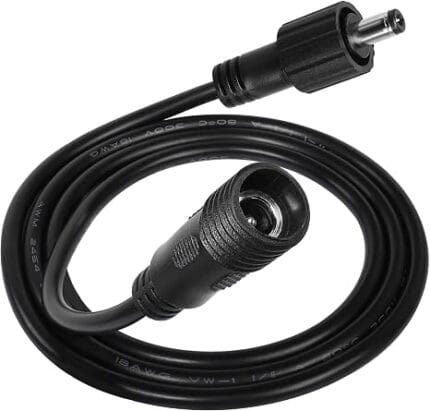
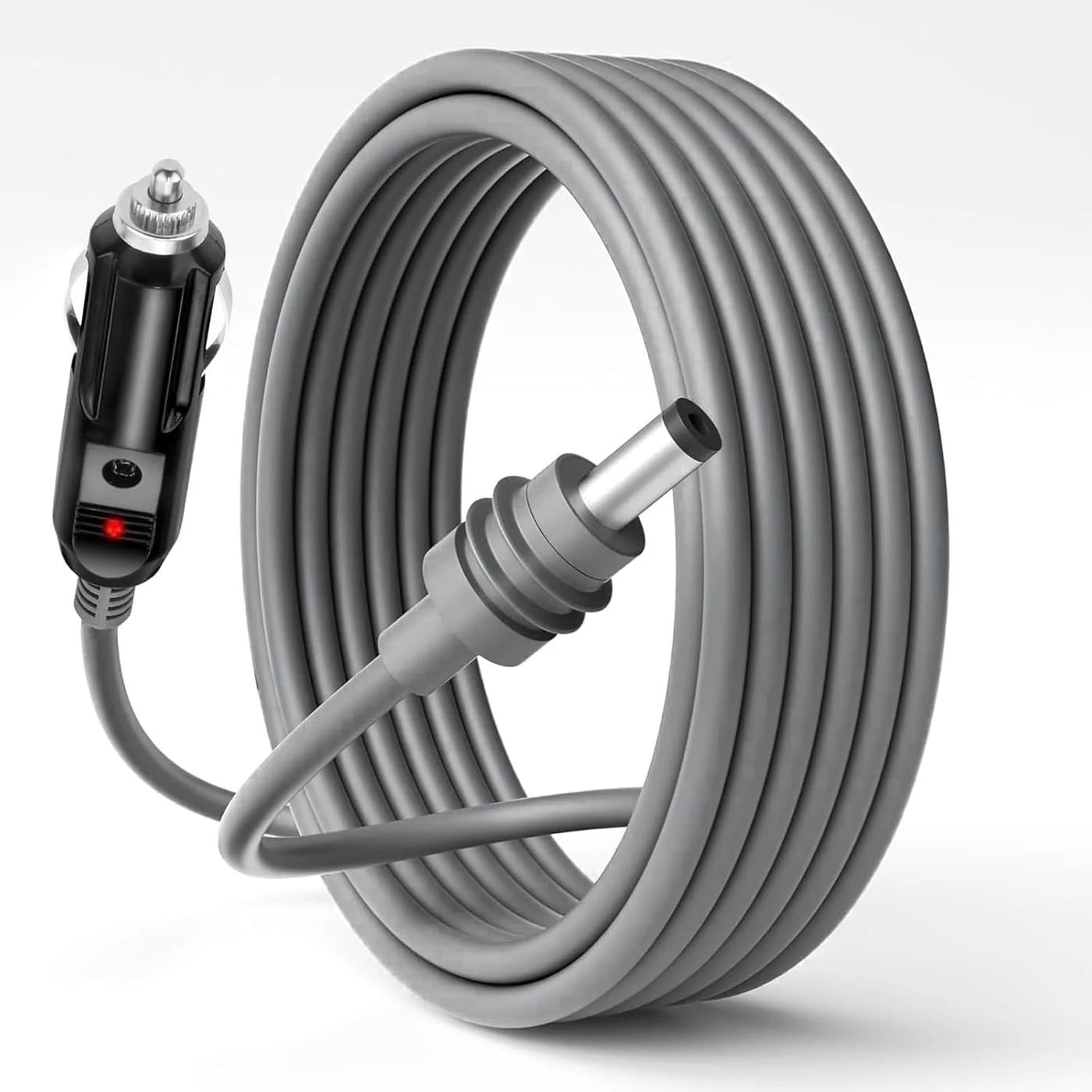
A dc7909 solar extension cable puts the panel in full sun and the power station in the shade. 14 AWG stranded copper, 25 ft and 50 ft, DC7909 or DC8020 ends, center positive and marked at both ends. The panel works best in full sun and the station charges best in the shade. Do not join two; buy the single length that fits.
Last updated: 13 September 2026
Overview
A dc7909 solar extension cable separates two requirements that usually conflict. A portable power station charges best when it is cool, so it lives in the shade, inside a tent or in the back of a vehicle. A solar panel works the other way round – it needs full sun and loses output fast under partial shading. This lead lets the panel go out into the open while the battery stays where it is convenient. The conductor is 14 AWG stranded copper, and the two stock lengths are 25 ft and 50 ft.
Key Specifications
| Connector A | DC7909 female barrel, 7.9 x 0.9 mm, center positive |
|---|---|
| Connector B | DC7909 male barrel; DC8020 male version available |
| Conductor | 14 AWG stranded copper |
| Lengths | 25 ft / 50 ft |
| Rated figures | 15 A / 300 V, quoted from public listings, pending verification |
| Jacket | Double layer PVC, 80 C rated |
| Temperature range | -15 to +80 C (pending verification) |
| Applications | Solar panels up to approximately 200 W feeding portable power stations |
| Polarity | Center positive, marked at both ends |
| Build note | Measured values stated per your specification after sample testing |
Why 14 AWG, and what it costs you
Size is a trade between weight, cost and lost voltage. The published resistance of 14 AWG copper is roughly 8.3 milliohms per meter, or about 2.5 milliohms per foot at 25 C; stranded builds run slightly higher depending on the stranding. Because the current has to travel out and back, the round-trip length is what matters. That is the whole calculation, and it is worth doing once before you pick a length.
The figures quoted for comparable cables are in the region of 14 AWG at 15 A and 300 V with an operating span from minus 15 to plus 80 C. Those come from public listings and are recorded on the confirmation list rather than presented as verified ratings. The values your cable is built and measured to are the ones stated per your specification after sample testing.
Voltage drop: 25 ft versus 50 ft
On a solar input, lost voltage does not show up as a fault – it shows up as a slower charge, which is why it is so easy to misdiagnose as a failing panel. The table below is worked from the published resistance above, at two currents, so you can see what each length costs.
| Length | Round-trip conductor | Approx. resistance | Lost at 5 A | Lost at 10 A |
|---|---|---|---|---|
| 25 ft | 50 ft | About 0.13 ohm | About 0.6 V | About 1.3 V |
| 50 ft | 100 ft | About 0.25 ohm | About 1.3 V | About 2.5 V |
Read that as a percentage of the panel voltage and it stops being abstract: two and a half volts out of a panel working in the high teens is a meaningful slice of the available power. Substitute the current you actually measured and the arithmetic holds.
Choosing between the two lengths
| Situation | Pick | Why |
|---|---|---|
| Panel on the ground a few meters from the station | 25 ft | Lowest loss, easiest to coil and stow |
| Van awning or a panel on a roof rack | 25 ft | Usually reaches, and keeps the drop small |
| Roof-mounted panel on a cabin or a large vehicle | 50 ft | The run length decides it; accept the drop |
| Panel moved out to open ground away from shade | 50 ft | Full sun beats the loss in the cable |
| Anything longer than 50 ft | Ask | A heavier conductor is better than two cables joined |
Do not join two extensions to make a longer run. Every coupling adds contact resistance and another place for water to sit. Buy the single length that fits.
Connector ends: DC7909 and DC8020
The standard build runs DC7909 female to DC7909 male, which extends an existing panel lead. A DC7909 female to DC8020 male version is available, because several newer stations moved to the DC8020 input while a great many panels in the field still terminate in DC7909 – and the mismatch is one of the most common support questions we get. Both barrel ends are center positive and marked.
The DC7909 shell is 7.9 x 0.9 mm. It looks very like several nearby sizes and it will not seat correctly in any of them, so check the socket pin rather than trusting the outer shell. Where the panel itself is the thing that needs adapting, the solar MC4 adapter cable is the piece on the other side of this run.
Sizing the panel to the run
This gauge is sized for panels up to roughly 200 W. A larger array on a long run wants a heavier conductor, and a 10 AWG or 12 AWG build is a straightforward variation. What you should not do is put a large array on a 50 ft 14 AWG lead and then blame the panel for charging slowly. Match three things: the panel open-circuit voltage to the station input range, the panel current to the conductor, and the conductor to the length.
Installation notes
- Coil the slack rather than leaving it in a heap, and keep the connector joint off wet ground.
- Route the run so it is not a trip hazard across a walkway, and secure it on a windy site.
- A panel dragged by its own cable is the usual way these leads get damaged.
- Keep the barrel ends capped or mated; grit in a barrel socket is a persistent fault.
Typical applications for this dc7909 solar extension cable
- Campsite setups with the panel on the ground and the station in the tent
- Van and overland builds with a roof-mounted or portable panel
- Cabin and shed roofs feeding a station kept indoors
- Balcony and courtyard panels where shade moves through the day
- Field work with a panel on a tripod and the battery in a bag
- Feeds into a distribution point such as a fused 12 V distribution harness
How to specify your build
- Length – 25 ft or 50 ft, or the measured run.
- Ends – DC7909 both ends, or DC7909 to DC8020.
- Panel open-circuit voltage and current, so we flag a mismatch.
- Conductor – 14 AWG as standard, heavier for large arrays.
- Jacket and color for the environment.
- Marking you want printed on the jacket.
- Quantity, sample or production.
Workmanship and testing
Builds here run under ISO 9001 to IPC/WHMA-A-620 Class 3 workmanship, across 32 to 12 AWG. Every assembly is tested for continuity and pinout before packing. Seal checking on the production batch can be quoted when the specification includes an ingress rating.
Custom builds and ordering
Prototypes run from 5 pcs with a 3 working day turnaround; volume orders start at MOQ 500 pcs and ship 14 working days after sample sign-off. If the build needs tooling we do not already hold, add roughly 10 working days. OEM and ODM orders ship under your part number and labeling, and material certificates and first-article reports are available on request.
Related DC assemblies
- Solar MC4 Adapter Cable to XT60, Anderson and DC7909
- 14 AWG DC Barrel Pigtail Cable to Bare Wire or Ring Terminals
- DC Plug XT60 Cable 5.5×2.1mm with Anderson SB50 Option
- Fused 12V Distribution Harness, Anderson Powerpole to 4-Way
- IP67 Waterproof DC Extension Cable 5.5×2.1mm
- IP65 Waterproof DC 5521 Extension Cable
Full range: DC plug power cable assemblies.
Frequently Asked Questions
25 ft or 50 ft?
Take the shorter one that reaches. Length costs voltage, and on a solar input that shows up as a slower charge rather than a fault.
Can I join two 25 ft cables for 50 ft?
You can, but the coupling adds resistance and another water trap. One length is better.
Will this fit my station?
If it has a DC7909 input, yes. If it has a DC8020 input, order the DC8020 version. Measure the socket pin rather than trusting the shell.
Is it center positive?
Yes, and both ends are marked. Check the marking before connecting.
What panel size suits this cable?
Around 200 W on 14 AWG. A larger array on a long run wants a heavier conductor – tell us the panel figures and we will size it.
| Connector A | DC7909 female barrel, 7.9 x 0.9 mm, center positive |
|---|---|
| Connector B | DC7909 male barrel; DC8020 male version available |
| Conductor | 14 AWG stranded copper |
| Lengths | 25 ft / 50 ft |
| Rated figures | 15 A / 300 V class |
| Jacket | Double layer PVC, 80 C rated |
| Temperature range | -15 to +80 C class |
| Applications | Solar panels up to approximately 200 W feeding portable power stations |
| Polarity | Center positive, marked at both ends |
| Build note | Measured values stated per your specification after sample testing |
Related products
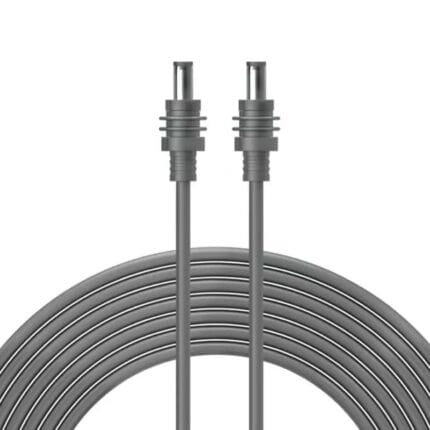
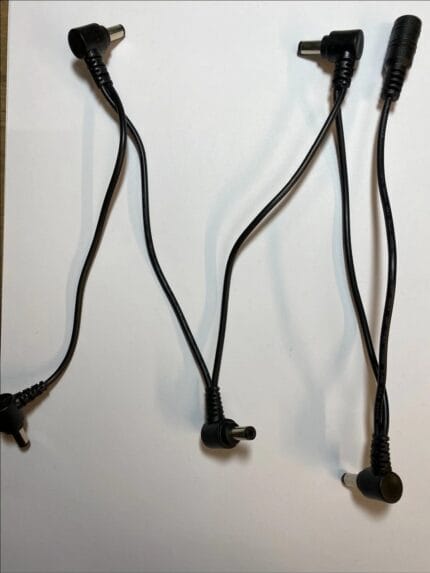
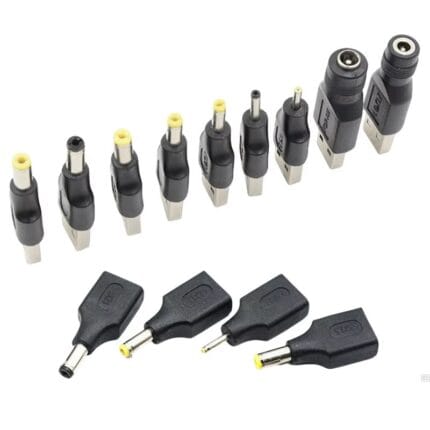
DC Barrel Adapter Kit – 5521 / 5525 / 4017 / 3513 / 1.35mm / 2.5mm, 6-Piece
A dc barrel adapter kit covering 5.5x2.1, 5.5x2.5, 4.0x1.7, 3.5x1.35 and 2.5 mm in six molded female-to-male adapters, so one supply covers a mixed estate. Center positive throughout, with nickel-plated brass contacts. Measure the socket pin with a caliper before ordering: the outer shell is identical across three of these five sizes. Bagged with a size card, or boxed with a printed insert.