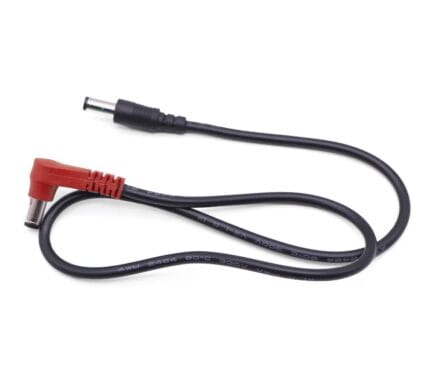
DC 5521 Power Splitter 1 Female 2 Way
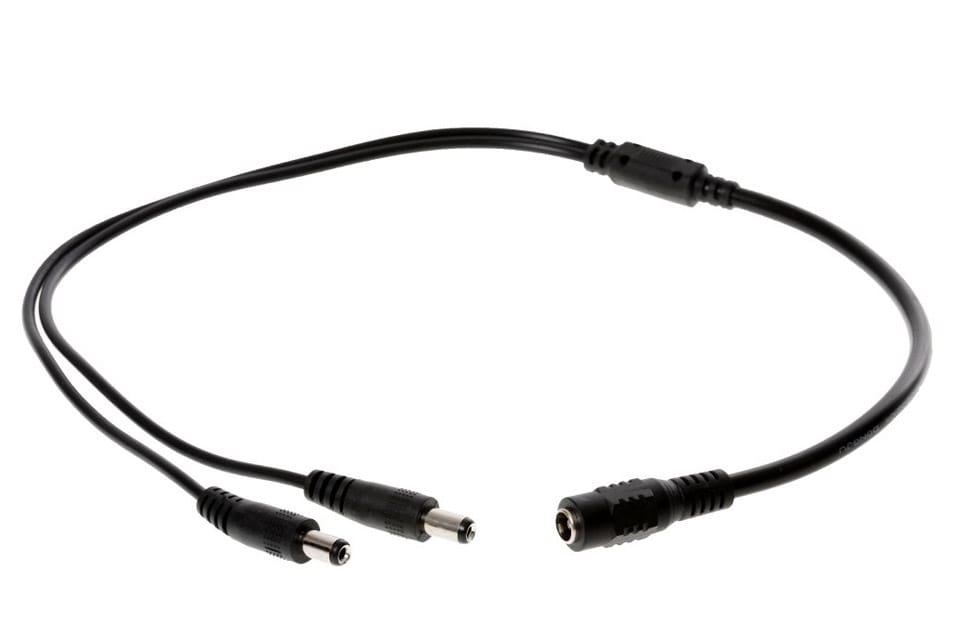
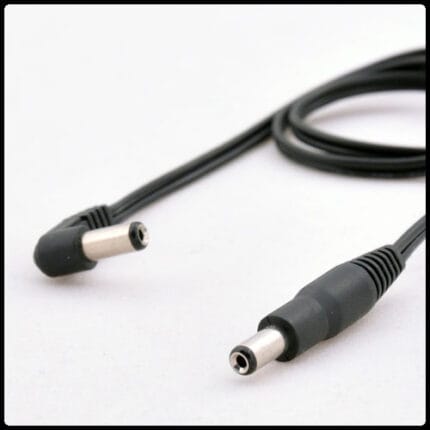
This dc 5521 2 way splitter is a Y cable routing a single DC 5.5 x 2.1 mm female input into two male barrel outputs, keeping twin leads tidy behind cabinets.
Two cameras, twin LED strips or dual sensors on one supply.
Overview
A dc 5521 2 way splitter takes one DC 5.5 x 2.1 mm female input and breaks it into two male barrel outputs in a Y. It is the standard way to run two 12 V devices – a pair of cameras, two LED strip sections, two sensors – from a single supply, and to keep the result tidy behind a cabinet instead of dangling in a knot of adapters.
Key Specifications
| Connector A | DC 5.5 x 2.1 mm female socket (1x) |
|---|---|
| Connector B | DC 5.5 x 2.1 mm male plug (2x) |
| Splitter type | 1 female to 2 male (2 way Y-cable) |
| Jacket | Black PVC |
| Polarity | Center positive (standard) |
| Conductor | Stranded copper; gage stated per your drawing |
| Cable length | Custom |
| Junction | Y-junction sealed in a soft PVC mold |
| Application | CCTV pair, dual LED strip, dual sensor |
Build the current budget before you order
A splitter does not create current. Everything downstream draws through the input leg, so the input conductor has to carry both loads and the supply has to be rated for their sum. Work it in this order:
- Read the nameplate current of each device. For cameras, use the figure with the heater and IR on, not the idle figure.
- Add them, then add startup surge – two devices that start together are a single transient.
- Compare against the supply rating. Leave headroom; a supply run at its limit runs hot and dies early.
- Size the input leg conductor to that total and to its length.
- Size each output leg to its own device and its own length.
Where the existing documentation does not state a current figure, the value is stated per your drawing. We do not assign a rating to a build we have not seen the load for.
Where splitters actually fail
| Failure | Mechanism | What prevents it |
|---|---|---|
| Junction gets warm | Both loads pass through one molded joint; resistance times current squared is heat | Size the input gage to the total, not to one load |
| One leg browns out | Output leg too thin for its run | Size each leg separately |
| Supply shuts down on startup | Two inrush currents arriving together | Oversize the supply, or stagger the loads |
| Intermittent drop on one output | Contact wear or a mixed 5521 / 5525 joint | Confirm barrel size; replace rather than re-seat |
| Junction cracks | The Y is flexed at the mold instead of at the cable | Route the legs so the junction is supported |
The first row is worth expanding. Joule heating scales with the square of the current, so doubling the load quadruples the heat in the joint. That is why a splitter that is fine at half an amp per leg needs a heavier input conductor at one amp per leg, even though the connectors have not changed.
Y-splitter or daisy chain?
Both do the same job and they suit different layouts. A Y gives both legs the same length from a single point, which keeps the voltage at the two devices close to equal – worth having when both devices are the same and mounted near each other. A daisy chain puts the outlets along one cable, which suits a run where the devices are spaced out, but the last outlet in the chain sees the drop of everything upstream of it.
- Choose the Y for a pair of devices at similar distance – two cameras on one wall.
- Choose the chain for devices strung along a route – LED strip sections, a row of sensors.
- Consider a fused distribution harness once you are past two or three loads, so a fault on one leg does not take the rest down.
- Check the barrel size on every joint – a 5525 plug on a 5521 jack is a future intermittent fault.
Typical applications for this dc 5521 2 way splitter
- Two security cameras on one 12 V supply
- Twin LED strip sections driven from a single driver
- Two low-power sensors sharing one supply in an enclosure
- Access point plus a small switch on one adapter
- Bench setups where one supply feeds two boards under test
How to specify your build
- Total load current, with both devices running and at startup.
- Supply voltage and the supply rating you are feeding from.
- Length of the input leg and of each output leg.
- Conductor gage for the input and for the legs.
- Barrel size – 5.5 x 2.1 mm here; confirm against the devices.
- Polarity – center positive unless stated otherwise.
- Quantity and packaging.
Workmanship and testing
Build standard for DC 5521 Power Splitter builds is IPC/WHMA-A-620 Class 3 under ISO 9001, with terminations from 32 to 12 AWG. No DC unit is packed until continuity and pinout check out, and seal checking is quoted whenever an ingress rating is on the drawing.
Every production run can ship with RoHS and REACH declarations and the electrical report agreed at quotation; see certifications and material declarations. UL styles and other named approvals are built to drawing: we source to the style you specify and document it, rather than asserting a listing we do not hold. Where this build needs an overmold, the tool is designed, cut and maintained in our own shop under overmold tooling cut in our own tool room, and it is never used for another customer’s program. The wider context is covered under our marine and outdoor work.
Custom builds and ordering
On DC 5521 Power Splitter builds, prototype lots run from 1 to 50 pcs and leave in 3 working days. Production runs of 500 pcs and up ship 14 working days after approval. Tooling not already held adds around 10 working days. DC builds go out under your part number and labeling, and material certificates plus first-article reports are available.
Related DC distribution assemblies
- DC 5521 Daisy Chain Cable, 1 Female 5 Way
- DC 5521 Power Splitter, 1 Female 6 Way
- 8-Way Fused DC Splitter Cable, 5.5×2.1mm with PTC
- Fused 12V Distribution Harness, Anderson Powerpole
- Mini UPS Splitter Cable DC 5.5×2.1mm
- COB LED Power Injection Cable, DC 5.5×2.1mm
- IP67 Waterproof DC Extension Cable 5.5×2.1mm
Full range: DC plug power cable assemblies.
Frequently Asked Questions
How much current can the splitter carry?
The assembly is limited by the input leg and the junction, both of which carry the sum of the two loads. Tell us the total and the lengths and we will size the conductors; the verified figure is stated on your drawing.
Can I daisy-chain two splitters together?
You can, but the first junction then carries everything downstream. For more than two or three loads, a fused distribution harness is the better answer.
Why does one camera drop out when the other starts?
Startup surge. Two devices drawing inrush at the same moment pull the rail down. Oversize the supply, or stagger the loads.
Do you make a fused version?
Yes. For larger builds, see the fused splitter range, where each leg is individually protected.
| Connector A | DC 5.5 x 2.1 mm female socket (1x) |
|---|---|
| Connector B | DC 5.5 x 2.1 mm male plug (2x) |
| Splitter Type | 1 female to 2 male (2 way Y-cable) |
| Cable Length | Custom |
| Jacket | Black PVC |
| Polarity | Center positive (standard) |
| Application | CCTV pair, dual LED strip, dual sensor |
| Junction | Y-junction sealed in a soft PVC mold |
Related products
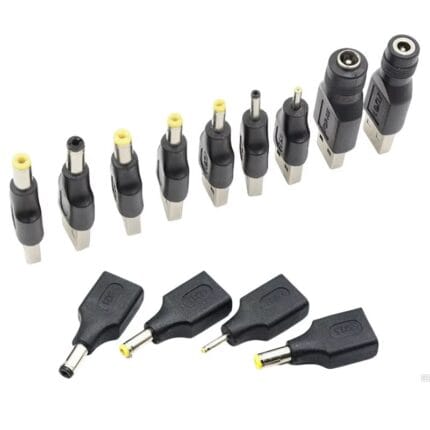
DC Barrel Adapter Kit – 5521 / 5525 / 4017 / 3513 / 1.35mm / 2.5mm, 6-Piece
A dc barrel adapter kit covering 5.5x2.1, 5.5x2.5, 4.0x1.7, 3.5x1.35 and 2.5 mm in six molded female-to-male adapters, so one supply covers a mixed estate. Center positive throughout, with nickel-plated brass contacts. Measure the socket pin with a caliper before ordering: the outer shell is identical across three of these five sizes. Bagged with a size card, or boxed with a printed insert.