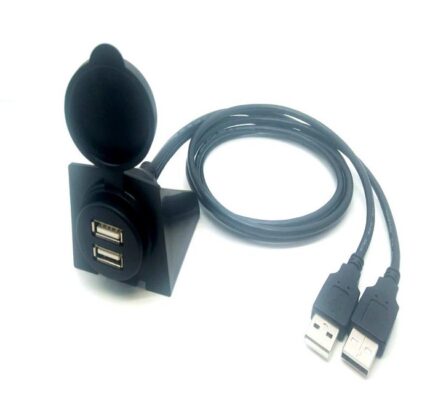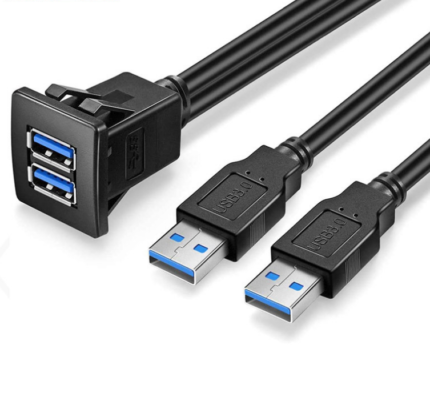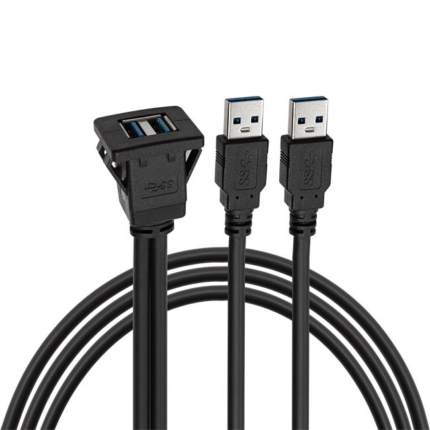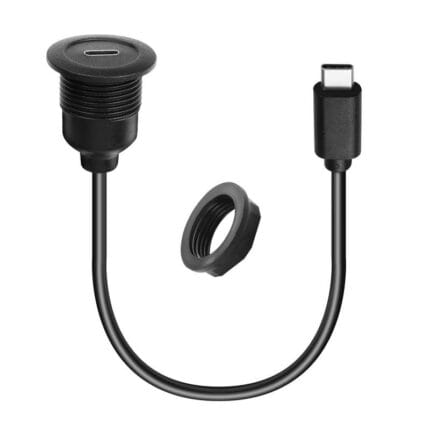
Car Dashboard Flush Mount USB-A + 3.5 mm Audio Extension Cable with Bracket
A usb 3 5mm audio cable carries a USB-A socket and a 3.5 mm AUX socket on one flush bracket, so one cut-out gives charging and stereo audio. 28 AWG data with 24 AWG power, black PVC jacket, 1 m / 2 m / 3 m.
Overview
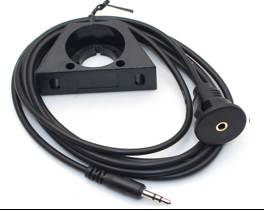
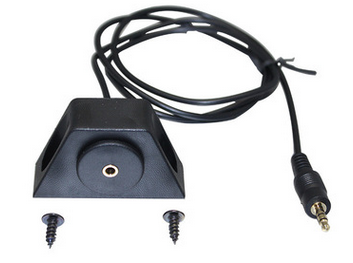
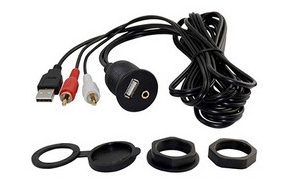
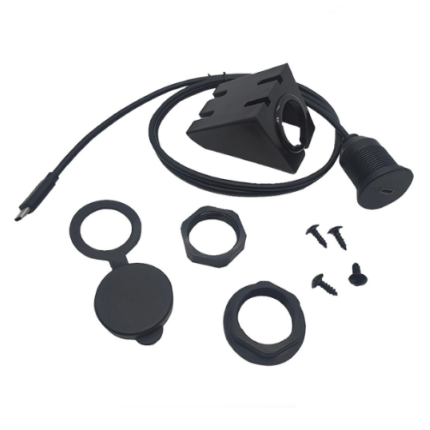
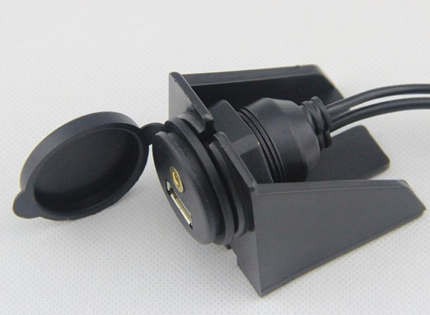
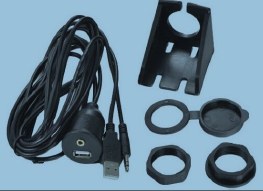
A usb 3 5mm audio cable puts two sockets in one flush panel bracket: a USB-A female for charging and a 3.5 mm stereo female for AUX audio. It is the combination that makes sense on a dashboard or a desk, because the two functions are almost always wanted in the same place and nobody wants two holes in the trim. The assembly breaks out to a USB-A male and a 3.5 mm stereo male at the source end, with 28 AWG data conductors and a 24 AWG power pair in a black PVC jacket, in 1 m, 2 m and 3 m. Putting a power port and an unbalanced audio input in the same bracket is convenient, and it is also the arrangement most likely to produce noise if the returns are not kept separate – which is the section worth reading below.
Key Specifications
| Connector A | USB-A Male, 3.5 mm Stereo Male |
|---|---|
| Connector B | USB-A Female panel mount, 3.5 mm Stereo Female panel mount |
| USB specification | USB 2.0, 480 Mbps |
| Audio | Stereo AUX via 3.5 mm TRS |
| Conductor | 28 AWG data + 24 AWG power |
| Outer diameter | USB OD 3.5 mm / USB OD 4.5 mm |
| Jacket material | Black PVC |
| Cable length | 1 m / 2 m / 3 m |
| Mounting | Flush mount bracket, 28-30 mm cut-out, screw and cap |
| Application | Car, marine and motorcycle AUX plus charge; furniture and desk multimedia ports |
Why the shared bracket is also the noise risk
An unbalanced 3.5 mm TRS connection has one signal conductor and one return per channel, and the return is ground-referenced. A USB charging port returns current through its own ground. If those two returns meet at a point that is not a single clean ground, the voltage drop from the charging current appears in series with the audio return, and it gets amplified along with the music. That is the whole mechanism behind alternator whine, and it is why a combined bracket deserves more care at install time than two separate sockets.
| Symptom | Mechanism | First check | Fix |
|---|---|---|---|
| Whine tracking engine speed | Alternator ripple on a shared return path | Unplug the USB device – if the whine stops, it is the charge path | Separate returns, or a different charger |
| Buzz only while charging | Switch-mode charger noise on the 5 V rail | Swap the charger for another one | Isolate the charger supply or filter it at source |
| Hum with engine off | Potential difference between source and head unit grounds | Run the source on battery | Ground loop isolator on the audio path |
| Muddy stereo, poor separation | Common return resistance coupling L into R | Swap left and right at the source – if the fault moves, it is upstream | Dedicated returns per channel |
| Audio cuts when a cable is touched | Plug not seated, or a fractured conductor | Wiggle test both plugs | Continuity check; replace if open |
Shielding: where to bond it on a short combined run
On a run of a meter or two inside a cabin, bonding a shield at both ends usually creates the problem it was meant to solve, because the second bond gives ground current a path through the shield. The normal practice on an unbalanced run is to bond at one end – the source end – so the shield drains the electric field without carrying return current. Where the run passes a motor, a DC-DC converter or a fuel pump, shield it, and keep the audio pair physically separated from the USB power conductors for the length of the route rather than bundling them together for neatness.
Mechanics: two sockets, one bracket, one hole
A combined bracket is wider than a single-socket one and it needs more depth behind the panel for two connector bodies. On thin or flexible trim, fit a backing plate: with a wider body, plugging into the outer socket puts a real moment on the cut-out, and a panel that flexes will eventually crack around the hole. Deburr the cut-out as well – a sharp edge on the inside of a drilled hole is a slow, reliable way to cut into a cable jacket.
Where a usb 3 5mm audio cable belongs in the build
- Dashboards and center consoles where the phone needs to charge and play at the same time
- Marine and motorcycle panels where two separate holes are not affordable
- Conference tables, hotel furniture and desk panels with a combined multimedia port
- Fleet vehicles with legacy head units that still have an AUX input, see the 8-Pin DIN Panel-Mount Extension
- Retrofits where RCA is wanted instead of a 3.5 mm source lead, compare the Car Dashboard USB + 2 RCA Audio Extension
- Builds that need audio only, without the USB socket, see the 3.5 mm AUX Audio Female Panel Mount Extension
- Panels that also carry video, see the HDMI 8K Panel Coupler with Screw Lock
- Kiosk and cabinet panels with an audio prompt, see the Kiosk and Self-Service Terminal Harness
Failure modes on combined USB and audio panels
Noise, described above, is the one everyone notices. The one that costs money is the cracked trim: a wide bracket clamped to flexible plastic, flexed every time a plug goes in, will crack at the screw holes within a season. And the slow one is a 3.5 mm socket that has worn or collected debris, which presents as one channel dropping out rather than as a dead port. Back the panel, keep the plugs supported, and clean the socket periodically.
What we treat as a target rather than a claim
The figures quoted for Car Dashboard Flush Mount builds are the industry-standard definitions of the interface family, not a claim about a part we have tested. The figures your assembly is actually built and verified to come from your drawing, and we check them against the supplier datasheet before quoting.
How to specify your build
- Socket combination – USB-A plus 3.5 mm as standard; other combinations on request.
- Poles – 3-pole stereo socket, or 4-pole TRRS if a microphone is needed.
- Returns – common or dedicated, and whether the audio run is shielded.
- Cut-out – 28-30 mm round; confirm against the bracket drawing.
- Length – 1 m, 2 m or 3 m, or your measured route length.
- Panel stiffness – whether a backing plate is needed.
- Quantity and whether this is a prototype or a production order.
Workmanship and testing
IPC/WHMA-A-620 Class 3 is the workmanship bar for Car Dashboard Flush Mount builds, and ISO 9001 is the system behind the line, from 32 to 12 AWG. No Car assembly is boxed before continuity and pinout are confirmed, and seal checking is quoted whenever an ingress rating is on the drawing.
RoHS and REACH declarations are provided per project together with the agreed test reports; the documentation scope is listed under certifications and compliance. If your drawing specifies a UL style, we build to that drawing and supply the UL reference with the shipment instead of substituting an equivalent. Production runs on the same lines described under cable assembly and wire harness production, where cutting, termination, molding and 100 percent electrical verification sit under one roof. Related reading: engineering support and design for manufacture review. Any tooling we cut for this part stays yours, maintained in our own tool room under your part reference.
Custom builds and ordering
Five pieces is the prototype minimum for Car Dashboard Flush Mount builds, shipping in 3 working days. The production minimum is 500 pcs, delivered 14 working days after approval. Tooling not already held adds around 10 working days. Car orders ship as OEM or ODM under your part number and labeling material certificates and first-article reports come with them on request.
Related audio and panel hardware
- 8-Pin DIN Male to Female Panel-Mount Extension
- Car Dashboard USB + 2 RCA Audio Extension
- 3.5 mm AUX Audio Female Panel Mount Extension
- HDMI 8K Panel Coupler with Screw Lock
- Kiosk and Self-Service Terminal Harness
- Micro USB Male to USB-A Female Car Dashboard Flush Mount Extension Cable
Full ranges: panel mount cable, signal and data cables and custom wire harnesses.
Frequently Asked Questions
Can I use both sockets at the same time?
Yes. That is the point of the combined bracket. Just keep the audio and charging returns separate back at the source, or you will hear the charger.
Is there a version with a microphone channel?
Yes, but the 3.5 mm socket has to be a 4-pole TRRS part rather than a 3-pole stereo socket. Specify it before we build.
Do I need a shielded audio run?
If the route passes a motor, a DC-DC converter or a fuel pump, yes. On a short run from a console to a head unit, separating the returns usually matters more than the shield.
Will it fit an existing single-socket cut-out?
Probably not – a combined bracket is wider. Check the bracket width against the panel before assuming it is a swap.
| Connector A | USB-A Male, 3.5 mm Stereo Male |
|---|---|
| Connector B | USB-A Female panel mount, 3.5 mm Stereo Female panel mount |
| Cable length | 1 m / 2 m / 3 m |
| USB specification | USB 2.0, 480 Mbps |
| Audio | Stereo AUX via 3.5 mm TRS |
| Conductor | 28 AWG data + 24 AWG power |
| Outer diameter | USB OD 3.5 mm / USB OD 4.5 mm |
| Jacket material | Black PVC |
| Mounting | Flush mount bracket, 28-30 mm cut-out, screw and cap |
| Application | Car, marine and motorcycle AUX plus charge; furniture and desk multimedia ports |