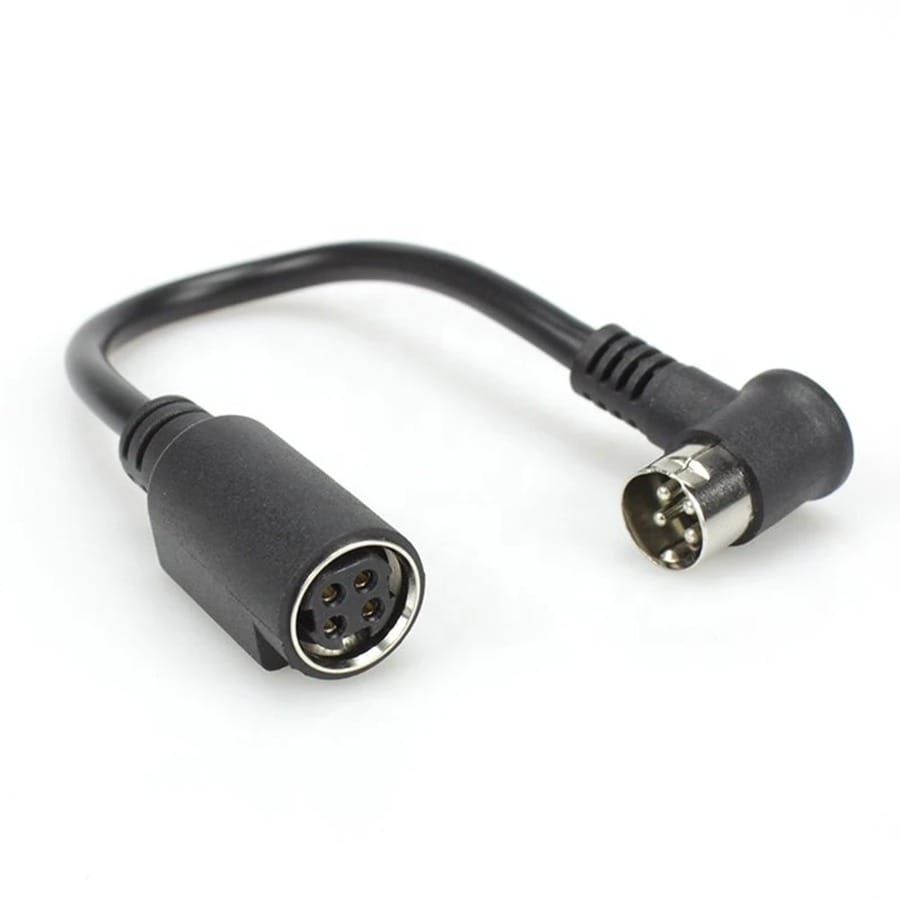
4-Pin MIDI DIN Male to Female Extension Cable
A 4 pin DIN extension cable that adds length to an existing run: male to female, straight-through wiring, molded strain reliefs at both ends.
Last updated: 13 September 2026
Overview
A 4 pin DIN extension cable is the least standardized member of the DIN family, which is exactly why it is worth being careful. The shell that carries MIDI has five pins; the four-pin version has been used for power, for audio, for control links and for video, and no single pinout applies across all of them. This build is a passive male-to-female extension: it adds length to a run that already works and changes nothing else.
Key Specifications
| Connector A | 4-pin DIN male |
|---|---|
| Connector B | 4-pin DIN female |
| Shell | Standard 13.2 mm DIN body or mini-DIN body, to order |
| Wiring | Straight-through, pin 1 to pin 1, unless you specify otherwise |
| Cable | Shielded multi-core, conductors to your pinout |
| Jacket | PVC |
| Strain Relief | Molded at both ends |
| Build standard | Built to the pinout you send; no signal conversion |
Telling the four-pin shells apart
Before you order, measure the shell and look at the pin layout. Two connectors that are both “4-pin DIN” can be different sizes with different pitch:
| Shell | Body diameter | Recognizable by | Common uses |
|---|---|---|---|
| Standard DIN | About 13.2 mm | Circular metal shroud with a locating lug | Legacy audio, power and control links |
| Mini-DIN | About 9.5 mm | Smaller body, plastic or metal shroud | S-video, some keyboard and data ports |
| 2-pin speaker DIN | About 13.2 mm | No shroud, one spade and one round pin | Older European speaker connections |
| XLR style | Larger, with a latch | Three or more pins plus a locking catch | Balanced audio, not a DIN shell |
The DIN connector family covers all of these bodies, and the mechanical definitions are industry standards rather than ours. Your cable is built and verified to the shell and pinout stated on your drawing.
Identifying the cable you need to extend
- Measure the plug body with calipers or a ruler: 13.2 mm is standard DIN, 9.5 mm is mini-DIN.
- Count the pins and note the keyway, which is the notch or flat on the shroud that stops it going in the wrong way round.
- Check gender at both ends of the existing run so the extension is male to female.
- Find out what the four conductors carry. Power, audio and control all use this shell, and the conductor size differs between them.
- Photograph both ends straight on and send them with the inquiry.
Why the original run failed
- Oxidized contacts. These connectors often sit unmoved for years. A dull contact surface is enough to kill a low-level signal.
- Bent pins. The pins are exposed and soft. One bent pin means one dead conductor, and the symptom is usually noise rather than silence.
- Shield broken at the relief. A cable that has been coiled tightly for years breaks its drain wire where it enters the plug.
- Cable too short. Most extensions are ordered because someone moved a rack and the original run no longer reaches.
- Wrong substitution. A straight MIDI cable used as a power lead, or the other way round, is the classic four-pin mistake.
We wire straight-through, pin 1 to pin 1, unless you tell us otherwise. We do not assume a pinout from the pin count.
Fitting and verifying an extension
- Fit the extension at the equipment end first, with the equipment powered down.
- Align the keyway before you push. Forcing a DIN plug bends pins, and bent pins are the most common cause of a channel that works intermittently.
- Confirm the signal or supply is present at the far end before you tidy the run.
- Keep the total run as short as the job allows; an extension adds length and the length adds capacitance.
- Label both ends if the run disappears into a rack.
Typical Applications for This 4 Pin DIN Extension Cable
- Extending a legacy audio or control link after equipment has been moved
- Bringing a DIN connection out to an accessible point on a rack or panel
- Replacing a damaged section of an installed run without re-cabling
- Low-voltage DC power links on older European equipment
- Test benches where the same device is moved between positions
How to specify your build
- Shell size: standard DIN or mini-DIN.
- Gender at each end on the existing run.
- Pinout, or a statement that straight-through is what you want.
- Conductor size if the run carries power.
- Length you need to add.
- Shielded or unshielded.
- Quantity, and whether this is a prototype or a production order.
Workmanship and testing
Assembly and inspection follow IPC/WHMA-A-620 Class 3 workmanship criteria under our ISO 9001 quality management system, and every unit passes 100% continuity and pinout testing before it is packed. Conductor range is 32 to 12 AWG. Straight-through is verified conductor by conductor rather than assumed, which is the only thing that matters on a shell with no agreed pinout. Any figure quoted for the shell is the industry-standard value; your assembly is built and verified to your drawing.
Custom builds and ordering
Small runs start at 5 pcs and leave in 3 working days. At production volume the minimum is 500 pcs and lead time is 14 working days after approval. New tooling is about 10 working days on top. OEM and ODM orders ship under your part number, with material certificates and first-article reports available.
Related DIN and audio assemblies
If you are working on legacy gear, these are the other shells in the same family:
- 5-Pin DIN Dual Right-Angle MIDI Audio Cable
- 6-Pin DIN Male to Male Dual Right-Angle Cable
- 8-Pin DIN Male to Female Panel-Mount Extension Cable
- 6.35mm (1/4 inch) to MIDI 5-Pin DIN Female Cable
- 3.5mm to MIDI 6-Pin DIN Audio Cable
- Turntable Tonearm Cable with DIN and Dual RCA Options
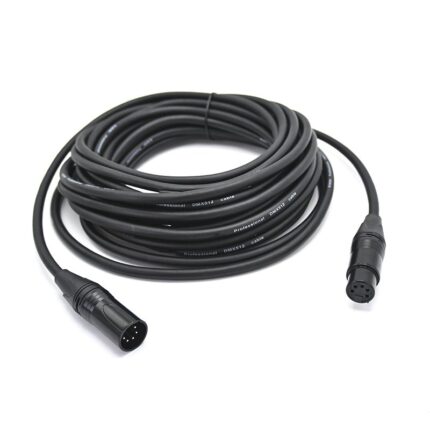
- XLR Microphone Cable, Balanced Three Pin Male to Female
Full range: audio and video cable assemblies.
Frequently Asked Questions
Is a 4-pin DIN the same as MIDI?
No. MIDI uses the five-pin shell. The four-pin version has been used for power, audio, control and video, and there is no single pinout that covers all of them.
Can you wire it to my pinout?
Yes. Send the pinout and we build to it. Straight-through, pin 1 to pin 1, is the default when you do not specify one.
Standard or mini shell?
Measure the plug body. About 13.2 mm is standard DIN, about 9.5 mm is mini-DIN. A photo with a ruler next to it settles it.
Will an extension degrade the signal?
It adds length, and length adds capacitance and loss. For long runs, tell us what the cable carries and we will advise on conductor size and shielding.
What is the minimum order?
Prototype quantity is 5 pcs minimum with a 3 working day turnaround. Production starts at 500 pcs and ships 14 working days from approval.
| Connector A | 4-pin DIN male |
|---|---|
| Connector B | 4-pin DIN female |
| Jacket | PVC |
| Shell | Standard 13.2 mm DIN body or mini-DIN body, to order |
| Wiring | Straight-through, pin 1 to pin 1, unless you specify otherwise |
| Cable | Shielded multi-core, conductors to your pinout |
| Strain Relief | Molded at both ends |
| Build standard | Built to the pinout you send; no signal conversion |