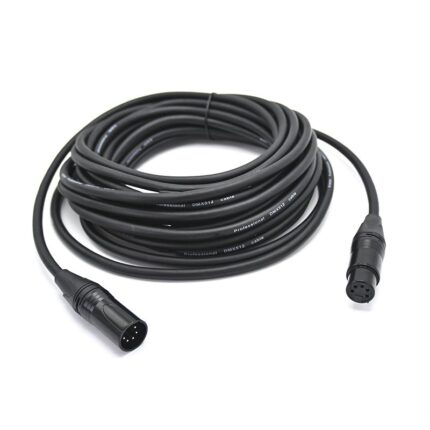
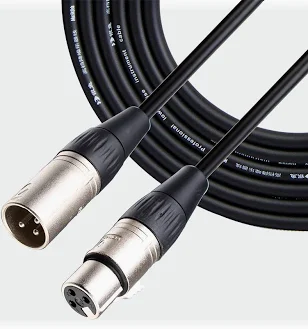
XLR Microphone Cable, Balanced Three Pin Male to Female
An xlr microphone cable is the everyday link between a mic and a preamp, carrying both the audio and the phantom supply. Balanced two core OFC pair with conductive layer and braid screen, 1 to 20 m, four jacket colors.
Overview
An xlr microphone cable is the everyday link between a mic and a preamp, and it is the cable most likely to be coiled badly, stepped on and dragged across a stage. It is also the one cable in a signal chain that carries both the audio and the 48 V that powers a condenser — so a fault in it does not just add noise, it can take the microphone off air entirely. This range covers the working lengths used in podcast booths, project studios, live venues and fixed installs, from a short patch at the desk to a 20 m run down the side of a room.
Key Specifications
| Interface | 3-pin XLR male to 3-pin XLR female |
|---|---|
| Wiring | Balanced two core plus screen |
| Conductor | OFC, 24 AWG |
| Shielding | Conductive PVC layer plus braid screen |
| Jacket | Matte flexible PVC |
| Stock lengths | 1 / 3 / 6 / 10 / 15 / 20 m |
| Shell profile | Built to Neutrik-style housing dimensions |
| Color options | Four jacket colors |
What the three pins do
The pin assignment below is the one specified by IEC 60268-12 and recommended by AES14 for microphones, and it is what the XLR interface is built around. It is the industry-published definition; where your equipment uses the older pin 3 hot convention, tell us and we will wire it to your list.
| Pin | Signal | Note |
|---|---|---|
| 1 | Screen / chassis | The return path, and the one that must never be left floating |
| 2 | In phase (hot) | The positive leg of the balanced pair |
| 3 | Return (cold) | The inverted leg of the balanced pair |
Balanced against unbalanced: why the second core exists
| Balanced (this cable) | Unbalanced | |
|---|---|---|
| Conductors | Two cores plus screen | One core plus screen |
| Noise behavior | Interference hits both legs and cancels at the input | Interference adds straight to the signal |
| Practical run | Tens of meters without trouble | Keep it short, a few meters at most |
| Phantom power | Carried on both legs, returned on the screen | Not applicable |
| Typical use | Microphones, line level between gear | Instruments, consumer equipment |
Common mode rejection is what you are buying with the second core. It works only if both legs see the same impedance, which is why a damaged or badly repaired lead can be noisier than an unbalanced one.
What phantom power asks of the cable
Condenser microphones are usually powered from the preamp at 48 V, with the voltage carried on both signal legs and returned on the screen. Three consequences follow, and they are the ones that catch people out.
- Pin 1 must be continuous. A lifted screen means no return path and a dead microphone, or a microphone that works on one desk and not another.
- A short between pin 1 and either signal pin takes the supply down and can mute the whole channel.
- Mating and unmating under load with a live supply is hard on contacts. Where a patch bay is involved, mute before you patch.
Construction layers, and what each one does
| Layer | Function |
|---|---|
| Two core OFC pair | Carries the balanced signal |
| Conductive PVC layer | Reduces handling noise from the cable moving against itself |
| Braid screen | Rejects hum and radio pickup |
| Matte flexible jacket | Coils without fighting back and lies flat under a desk |
Shells are built to Neutrik-style housing dimensions, so they seat and release normally in equipment and patch panels built around that standard.
Choosing a length
Buy the shortest length that reaches with a little slack. Excess cable coiled at the foot of a stand is a common source of hum pickup and trip hazards, and a coil of microphone cable next to a power supply is an antenna with a purpose. Where a run has to cross a room, route it along the wall rather than diagonally, and keep microphone leads away from mains and lighting cables wherever they have to run parallel.
Typical applications for this xlr microphone cable
- Podcast and voice booths where the cable is short and rarely moved
- Live stages, where shielding and strain relief decide how long the lead lasts
- Fixed installs in meeting rooms and houses of worship, dressed into a floor box or wall plate
- Patching between outboard and a desk, alongside our 1/4 TRS to XLR cable where a balanced jack meets an XLR input
- Location and field recording bags, paired with our balanced IEM cable on the monitoring side
Ordering options
- Stock lengths of 1, 3, 6, 10, 15 and 20 m
- Four jacket colors for identifying channels at a glance
- Bulk carton, individually bagged or retail packing
- Custom lengths, color and printed branding for volume orders
Conductor gauge, shielding build and copper grade for this range come from publicly listed competitor data rather than our own verified datasheet. Ask us for the supplier specification before you commit to a project quantity, particularly where the cable will be used for long runs or installed into a building permanently.
Workmanship and testing
ISO 9001 covers the system and IPC/WHMA-A-620 Class 3 covers the work on XLR Microphone builds, across 32 to 12 AWG. No XLR unit is packed until continuity and pinout check out, and seal checking is quoted whenever an ingress rating is on the drawing.
Every production run can ship with RoHS and REACH declarations and the electrical report agreed at quotation; see certifications and material declarations. UL styles and other named approvals are built to drawing: we source to the style you specify and document it, rather than asserting a listing we do not hold. This assembly is built on the four lines covered under the assembly lines behind this build, with nothing in the build handed to an undisclosed subcontractor. Related reading: what stage and studio work demands. Tooling is quoted separately, cut in-house rather than brokered out, and owned by you.
Custom builds and ordering
XLR Microphone lots run from 1 to 50 pcs, out in 3 working days. Volume starts at MOQ 500 pcs shipping 14 working days after sample approval. XLR orders go out under your part number and labeling, OEM or ODM, and material certificates and first-article reports are available on request. We hold 100 sets of mold tooling in house, so a standard body needs no tooling time and a new one adds about 10 working days.
Related audio leads
- 1/4 TRS to XLR cable, 6.35 mm balanced lead for monitors
- DMX512 lighting cable with 3-pin or 5-pin XLR
- Balanced IEM cable with detachable two-pin and MMCX
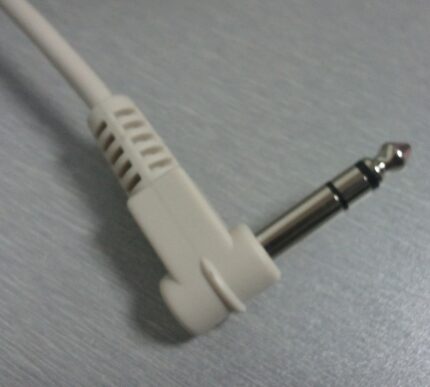
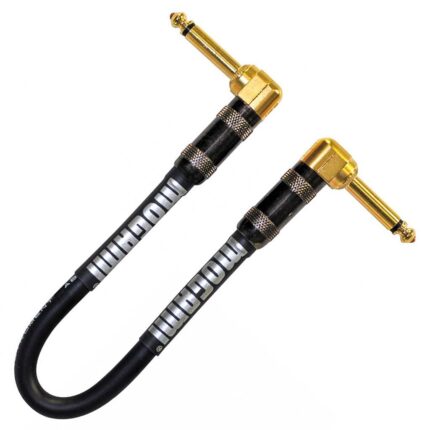
- 6.35 mm TRS 90 degree audio cable
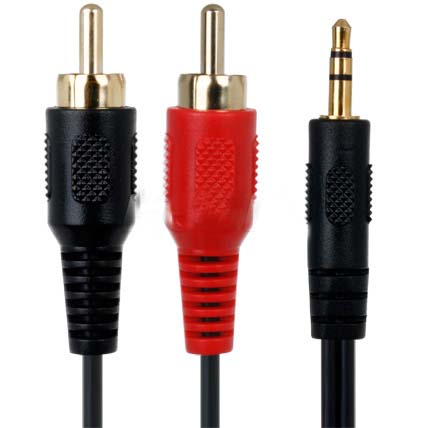
- 3.5 mm TRS to 2x RCA cable
Full range: audio and video cable assemblies.
Frequently Asked Questions
Which pin is hot on this cable?
Pin 2, following IEC 60268-12 and AES14. Older equipment wired pin 3 hot still exists, so tell us if your install follows the other convention and we will build to it.
Will it carry phantom power?
Yes, provided pin 1 is continuous end to end. A lifted screen is the usual reason a condenser stops working on one desk but not another.
How long can a balanced microphone run be?
Tens of meters is routine for a balanced line. The practical limit is usually noise picked up from poor routing next to mains rather than the length itself.
Do you publish capacitance and resistance figures?
Not yet. Those numbers come from competitor listings today; ask for the supplier datasheet before specifying a permanent install.
| Interface | 3-pin XLR male to 3-pin XLR female |
|---|---|
| Wiring | Balanced two core plus screen |
| Conductor | OFC, 24 AWG |
| Shielding | Conductive PVC layer plus braid screen |
| Jacket | Matte flexible PVC |
| Stock lengths | 1 / 3 / 6 / 10 / 15 / 20 m |
| Shell profile | Built to Neutrik-style housing dimensions |
| Color options | Four jacket colors |