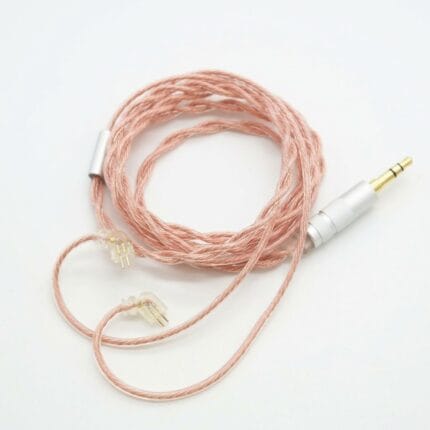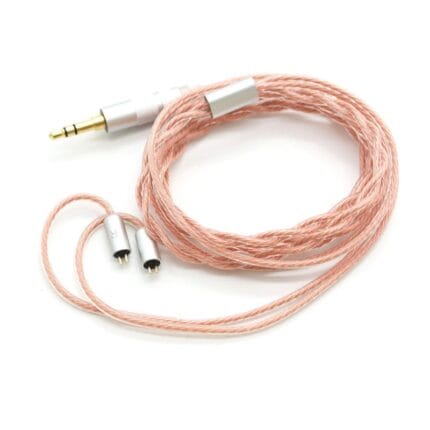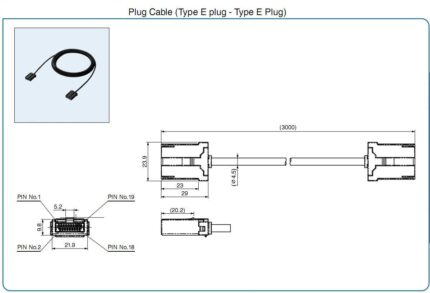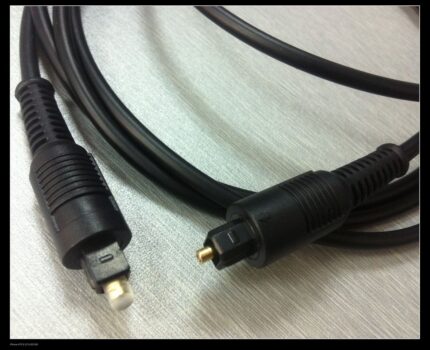
Turntable Tonearm Cable with DIN and Dual RCA Options
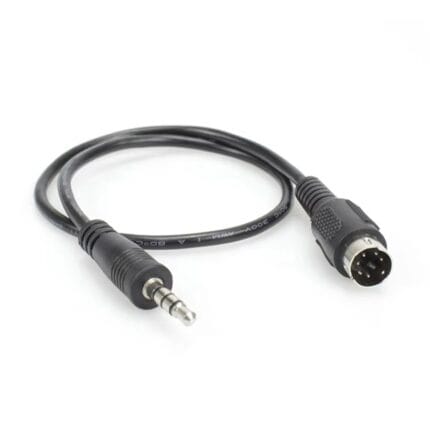
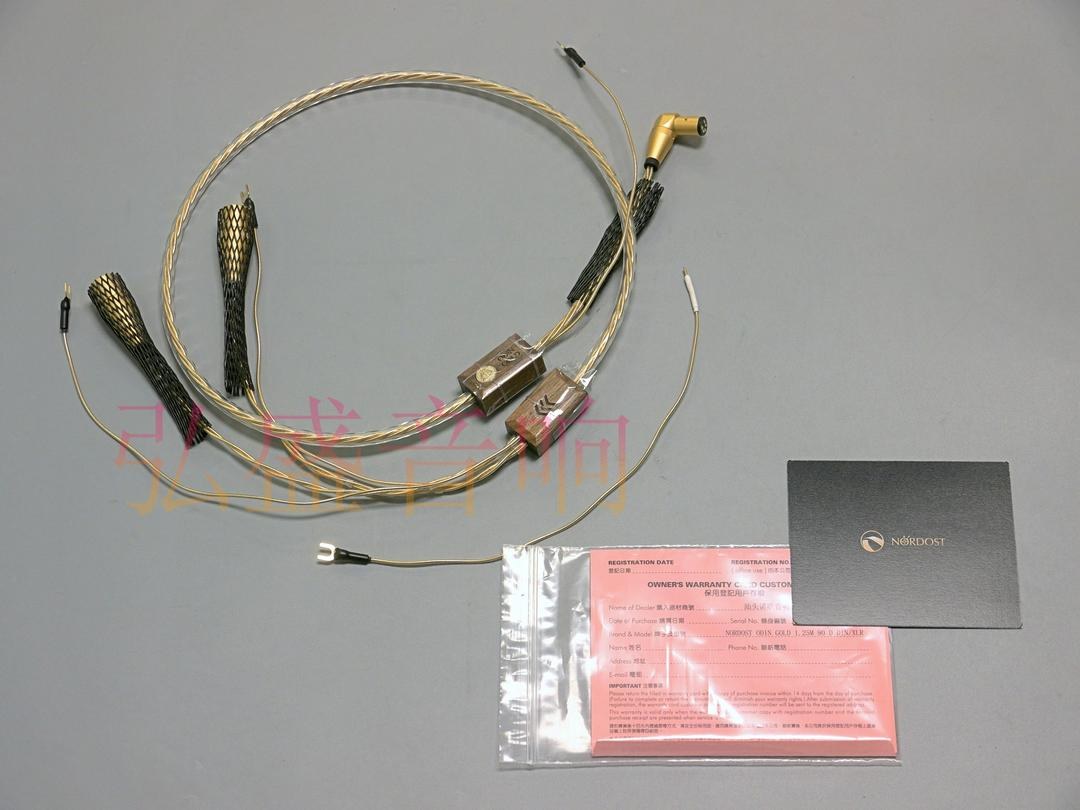
A turntable tonearm cable is the one link in a vinyl system where the wiring, the screening and the ground path are all audible. Built with DIN 5-pin or dual RCA ends, a separate ground spade and two shielding layers, to the pinout on your drawing. Send a photo of the back of the deck and we will match it.
Overview
The smallest signal in a vinyl system is the one leaving the cartridge, and the short run that
carries it to the phono stage decides how much of it survives. Hiss, hum and a tilted top end almost always
trace back to this link. A turntable tonearm cable built properly keeps capacitance low,
screens the pair over its whole length, and gives the arm and the deck chassis a deliberate path back to
the ground post.
Key Specifications
| Interface | DIN 5-pin to 2 x RCA, or RCA to RCA |
|---|---|
| DIN housing | Straight or angled (pending confirmation) |
| Ground lead | Separate spade terminal |
| Conductor | OFC, grade pending supplier datasheet |
| Shielding | Foil layer plus braid |
| RCA finish | Gold plated |
| Stock lengths | 0.8 m / 1.2 m / 1.5 m |
| Capacitance | Not yet verified, pending measurement |
| Ground routing | Chassis bond to the phono stage ground post |
| Wiring | Built to the pinout on your drawing |
| Build length | Custom lengths on request |
DIN or dual RCA: what does your deck present?
Two wiring conventions are in the field and they are not interchangeable without an adapter. Some decks
present a single multi-pin socket on the chassis, so one plug carries both channels and the ground. Others
leave a pair of RCA sockets at the back, or bring the arm wiring out to flying leads at the arm base.
Matching the plug to the socket is the whole decision, and it is usually made from a photograph.
| What you see at the deck | Order this | Notes |
|---|---|---|
| A 5-pin socket on the chassis | DIN plug to 2 x RCA, with a ground spade | Straight or angled by rear clearance |
| Two RCA sockets on the chassis | RCA to RCA, with a ground spade | Check for a ground post |
| Flying leads or a plug at the arm base | Tonearm plug to your choice of source end | Pitch and recess vary by maker |
| An arm with no detachable lead | Not this product | Internal wiring; send a photo |
Tonearm pinout and ground reference
The circular multi-pin shells used here are covered by IEC 60130-9. That long history is also the
problem: several generations of equipment wired the same shell differently. The
DIN connector family shares one shell size across three, five, six and
eight pin versions, so a plug that fits mechanically is not evidence that it is wired as you expect.
| Signal | 5-pin DIN at the deck (common convention) | Tonearm 5-pin convention | Dual RCA flying leads |
|---|---|---|---|
| Left hot | Pin 3 | L+ | Left or white-marked RCA tip |
| Left return | Pin 2, shared screen | L- | Left RCA sleeve |
| Right hot | Pin 5 | R+ | Right or red-marked RCA tip |
| Right return | Pin 2, shared screen | R- | Right RCA sleeve |
| Chassis and earth | DIN shell, or a separate spade lead | Dedicated earth pin | Separate spade to the preamplifier ground post |
Read that table as a starting point, not as a promise. Wiring is confirmed against the deck manual or
the pinout you send.
The ground path is where hum is made
Mains hum on a turntable is almost never a shielding problem. It is two pieces of equipment at slightly
different earth potentials with a signal cable between them, so current flows down the screen and appears in
the audio. The fix is a deliberate low resistance bond between the deck chassis and the phono stage, which
is what the separate spade lead is for.
- Fit the spade under the preamplifier ground post and tighten it; a loose spade is an intermittent hum
- Touch the arm with the volume up: if the hum changes, fix the ground path before touching anything else
- Bond at one point only, so the screen does not become a second return path
- Route the lead away from power cords and from the transformer in the phono stage
Capacitance and cartridge loading
A moving magnet cartridge sees the total capacitance of everything hanging off it: the fine wiring inside
the arm, this cable, and the input stage of the phono preamplifier. Too much capacitance moves the resonant
peak and the result is a bright, hard top end. The practical response is to keep this run as short as the
layout allows and to ask for a number rather than assuming one. The value your build is made and measured to
is stated per your drawing, and we will supply our own bench measurement on request.
Build and lengths
Conductors are oxygen free copper, and the RCA plugs are gold plated so contact resistance stays stable
over years of sitting in one place, which is what these leads do. Two screening layers are used: a foil
layer for coverage of the pair, and a braid over it for mechanical protection and a low resistance return.
Stock lengths cover the distances that come up in practice. Longer runs are worth avoiding wherever the
equipment can be moved closer.
Typical applications for this turntable tonearm cable
- Replacing a lost or damaged lead on a deck with a chassis socket
- Service and refurbishment shops rebuilding vintage decks
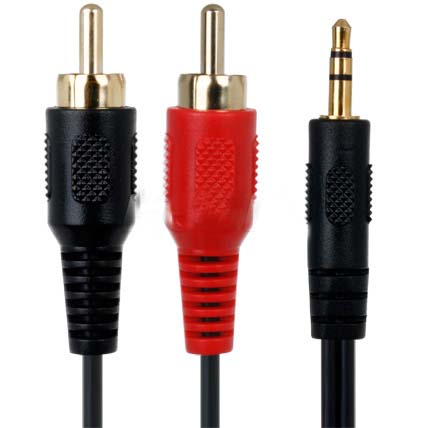
- Hi-fi retailers stocking a spare alongside a 3.5 mm TRS to 2x RCA cable
- Demo rooms swapping between a DIN deck and an RCA deck on one phono stage
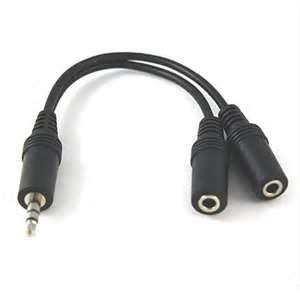
- OEM bundles shipped with a phono stage or a RCA subwoofer Y splitter
How to specify your build
- What the deck presents — a 5-pin socket, two RCA sockets, or flying leads. A photo is enough.
- What the phono stage presents — RCA inputs with a ground post, or a 5-pin input.
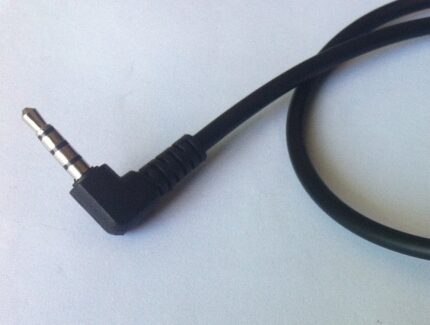
- Housing — straight or angled DIN, and the clearance behind the deck.
- Length, measured as the route the cable takes, not as a straight line.
- Ground — separate spade, shell ground, or both.
- Pinout, if it differs from the table above.
- Quantity, and whether this is a prototype, service stock, or production.
Workmanship and testing
Turntable Tonearm builds are assembled and inspected to IPC/WHMA-A-620 Class 3 criteria, with ISO 9001 as the quality system over 32 to 12 AWG work. continuity and pinout are verified on each Turntable assembly before packing, and seal checking is quoted whenever an ingress rating is on the drawing.
Material declarations against RoHS and REACH are issued per project, alongside the dimensional and electrical reports agreed at quotation; see certifications, compliance and material declarations. Where your drawing names a UL style or another approval, the build follows your drawing and ships with the supporting document rather than a claim of our own. Where this build needs an overmold, the tool is designed, cut and maintained in our own shop under overmold tooling cut in our own tool room, and it is never used for another customer’s program. Related reading: cable assemblies for broadcast and pro AV.
Custom builds and ordering
Turntable Tonearm prototype builds start from 1 to 50 pcs and are out in 3 working days. Production is quoted from 500 pcs at 14 working days after sample approval. Your part number and labeling go on OEM and ODM Turntable shipments, and material certificates plus first-article reports are available. We hold 100 sets of mold tooling in house, so a standard body needs no tooling time and a new one adds about 10 working days.
Related audio assemblies
- 3.5 mm TRS to 2x RCA Cable
- SCART to 3 RCA AV Cable
- RCA Premium Subwoofer Y Splitter
- Toslink Digital Optical Audio Cable
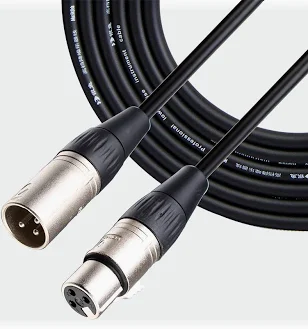
- XLR Microphone Cable, Balanced Three Pin Male to Female
- 1/4 TRS to XLR Cable 6.35 mm Balanced Lead for Monitors
Full range: audio and video cable assemblies.
Frequently Asked Questions
My deck has a 5-pin socket and so does my preamplifier. Do I need a DIN to RCA lead?
No. Ask for a DIN to DIN build and tell us whether the ground travels on the shell or on a separate lead.
The pinout still has to be confirmed against both units.
Why is there a separate spade terminal hanging off the cable?
It bonds the deck chassis to the ground post on the phono stage. Without it the return current travels
through the screen, which is heard as mains hum.
Can I have a longer lead so the deck sits further from the rack?
Yes, but a moving magnet cartridge is sensitive to the total capacitance it sees. Tell us the length you
need and we will build to the capacitance figure on your drawing.
The old lead has no markings. How do I identify it?
Send a photograph of the connector face at the deck and of the plugs at the preamplifier. Gender, pin
count and housing angle can usually be read off the photo.
| Interface | DIN 5-pin to 2 x RCA, or RCA to RCA |
|---|---|
| DIN housing | Straight or angled |
| Ground lead | Separate spade terminal |
| Conductor | Stated per your drawing |
| Shielding | Foil layer plus braid |
| RCA finish | Gold plated |
| Stock lengths | 0.8 m / 1.2 m / 1.5 m |
| Capacitance | Stated per your drawing |
| Ground routing | Chassis bond to the phono stage ground post |
| Wiring | Built to the pinout on your drawing |
| Build length | Custom lengths on request |