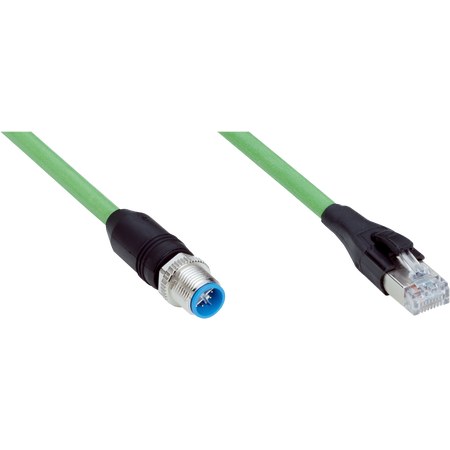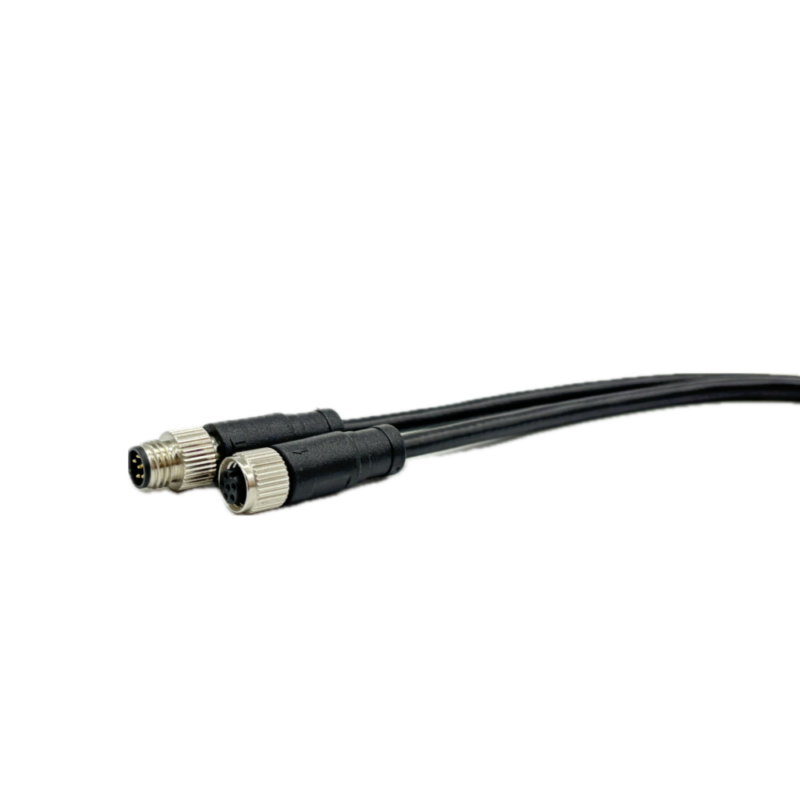

Cleanroom Robot Cable Harness for EFEM and Vacuum Transfer Arms
A cleanroom robot cable harness for EFEM and vacuum transfer arms, built with FEP, PFA or ETFE jackets and no PVC anywhere in the assembly. Silver-plated fine-strand conductors, foil plus braid shielding, routing set to your arm travel. Send the drawing and we build to it.
Last updated: 13 September 2026
Overview
A cleanroom robot cable harness is judged by what it does not give off. Inside an equipment front end module or a vacuum transfer chamber the contamination path matters more than flex life does: a standard PVC jacket softens at elevated temperature and releases volatile condensable material, and that material settles on wafer surfaces and on optics. This assembly is built with fluoropolymer jackets and no PVC anywhere in it, to the travel, bend radius and connector set on your drawing.
Key Specifications
| Product type | Cleanroom and vacuum robot cable harness |
|---|---|
| Jacket material | FEP, PFA or ETFE fluoropolymer – no PVC anywhere in the assembly |
| Conductor | Silver-plated oxygen-free copper, fine stranded |
| Shielding | Double layer, foil plus braid, applied per functional group |
| Surface control | Antistatic or carbon-loaded jacket option where charge build-up matters |
| Core mix | Signal, power and coax elements in one sheath – set per arm |
| Termination | Overmolded connector bodies, or open ends for field assembly |
| Outgassing | Low-outgassing material set – TML and CVCM figures to be confirmed |
| Cleanroom class | Designed for classified zones per ISO 14644-1 – class to be confirmed |
| Temperature rating | Up to +150 degrees C – to be confirmed on a finished assembly |
What the environment does to a standard jacket
The specification that decides this build is not the cycle count, it is what the assembly releases into the chamber and what the chamber does back to it. Four mechanisms account for almost every early failure we are asked to replace:
| Stress in service | What it does to a standard build | What we change |
|---|---|---|
| Elevated temperature | Plasticizer migration, then volatile condensable material depositing on wafers and optics | Fluoropolymer jacket, no PVC in the assembly |
| Continuous flexing at the wrist | Conductor fatigue at the lay, intermittent cores long before the jacket looks worn | Fine-strand silver-plated copper, lay length set against the actual bend radius |
| Vacuum and load-lock cycling | Gas trapped under the jacket vents through the terminations and carries particles with it | Vented construction and a fixing method agreed before quoting |
| Charge build-up | Electrostatic discharge near the wafer, attracting particles to the surface | Antistatic or carbon-loaded jacket option |
Choosing between FEP, PFA and ETFE
All three are fluoropolymers and all three outgas far less than PVC, but they do not behave the same in a moving harness. The choice is usually a compromise between temperature, flex life and cut-through resistance:
| Jacket | Where it wins | Trade-off |
|---|---|---|
| FEP | Lowest outgassing of the three, wide chemical resistance, good at temperature | Lower cut-through resistance; routing has to be designed, not improvised |
| PFA | Higher continuous temperature than FEP and better flex life at the same wall | Costs more, and some sizes carry a longer material lead time |
| ETFE | Tough, good abrasion and cut resistance, still a low-outgassing material | Stiffer than FEP, so the minimum bend radius grows |
If the arm carries a vacuum end effector, tell us before the jacket is chosen. Venting behavior and the way the harness is clamped to the arm both change the answer, and neither can be fixed after the sheath is extruded.
Flex, torsion and the wrist end
A transfer arm does not only bend its harness, it twists it. Core grouping and lay length are set together so that power conductors, signal pairs and any coax element can share one sheath without the signal side picking up noise from the motor side. Shielding is applied per functional group rather than as a single overall braid, which keeps the encoder and sensor returns clean while the motor conductors switch. Where the wrist rotates through a large angle, we ask for the angle per meter and set the construction against that number rather than against a catalog entry.
Figures we are still confirming
Low outgassing is the headline requirement and it has to be proven rather than asserted. We specify fluoropolymer materials and silver-plated conductors, and we are arranging total mass loss and collected volatile condensable material testing plus a particle generation check before any number goes on a datasheet. The cleanroom class statement is handled the same way: the harness is designed for classified zones, but the class has to be confirmed with the equipment maker and by testing. The temperature rating and the flex life figure in the table are also design targets taken from raw material data rather than from a finished assembly, because the assembly process changes both.
Typical applications for this cleanroom robot cable harness
- Transfer arms inside an equipment front end module, alongside our wafer handling robot harness
- Vacuum transfer chambers and load-lock mechanisms where venting behavior has to be designed in
- Metrology stages and inspection tools with optics close to the moving bundle
- Replacement harnesses for semiconductor process tools, built from the failed sample
- General custom industrial robot wire harness builds where PVC is not acceptable
ISO 14644-1 is the industry reference for cleanroom classification by particle count. We quote the class your assembly is built and verified to from your drawing, not a generic figure.
What we need from you to quote
- Arm make and model, or the travel envelope if it is a new design.
- Core mix – how many signal, power and coax elements, and the cross-sections.
- Bend radius and torsion angle at the tightest point in the route.
- Temperature and vacuum exposure, including whether the run sees a load lock.
- Connector set at each end, or open ends for your own field assembly.
- Any class or outgassing requirement imposed by the equipment maker.
Workmanship and testing
Assembly and inspection follow IPC/WHMA-A-620 Class 3 workmanship criteria under our ISO 9001 quality management system, and every unit passes 100% continuity and pinout testing before it is packed. Conductor range is 32 to 12 AWG. Where an ingress rating is specified we can quote seal checking on the production batch.
Custom builds and ordering
Prototype builds start from 5 pcs and ship in 3 working days; production orders start at MOQ 500 pcs and ship 14 working days after approval. New overmold tooling adds about 10 working days. OEM and ODM builds ship under your part number and labeling, with material certificates and first-article reports available on request.
Related assemblies
- Wafer Handling Robot Harness for EFEM and Vacuum Transfer Modules
- Robot Torsion Resistant Cable for Six-Axis Arm Wiring
- Robot Teach Pendant Cable with PUR Jacket for Arm Controllers
- Custom Industrial Robot Wire Harness
- Surgical Robot Cable Harness with Sealed Joints
- Cobot Arm Cable Harness with Drag-Chain Jacket
Full range: custom wire harnesses.
Frequently Asked Questions
Why no PVC anywhere in the assembly?
PVC relies on plasticizers that migrate at elevated temperature and condense on cool surfaces. In a process chamber that condensate lands on the wafer and on optics, so the jacket is FEP, PFA or ETFE instead.
Can you build to the class my tool requires?
Tell us the class and the test method at enquiry stage. We build the material set and the construction for it and confirm the class by testing; the value your assembly is verified to is the one stated on your drawing.
Do you handle the vacuum side of the run?
Yes, but it has to be specified up front. Venting behavior and the clamping method both change with the jacket and the fixing hardware, and neither can be changed after the sheath is extruded.
What is the minimum order?
Prototypes start from 5 pcs and ship in 3 working days. Production runs start at 500 pcs and ship 14 working days after approval.
| Product type | Cleanroom and vacuum robot cable harness |
|---|---|
| Jacket material | FEP, PFA or ETFE fluoropolymer – no PVC anywhere in the assembly |
| Conductor | Silver-plated oxygen-free copper, fine stranded |
| Shielding | Double layer, foil plus braid, applied per functional group |
| Outgassing | Low-outgassing material set – TML and CVCM figures to be confirmed |
| Cleanroom class | Designed for classified zones per ISO 14644-1 – class to be confirmed |
| Temperature rating | Up to +150 degrees C – to be confirmed on a finished assembly |
| Surface control | Antistatic or carbon-loaded jacket option where charge build-up matters |
| Core mix | Signal, power and coax elements in one sheath – set per arm |
| Termination | Overmolded connector bodies, or open ends for field assembly |