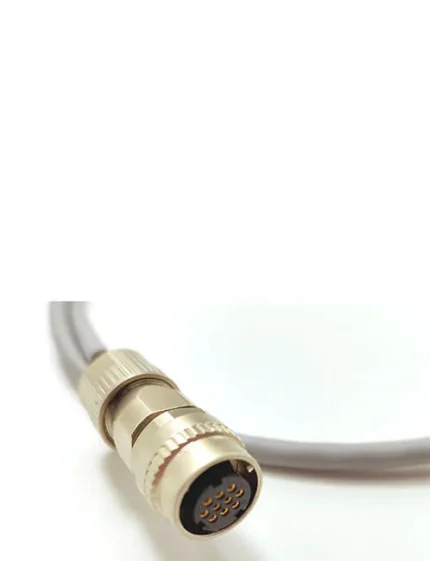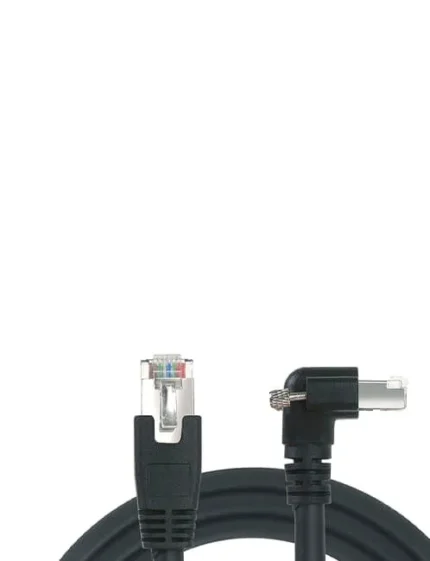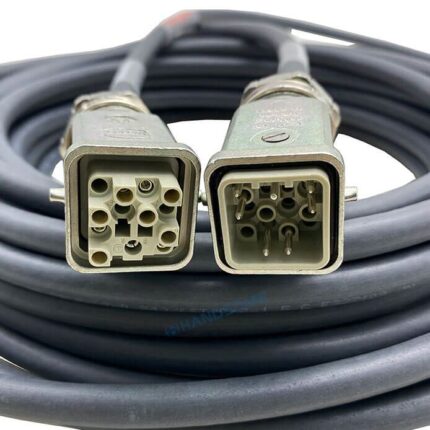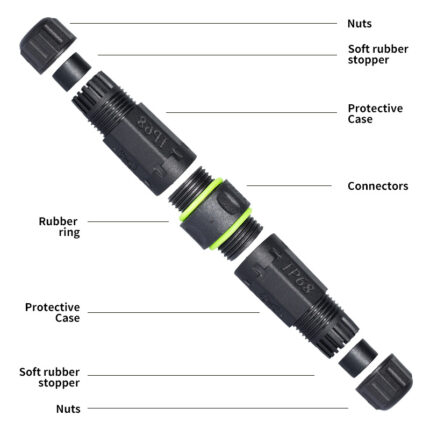
Robot Teach Pendant Cable with PUR Jacket for Arm Controllers
A robot teach pendant cable with PUR jacket and full shielding, wired to the pendant and cabinet pin-out of your arm model, with an optional coiled section.
Last updated: 13 September 2026
Overview
On any cell, the robot teach pendant cable is handled the most and protected the least. It gets dragged across the floor, coiled around a bracket, run over by a pallet truck, and pulled taut when an operator walks two steps too far with it still in their hand. It is a consumable, and most plants running mixed robot brands keep one on the shelf. The replacement has to do three things: match the pin-out of the pendant and the cabinet connector, survive the daily mechanical abuse, and keep the emergency-stop and enable circuits on a screened path the controller reads reliably. Getting any one of those wrong costs a second outage, and the second outage is the one that annoys a maintenance team.
Key Specifications
| Product type | Robot teach pendant cable |
|---|---|
| Jacket material | PUR for oil, coolant and abrasion on the shop floor |
| Shielding | Overall screen plus drain wire, bonded at both ends |
| Flex duty | Flex life stated with your radius, angle and cycle target |
| Controller fitment | Built to your pendant and cabinet pin-out, any arm model |
| Length | Set per your cell layout; coiled section optional |
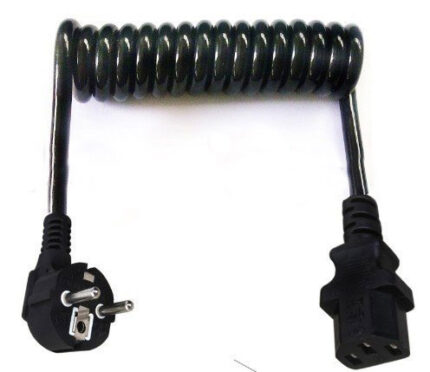
| Options | Coiled retracting section, straight or angled pendant plug |
| Safety circuits | E-stop and enable circuits on a screened path per your drawing |
What kills this cable
Pendant leads do not die of old age. They die of specific, repeated mechanical events.
| Stress | Failure mode | Design response |
|---|---|---|
| Dragging across the floor | Jacket abrades through at the point that touches the concrete, then the screen, then a core | PUR jacket, and a strain relief that takes the pull at the plug rather than at the cores |
| Being pulled taut | Conductor breaks just inside the plug boot – intermittent, position-dependent faults | Overmolded bend relief at the plug, load carried by the boot |
| Running over it with a pallet truck | Crush damage; the cable works until it is flexed again near the crush | PUR rather than PVC, and a coiled option that lifts the slack off the floor |
| Twisting while coiling | Cores migrate, the screen opens, noise appears on the enable circuit | Lay-up selected for torsion, not only for bending |
| Coolant and oil on the shop floor | Jacket stiffens and cracks at the bend | PUR compound selected against the fluid |
Why PUR rather than PVC
Polyurethane – polyurethane in full, PUR on a datasheet – costs more than PVC and earns it on a shop floor three different ways. It resists cutting oil and coolant instead of stiffening in them. It survives abrasion against concrete far better. And it stays flexible at the temperatures where a plant is cold in winter. For a pendant lead that lives on the floor, all three are the failure modes you are actually buying protection against.
The trade is real: PUR is more expensive per meter and it is stiffer to handle in very cold conditions than some compounds. If a pendant lead never leaves the bracket, PVC is a defensible choice. If it touches the floor, it usually is not.
Screening and the safety circuits
The pendant is not only a display. The emergency-stop and the enable device run through the same cable, and those are circuits the controller is continuously monitoring. A noise event on that path does not produce a garbled display – it produces a stop, or worse, an unreliable stop.
- Overall screen plus drain wire, with the drain bonded to the connector shell at both ends rather than gathered into a tail.
- Keep the safety circuits on their own screened path where the pin-out allows it, rather than sharing with the data pairs.
- Verify screen continuity on every build. A screen that is open at one end is not a screen.
Coiled or straight
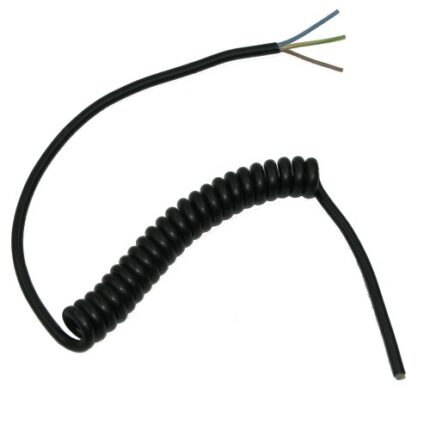
A coiled section keeps the slack off the floor, which removes the two worst failure modes – abrasion and being run over – in one move. It adds cost and it adds a part that has a finite extension life of its own. Straight is cheaper and simpler and is fine where the pendant has a proper holster and the operator uses it.
The decision is about where the pendant actually lives. If it hangs on the controller cabinet and is carried to the arm, a coil is worth it. If it stays clipped to the arm or a nearby post, a straight run with the right length is better value.
Design notes from the build
- Build to your pendant and cabinet pin-out rather than to a robot brand name. Different controller generations change the pin-out even where the connector shell looks identical.
- Clock the angled plug to the run so it does not foul the pendant housing.
- Label both ends. A pendant lead that gets swapped between cells is a lead that will eventually be plugged into the wrong cabinet.
- Specify the length you need, not a round number. Excess length on the floor is the thing that gets run over.
Typical applications for this robot teach pendant cable
- Replacement pendant leads for mixed-brand cells where the original is no longer stocked
- New cells where the standard lead length does not suit the layout
- Harsh cells with coolant, swarf or weld spatter on the floor
- Training cells, where the lead gets handled several times an hour
- Cells with a pendant holster mounted away from the cabinet, alongside our Custom Industrial Robot Wire Harness
- Mobile and rail-mounted robot axes with a long pendant run
How to specify your build
- Pendant end connector and the cabinet end connector.
- Pin-out for both ends – this is the part that decides whether it works.
- Length, and whether you want a coiled section and where.
- Straight or angled plug at the pendant, and the clocking angle.
- Exposure – oil, coolant, swarf, weld spatter, temperature.
- Flex life or cycle target, with the radius and angle it is quoted at.
- Quantity, and whether spares are wanted with the run.
Workmanship and testing
Assembly and inspection follow IPC-WHMA-A-620 Class 3 workmanship criteria under our ISO 9001 quality management system. Every cable passes 100% continuity and pinout testing, and screen continuity is checked on the same pass, because an open screen is invisible until it matters. Conductor range is 32 to 12 AWG. Where your drawing states a flex life, we build and verify to it at the radius, angle and cycle target you specify rather than quoting a standalone number.
Custom builds and ordering
Prototypes start from 5 pcs and ship in 3 working days; production orders start at MOQ 500 pcs and ship 14 working days after approval. New overmold tooling adds about 10 working days, and we hold 100 sets in house at our Longgang, Shenzhen plant – four assembly lines, 40 assembly workers, 1,000,000 pcs annual output. Spares can be shipped with the production run so a cell is not waiting on a second order. Factory audits and video line tours can be arranged.
Related robot cables
- FANUC Robot Teach Pendant Cable for R-30iB / R-30iB Plus
- Motoman Robot Teach Pendant Cable for DX100 / DX200 / FS100
- Custom Industrial Robot Wire Harness
- Robot Torsion Resistant Cable for Six-Axis Arm Wiring
- Hybrid Robot Torsion Cable with CAT6 Data Pair, Power and Control Cores
- Cobot Arm Cable Harness with Drag-Chain Jacket
Full range: signal and data cables and custom wire harnesses.
Frequently Asked Questions
Will this fit my robot?
If we have the pin-out for the pendant end and the cabinet end, yes. We build to the pin-out rather than to a brand name, because connector shells that look identical often differ between controller generations.
Coiled or straight?
Coil it if the pendant is carried away from where it is stored – it keeps the slack off the floor, which removes the two failure modes that actually kill these cables. Straight is better value if it stays holstered near the arm.
Why does the enable device drop out intermittently?
Usually a conductor breaking just inside the plug boot, or a screen that has opened at one end. Both are mechanical, both get worse with handling, and both show up as position-dependent faults.
Can you supply spares with the production run?
Yes, and it is worth doing. A pendant lead is a consumable, and the second outage is the expensive one.
What is the minimum order?
5 pcs minimum for prototypes, shipping in 3 working days. Production runs of 500 pcs and up ship 14 working days after approval.
| Product type | Robot teach pendant cable |
|---|---|
| Jacket material | PUR for oil, coolant and abrasion on the shop floor |
| Shielding | Overall screen plus drain wire, bonded at both ends |
| Flex duty | Flex life stated with your radius, angle and cycle target |
| Controller fitment | Built to your pendant and cabinet pin-out, any arm model |
| Length | Set per your cell layout; coiled section optional |
| Options | Coiled retracting section, straight or angled pendant plug |
| Safety circuits | E-stop and enable circuits on a screened path per your drawing |