Hybrid Robot Torsion Cable with CAT6 Data Pair, Power and Control Cores
One Jacket, Three Jobs on the Arm
A hybrid robot torsion cable removes the second harness from a moving arm. Motor power, brake and control signals, and a shielded data pair for the camera or the encoder travel inside a single round jacket, so the dress pack carries one bending radius instead of three, the cable track stays narrow, and the fitter routes a single clamp line instead of chasing two bundles that rub against each other.
What Sits Inside the Jacket
The build pairs a group of power and control conductors with an individually foiled Cat6 data pair, then wraps the whole bundle in a tinned copper braid. That arrangement only holds up when the braid coverage is high and the pair foil stays continuous into the strain relief; otherwise drive noise couples straight into the data pair. Conductor count, coverage figure and voltage rating all sit on the confirmation list below.
Torsion, Not Just Bending, Decides Service Life
Axis one of a six-axis arm rotates rather than bends, and a cable with a long drag-chain life can still fail early there. Torsion loads the stranding, the shield and the jacket bond in a different direction, so strand pitch, lay length and the grip between jacket and core are chosen to spread the twist along the cable instead of concentrating it at the gland.
- Built for continuous torsion on rotating axes, not only for linear track travel
- High-cycle bend life for gantries, cobots and AMR drag chains
- Jacket bonded to the core bundle so the assembly does not telescope inside the clamp
Why Screw-Lock Retention Matters Here
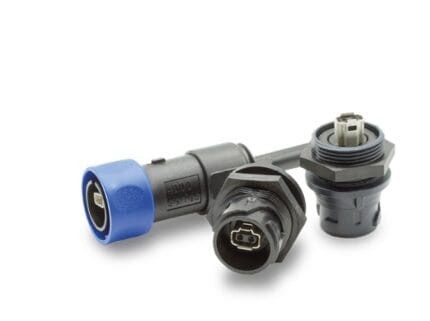
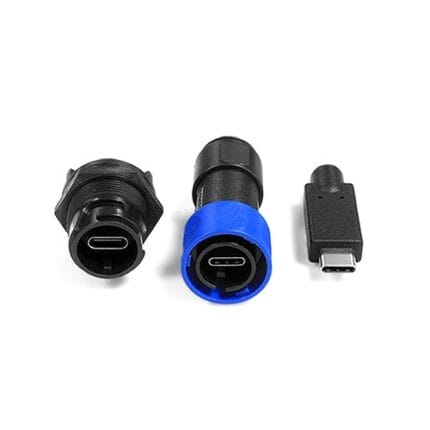
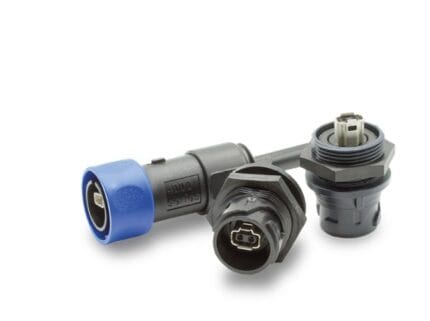
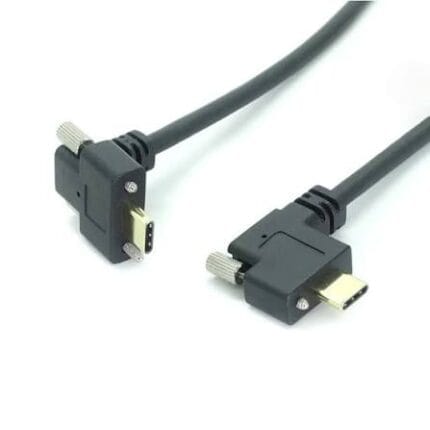
A robot cell vibrates all shift, and the vibration collects at the connector. A friction-fit plug backs out a fraction of a turn at a time until the latch no longer holds. A screw-lock coupling with a metal thread stays clamped, keeps the shield contact pressed against the housing, and gives the maintenance team a torque value to check at service intervals instead of a guess.
Jacket Chemistry
Polyether polyurethane is the default jacket for this duty: it resists mineral oil and water-miscible coolant, does not soften under hydrolysis, and holds up against microbial attack in damp cells. Orange is offered for visibility on a moving arm, black where the cell camera needs a low-reflectance surface.
Typical Placements
- Six-axis welding and handling cells where the camera rides on axis three
- Collaborative robots sharing a workspace with operators
- Gantry and linear pickers with long track travel
- AGV and AMR masts carrying vision and power up the same column
Related Cable Ranges
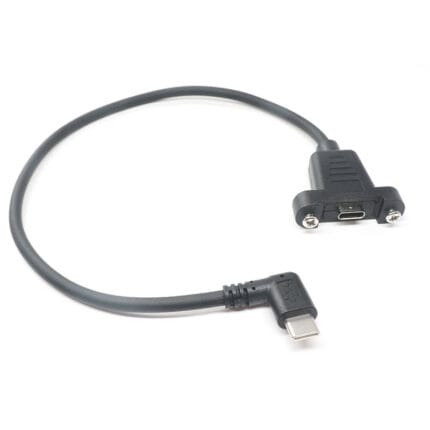
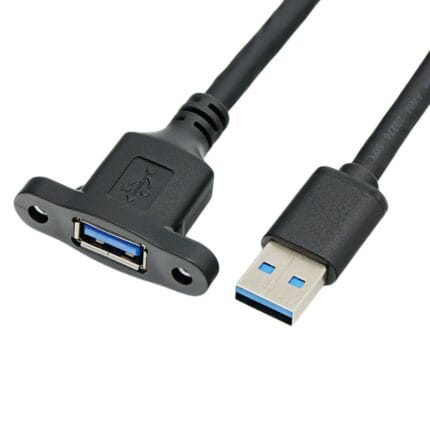
Panel Mount Cable • Signal and Data Cables • Circular M8 M12 Cable
| Cable type | Hybrid power, control and data cable for moving machine axes |
|---|---|
| Conductor layout | Power and control conductors plus shielded Cat6 data pair, layout pending confirmation |
| Shielding | Tinned copper braid over pair foil, coverage figure pending datasheet |
| Jacket | Polyether polyurethane, oil and coolant resistant, orange or black |
| Motion duty | Continuous torsion plus high-cycle drag chain travel |
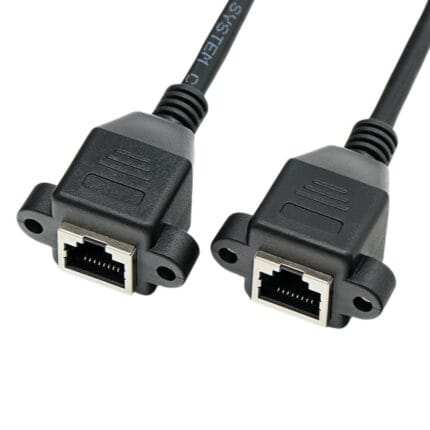
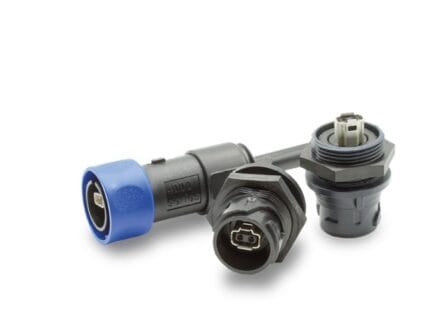
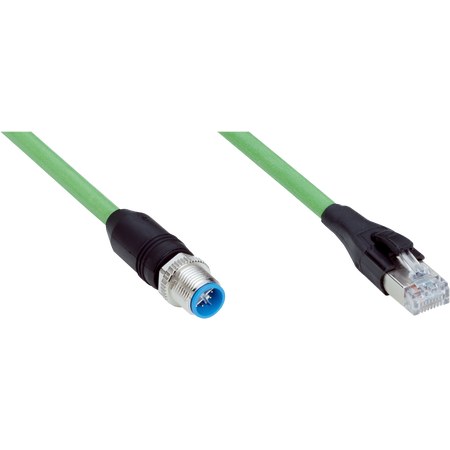
| Terminations | M12 screw-lock and shielded RJ45 screw-lock options |
| Rated voltage | 300/500 V on power and control cores, pending confirmation |
| Temperature range | -40 to +105 C, pending confirmation |
| Options | Power over Ethernet capable variants on request |