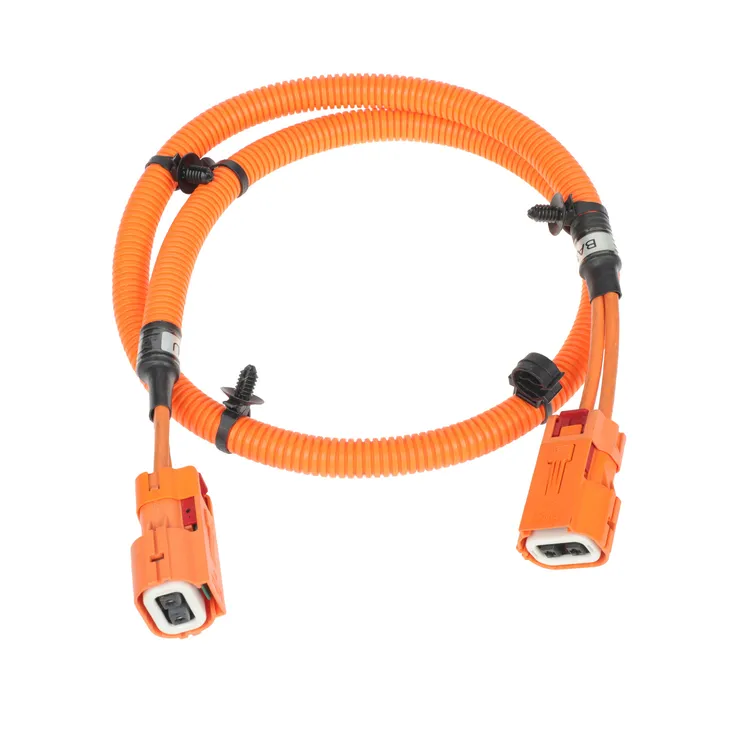
Energy Storage Cabinet Wiring Harness
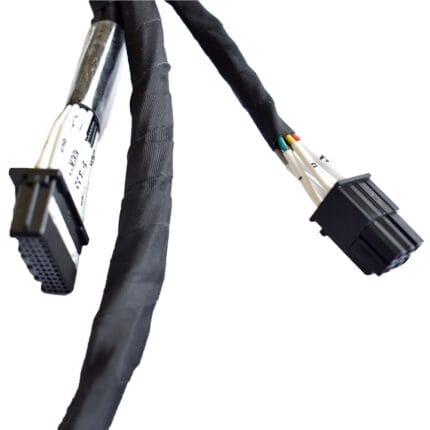
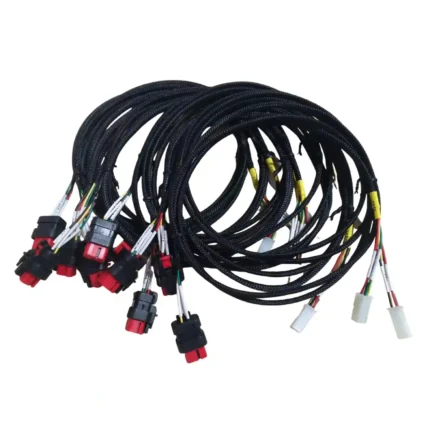
An energy storage wiring harness for ESS cabinets: segregated power and BMS runs, conduit-protected branches and sealed connectors, built to your rack drawing.
Last updated: 13 September 2026
Overview
An energy storage wiring harness inside an ESS cabinet mixes three things that do not want to share a loom. Power runs that must be segregated and protected. Battery-management signals that have to stay quiet next to them. And a service route that a technician can follow correctly at two in the morning with a torch in one hand. Most harness designs for this application get the first two right and the third wrong. We build to your rack layout with all three treated as requirements, and the routing and labeling are part of the drawing rather than an afterthought on the line.
Key Specifications
| Build | Power, signal and BMS branches per your rack drawing |
|---|---|
| Segregation | Power and signal routing kept in separate lanes |
| Protection | Conduit or braided sleeve on exposed runs |
| Connectors | HV-style sealed connectors, per your BOM |
| Jacket rating | Temperature and flame class selected to your cabinet spec |
| Marking | Branch and pole labels at every break-out |
| Documentation | First-article report in your format |
| Revisions | Built to your revision number, reorder-stable |
What kills this cable
Battery cabinets are warm, tightly packed and expected to run for a decade without being opened. The failure modes follow from that.
| Stress | Failure mode | Design response |
|---|---|---|
| Sustained elevated temperature | Insulation embrittles, then cracks at the tightest bend in the rack | Jacket temperature rating selected against the cabinet profile you give us, not against a room-temperature figure |
| Vibration from cooling fans and contactors | Terminations loosen, resistance rises, and the joint gets hotter still | Crimp pull force verified per terminal, runs clamped at intervals |
| Abrasion against rack edges and busbars | Sleeving wears through and the conductor is next | Conduit or braided sleeve on every exposed run, grommets at every panel pass-through |
| Contact with coolant or electrolyte | Jacket swelling and corrosion at the contact | Compound selected against the fluid; sealed connectors where exposure is possible |
| A thermal event in a neighboring module | The harness becomes a propagation path | Flame-retardant grade and routing selected to the rating your cabinet spec calls out |
On flame rating and temperature class
Buyers often ask us to name a specific flame class. We do not publish one of our own, and it would not help you if we did: the class that matters is the one your cabinet specification and your system integrator require, and that is a requirement on the finished installation rather than on a cable supplier. Tell us the rating you need and we select the jacket and sleeving to it, with the material certificate for the compound issued against the build so your compliance file has something real in it.
Temperature is the same story. A cabinet that runs warm at the top and cool at the bottom needs different treatment in different zones, and a single rating applied across the whole harness is usually either wrong at the top or needlessly expensive at the bottom. Give us the profile and we zone it.
Segregation: keeping the BMS quiet
Battery-management signals are small, and the power runs next to them are not. Three rules cover most of it:
- Separate lanes. Power down one side, signal down the other, crossing only at right angles.
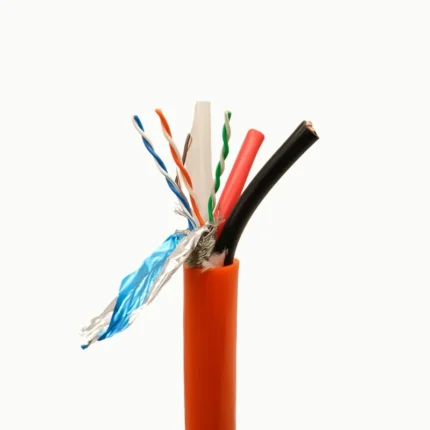
- Screen the signal runs and terminate the drain properly, all the way around the connector shell wherever the design allows.
- Do not share a clamp. A clamp that grips both bundles ties them together electrically as well as mechanically.
Design notes from the build
Exposed runs are carried in conduit or sleeving selected for the cabinet’s temperature and abrasion profile, with break-outs strain-relieved at the bracket rather than left floating – a floating break-out is a branch that will eventually be pulled. Sealed connectors are mated and tested as an assembly so the pinout you approved is the pinout that ships. Pole and branch labels are applied at every break-out, because a cabinet with four identical modules is a cabinet where an unlabeled branch is a genuine safety problem.
Routing-wise, leave the service path first when you lay the rack out. If the BMS connector cannot be reached without lifting a module, the harness layout has failed regardless of how well the electrical side was done.
Typical applications for this energy storage wiring harness
- Grid-scale and commercial BESS cabinets
- Rack-mounted battery modules and BMS communication drops
- UPS and backup power cabinets
- Telecom and data-center battery backup racks
- Mobile and containerized storage units, alongside our BESS Battery Wiring Harness Built to Drawing for Storage Racks
- Charging and inverter cabinet interconnects
How to specify your build
- Rack drawing with module positions, clamp points and panel pass-throughs.
- Circuit schedule – power, signal and BMS branches, with sizes.
- Temperature profile by zone, and the flame rating your spec requires.
- Connector part numbers and whether sealed housings are needed.
- Protection – conduit, braided sleeve, or both, and where.
- Documentation – first-article report format, material certificates.
- Revision number and quantity.
Workmanship and testing
Assembly and inspection follow IPC-WHMA-A-620 Class 3 workmanship criteria under our ISO 9001 quality management system, and every unit passes 100% continuity and pinout testing before packing. Conductor range is 32 to 12 AWG. Crimp pull force is verified at setup per terminal and wire combination and re-checked in process – in a cabinet where a loose joint heats up, that check is the control that matters most. Insulation resistance and hipot testing can be quoted against the values on your drawing.
Custom builds and ordering
Prototypes start from 5 pcs and ship in 3 working days; production orders start at MOQ 500 pcs and ship 14 working days after approval. Our Longgang, Shenzhen plant runs four assembly lines with 40 assembly workers and 1,000,000 pcs annual output, with 100 sets of mold tooling in house for overmolded break-outs and strain reliefs. Factory audits and video line tours can be arranged.
Related energy storage harnesses
- BESS Battery Wiring Harness Built to Drawing for Storage Racks
- BMS Communication Harness for CAN and RS-485 Battery Rack Links
- EV High Voltage Harness Built to Print for Battery Packs
- Hydrogen Electrolyzer Cable Harness with HVIL for High-Temperature Stacks
- eBike Battery Harness with XT60, XT90-S or SB50 Plug
- Heavy-Duty Battery Power Cable with Ring Terminals
Full range: custom wire harnesses.
Frequently Asked Questions
Can you name a flame rating for this harness?
We build to the rating your cabinet specification requires rather than publishing one of our own. Give us the class you need and we select the jacket and sleeving to it, with material certificates issued against the build.
How do you keep the BMS signals clean next to the power runs?
Physically separate lanes first – that does more than any shielding. Then screened signal runs with the drain terminated properly, and no shared clamps between the two bundles.
Do you build the busbar interconnects as well?
We build cable and wire assemblies. If your design uses cable between modules or between the rack and the inverter, that is ours; rigid busbar is a different supply.
What about a thermal event spreading along the harness?
Thermal runaway in a neighboring module is exactly why routing and material selection matter here. Zoning the jacket rating and keeping the harness off the hot surfaces limits the paths available to it. The detail belongs in your system design, and we build to what you specify.
What is the minimum order?
For prototypes the floor is 5 pcs and lead time is 3 working days. Production orders begin at 500 pcs and ship 14 working days after sample sign-off.
| Build | Power, signal and BMS branches per your rack drawing |
|---|---|
| Protection | Conduit or braided sleeve on exposed runs |
| Connectors | HV-style sealed connectors, per your BOM |
| Segregation | Power and signal routing kept in separate lanes |
| Marking | Branch and pole labels at every break-out |
| Documentation | First-article report in your format |
| Jacket rating | Temperature and flame class selected to your cabinet spec |
| Revisions | Built to your revision number, reorder-stable |