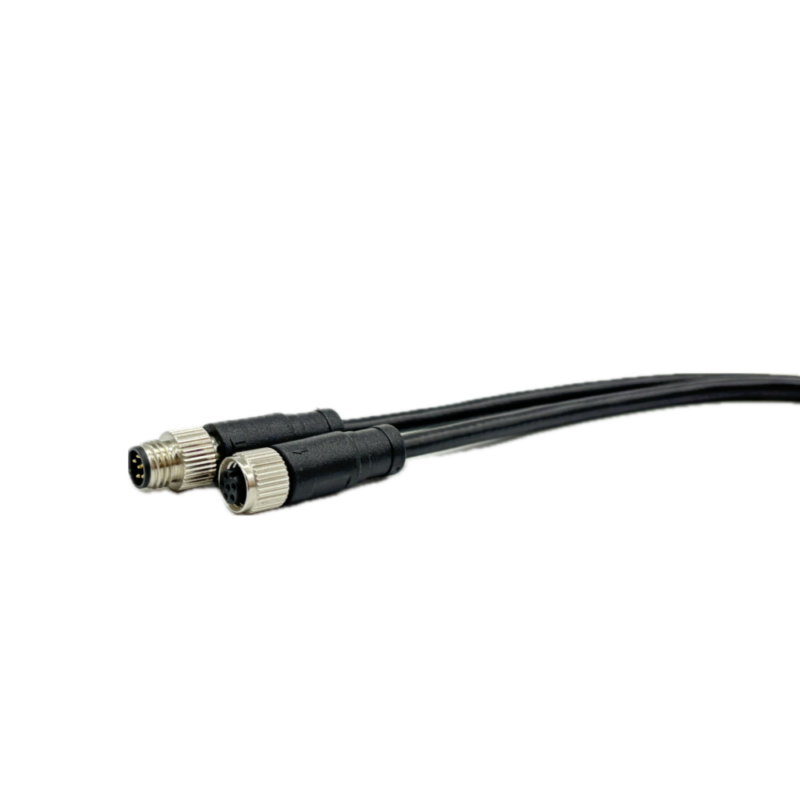
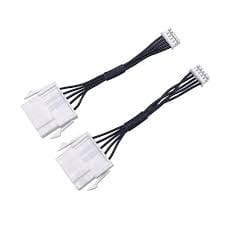
Vending Machine Wire Harness, JST and Molex Pigtails
A vending machine wire harness with JST and Molex pigtail branches, labeled per branch and crimped to your BOM, built to the machine layout in OEM volumes.
Last updated: 13 September 2026
Overview
A vending machine wire harness is a loom of short pigtail branches feeding motors, lights, a coin mechanism, a cooling unit and a control board – and its failure mode is almost never the wire. It is a branch terminated to the wrong housing, or a connector that fits two places and lands in the wrong one on a Friday afternoon. Ours arrives labeled per branch with housings pulled from your BOM, so assembly is a one-pass job rather than a debugging exercise.
Key Specifications
| Build | Control board to component pigtail branches |
|---|---|
| Housings | JST and Molex families per your BOM |
| Conductors | Discrete cores, per circuit schedule |
| Marking | Branch labels at the board end |
| Length | Branch lengths matched to your cabinet |
| Poka-yoke | Keyed housings and polarized connectors where specified |
| Documentation | Wiring table held against your part reference |
| Revisions | Built to your revision number, reorder-stable |
What kills this cable
A vending machine sits in a corridor for years with its door opened for restocking several times a day. The stresses are boring and relentless.
| Stress | What goes wrong | What the build does about it |
|---|---|---|
| Vibration from the compressor and the delivery motors | Crimps work loose at the board header, and the fault is intermittent | Crimp pull force verified per terminal, ferrules where the end lands under a screw |
| Restocking and door swings | Branches snag, and the strain lands on the termination instead of the clamp | Branches clamped within a short distance of the breakout |
| Condensation and cleaning in a cooled cabinet | Corrosion at the contact and tracking across the housing | Tinned conductors and sealed housings on the runs that see moisture |
| Heat near the refrigeration deck | Insulation embrittles on the branches routed past it | Jacket rating selected for the cabinet zone, not the room |
| Assembly error on the line | Two branches with the same housing swapped; the machine ships and fails in the field | Keyed and polarized housings, distinct labels, wiring table to check against |
Poka-yoke: designing the mistake out
Assembly mistakes are the dominant cost in a harness like this, and they are prevented rather than inspected out. The options, in order of effectiveness:
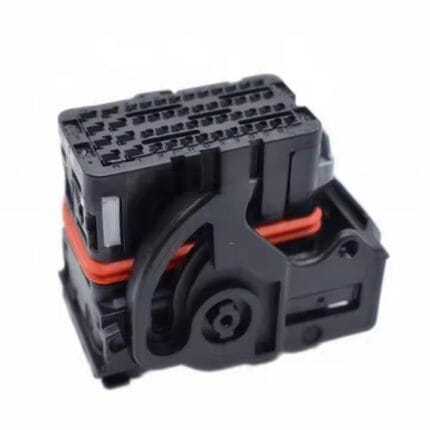
- Physically different housings for circuits that must not be swapped. If two branches in the same area have to be different, give them different pin counts or different keying.
- Polarized and latching connectors, so a connector cannot go in backwards and cannot vibrate out afterwards.
- Unique labels at both ends of every branch, not just at the board end, because the far end is the one in the technician’s hand.
- Branch lengths that only reach the right place. Sizing a branch so it cannot physically reach the wrong connector is the cheapest mistake-proofing there is.
Terminations and crimp quality
Every pigtail is crimped to the housing maker’s specification, pull-tested at setup for each terminal and wire combination, and re-checked in process. That last part matters more than it sounds: a crimp tool drifts, and the drift shows up as a joint that passes continuity and then fails under vibration three months later. Pull force is recorded, not estimated.
Where a stranded end lands in a screw terminal we fit a ferrule, because a bare stranded end under a screw sheds strands a little more each time the machine is serviced, and a loose strand in a control cabinet is a future fault.
Routing inside the cabinet
- Separate the motor and compressor feeds from the low-voltage control and payment runs. Cross at right angles where they must cross.
- Keep branches off the refrigeration deck and away from any moving delivery mechanism.
- Fix at intervals along the run. A harness secured only at each end will drum against the panel.
- Leave enough slack at the door side for service, and no more – excess slack becomes a snag.
Design notes from the build
Branches are cut to the machine layout rather than to a round number, and the wiring table is held against your part reference so a reorder two years later matches the build you approved. Reorders are the part that catches people out: without a revision number, the only reference is a physical sample, and samples have usually been modified in the field by then.
Typical applications for this vending machine wire harness
- Snack and drink machines with several motor and lighting branches
- Coffee and hot-drink machines, where heat and moisture share the cabinet
- Refrigerated and frozen food machines
- Unattended retail lockers and micro-markets
- Coin, note and cashless payment modules
- Ticket and consumable dispensers, alongside our Kiosk and Self-Service Terminal Harness
How to specify your build
- Circuit schedule with every branch named and its termination given.
- Housing part numbers – JST, Molex, or whatever you already stock.
- Cabinet layout with clamp points and branch lengths.
- Which circuits must not be swappable, so we can key them differently.
- Environment – temperature zones, condensation, cleaning.
- Revision number and quantity.
Workmanship and testing
Assembly and inspection follow IPC-WHMA-A-620 Class 3 workmanship criteria under our ISO 9001 quality management system, and every unit passes 100% continuity and pinout testing before packing. Conductor range is 32 to 12 AWG. Crimp pull force is verified at setup for each terminal and wire combination and re-checked in process, which is the control that actually keeps vibration failures out of the field.
Custom builds and ordering
Prototypes start from 5 pcs and ship in 3 working days; production orders start at MOQ 500 pcs and ship 14 working days after approval. Our Longgang, Shenzhen plant runs four assembly lines with 40 assembly workers and an annual output of 1,000,000 pcs, and OEM builds ship under your part number and labeling. Factory audits and video line tours can be arranged.
Related harnesses for unattended equipment
- Kiosk and Self-Service Terminal Harness
- POS USB-C PD Cable for Kiosk and Self-Service Terminals
- Fused 12V Distribution Harness, Anderson Powerpole to 4x DC Outputs
- DT Connector Pigtail Harness, 2/3/4-Pin Sealed Leads for Work Lights
- Energy Storage Cabinet Wiring Harness
- IBM 24V Powered USB to USB-B Scanner Cable
Full range: custom wire harnesses.
Frequently Asked Questions
Can you work from a sample harness?
Yes. Send the sample and we will produce a wiring table from it for your approval. Once approved, that table is the reference for reorders.
How do you stop two branches being swapped on the line?
Best answer is to make them physically different – different pin count, different keying, or a branch length that will not reach the wrong socket. Labels are the second line of defense, not the first.
Do you supply sealed housings for the refrigerated section?
Yes, where the run sees condensation. Tell us which branches those are on the layout and we quote sealed housings for them.
What conductors do you run?
32 to 12 AWG, sized per the circuit schedule on your drawing. If you are unsure of a size, give us the load and the run length and we will propose one for your approval.
What is the minimum order?
Prototype quantity is 5 pcs minimum with a 3 working day turnaround. Production starts at 500 pcs and ships 14 working days from approval.
| Build | Control board to component pigtail branches |
|---|---|
| Housings | JST and Molex families per your BOM |
| Conductors | Discrete cores, per circuit schedule |
| Marking | Branch labels at the board end |
| Length | Branch lengths matched to your cabinet |
| Documentation | Wiring table held against your part reference |
| Poka-yoke | Keyed housings and polarized connectors where specified |
| Revisions | Built to your revision number, reorder-stable |