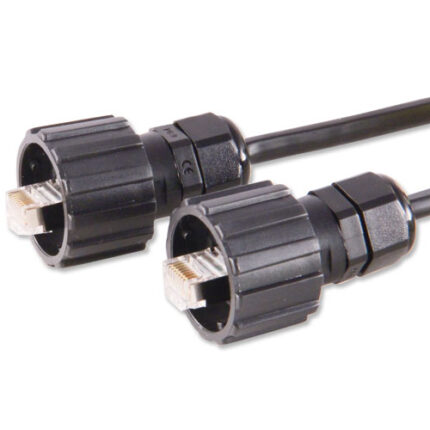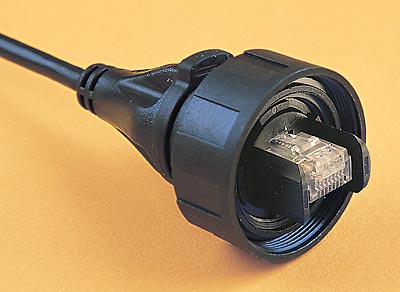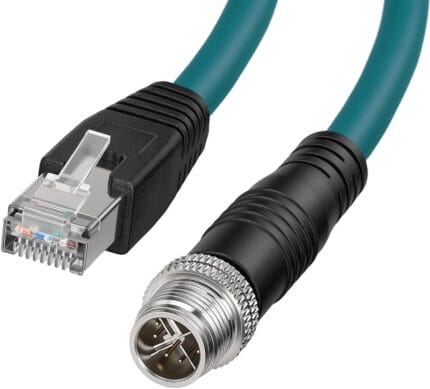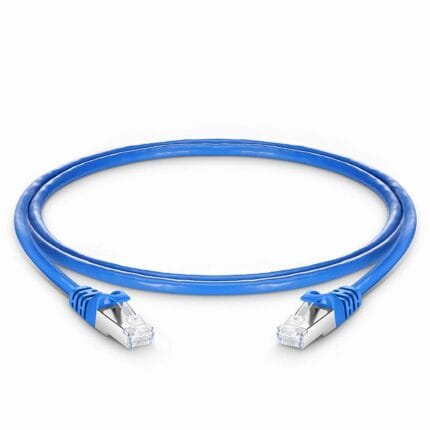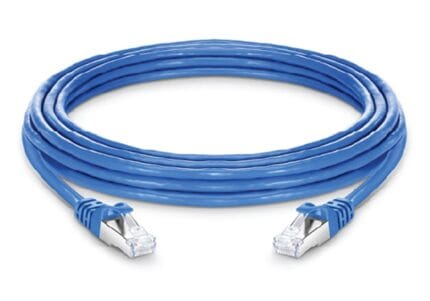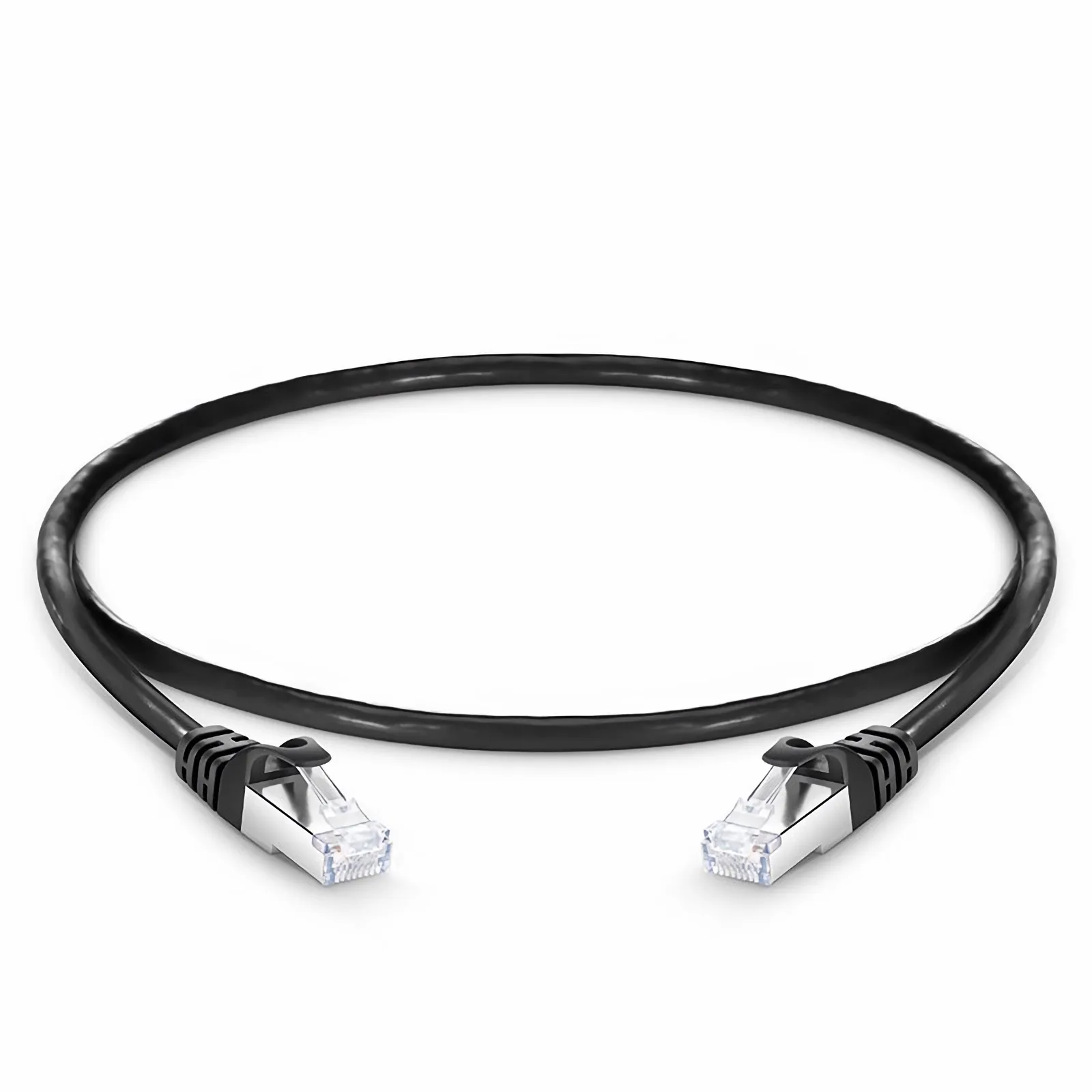
Cat6A PUR High-Flex Patch Cord, S/FTP 26AWG, RJ45 to RJ45
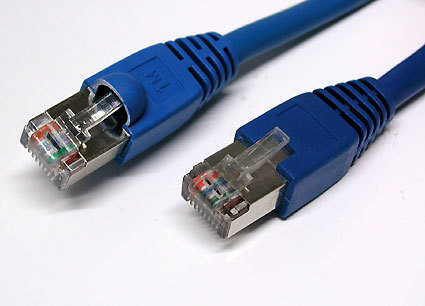
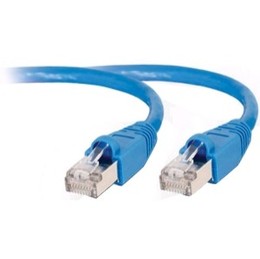
A Cat6A PUR high-flex patch cord for the factory floor rather than the wiring closet: S/FTP 26 AWG stranded copper that tolerates repeated flexing, in a polyurethane jacket chosen for oil, coolant, UV and hydrolysis resistance. Shielded die-cast RJ45 plugs.
Overview
A Cat6A PUR high-flex patch cord is specified for the factory floor rather than the wiring closet. Standard PVC patch leads work well in a rack and fail early on a machine. This one is built for automation cells, moving gantries, machine-vision camera drops and 10GBASE-T device points that also draw power over the same four pairs – stranded conductors that tolerate repeated flexing instead of work-hardening, and a polyurethane jacket chosen for resistance to oil, coolants, UV and hydrolysis.
Key Specifications
| Product type | Category 6A industrial patch cord, RJ45 to RJ45 |
|---|---|
| Conductor | 4 pairs, 26 AWG stranded copper, 7-wire – confirm per build |
| Shielding | S/FTP: pair foil plus overall tinned-copper braid |
| Jacket | PUR, oil, UV and hydrolysis resistant |
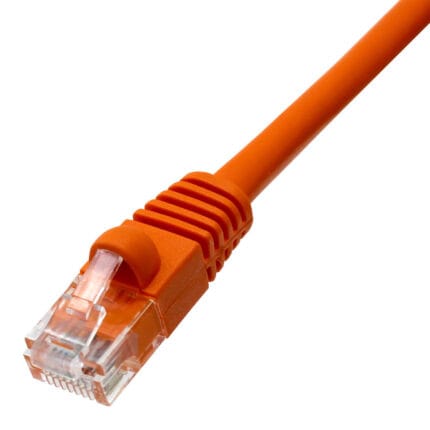
| Connector A | Shielded die-cast RJ45 plug |
| Connector B | Shielded die-cast RJ45 plug |
| Rated temperature | -40 to +80 C – confirm per build |
| Applicable standard | Category 6A per ISO/IEC 11801 Class EA, TIA-568.2-D |
Bend radius is the number that decides flex life
On a moving run, the cable does not fail because it was flexed; it fails because it was flexed tighter than its construction allows. The minimum bend radius is set by the cable build, and routing around a machine frame with a tight corner is the usual place the limit gets exceeded. PUR recovers well from a one-off kink, but repeated tight kinking damages the pair lay, and once the lay is disturbed the electrical performance goes with it.
| Motion class | What the build has to handle | What we check |
|---|---|---|
| Static, routed once | Installation bend radius only | Corner radii and support spacing |
| Occasional movement | Repeated handling and re-routing | Stranding class and jacket recovery |
| Continuous flexing in a carrier | Millions of cycles at a fixed radius | Carrier radius, travel, speed, cycle target |
| Torsion on a robot arm | Twisting as well as bending | Rotation angle per meter and direction |
For continuous flexing or torsion, tell us at quote stage – the construction is different from a static high-flex build, and our Cat6A high-flex drag chain patch cord is the part designed for the carrier case.
Why PUR rather than PVC here
PVC is cheaper and perfectly adequate in a dry cabinet. On a machine it loses to PUR on three counts: cutting oil and coolant attack it, ultraviolet embrittles it, and it does not recover from abrasion against a frame the way polyurethane does. Against that, PUR costs more and is harder to strip, so specifying it for a clean indoor rack is simply spending money you did not need to spend. If your installation is a clean indoor rack, a general-purpose Category 6A lead will cost less and we will say so.
Screen termination at 10G
The S/FTP construction – foil around each pair plus an overall tinned-copper braid – is what makes the alien-crosstalk margins achievable when many leads are bundled together. That only works if the braid is terminated to the plug shell at both ends. An ungrounded screen delivers very little benefit at 10G, and it is the single most common assembly fault we see in industrial Ethernet installations.
- Keep the braid terminated to the plug shell at both ends.
- Respect the minimum bend radius when routing around machine frames.
- Where the run has to sit alongside motor power conductors, keep separation and cross at right angles rather than running parallel.
Bandwidth and power
The assembly is built to Category 6A channel requirements, with a 500 MHz design bandwidth and 10GBASE-T operation over the patch lengths normally used at the machine. Category 6A itself is defined by ISO/IEC 11801 Class EA and by TIA-568.2-D as industry standards – the description here is the general one, and the figures your assembly is built and verified to are the ones on your drawing. Power is delivered alongside data under IEEE 802.3bt. Because a bundle of powered leads runs measurably warmer than a single cable, derating guidance for the filled tray or carrier should be confirmed before the installation is signed off, especially at the top end of the temperature range.
Typical applications for this Cat6A PUR high-flex patch cord
- Factory automation cells and machine-vision camera drops
- Robotic workstations and tool changers
- AGV and AMR docking points
- Enclosures sited where oil mist and daylight are both present
- Sealed device connections using our Cat6A M12 X-coded patch cord
- Carrier-mounted runs using our Cat6A high-flex drag chain patch cord
Ordering
Standard and custom lengths, plus alternative jacket colors, can be quoted against a drawing or a sample. Tell us whether the run is static or moving, what it is exposed to, and whether PoE is involved, and we will confirm the construction before the first article.
Workmanship and testing
IPC/WHMA-A-620 Class 3 is the workmanship standard and ISO 9001 is the quality system behind it. We work from 32 to 12 AWG. Nothing ships without a continuity and pinout check, and seal checking can be added where an ingress rating is part of the specification.
Material declarations against RoHS and REACH are issued per project, alongside the dimensional and electrical reports agreed at quotation; see certifications, compliance and material declarations. Where your drawing names a UL style or another approval, the build follows your drawing and ships with the supporting document rather than a claim of our own. Flex life is a construction decision made before tooling, following the conductor and jacket approach set out under continuous-flex design and testing. The wider context is covered under cable assemblies for industrial automation and robotics. Tooling for this build is cut in our own tool room and belongs to your program, so a repeat run years later starts from the same tool.
Custom builds and ordering
Small runs start from 1 to 50 pcs and leave in 3 working days. At production volume the minimum is 500 pcs and lead time is 14 working days after approval. New tooling is about 10 working days on top. OEM and ODM orders ship under your part number, with material certificates and first-article reports available.
Related industrial Ethernet assemblies
- Cat6A high-flex drag chain patch cord, PUR
- Cat6A M12 X-coded patch cord, M12 to RJ45
- Cat6A shielded patch cord, S/FTP 26 AWG
- Cat6A IP67 industrial pigtail with dust cap
- Cat6A railway patch cord for rolling stock
- M12 X-coded Cat6A cable to RJ45 for machine vision
Full range: Ethernet cable patch cord range.
Frequently Asked Questions
Is PUR always worth the extra cost?
No. On a clean indoor rack, PVC is fine and cheaper. Specify PUR where the cable sees oil, coolant, ultraviolet or repeated flexing.
Can this run in a cable carrier?
Not as a standard build. Continuous flexing needs a different construction – tell us the carrier radius and cycle target and we will quote the drag chain version.
Does the screen have to be bonded at both ends?
Yes. At 10G an ungrounded screen gives you very little of the benefit you paid for in the S/FTP construction.
Can it carry PoE to a camera?
Yes, under IEEE 802.3bt. Check the derating where a bundle of powered leads runs in a filled tray or carrier.
| Product type | Category 6A industrial patch cord, RJ45 to RJ45 |
|---|---|
| Conductor | 4 pairs, 26 AWG stranded copper, 7-wire – confirm per build |
| Shielding | S/FTP: pair foil plus overall tinned-copper braid |
| Connector A | Shielded die-cast RJ45 plug |
| Connector B | Shielded die-cast RJ45 plug |
| Rated temperature | -40 to +80 C – confirm per build |
| Applicable standard | Category 6A per ISO/IEC 11801 Class EA, TIA-568.2-D |
| Jacket | PUR, oil, UV and hydrolysis resistant |