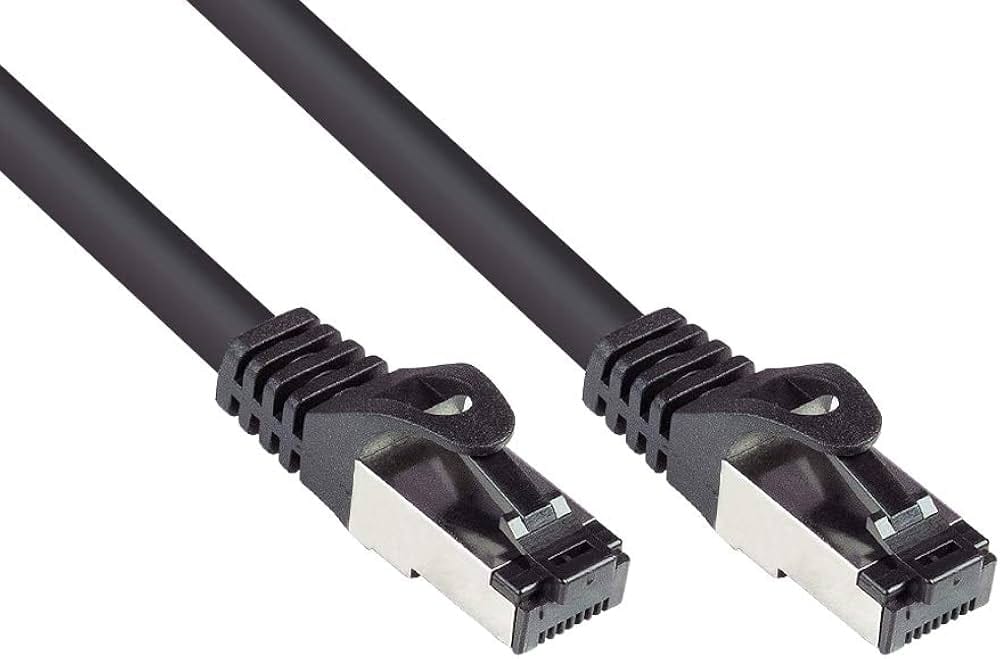
Cat6A High-Flex Drag Chain Patch Cord, S/FTP PUR
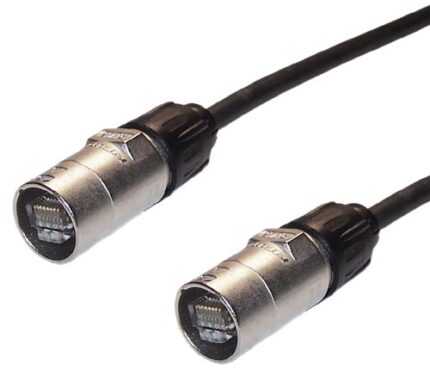
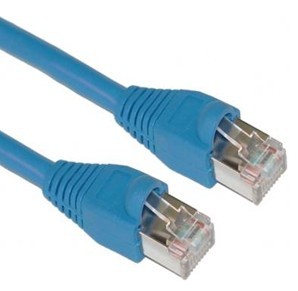
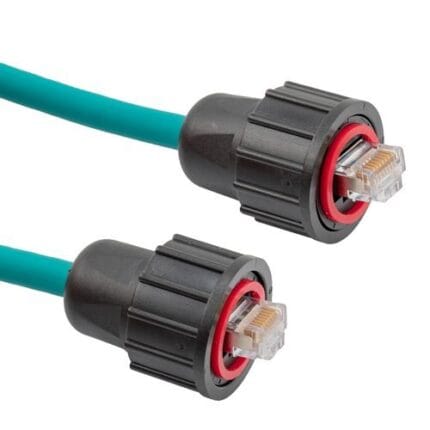
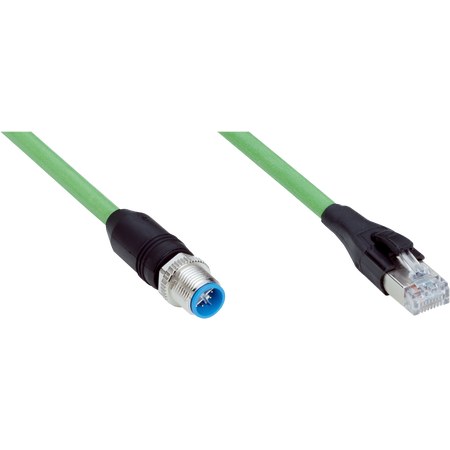
A cat6a drag chain patch cord on high-flex PUR: S/FTP 26 AWG, RJ45 to RJ45, built to the radius, stroke and cycle count you state.
Last updated: 13 September 2026
Overview
A cat6a drag chain patch cord is specified by its motion, not by its category. A cord that lives in a cable carrier is bent and released thousands of times an hour at a fixed radius, and when it fails the cause is conductor fatigue or jacket wear, not anything electrical. So we build to the radius, stroke and cycle count you state, and report the test conditions alongside the result instead of a bare number.
Key Specifications
| Category | Category 6A class, 500 MHz industry-general definition |
|---|---|
| Construction | S/FTP, 4-pair, 26 AWG stranded |
| Jacket | High-flex PUR, drag-chain suitable |
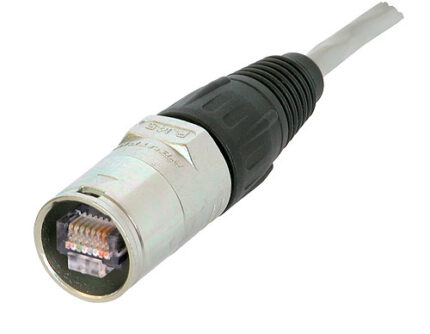
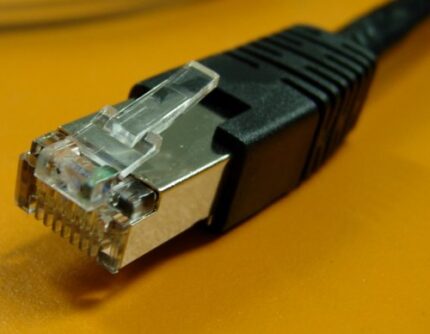
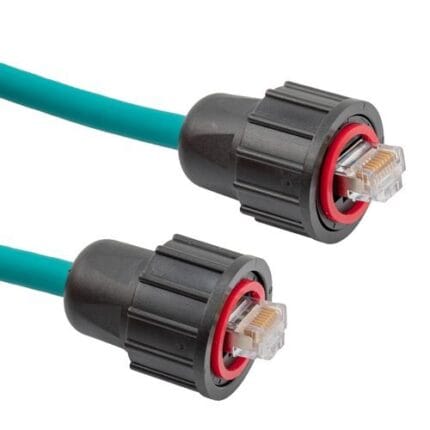
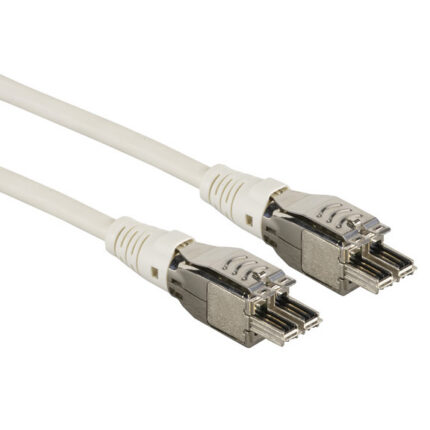
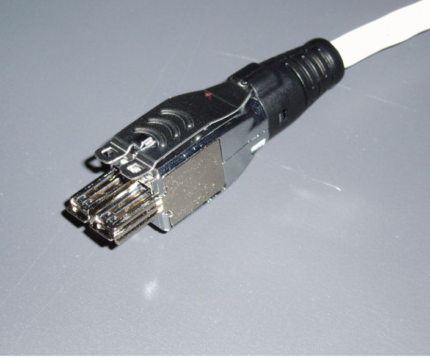
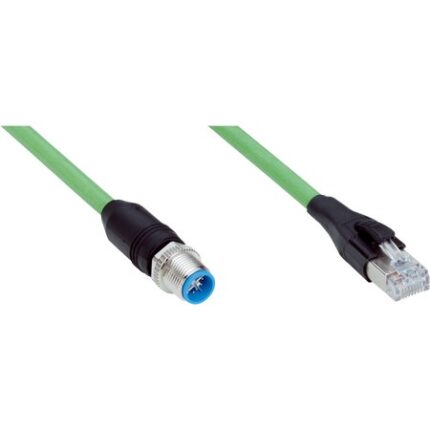
| Ends | RJ45 to RJ45, shielded, keyed boots; M12 X-code on request |
| Bend radius | Set by your carrier; stated per order |
| Cycle life | Built and tested to the count you state |
| Length | OEM build to order |
| Flex duty | Load, radius and angle stated with the result |
Why drag chain duty is a different specification
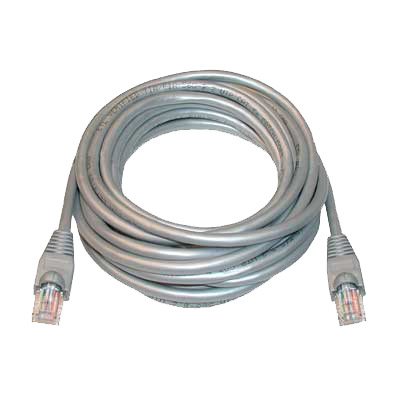
The same category rating can be met by two cords with completely different service lives. What separates them is everything the category test does not measure.
| Static patch cord | Drag chain patch cord | |
|---|---|---|
| Duty | Plugged in and left alone | Continuous cyclic bending at a fixed radius |
| Stranding | Standard bunch stranding | Fine strands, short lay, flex-optimized |
| Jacket | PVC, chosen for cost and flame | PUR, chosen for abrasion and cut resistance |
| Shield | Foil and braid, drain at the ends | Braid that survives repeated flexing |
| Failure mode | Latch breakage, accidental unplug | Conductor fatigue, jacket wear, shield break |
| What matters most | Category compliance | Bend radius, stroke, acceleration, cycle count |
Bend radius: the number that sets cycle life
Bend radius is normally expressed as a multiple of the cable outside diameter, and inside a carrier it is set by the carrier, not by the cable. That is the part people get wrong: you cannot buy your way out of a tight radius with a better jacket. Roughly speaking, halving the radius does not halve the life — it can cut it by an order of magnitude. Give us the carrier’s inside radius and the stroke length, and we will tell you what the build can be verified to. The cycle count is stated per order, from the test we run on your build.
Installing it in the carrier
- Set the radius from the carrier, not from the cable datasheet, and do not fill the carrier past its rated fill.
- Let the cable float. Clamp it only at the fixed end and at the moving end; a clamp midway turns a bending load into a fatigue load at one point.
- Separate power and data. Keep motor and drive cables in a separate compartment of the carrier.
- Avoid torsion. A cord designed for bending in one plane will not survive being twisted.
- Leave it relaxed. A cable installed under tension is already halfway to failure.
- Check the exit. Most breaks happen where the cable leaves the carrier or the connector.
Why PUR rather than PVC
PUR is chosen for three properties that matter in a carrier: abrasion resistance against the carrier walls and the other cables, resistance to cutting oil and coolant, and elasticity that lets it recover after each bend. PVC is cheaper and easier to strip, and it is the right answer for a cord that never moves. Inside a cable carrier, PUR is usually the difference between a service interval and a breakdown.
Typical applications for this cat6a drag chain patch cord
- Machine vision cameras on moving gantries — see our Cat6A S/FTP GigE Vision screw-lock cable for drag chain
- Robot cells and cobot arms with Ethernet to the tool
- CNC and machining centers with an Ethernet drop on the axis
- Automated storage and retrieval machines
- Moving gantries and linear stages in inspection equipment
How to specify your build
- Bend radius — the inside radius of your carrier.
- Stroke length and speed, and the acceleration if you have it.
- Required cycle count, so we can build and test to it.
- Length, measured along the carrier path with the carrier at its extremes.
- Ends — RJ45 both ends, or M12 X-code, or a screw-lock plug.
- Exposure — oil, coolant, weld spark, chips.
Workmanship and testing
Assembly and inspection follow IPC/WHMA-A-620 Class 3 workmanship criteria under our ISO 9001 quality management system, and every unit is 100% continuity and pinout tested before it is packed. Conductor range is 32 to 12 AWG. Flex testing is run at the radius, stroke and speed you state, and the conditions are reported with the result. Where a standard sets a limit for the category, the connector interface or the jacket, that is the industry-general definition of the rating. The values your assembly is built and verified to are the ones stated on your drawing, per order.
Custom builds and ordering
Motion builds are quoted from the duty cycle, so send the carrier data with the RFQ. Prototype builds start from 5 pcs and ship in 3 working days; production orders start at MOQ 500 pcs and ship 14 working days after approval. New tooling adds about 10 working days, and we hold 100 sets of mold tooling in house. OEM and ODM builds ship under your part number and labeling, with material certificates and first-article reports on request. Factory audits and video line tours of our Longgang, Shenzhen plant can be arranged through Alan Kang.
Related high-flex and industrial Ethernet assemblies
- Cat6A PUR High-Flex Patch Cord, S/FTP 26 AWG
- Cat6A RJ45 Screw-Lock GigE Vision Cable
- Cat6A S/FTP GigE Vision Screw-lock Cable for Drag Chain
- Cobot Arm Cable Harness with Drag-Chain Jacket
- Cat6A Shielded Patch Cord, S/FTP 26 AWG
- Cat6A S/FTP M12 X-Code RJ45 Cable, Screw-Lock, 26 AWG PUR
Full range: Ethernet patch cord range.
Frequently Asked Questions
What cycle count can you guarantee?
We do not quote one in the abstract. Give us the radius, stroke and speed and we will build to a count and report the test conditions that produced it.
Can I use a normal Cat6A patch cord in a drag chain?
You can, briefly. Standard patch cable is stranded for handling, not for continuous cyclic bending, and it will work-harden and fail.
RJ45 or M12 X-code?
RJ45 when both ends are inside dry cabinets. M12 X-code when the moving end is in the machine and sees coolant or vibration.
Does PUR handle cutting oil?
Yes, that is the main reason to specify it. Tell us the oil and temperature and we will confirm the grade.
| Category | Category 6A class, 500 MHz industry-general definition |
|---|---|
| Construction | S/FTP, 4-pair, 26 AWG stranded |
| Jacket | High-flex PUR, drag-chain suitable |
| Ends | RJ45 to RJ45, shielded, keyed boots; M12 X-code on request |
| Length | OEM build to order |
| Flex duty | Load, radius and angle stated with the result |
| Bend radius | Set by your carrier; stated per order |
| Cycle life | Built and tested to the count you state |