ix Industrial Cat6A Patch Cord for ix-to-RJ45 and ix-to-ix Links
An ix industrial cat6a patch cord exists because the RJ45 plug is simply too big for some of the equipment that now needs Ethernet. Collaborative robot joints, servo drives, compact vision sensors and camera bodies have a faceplate area that an RJ45 does not leave room for, and the answer in competitor catalogues is a smaller shielded interface on the same Category 6A performance. ix Industrial is a HARTING trademark; these cordsets are compatible parts built to the published interface, not HARTING products.
What you actually save
The quoted space saving against an RJ45 is around 70 percent of the faceplate area, which is the figure competitor material leads with. That matters in two places: the device itself, where the connector competes with a status LED and a lens, and the cable path, where a smaller plug means a smaller bend and a smaller gland. The interface is described in IEC 61076-3-124 Type A; confirm the edition your machine standard references, because the keying and the latching are what stop a data plug going into the wrong receptacle.
Wire and shielding
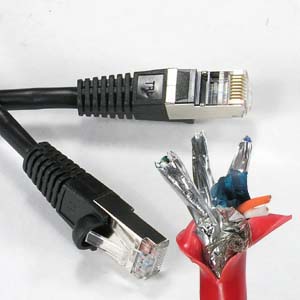
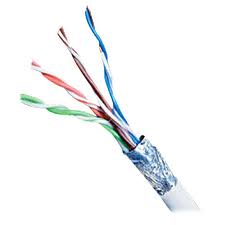
The quoted construction is four screened pairs at 26 or 28 AWG in S/FTP, with 360 degree shielding carried through the connector so the shell closes the screen rather than leaving a gap at the boot. That matters more here than on a larger connector, because the whole reason for choosing this interface is that it sits next to motor and drive electronics. Both 1 Gbit/s and 10 Gbit/s operation are quoted. Choose 26 AWG where the run is long or carries PoE and 28 AWG where the cord has to be thin and short.
Ends and lengths
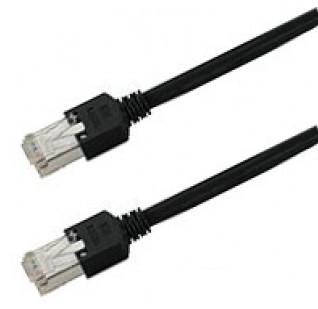
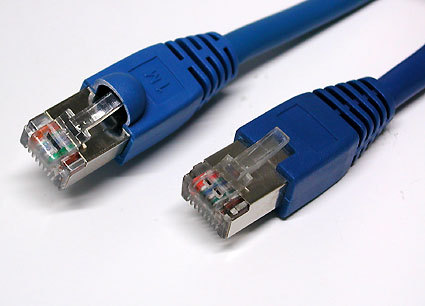
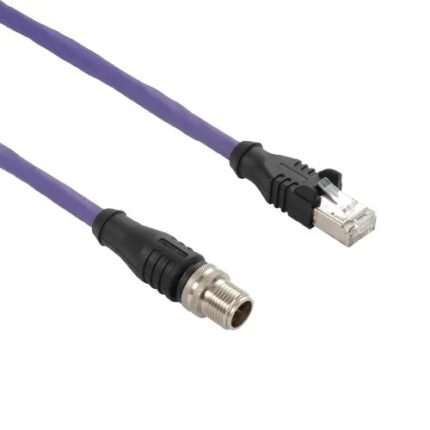
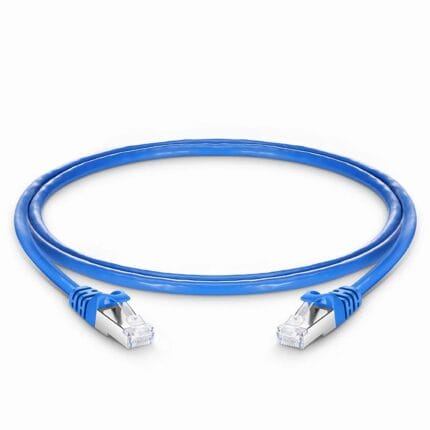
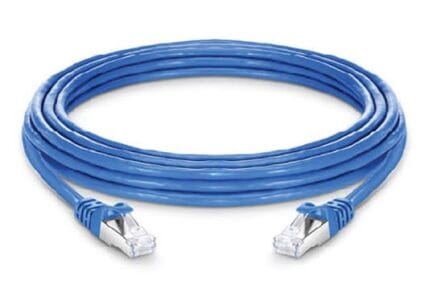
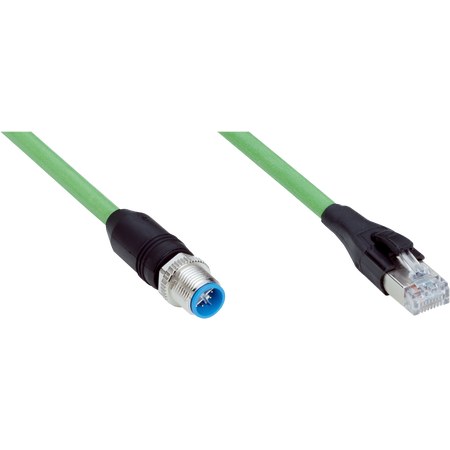
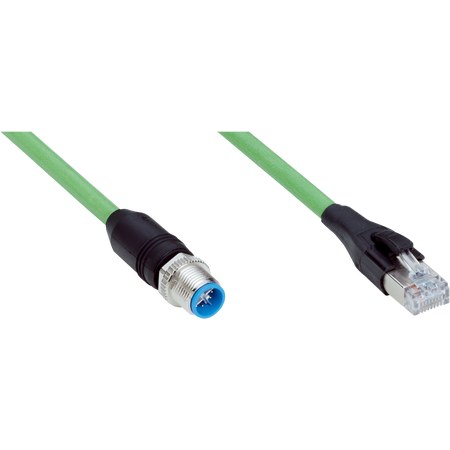
Cords are offered as ix to RJ45, which is the usual case for connecting a compact device back to a conventional switch, and as ix to ix for device-to-device runs inside a machine. Jacket options quoted in competitor data are PUR and PVC for normal industrial use and LSZH or FRNC where the installation has smoke and flame requirements. Short lengths are the norm: 0.5 to 5 m covers most machine builds.
Installation reality
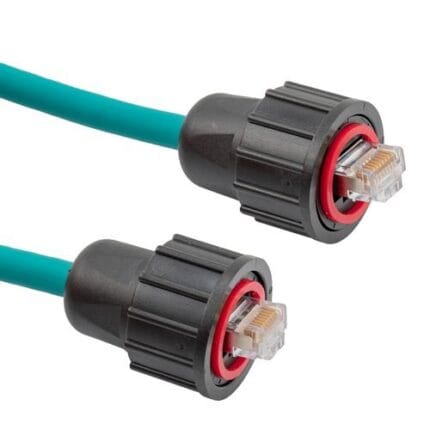
The latch on a small connector is small, so support the cord near the plug rather than letting it hang, and keep the bend radius at the exit generous even though the plug is compact. Because the interface is keyed and latched, listen for the latch engaging on a moving robot joint, where vibration will otherwise work a partly seated plug loose over time. Keep these cords out of the same duct as the motor power leads despite the shielding.
What we are confirming
Space saving, conductor gauge, data rates, mating cycles, jacket ratings and temperature figures come from public competitor data. Ask for the datasheet covering the exact construction before you design the faceplate around it.
Related Cable Ranges
Signal and Data Cables • Circular M8 M12 Cable • Panel Mount Cable
| Interface | ix Industrial style, Type A per IEC 61076-3-124 (confirm applicable edition) |
|---|---|
| Category / class | Category 6A, Class EA per ISO/IEC 11801 |
| Space saving | Around 70 percent less faceplate area than RJ45, quoted in competitor data (pending verification) |
| Construction | 4 x 2, 26 AWG or 28 AWG S/FTP (pending supplier datasheet) |
| Shielding | 360 degree shielding carried through the connector shell |
| Data rates | 1 Gbit/s and 10 Gbit/s (pending channel test) |
| End configurations | ix to RJ45, ix to ix |
| Jacket options | PUR or PVC; LSZH or FRNC where smoke and flame requirements apply (pending supplier datasheet) |
| Mating cycles | 5000 cycles class (pending supplier test report) |
| Standard lengths | 0.5 / 1 / 2 / 3 / 5 m (pending supplier confirmation) |
| Typical loads | Collaborative robot joints, servo drives, compact vision sensors, camera bodies |