USB-C PD Trigger Power Cable to DC 5.5×2.1mm Barrel, 9V / 12V / 15V / 20V
A pd trigger power cable that asks a USB-C PD charger for one fixed voltage and presents it on a 5.5×2.1mm barrel plug. Fixed 9 V, 12 V, 15 V or 20 V, or auto-negotiating; 18 AWG, 1 m or 2 m. PD 2.0 / 3.0 only.
Overview
A PD trigger power cable is a small negotiation circuit with a plug on each end.
A USB-C charger does not output 12 V by default; it waits to be asked. This cable does the asking,
requesting a fixed voltage from the charger’s advertised list and presenting it on a 5.5×2.1mm barrel
plug. The result is a replacement for a lost or failed AC adapter: any USB-C PD charger, power bank or
car charger becomes a barrel supply for a router, an optical modem, a mini PC, an LED controller or a
single-board computer. The voltage the trigger requests is set at build time, so that is the first
decision to make.
Key Specifications
| Connector A | USB-C plug with PD negotiation circuit |
|---|---|
| Connector B | DC barrel plug 5.5×2.1mm, center positive |
| Output options | Fixed 9 V / 12 V / 15 V / 20 V, or auto-negotiating |
| Protocol | USB Power Delivery 2.0 / 3.0 only; Quick Charge not supported |
| Conductor | 18 AWG |
| Lengths | 1 m / 2 m |
| Options | Right-angle barrel plug, 5.5×2.5mm and 4.0×1.7mm versions |
| Max power | Up to 100 W, subject to the attached charger and an E-marked cable |
How the trigger chip picks a voltage
When a USB-C source connects, it advertises a list of profiles it can supply — power data objects,
in the language of the specification. The trigger chip reads that list and asks for one entry in it.
Nothing more clever than that happens. Two behaviors are available, and the choice matters more than
the wattage printed on the box.
| Behavior | What it does | Pick it when |
|---|---|---|
| Fixed voltage | Requests one specific profile, always the same one | The load has a narrow input range, or the same model is deployed across many sites |
| Auto-negotiating | Requests the highest profile the attached charger offers, and steps down if it cannot supply it | The load accepts a wide input range and chargers vary between sites |
| Switch-selected | A physical switch or a solder link sets the profile | Field staff need to change the voltage without a new cable |
A fixed 12 V build on a 12 V router is the safe answer in almost every case: the load never sees a
voltage it was not designed for, no matter which charger an engineer pulls out of the van. Auto is the
answer when the load is genuinely wide-range and you cannot control the charger.
Reading the charger before you blame the cable
Most “the trigger does not work” reports are charger problems. Three checks settle it:
- Does the charger speak PD at all? A Quick Charge only port with no PD capability will not negotiate, and the output stays at the default 5 V, which in practice means the load will not start.
- Does the charger offer the voltage you asked for? A 12 V fixed trigger on a charger that only advertises 5 V, 9 V and 15 V gets nothing. Ask for a profile that exists.
- Is the rating per port? Power banks and multi-port chargers are rated for the whole unit, not per port, and many renegotiate when a second device is plugged in. Check the per-port rating before assuming a load will run.
Leave headroom either way. A load that pulls close to the charger limit will brown out at startup or
on a transient, and the symptom looks like a cable fault.
Where the specification draws the line
USB Power Delivery 3.1 splits into a standard power range, which is the 5 V, 9 V, 15 V and 20 V
profiles from PD 2.0 and 3.0, and an extended power range that adds 28 V, 36 V and 48 V at the same
5 A current limit. This trigger is a standard power range device: it speaks PD 2.0 and PD 3.0 and
nothing else, and it tops out at 100 W subject to the charger and the cable. Above 20 V the source and
the cable have to agree on extended power range first, which is a different conversation. The same
USB-C
connector carries both, which is why the profile list and not the plug shape decides what you get.
The voltage and current your assembly is built and verified to are the values stated on your drawing.
Sizing the load
| Load | Typical input | What to check first |
|---|---|---|
| Router, ONT, modem | 9 V / 12 V barrel, center positive | Nameplate current, and the startup surge when radios come up |
| Mini PC, single-board computer | 12 V barrel, or 5 V at higher current | Peak draw under load, not idle — these can double at boot |
| LED controller and strip | 12 V / 24 V barrel | Current at full brightness, which is far above the idle figure |
| Small monitor, portable display | 12 V barrel | Backlight surge at power-on |
Typical applications for this PD trigger power cable
- Replacing a failed OEM adapter for a router, ONT or modem without waiting on a branded spare
- Running a mini PC or single-board computer from a power bank during field work
- Powering 12 V LED controllers and small displays from a USB-C PD supply
- Emergency comms and field kits where one charger has to serve every device in the bag
- Permanent installs fed from a sealed DC rail, with our IP67 DC to USB-C cable covering the opposite direction
- Bench and test setups that need a repeatable barrel supply instead of a drawer of adapters
Polarity, barrel size and the other end of the cable
The barrel is 5.5×2.1mm, center positive, which covers the great majority of network and small
computing gear. Where your load takes a different size, the same build is available with a 5.5×2.5mm
or a 4.0×1.7mm plug, and with a right-angle barrel for wall-mounted equipment. Check the polarity
symbol on the device before applying power.
How to specify your build
- Output voltage — fixed, and to which value; or auto-negotiating.
- Barrel size and orientation — 5.5×2.1mm, 5.5×2.5mm or 4.0×1.7mm, straight or right-angle.
- Length — 1 m or 2 m stock, or a custom length.
- Conductor — 18 AWG stock; heavier if the run and the load ask for it.
- Jacket and marking — color, print, and your part number on the bag.
- Quantity, and whether you need samples before the run.
Because the trigger behavior is set by the chip profile or a resistor, the voltage is locked at the
point of order. A fixed 12 V build cannot be changed later in the field, so decide once, on the
drawing, and we build to it.
Workmanship and testing
Terminations on USB-C PD Trigger Power builds run from 32 to 12 AWG, and the work is held to IPC/WHMA-A-620 Class 3 inside an ISO 9001 system. continuity and pinout are checked on every USB-C unit before packing, and seal checking is quoted whenever an ingress rating is on the drawing.
RoHS and REACH declarations are provided per project together with the agreed test reports; the documentation scope is listed under certifications and compliance. If your drawing specifies a UL style, we build to that drawing and supply the UL reference with the shipment instead of substituting an equivalent. The molded body is shot on our own presses; material choice and bond behavior follow the process described under how we run the overmold press. More background: cable assemblies for marine and outdoor equipment. Any tooling we cut for this part stays yours, maintained in our own tool room under your part reference.
Related power leads
- USB-C PD Trigger Cable with Voltage Display, 5/9/12/15/20/28 V
- IP67 DC to USB-C Cable, 5.5×2.1mm Barrel Power Lead
- 14 AWG DC Barrel Pigtail Cable 5.5×2.1mm to Bare Wire
- DC Plug Adapter Set 5521 / 5525 / 4017 / 3513 / 1.35mm / 2.5mm
- USB A to 2.5mm Barrel Power Cable
Full range: DC Plug Power Cable.
Frequently Asked Questions
Fixed voltage or auto-negotiating?
Fixed, unless the load genuinely accepts a wide input range. A fixed 12 V build gives a 12 V device 12 V from any PD charger, which removes a whole class of field failures.
Does it work with a Quick Charge charger?
No. This is a Power Delivery device. On a QC only port it will not negotiate and the output stays at the default 5 V.
Why does my 12 V device not start on a 12 V trigger?
Usually the charger, not the cable. Either it does not advertise a 12 V profile, or the per-port current is below what the load draws at startup. Check the charger label first.
Can I change the voltage after delivery?
Not on a fixed build. The profile is set at the trigger, so the voltage has to be decided when you place the order.
What is the minimum order?
USB-C PD Trigger Power prototypes start from 1 to 50 pcs and ship in 3 working days; series supply starts at 500 pcs and takes 14 working days after sample approval.
| Connector A | USB-C plug with PD negotiation circuit |
|---|---|
| Connector B | DC barrel plug 5.5×2.1mm, center positive |
| Output options | Fixed 9 V / 12 V / 15 V / 20 V, or auto-negotiating |
| Protocol | USB Power Delivery 2.0 / 3.0 only; Quick Charge not supported |
| Conductor | 18 AWG |
| Lengths | 1 m / 2 m |
| Options | Right-angle barrel plug, 5.5×2.5mm and 4.0×1.7mm versions |
| Max power | Up to 100 W, subject to the attached charger and an E-marked cable |
Related products
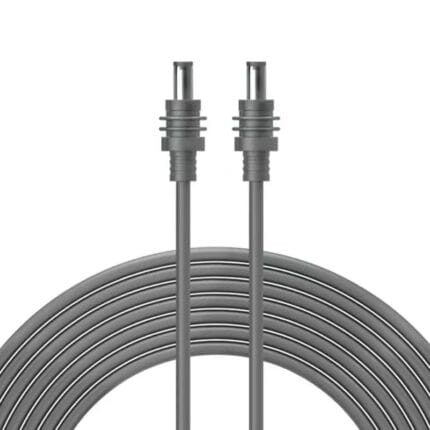
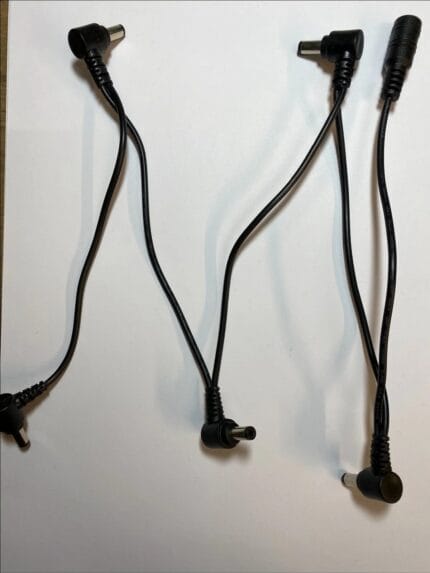
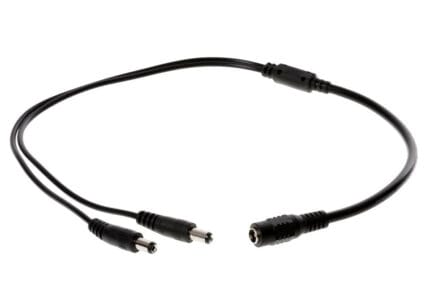
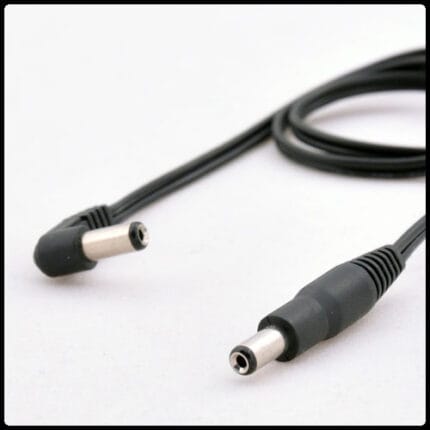
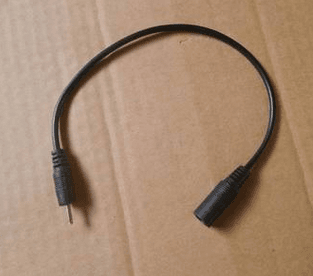
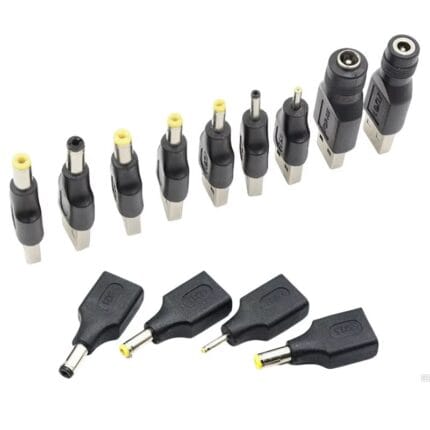
DC Barrel Adapter Kit – 5521 / 5525 / 4017 / 3513 / 1.35mm / 2.5mm, 6-Piece
A dc barrel adapter kit covering 5.5x2.1, 5.5x2.5, 4.0x1.7, 3.5x1.35 and 2.5 mm in six molded female-to-male adapters, so one supply covers a mixed estate. Center positive throughout, with nickel-plated brass contacts. Measure the socket pin with a caliper before ordering: the outer shell is identical across three of these five sizes. Bagged with a size card, or boxed with a printed insert.